Lardy cake is a slab of enriched dough laminated with handfuls of lard, sugar, and dried fruit, folded and rolled and folded again, then baked until the lard caramelises through every layer and the bottom of the tin is a sticky golden mess.
It is the cake equivalent of a croissant invented in Wiltshire by farmers who had a pig and some flour and no time for nonsense.
Modern versions almost universally use butter or vegetable shortening instead of lard. Both are inferior. Lard has a higher melting point than butter, so it does not soak into the dough during baking the same way - it pockets, melts, and creates the distinct flaky pastry layer that defines a proper lardy cake.
Lardy cake is also one of the oldest British uses for pig fat, made the same way for at least three hundred years until the fat panic of the 1980s recast lard as poison. Bakers switched to butter or industrial shortening, the texture went flat, and a cheap farmhouse treat became a sad imitation of itself.
The recipe:
- 500g strong white flour.
- 7g instant yeast.
- 1 teaspoon salt.
- 300ml warm milk.
- 200g pure lard, kept cold.
- 150g caster sugar.
- 200g mixed dried fruit (currants, raisins, sultanas).
- A pinch of mixed spice.
Mix the flour, yeast, salt, and milk into a soft dough. Knead 8 minutes. Rise covered for an hour.
Roll into a long rectangle. Dot a third of the lard, sugar, fruit, and spice over two-thirds of the dough. Fold like a letter. Turn 90 degrees.
Repeat twice more.
Press into a greased deep tin. Rise 45 minutes.
Bake at 200C for 30 to 35 minutes.
Turn out upside down so all the caramelised lard runs back into the cake.
The bottom will be sticky. The top will be flaky. The smell will fill the house.
A wedge of this with a strong cup of tea was the Wiltshire farmer's three o'clock break. We have a Pret protein ball.
Keith the Apocalypse Bringer received a visitor this week. A young woman with a clipboard, a fleece bearing the logo of a national rewilding charity, and the kind of clear-eyed certainty that comes from having read three books about ecosystems and never having stood in a wet field in February.
She had come to assess the farm for what she described as "rewilding potential."
Keith was eating a bramble at the time.
Visitor: Hello. I'm here to talk about transitioning the land away from livestock.
Farmer: Keith does most of the talking.
Visitor: I think we could really restore this landscape if we removed the grazing pressure.
Farmer: Have you noticed Keith.
Visitor: The goat? Yes. He'd be moved.
Farmer: Where to.
Visitor: A sanctuary, ideally.
Farmer: Keith was at a sanctuary. They asked us to take him back.
Visitor: Right. Well. Without the grazing, the natural succession would take over. Scrub, then woodland.
Farmer: That's bramble.
Visitor: Yes. Scrub is part of the natural process.
Farmer: Bramble is what Keith eats.
Visitor: The whole point is to let nature take its course without human interference.
Farmer: Keith is a goat. Goats are nature. Goats have been on this hill for several thousand years. The hill is the way it is because of goats.
Visitor: Domesticated goats aren't really wild.
Farmer: Neither are the trees you'd plant. Neither are you. What's your point.
Visitor: I think we could see the return of some really exciting species without the grazing.
Farmer: Like what.
Visitor: Well, eventually, lynx. Wolves.
Farmer: To eat Keith.
Visitor: ...
Farmer: You want to remove the goat to bring back the predator to eat the goat.
Visitor: When you put it like that.
Farmer: When you put it any way at all. Keith is doing the job. Keith is doing it for free. Keith has been doing it since the Neolithic. The bramble eats the field if Keith doesn't eat the bramble. You can hire a contractor to come up here once a year with a strimmer and do half as good a job for several thousand pounds, or you can have Keith, who works seven days a week for cheese.
Keith, at this point, kicked over the clipboard.
The visitor packed up. She left a leaflet.
Keith ate the leaflet.
The leaflet said "Wild By Nature."
So is Keith. Nobody at head office had thought about it for quite that long.
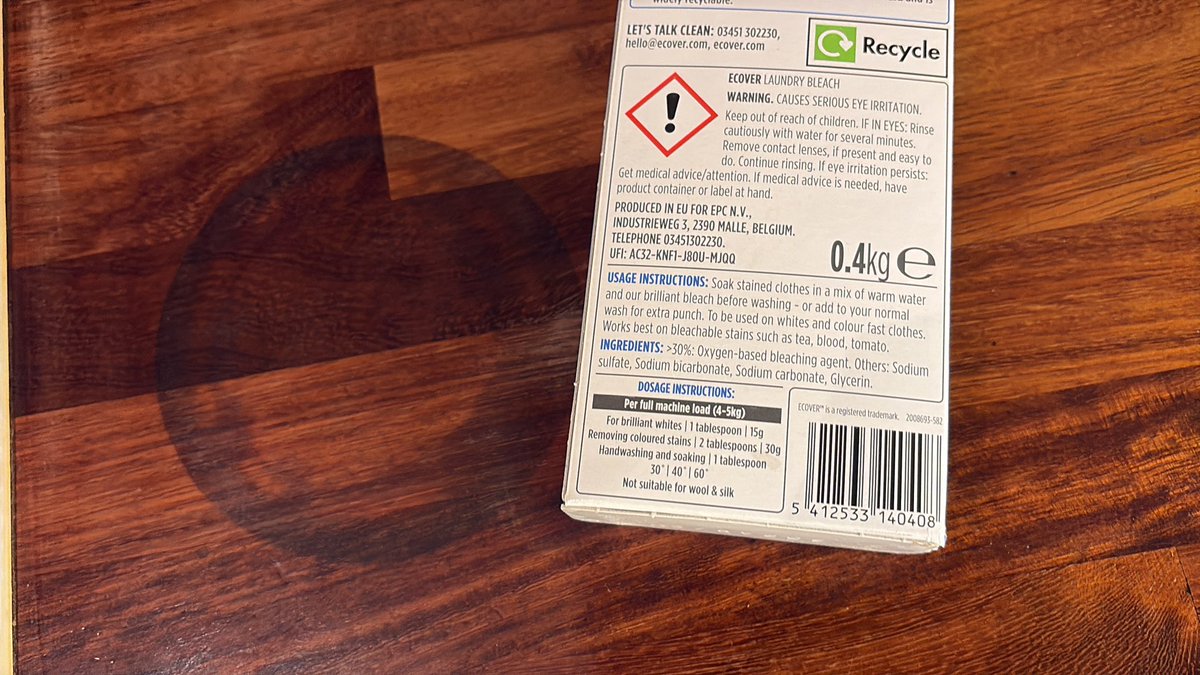
@AndyWoodturner please can you help?? This is iroko worktop and I was bleaching in a bowl and has the bowl bottom made a dark stain in the wood. How can I restore the wood and remove the stain please??
You are so knowledgeable about everything wood so you were my first thought…
@janepursey This is absolutely sooooo beautiful @janepursey I’ve been trying to see one like this for ages?! There might be some (one would do?!) near me soon 🤞🤞