@Jean__Fisch@d_spiegel Yes, the other thing was that the situation was finely balanced with Delta in the UK over the summer: for the population as a whole R(t) hovered around 1, and incidence wasn't trivial. Without vaccines it would undoubtedly have grown rapidly, without behavioural modification
@Jean__Fisch@d_spiegel I think ages 12-16 is mainly Delta transmission and schooling (hence the biggest spike after the summer holidays); 17-24 could be a mixture of activities (including Euros). Neither group fully vaxxed when pre-Omicron spikes occurred.
@d_spiegel@Jean__Fisch But in many ways incidence only stayed low until autumn because mass vaccination had taken place - prior to Omicron vaccines were pretty good at reducing both infection, and transmission if infected - the combined effect substantially reduced overall community transmission.
This scare story is doing the rounds.
I asked Claude Opus 4.6 to analyze it.
TLDR its nonsense.
Otherwise, link and explanation within....
https://t.co/Bf2pLgdtb8
@unherd@drdavidajames "Kebede .... has referred to proposed pay increases which amount to 17% over the course of this parliament as, effectively, a pay cut". No, he hasn't: he has referred to the proposed 6.5% over the next three years as an effective pay cut, which could well turn out to be true.
@TimandraHarknes@TheBMA This is wrong, empirically - however you measure it, Resident Doctors' pay has lagged most other people's since the financial crash (eg, below, using Nuffield's methodology). Then, what's with this divisive "taxes pay your salaries"? Attack teachers next? No-one should strike?
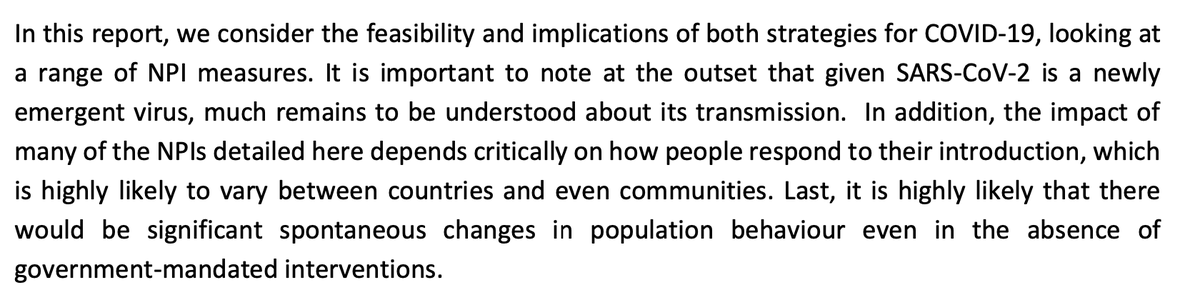
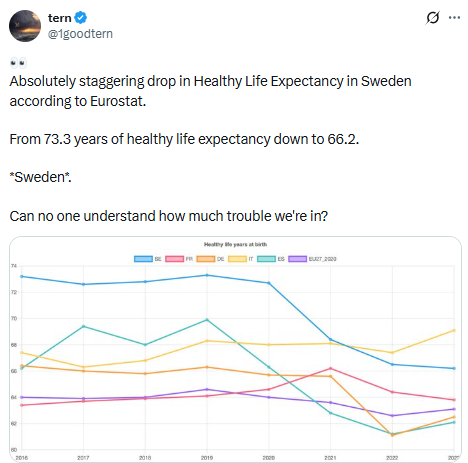
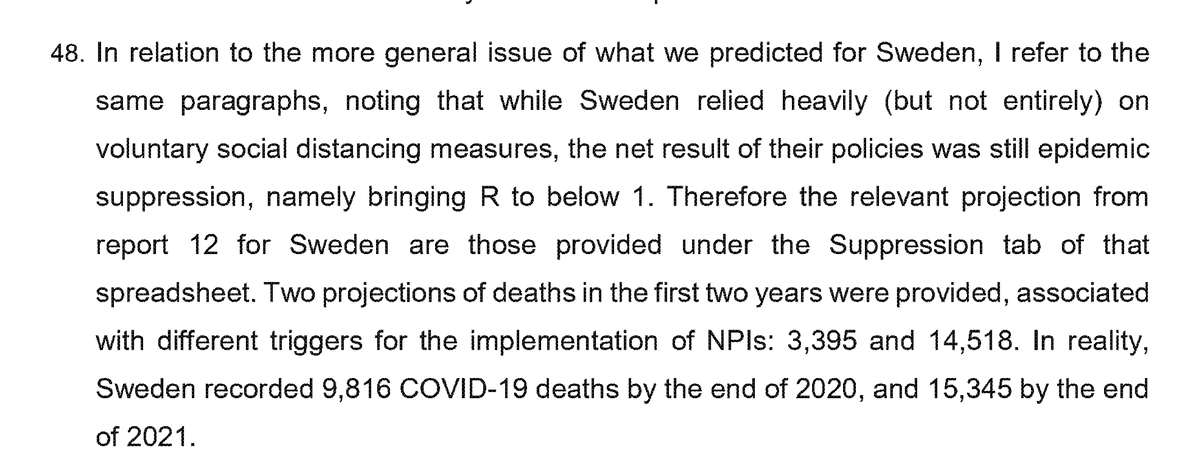
@DanielJHannan Still pushing this long- and easily-refuted claim? Amazing after all this time. The large numbers were for the hypothetical scenario of zero mitigation, which no-one expected to happen, including Ferguson (see below). Then in fact Sweden did quite a lot (also see below).
@mattwridley Due to limited testing, if anything your graph underplays the difference (see below). BUT, this only raises the issue of causality more starkly: perhaps the UK's response was stronger because the situation was much worse in the UK, requiring much more rapid descent from the peak
@pieterstreicher@Jean__Fisch I have seen an argument that the old did continue to (somewhat) distance. However, another huge factor explaining the difference by age in summer 2021 is vaccination status (prior to Omicron, vaccines significantly reduced the chance of infection and onward transmission)
@pieterstreicher@Jean__Fisch The authors of the 2021 and other similar papers (including March 2020) were well aware that they were in part simplifications. I recently re-watched the LockdownTV interview with Ferguson from April 2020. The section starting 11'45" is relevant 2/2:
https://t.co/6TIQk7ORoe
@pieterstreicher@Jean__Fisch We've discussed this before I recall. That NPIs could drive Rt (well) below 1 is very strongly established, in richer countries at any rate. Then it is *just* a matter of getting the balance on the role played by voluntary and compulsory measures 1/2
@pieterstreicher@Jean__Fisch Agreed it all happened faster than expected. However, in addition to that, letting it run then very quickly moving through mitigation to strong suppression led to a lower and earlier (suppression-caused) peak than would have happened with mitigation all the way.
@Jean__Fisch@pieterstreicher A later (and higher) peak was of course reasonable under the prevailing policy assumptions - mitigation of one kind or another rather than suppression.
@Jean__Fisch@jneill As far as I can tell, this part of the history hasn't, fully, made it into the report. It's still a little unclear to me just when the consensus around a shorter doubling time was established, to the extent of informing policy (if it ever did):
https://t.co/gQjtiruwlG
@FraserNelson Related, in that April 2020 LockdownTV (later to become UnHerd) interview, Ferguson also points out that the UK most likely drove R(t) below 1 in the week of March 16 (ie before Lockdown), and that indeed that was the aim of the measures initiated 16 March (listen from 11'45").
@FraserNelson A problem with this polemic is that it is based on a misrepresentation of what it is criticising. You say: "Sweden was down for 65,000 deaths unless it locked down". This is simply not true, as Ferguson has explained (below). Or watch this (from 9'30"):
https://t.co/6TIQk7PpdM