Absolutely:
— Focus on fabric weight and weave, as lightweight fabrics made with a porous weave will breathe better
— Consider linen shirts, as these will wick moisture from your skin and keep you dry
— Advocate for affordable housing in walkable neighborhoods, as this will reduce our dependence on cars and thus oil
— Ask local leaders to plant trees along sidewalks, as these will lower temps
— Vote for politicians who support green policies
— Pay attention to shape and drape, as your silhouette will have to do more when you're not layering
— Consider accessories, such as jewelry
the new middlebrow podcast with @mcmansionhell is very enjoyable. many of the points raised feel salient to menswear — deskilling in the trades, rise of bad taste because an uneducated customer goes wild with options, poptimism vs cultural criticism, etc
IG middlebrowpod
I think interesting outfits are about two things. First, what does the outfit suggest? Second, what does the outfit look like?
Outfits will naturally suggest something, whether you want them to or not. Some of the most stylish people I see in real life are not even into fashion. This includes the owner of an Italian restaurant near me, who wears big navy sport coats that don't quite fit, along with a gold Mariner-link bracelet. Or a barista who I thought wore Lemaire and Margiela, but actually alters thrifted clothes at home with her sewing machine.
Some years ago, I wrote a blog post about the charming ways I see people dress at my local bookstore. Specifically, the people who attend author talks — the old anthropology guy with a beaten Jansport and dusty cords. The exquisite ladies with fancy scarves. The tweedy bookstore owner.
Sometimes these clothes hint at something interesting about the person's inner life. The old anthropology guy may know a lot about linguistics. One can imagine the Italian restaurateur charming people every night in his sports coat and gold bracelet.
Second, what does the outfit look like? If we are talking about the stylishness of an outfit, then there has to be an outfit. A porn star may have an interesting life, but one can't say someone has a stylish outfit if they're not wearing an outfit.
Thus, for an outfit to be visually interesting, it helps to have certain characteristics. First is shape and drape (Does the outfit have a distinctive silhouette? How does the fabric hang and move?). Second, the use of accessories or layers (good outfits often have a "finishing layer"). Some will have texture, although not all outfits need them.
A lot of fashion content is about how to achieve a trendy look. Or how to dress in a way to project certain desirable attributes — wealth, fitness, success, respectability, etc. This sort of content can be fine, but doesn't always resonate with me.
At worst, sometimes this advice lands you with something like slide one. Some years ago, a stylist dressed Stephen Colbert for the cover of WSJ Magazine. I felt the clothes made him look less like himself — the minimalist, trendy look said nothing about his inner life except "I want to look trendy." I think this can make you look like an ambulant mannequin. The clothes suggest nothing except that you're a consumer.
IMO, a good outfit suggests something culturally and personally. It also looks natural. And it often employs things such as shape, drape, layers, and texture. The outfit doesn't have to look eccentric — although it can.
The best summation of good style comes from my friend and fellow menswear writer Bruce Boyer, who said, "Style is simply about being yourself on purpose." Sometimes this cultivation is a lifelong process, which is why it can take some experimentation.
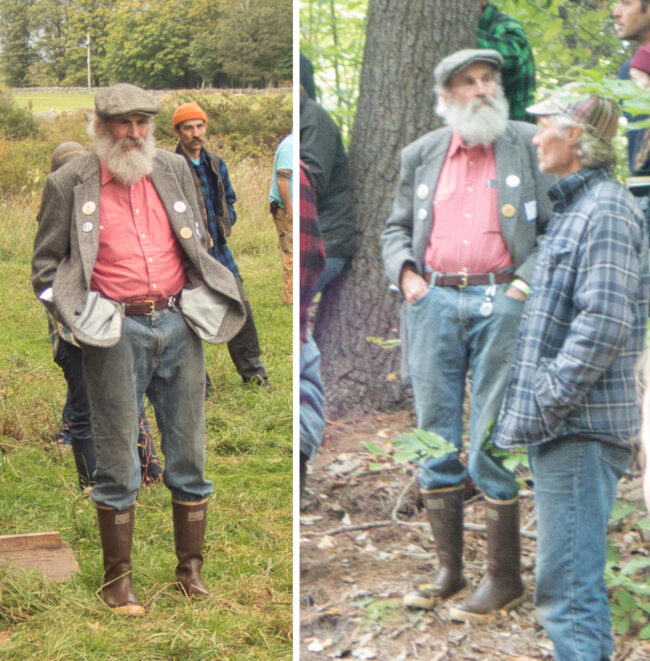
Some years ago, a friend of mine in Vermont attended a workshop about growing flax, the plant used to produce linen. One of the attendees wore a gray tweed sport coat with a pink chambray shirt, jeans, and Wellies. I found his outfit to be very charming/ interesting.
I've seen so many tweets in response to Paul Graham's post that I have to chime in.
Everyone who has replied to Paul's post misses an important dimension to taste: social relations.
Taste touches on everything — film, music, art, furniture, industrial design, cars, etc. For obvious reasons, I can't talk about all of these subjects, not just because I'm not an expert, but also because this is Twitter. Thus, I will stick to what I know, fashion, which happens to be the topic that sparked this conversation.
Everyone who has replied so far takes beauty as an objective variable, like scientific laws or mathematical truths (which, if you dig deep enough, turn out to be conditional, but we'll set that aside). In this regard, a person's taste is their ability to identify some objective truth in beauty. It's asserted that a person who has good taste in fashion must have good taste in furniture and art. So on and so forth.
In reality, our judgments of taste are not neutral or objective. They are extensions of our social relations. We know this because the suit spread around the world on the back of the Second British Empire. By any reasonable measure, elite men's dress in regions stretching from France to China was obviously superior in cut and styling. But as the British Empire spread around the world, this colorful, extravagant garb was slowly pushed aside by the austere, drab clothes once promoted by Beau Brummell.
We can also see this relationship happen within English society. In the early 20th century, elite Guardsmen commissioned Edwardian-style suits from Savile Row tailors. But when lower, working-class youths started to buy ready-to-wear imitations of these clothes — wearing them while causing a ruckus on the streets — the elites dropped the style and moved on.
This gets back to a very simple dynamic that German sociologist Georg Simmel wrote about in his 1902 essay "On Fashion." As he observed, fashion is often a game of imitation, with people copying their supposed "social betters." When they succeed, those at the top of the hierarchy move on to distinguish themselves. French sociologist Pierre Bourdieu put it more succinctly when he said that our notions of "good taste" are often nothing more than the preferences and habits of the ruling class.
In response to Paul's tweet, @nntaleb wrote yesterday: "Your sense of aesthetics is best reflected in the way you dress & the way you organize your surroundings. [...] Without aesthetics (elegance in both looks and behavior), a human is no human."
But what does it mean to "dress elegantly?" Most people assume this means wearing upper-class British dress. Critical theorist Max Horkheimer would have described this dynamic as a kind of internalized repression — a way of "inserting social power more deeply into the very bodies of those it subjugates."
I love tailoring and elegant dress, but I would caution someone who puts too much weight on them. I disagree that a person is less of a person if they don't dress elegantly. It's just clothes.
There are lots of people who don't have to learn "good taste." Their taste is simply the collection of objects and mannerisms that make up the natural way of being in their social circle. Yet, we admire their taste because they have cultural capital.
Before stylists dressed him, Rocky's outfits were just his version of how people in his social group dressed. Similarly, people often post images of JFK Jr.'s outfits on style inspiration boards, even when the outfits are objectively not that great. The dark suit with a collar gap, a backpack, and square-toed shoes shown above could have been worn by anyone in the 1990s. But this photo gets posted everywhere because you're not admiring the outfit — you are admiring JFK's cultural, political, and economic capital. You are admiring status.
Most of us don't have much cultural capital. My guess is that you're a pretty average middle-class person who works a desk job. Your life is probably not that glamorous. You are not part of any cool social groups. Thus, if you were to let your taste naturally manifest, it would express itself as the boring person you are.
Thus, to develop good taste, you have to figure out the visual language of culture as shaped by history, and play around with different identities until you figure out what works for you. Are you a nerd? Maybe you can try different variations of the "intellectual" stereotype, such as Ivy Style. Are you a rugged guy? Maybe you can try different identities around that, such as the laborer (workwear) or soldier (military surplus). Are you artsy? Look at how musicians and artists dressed in the past.
Paul's post fundamentally assumes that dressing well takes a lot of time and effort. I agree with this. Unless you have a lot of cultural capital, you have to invest time into this project, as you have to learn a new language.
Albert Einstein could walk to any old store around the corner and be told how to dress by a clothier. The scope of choices was much narrower because clothing was defined by time, place, and occasion. The world has changed dramatically, and you can't even easily find a tailor anymore.
IMO, this is also true for almost every area of aesthetic life: interior design, art, music, etc. People I know who have great taste in these areas invest tremendous time and energy in them. This is why people should be very careful about assigning too much moral weight to taste. No one would think that someone is good or bad just because they happen to know a lot about physics or sunflower seed production. The same should be true concerning whether someone dresses well or not.
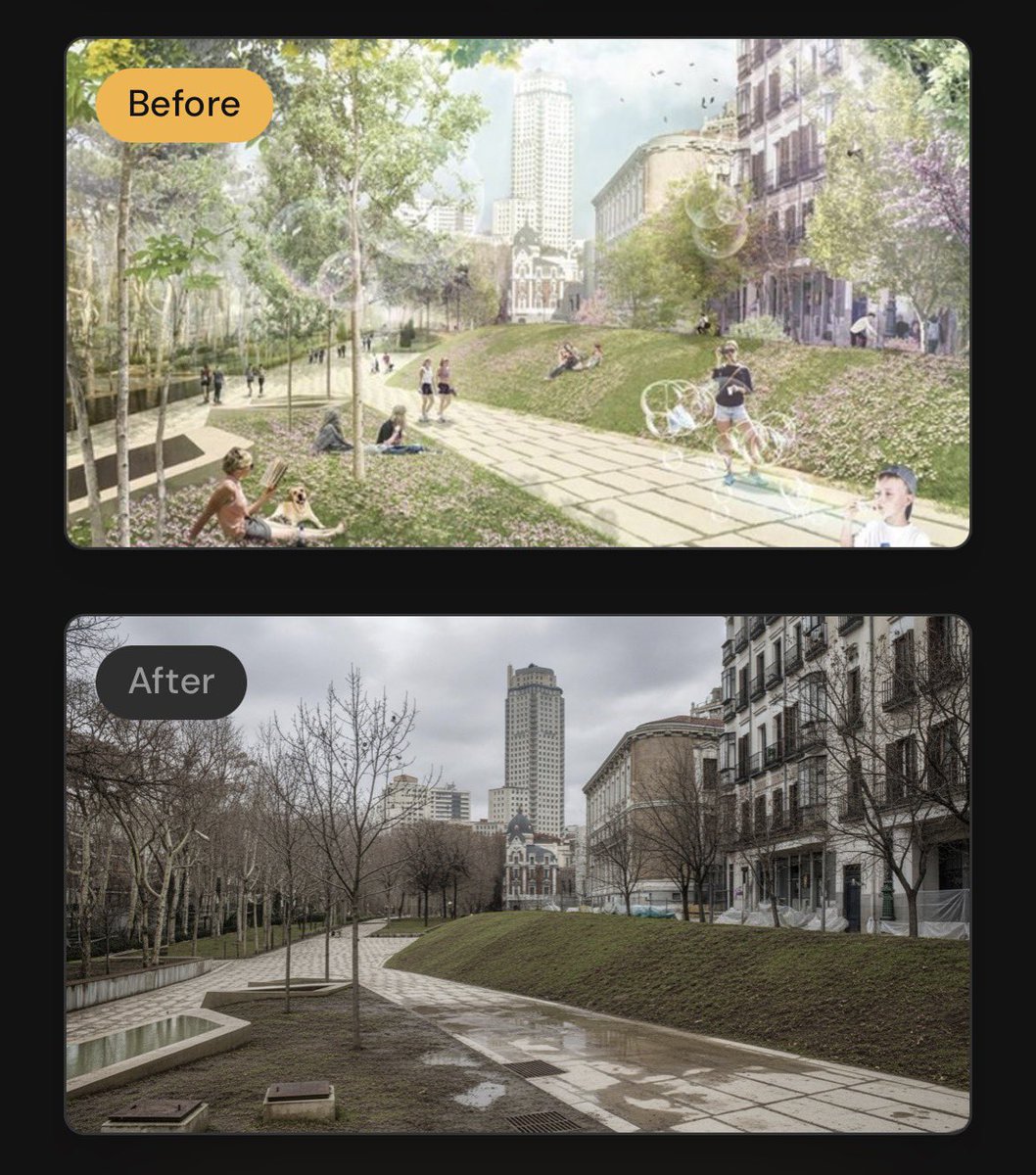
At last an AI tool I can get behind
“Upload an architectural render. Get back what it'll actually look like on a random Tuesday in November.”
https://t.co/23Ay7MD4ka
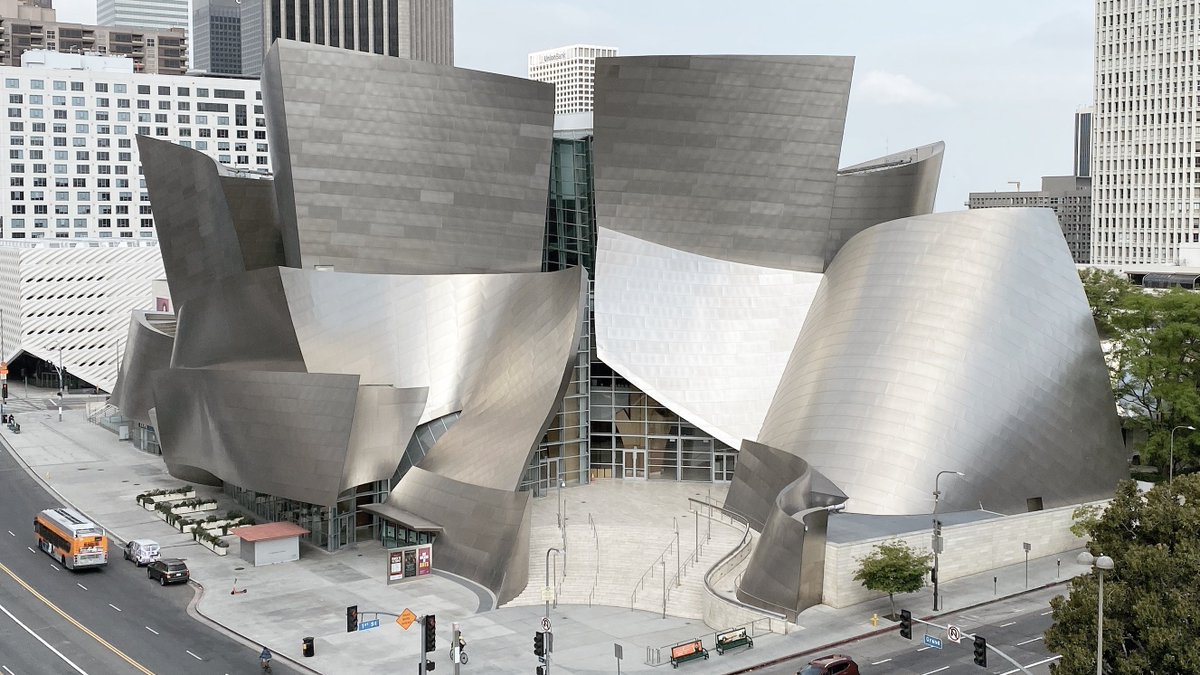
Frank Gehry passed away today. Most people know him for the wild curves, crumpled paper inspiration, and metallic skins of his buildings, but there’s a more interesting story underneath.
What most people don’t know is that his office was pushing form and fabrication so far that the existing tools of architecture simply broke. Conventional software couldn’t model it. Fabricators couldn’t price it or build it. Instead of pulling back, they built new tools.
Gehry Technologies became the quiet enabler of that work. They adapted aerospace software (CATIA), built their own layers on top, and used it to coordinate geometry, structure, and fabrication with a level of precision the field had never seen. Behind the spectacle was process discipline. It proved that if you retool the process, you can make things that were previously impossible.
Sometimes your only option is to invent the tools before you can build the thing itself.
Whether or not you like every building he designed, Gehry forced the industry to evolve. And that’s a rare legacy.
Ha muerto Nicholas Grimshaw a los 85 años.
Pionero de la arquitectura high-tech, el británico fue el autor de la Terminal Internacional de la estación londinense de Waterloo, y del icónico Proyecto Edén de Cornualles (un jardín botánico con biocúpulas de ETFE). En España levantó el pabellón de Reino Unido en la Expo 92 de Sevilla.
We are deeply saddened by the passing of Manuel Gausa (1959–2025), co-founder of IAAC. Our thoughts are with his family, friends and all who remember him with affection.
Details about the wake and funeral: https://t.co/YeNHU7tWrC
Lamentem la mort de Manel Gausa, dr. arquitecte i vicepresident del Consell Assessor per al Desenvolup. Sostenible de la @gencat. Director de l’Escola de Doctorat en Arquitectura de la Univ. Gènova. Autor de projectes guardonats internacionalment. Ex director de Quaderns. #DEP
Let's compare the tailoring in two film scenes. Here is Fred Astaire dancing in Broadway Melody of 1940. Pay attention to how his clothing moves with him. 🧵
If you are in Mexico, you can now find "serendipity vs consequence" adorning the labels of Fierabras beer. I collaborated with friend and brewer @gilpzd on a curated set from the algorithm, each tuned to each beer. "Cibera" is a wheat beer, "Noctámbula is a Baltic porter.
@luisfraguada Thank you @luisfraguada for being so generous!! You know I've been a fan of your work since long ago, and it's been great to collaborate this time. It's an honor to have your work!!
Until we star shipping internationally we'll have to find a way for you to taste the beer.


![dieworkwear's tweet photo. I've seen so many tweets in response to Paul Graham's post that I have to chime in.
Everyone who has replied to Paul's post misses an important dimension to taste: social relations.
Taste touches on everything — film, music, art, furniture, industrial design, cars, etc. For obvious reasons, I can't talk about all of these subjects, not just because I'm not an expert, but also because this is Twitter. Thus, I will stick to what I know, fashion, which happens to be the topic that sparked this conversation.
Everyone who has replied so far takes beauty as an objective variable, like scientific laws or mathematical truths (which, if you dig deep enough, turn out to be conditional, but we'll set that aside). In this regard, a person's taste is their ability to identify some objective truth in beauty. It's asserted that a person who has good taste in fashion must have good taste in furniture and art. So on and so forth.
In reality, our judgments of taste are not neutral or objective. They are extensions of our social relations. We know this because the suit spread around the world on the back of the Second British Empire. By any reasonable measure, elite men's dress in regions stretching from France to China was obviously superior in cut and styling. But as the British Empire spread around the world, this colorful, extravagant garb was slowly pushed aside by the austere, drab clothes once promoted by Beau Brummell.
We can also see this relationship happen within English society. In the early 20th century, elite Guardsmen commissioned Edwardian-style suits from Savile Row tailors. But when lower, working-class youths started to buy ready-to-wear imitations of these clothes — wearing them while causing a ruckus on the streets — the elites dropped the style and moved on.
This gets back to a very simple dynamic that German sociologist Georg Simmel wrote about in his 1902 essay "On Fashion." As he observed, fashion is often a game of imitation, with people copying their supposed "social betters." When they succeed, those at the top of the hierarchy move on to distinguish themselves. French sociologist Pierre Bourdieu put it more succinctly when he said that our notions of "good taste" are often nothing more than the preferences and habits of the ruling class.
In response to Paul's tweet, @nntaleb wrote yesterday: "Your sense of aesthetics is best reflected in the way you dress & the way you organize your surroundings. [...] Without aesthetics (elegance in both looks and behavior), a human is no human."
But what does it mean to "dress elegantly?" Most people assume this means wearing upper-class British dress. Critical theorist Max Horkheimer would have described this dynamic as a kind of internalized repression — a way of "inserting social power more deeply into the very bodies of those it subjugates."
I love tailoring and elegant dress, but I would caution someone who puts too much weight on them. I disagree that a person is less of a person if they don't dress elegantly. It's just clothes.
There are lots of people who don't have to learn "good taste." Their taste is simply the collection of objects and mannerisms that make up the natural way of being in their social circle. Yet, we admire their taste because they have cultural capital.
Before stylists dressed him, Rocky's outfits were just his version of how people in his social group dressed. Similarly, people often post images of JFK Jr.'s outfits on style inspiration boards, even when the outfits are objectively not that great. The dark suit with a collar gap, a backpack, and square-toed shoes shown above could have been worn by anyone in the 1990s. But this photo gets posted everywhere because you're not admiring the outfit — you are admiring JFK's cultural, political, and economic capital. You are admiring status.
Most of us don't have much cultural capital. My guess is that you're a pretty average middle-class person who works a desk job. Your life is probably not that glamorous. You are not part of any cool social groups. Thus, if you were to let your taste naturally manifest, it would express itself as the boring person you are.
Thus, to develop good taste, you have to figure out the visual language of culture as shaped by history, and play around with different identities until you figure out what works for you. Are you a nerd? Maybe you can try different variations of the "intellectual" stereotype, such as Ivy Style. Are you a rugged guy? Maybe you can try different identities around that, such as the laborer (workwear) or soldier (military surplus). Are you artsy? Look at how musicians and artists dressed in the past.
Paul's post fundamentally assumes that dressing well takes a lot of time and effort. I agree with this. Unless you have a lot of cultural capital, you have to invest time into this project, as you have to learn a new language.
Albert Einstein could walk to any old store around the corner and be told how to dress by a clothier. The scope of choices was much narrower because clothing was defined by time, place, and occasion. The world has changed dramatically, and you can't even easily find a tailor anymore.
IMO, this is also true for almost every area of aesthetic life: interior design, art, music, etc. People I know who have great taste in these areas invest tremendous time and energy in them. This is why people should be very careful about assigning too much moral weight to taste. No one would think that someone is good or bad just because they happen to know a lot about physics or sunflower seed production. The same should be true concerning whether someone dresses well or not.](https://pbs.twimg.com/media/HBVxNNMbcAMlLlJ.jpg)
![dieworkwear's tweet photo. I've seen so many tweets in response to Paul Graham's post that I have to chime in.
Everyone who has replied to Paul's post misses an important dimension to taste: social relations.
Taste touches on everything — film, music, art, furniture, industrial design, cars, etc. For obvious reasons, I can't talk about all of these subjects, not just because I'm not an expert, but also because this is Twitter. Thus, I will stick to what I know, fashion, which happens to be the topic that sparked this conversation.
Everyone who has replied so far takes beauty as an objective variable, like scientific laws or mathematical truths (which, if you dig deep enough, turn out to be conditional, but we'll set that aside). In this regard, a person's taste is their ability to identify some objective truth in beauty. It's asserted that a person who has good taste in fashion must have good taste in furniture and art. So on and so forth.
In reality, our judgments of taste are not neutral or objective. They are extensions of our social relations. We know this because the suit spread around the world on the back of the Second British Empire. By any reasonable measure, elite men's dress in regions stretching from France to China was obviously superior in cut and styling. But as the British Empire spread around the world, this colorful, extravagant garb was slowly pushed aside by the austere, drab clothes once promoted by Beau Brummell.
We can also see this relationship happen within English society. In the early 20th century, elite Guardsmen commissioned Edwardian-style suits from Savile Row tailors. But when lower, working-class youths started to buy ready-to-wear imitations of these clothes — wearing them while causing a ruckus on the streets — the elites dropped the style and moved on.
This gets back to a very simple dynamic that German sociologist Georg Simmel wrote about in his 1902 essay "On Fashion." As he observed, fashion is often a game of imitation, with people copying their supposed "social betters." When they succeed, those at the top of the hierarchy move on to distinguish themselves. French sociologist Pierre Bourdieu put it more succinctly when he said that our notions of "good taste" are often nothing more than the preferences and habits of the ruling class.
In response to Paul's tweet, @nntaleb wrote yesterday: "Your sense of aesthetics is best reflected in the way you dress & the way you organize your surroundings. [...] Without aesthetics (elegance in both looks and behavior), a human is no human."
But what does it mean to "dress elegantly?" Most people assume this means wearing upper-class British dress. Critical theorist Max Horkheimer would have described this dynamic as a kind of internalized repression — a way of "inserting social power more deeply into the very bodies of those it subjugates."
I love tailoring and elegant dress, but I would caution someone who puts too much weight on them. I disagree that a person is less of a person if they don't dress elegantly. It's just clothes.
There are lots of people who don't have to learn "good taste." Their taste is simply the collection of objects and mannerisms that make up the natural way of being in their social circle. Yet, we admire their taste because they have cultural capital.
Before stylists dressed him, Rocky's outfits were just his version of how people in his social group dressed. Similarly, people often post images of JFK Jr.'s outfits on style inspiration boards, even when the outfits are objectively not that great. The dark suit with a collar gap, a backpack, and square-toed shoes shown above could have been worn by anyone in the 1990s. But this photo gets posted everywhere because you're not admiring the outfit — you are admiring JFK's cultural, political, and economic capital. You are admiring status.
Most of us don't have much cultural capital. My guess is that you're a pretty average middle-class person who works a desk job. Your life is probably not that glamorous. You are not part of any cool social groups. Thus, if you were to let your taste naturally manifest, it would express itself as the boring person you are.
Thus, to develop good taste, you have to figure out the visual language of culture as shaped by history, and play around with different identities until you figure out what works for you. Are you a nerd? Maybe you can try different variations of the "intellectual" stereotype, such as Ivy Style. Are you a rugged guy? Maybe you can try different identities around that, such as the laborer (workwear) or soldier (military surplus). Are you artsy? Look at how musicians and artists dressed in the past.
Paul's post fundamentally assumes that dressing well takes a lot of time and effort. I agree with this. Unless you have a lot of cultural capital, you have to invest time into this project, as you have to learn a new language.
Albert Einstein could walk to any old store around the corner and be told how to dress by a clothier. The scope of choices was much narrower because clothing was defined by time, place, and occasion. The world has changed dramatically, and you can't even easily find a tailor anymore.
IMO, this is also true for almost every area of aesthetic life: interior design, art, music, etc. People I know who have great taste in these areas invest tremendous time and energy in them. This is why people should be very careful about assigning too much moral weight to taste. No one would think that someone is good or bad just because they happen to know a lot about physics or sunflower seed production. The same should be true concerning whether someone dresses well or not.](https://pbs.twimg.com/media/HBVuQoPaoAEkWP_.jpg)
![dieworkwear's tweet photo. I've seen so many tweets in response to Paul Graham's post that I have to chime in.
Everyone who has replied to Paul's post misses an important dimension to taste: social relations.
Taste touches on everything — film, music, art, furniture, industrial design, cars, etc. For obvious reasons, I can't talk about all of these subjects, not just because I'm not an expert, but also because this is Twitter. Thus, I will stick to what I know, fashion, which happens to be the topic that sparked this conversation.
Everyone who has replied so far takes beauty as an objective variable, like scientific laws or mathematical truths (which, if you dig deep enough, turn out to be conditional, but we'll set that aside). In this regard, a person's taste is their ability to identify some objective truth in beauty. It's asserted that a person who has good taste in fashion must have good taste in furniture and art. So on and so forth.
In reality, our judgments of taste are not neutral or objective. They are extensions of our social relations. We know this because the suit spread around the world on the back of the Second British Empire. By any reasonable measure, elite men's dress in regions stretching from France to China was obviously superior in cut and styling. But as the British Empire spread around the world, this colorful, extravagant garb was slowly pushed aside by the austere, drab clothes once promoted by Beau Brummell.
We can also see this relationship happen within English society. In the early 20th century, elite Guardsmen commissioned Edwardian-style suits from Savile Row tailors. But when lower, working-class youths started to buy ready-to-wear imitations of these clothes — wearing them while causing a ruckus on the streets — the elites dropped the style and moved on.
This gets back to a very simple dynamic that German sociologist Georg Simmel wrote about in his 1902 essay "On Fashion." As he observed, fashion is often a game of imitation, with people copying their supposed "social betters." When they succeed, those at the top of the hierarchy move on to distinguish themselves. French sociologist Pierre Bourdieu put it more succinctly when he said that our notions of "good taste" are often nothing more than the preferences and habits of the ruling class.
In response to Paul's tweet, @nntaleb wrote yesterday: "Your sense of aesthetics is best reflected in the way you dress & the way you organize your surroundings. [...] Without aesthetics (elegance in both looks and behavior), a human is no human."
But what does it mean to "dress elegantly?" Most people assume this means wearing upper-class British dress. Critical theorist Max Horkheimer would have described this dynamic as a kind of internalized repression — a way of "inserting social power more deeply into the very bodies of those it subjugates."
I love tailoring and elegant dress, but I would caution someone who puts too much weight on them. I disagree that a person is less of a person if they don't dress elegantly. It's just clothes.
There are lots of people who don't have to learn "good taste." Their taste is simply the collection of objects and mannerisms that make up the natural way of being in their social circle. Yet, we admire their taste because they have cultural capital.
Before stylists dressed him, Rocky's outfits were just his version of how people in his social group dressed. Similarly, people often post images of JFK Jr.'s outfits on style inspiration boards, even when the outfits are objectively not that great. The dark suit with a collar gap, a backpack, and square-toed shoes shown above could have been worn by anyone in the 1990s. But this photo gets posted everywhere because you're not admiring the outfit — you are admiring JFK's cultural, political, and economic capital. You are admiring status.
Most of us don't have much cultural capital. My guess is that you're a pretty average middle-class person who works a desk job. Your life is probably not that glamorous. You are not part of any cool social groups. Thus, if you were to let your taste naturally manifest, it would express itself as the boring person you are.
Thus, to develop good taste, you have to figure out the visual language of culture as shaped by history, and play around with different identities until you figure out what works for you. Are you a nerd? Maybe you can try different variations of the "intellectual" stereotype, such as Ivy Style. Are you a rugged guy? Maybe you can try different identities around that, such as the laborer (workwear) or soldier (military surplus). Are you artsy? Look at how musicians and artists dressed in the past.
Paul's post fundamentally assumes that dressing well takes a lot of time and effort. I agree with this. Unless you have a lot of cultural capital, you have to invest time into this project, as you have to learn a new language.
Albert Einstein could walk to any old store around the corner and be told how to dress by a clothier. The scope of choices was much narrower because clothing was defined by time, place, and occasion. The world has changed dramatically, and you can't even easily find a tailor anymore.
IMO, this is also true for almost every area of aesthetic life: interior design, art, music, etc. People I know who have great taste in these areas invest tremendous time and energy in them. This is why people should be very careful about assigning too much moral weight to taste. No one would think that someone is good or bad just because they happen to know a lot about physics or sunflower seed production. The same should be true concerning whether someone dresses well or not.](https://pbs.twimg.com/media/HBVtlsTbIAAOp3q.jpg)








![dieworkwear's tweet photo. I've seen so many tweets in response to Paul Graham's post that I have to chime in.
Everyone who has replied to Paul's post misses an important dimension to taste: social relations.
Taste touches on everything — film, music, art, furniture, industrial design, cars, etc. For obvious reasons, I can't talk about all of these subjects, not just because I'm not an expert, but also because this is Twitter. Thus, I will stick to what I know, fashion, which happens to be the topic that sparked this conversation.
Everyone who has replied so far takes beauty as an objective variable, like scientific laws or mathematical truths (which, if you dig deep enough, turn out to be conditional, but we'll set that aside). In this regard, a person's taste is their ability to identify some objective truth in beauty. It's asserted that a person who has good taste in fashion must have good taste in furniture and art. So on and so forth.
In reality, our judgments of taste are not neutral or objective. They are extensions of our social relations. We know this because the suit spread around the world on the back of the Second British Empire. By any reasonable measure, elite men's dress in regions stretching from France to China was obviously superior in cut and styling. But as the British Empire spread around the world, this colorful, extravagant garb was slowly pushed aside by the austere, drab clothes once promoted by Beau Brummell.
We can also see this relationship happen within English society. In the early 20th century, elite Guardsmen commissioned Edwardian-style suits from Savile Row tailors. But when lower, working-class youths started to buy ready-to-wear imitations of these clothes — wearing them while causing a ruckus on the streets — the elites dropped the style and moved on.
This gets back to a very simple dynamic that German sociologist Georg Simmel wrote about in his 1902 essay "On Fashion." As he observed, fashion is often a game of imitation, with people copying their supposed "social betters." When they succeed, those at the top of the hierarchy move on to distinguish themselves. French sociologist Pierre Bourdieu put it more succinctly when he said that our notions of "good taste" are often nothing more than the preferences and habits of the ruling class.
In response to Paul's tweet, @nntaleb wrote yesterday: "Your sense of aesthetics is best reflected in the way you dress & the way you organize your surroundings. [...] Without aesthetics (elegance in both looks and behavior), a human is no human."
But what does it mean to "dress elegantly?" Most people assume this means wearing upper-class British dress. Critical theorist Max Horkheimer would have described this dynamic as a kind of internalized repression — a way of "inserting social power more deeply into the very bodies of those it subjugates."
I love tailoring and elegant dress, but I would caution someone who puts too much weight on them. I disagree that a person is less of a person if they don't dress elegantly. It's just clothes.
There are lots of people who don't have to learn "good taste." Their taste is simply the collection of objects and mannerisms that make up the natural way of being in their social circle. Yet, we admire their taste because they have cultural capital.
Before stylists dressed him, Rocky's outfits were just his version of how people in his social group dressed. Similarly, people often post images of JFK Jr.'s outfits on style inspiration boards, even when the outfits are objectively not that great. The dark suit with a collar gap, a backpack, and square-toed shoes shown above could have been worn by anyone in the 1990s. But this photo gets posted everywhere because you're not admiring the outfit — you are admiring JFK's cultural, political, and economic capital. You are admiring status.
Most of us don't have much cultural capital. My guess is that you're a pretty average middle-class person who works a desk job. Your life is probably not that glamorous. You are not part of any cool social groups. Thus, if you were to let your taste naturally manifest, it would express itself as the boring person you are.
Thus, to develop good taste, you have to figure out the visual language of culture as shaped by history, and play around with different identities until you figure out what works for you. Are you a nerd? Maybe you can try different variations of the "intellectual" stereotype, such as Ivy Style. Are you a rugged guy? Maybe you can try different identities around that, such as the laborer (workwear) or soldier (military surplus). Are you artsy? Look at how musicians and artists dressed in the past.
Paul's post fundamentally assumes that dressing well takes a lot of time and effort. I agree with this. Unless you have a lot of cultural capital, you have to invest time into this project, as you have to learn a new language.
Albert Einstein could walk to any old store around the corner and be told how to dress by a clothier. The scope of choices was much narrower because clothing was defined by time, place, and occasion. The world has changed dramatically, and you can't even easily find a tailor anymore.
IMO, this is also true for almost every area of aesthetic life: interior design, art, music, etc. People I know who have great taste in these areas invest tremendous time and energy in them. This is why people should be very careful about assigning too much moral weight to taste. No one would think that someone is good or bad just because they happen to know a lot about physics or sunflower seed production. The same should be true concerning whether someone dresses well or not.](https://pbs.twimg.com/media/HBV2y-UbcAE5txJ.jpg)