Exciting News! My new book "Power and Pain: Navigating the Collision" is here!
This isn't just a book—it's a journey through faith, resilience, and transformation.
Grab your copy on Amazon now! https://t.co/JMzrLb1VoO
#PowerAndPain#SpiritualJourney
One of the biggest misconceptions in high school sports is that coaching is primarily about practices, games, and wins.
The reality is that coaching has become one of the most challenging roles in education because coaches are expected to wear dozens of hats while being evaluated from every direction.
Every parent, player, administrator, and community member often has a different expectation of success.
One family wants college recruiting to be the priority.
Another wants playing time.
Another wants winning.
Another wants player development.
Another wants discipline.
Another simply wants their child to enjoy the experience.
The challenge is that those goals frequently conflict, and coaches are often expected to satisfy all of them simultaneously.
Most coaches are balancing far more than what happens between the lines. They manage team culture, player conflicts, parent concerns, academics, transportation, fundraising, budgets, equipment, scheduling, eligibility, social media issues, and the emotional needs of teenagers.
At the same time, every roster includes athletes with different abilities, goals, motivations, and commitment levels. Some dream of college athletics. Some are trying to make varsity. Some simply want to belong. Building one program that serves all of them is incredibly difficult.
Perhaps the greatest challenge is decision-making.
Who starts?
Who plays?
Who sits?
Who travels?
Who gets moved up?
Who gets cut?
Every decision creates opportunity for one athlete and disappointment for another. Even well-intentioned decisions can be viewed as favoritism or politics when seen through the lens of an individual family.
Recruiting adds another layer of complexity. Coaches are expected to help athletes pursue college opportunities while also managing the needs of an entire team. Supporting one athlete can sometimes raise questions from another family about their child’s opportunities.
Social media has amplified many of these challenges. One lineup decision, one difficult conversation, or one emotional moment can quickly become public discussion, often without the full context.
There are also pressures many people never see.
Pressure from administrators to represent the school well.
Pressure from parents to provide opportunities.
Pressure from athletes to help them achieve their goals.
Pressure from communities that often measure success by wins and losses.
Pressure to retain athletes in an era of increasing transfers and movement.
And all of this occurs while coaches are trying to develop young people, not just athletes.
What makes coaching difficult is not that people don’t care.
It’s that everyone cares deeply, but often about different things.
Parents focus on their child.
Players focus on their opportunities.
Administrators focus on the school.
Communities focus on results.
Coaches must somehow balance all of those interests while making decisions they believe are best for the team.
As a former college coach, athletic director, and high school administrator, I’ve learned that most coaches are not trying to hold athletes back, play favorites, or make life difficult for families. Most are simply navigating competing priorities, limited resources, and difficult decisions while trying to do what’s best for kids.
Because at its core, coaching has never really been about managing games.
It’s about managing people.
And that’s what makes it both incredibly challenging and incredibly important
Un profesor del MIT dio la misma conferencia cada enero durante 40 años, y cada una de las veces no cabía ni un alma en el aula.
La vi a las 2 de la mañana y cambió por completo mi forma de entender la comunicación.
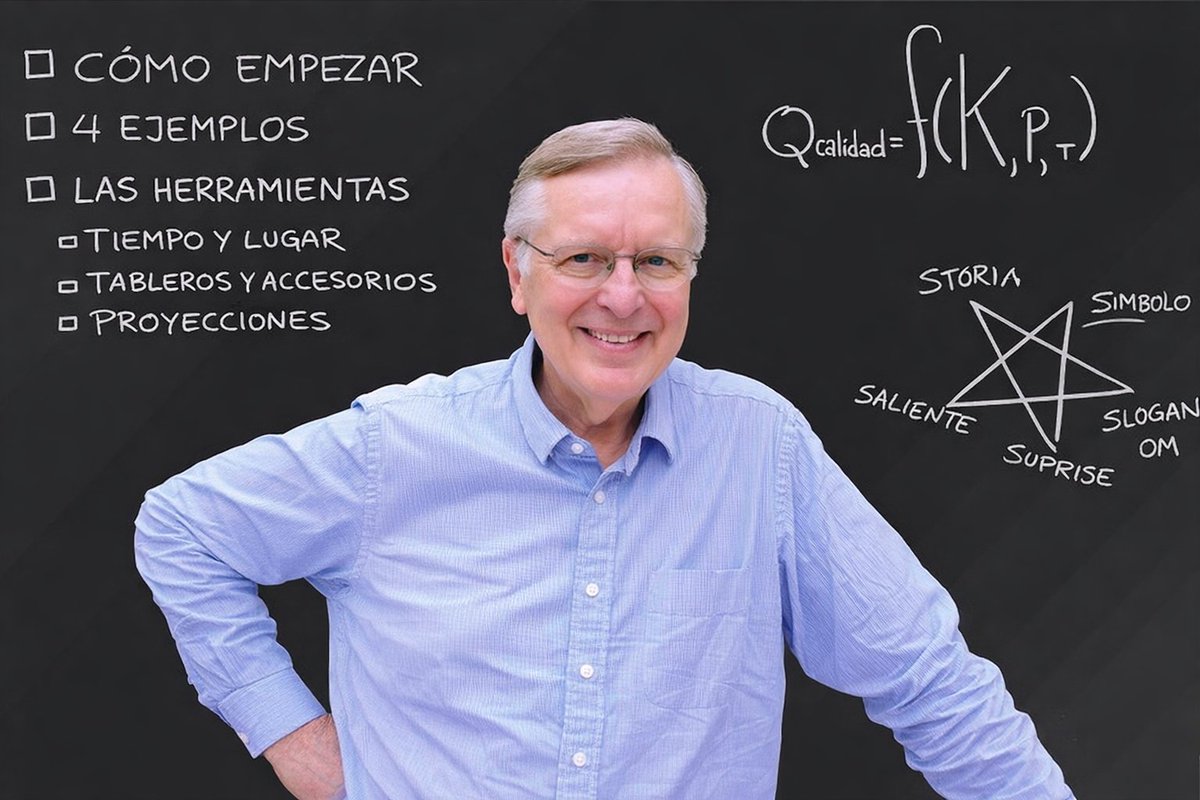
Su nombre era Patrick Winston. La conferencia se titula "Cómo hablar" (How to Speak).
Su frase de apertura te golpea como un camión: "Tu éxito en la vida vendrá determinado en gran medida por tu capacidad para hablar, tu capacidad para escribir y la calidad de tus ideas, en ese orden".
Ni tu nota media, ni tus títulos, ni tu coeficiente intelectual. Cómo hablas es lo que separa a las personas que son escuchadas de las que son ignoradas.
Este es el esquema que inculcó a los estudiantes del MIT durante cuatro décadas:
1) Nunca empieces con un chiste: Empieza diciendo a la gente exactamente qué es lo que va a aprender. "Prepara la bomba antes de verter nada". Él lo llamaba la "promesa de empoderamiento": dales una razón para no levantarse del asiento en los primeros 60 segundos.
2) La regla de las 5S: Para que una idea se quede grabada debe ser: Símbolo, Slogan, Sorpresa, Saliente (relevante) e Historia (Story). Cualquier idea que valga la pena recordar cumple al menos tres de estas.
3) La técnica del "casi acierto" (Near Miss): Esta parte me dejó alucinado. No te limites a mostrar lo que está bien; muestra lo que parece estar bien pero no lo está. Ese contraste es lo que hace que el cerebro registre algo de forma permanente.
4) Su regla final: Termina con una contribución, no con un resumen. No recapitules lo que ya dijiste. Dile a la gente qué les has dado que no tenían antes de entrar por la puerta.
He usado este esquema en ventas, entrevistas y presentaciones desde que lo vi, y los resultados no son sutiles.
Patrick Winston falleció en 2019, pero esta clase sigue siendo gratuita en el OpenCourseWare del MIT. Una hora, vista por millones de personas, y no cuesta absolutamente nada.
Video: "How to Speak", Patrick Winston, MIT OpenCourseWare, RES.TLL-005, January IAP 2018.
Fuente: MIT OpenCourseWare.
Licencia: CC BY-NC-SA.
Términos: ocw. mit. edu/ terms
Coach Cal’s right — administration matters. But at the high school level, it takes more than that.
You need administration that believes in you, coaches/players that are all in, parents that get involved in program, and a community that doesn’t just cheer on Friday nights… but financially supports the program too.
Great high school programs aren’t built by one person. They’re built when everybody is invested — with their time, their trust, and their resources.
If everybody isn’t rowing the boat in the same direction, don’t complain when the whole thing ends up spinning in circles.
Rick Pitino shares a masterclass on teamwork and selflessness.
"Regardless of how you play, when you play for the name on the front, the back prospers."
"When you play for the name on the back, you never prosper. All you are is guys with good stats. That's it."
Stats don't win championships - teams do.
"Play for the front. Give everything you have for the front name."
"Do everything - from diving on the floor, to blocking shots, to setting screens, to playing together. Play for the name on the front."
Great teams play for each other. They know connected teams achieve more.
"The name on the front is gonna bring big rewards for the name on the back. I guarantee it."
"Give it everything you have for this name."
The formula is simple: Put the team first, and everything else follows.
Play for the front. The back will take care of itself.
(🎥St. Johns )
Tom Izzo shares an uncomfortable truth about earning your spot.
"You play real good, you start. You don't play as good, you work your way back in."
"That's the American way - except America has gotten soft."
You don't get what you want in life - you get what you earn.
It starts with showing up and earning it every single day.
No shortcuts...Just hard work.
(🎥@CBBonFOX )
“Plan, dream, and work with your heart—God wants you to! But Proverbs 19:21 reminds us: many plans may exist, yet His counsel stands. Like Joseph, life may twist, but Jeremiah 29:11 promises God’s plans are good, full of hope and a future.”
"Worry is a conversation you have with yourself about things you cannot change. Prayer is a conversation you have with God about things He can change."
— Unknown