Germany is in panic over Chinese companies taking over its markets at home, abroad and in China. Having spent quite some time in China in the 2010s, I can’t help but thinking back to the arrogance and quite frankly racism of German expat businesses people. Chinese engineers with Ivy League degrees speaking fluent English and German looked down upon by German engineers with a degree from some German university, unimpressive English and less than two sentences of Chinese. The Germans didn’t see it coming because they couldn’t imagine Chinese people becoming better at what they are doing than themselves. An industry insider told me at the time how keen Chinese entrepreneurs were to collaborate with German car companies on EV development. But all the Germans worried about was they are going to steal our IP. Well, here we are.
This is applied micro now: Editor gives you path to publication (Rej & Resub). You spend 9mo revising paper. 2 refs say accept, 1 says R&R. But, there's a new editor. They find a new ref that says reject. So, paper rejected. Everyone's time wasted.
A lot of mainstream economic theories would tell you that India should have outperformed China — democracy, stronger private property rights, English advantage, younger population, cheaper labor, deeper integration with the West. On paper, it ticks almost every box. And yet, reality turned out very differently.
That’s the interesting part. The issue isn’t that India “lacked the right conditions.” It’s that those conditions were never enough in the first place. Development is not just about how private your system is or how “free” your market looks. It’s about whether a country can actually build a functioning national market, enforce rules, invest in infrastructure, control corruption, and coordinate large-scale industrial upgrading.
China’s experience is uncomfortable for a lot of theories because it shows something simple but often ignored: markets don’t just emerge on their own — they are built. They require state capacity, organization, and long-term coordination. Without that, even perfect “textbook conditions” don’t automatically translate into growth.
That’s why this comparison matters. It’s not about ideology. It’s about what actually works in practice.
#China #India #Economics #Development #GlobalSouth #IndustrialPolicy #StateCapacity #Geopolitics
Academic friends: Did I recently see a paper re-analyzing the China shock paper and showing the results mostly went away when you corrected some error or assumption? (Or am I hallucinating?) Pointers appreciated.
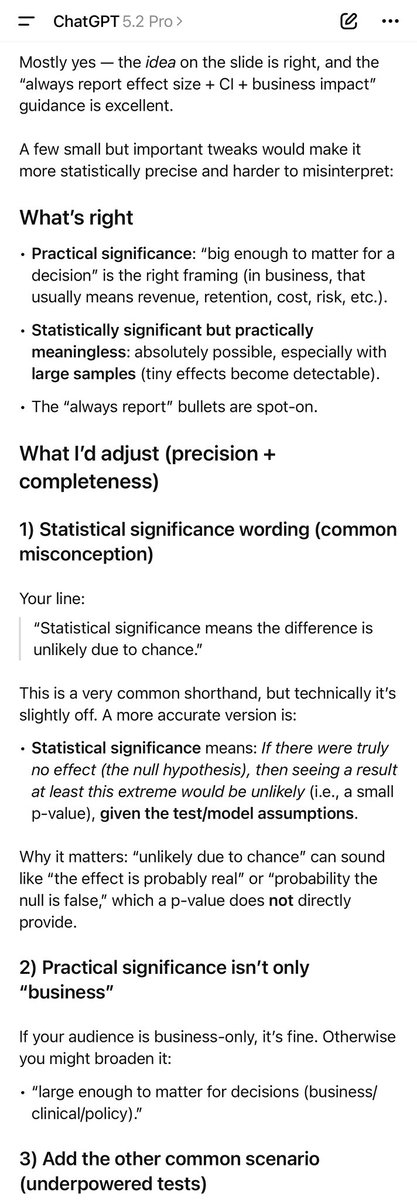
GPT-5.2 Pro and Thinking spot the issue in Anthropic’s analysis skill, Opus 4.5 and Gemini 3 Pro do not (Its a not huge issue, but interesting)
(The 5.2 models have the strongest statical reasoning in my experience & 5.2 Pro is best if you want pedantic, correct second opinions)