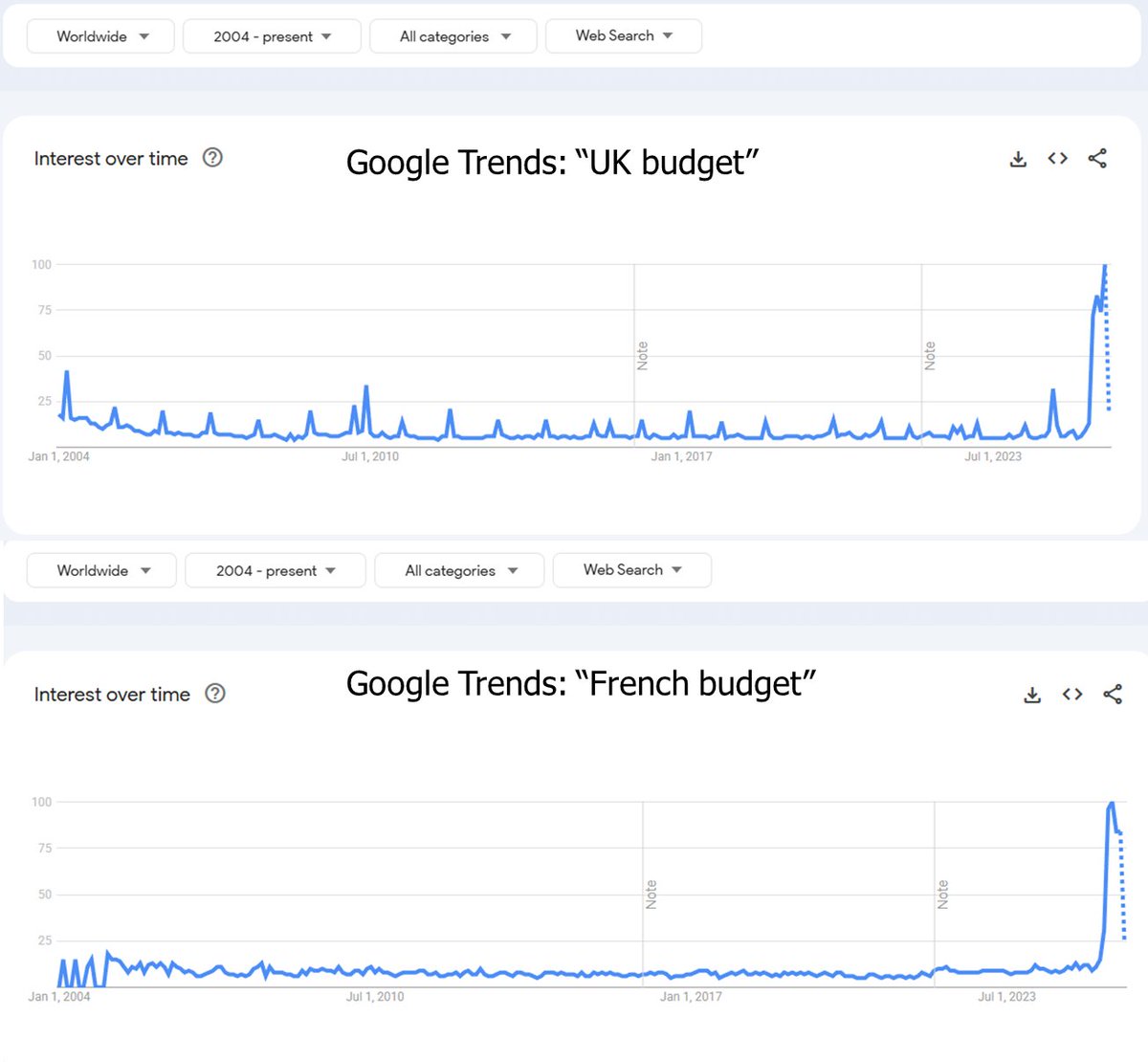
Friendly advice: Start paying close attention to government debt and budget deficits. It will impact your everyday life, money, and wealth.
Bloomberg today: French Prime Minister faces (another) key vote on the budget.
As Google Trends data reveal, budgets and budget deficits of highly indebted nations are making headlines continuously.
For many people, including investors, budget issues remain a "I don't follow," "It doesn't concern me" type of problem.
But the exact opposite is true. The ability of governments to turn in a decent budget is at historic lows as swift aging societies and welfare states do not go well together. Increasingly extreme policies are needed to ensure debt sustainability. If you are expecting governments ever to pay back their debts, please adjust that view. Rolling over (refinancing) existing debt while issuing even more debt has become the ultimate goal.
With massive consequences for ordinary people like you and me. For example:
- higher income taxes
- higher property taxes (you are a sitting duck, as you cannot move a house abroad)
- higher capital gains taxes
- In Europe, all kinds of climate-related taxes.
But that's not all. With debt sustainability as the primary focus, monetary policy must also change (fiscal dominance). Meaning:
- structurally low interest rates
- higher inflation, killing the purchasing power of fiat money and wealth
- financial repression, forcing people to keep their fiat money in the system and to buy government debt (also think pensions)
- central banks aiming for total control over money through Central Bank Digital Currencies.
In addition, political volatility and policies that hurt the standard of living cause polarization, which you can see happening literally everywhere around you.
To understand why politicians fight and struggle to come up with sustainable budgets that prevent debt-to-GDP ratios from spiking even higher is to understand what will happen to your income, money, and wealth if you do not adjust.
Peter Thiel: Meaning is found in doing things that are important, that otherwise wouldn't get done.
Aim to work on things which without you, wouldn't / couldn't get done by anyone else.
Monetary policy is confusing, and a mess.
But what can you do?
Take @PMehrling's FREE course!
The Economics of Money & Banking: https://t.co/UESQ3KkpmZ
Also, I understand that a Bloomberg terminal is expensive for a large bank like SG, but maybe call a friend who can afford one and ask them to run WIRPP ? It's free of charge for terminal users (that's a random date, 18mo ago)
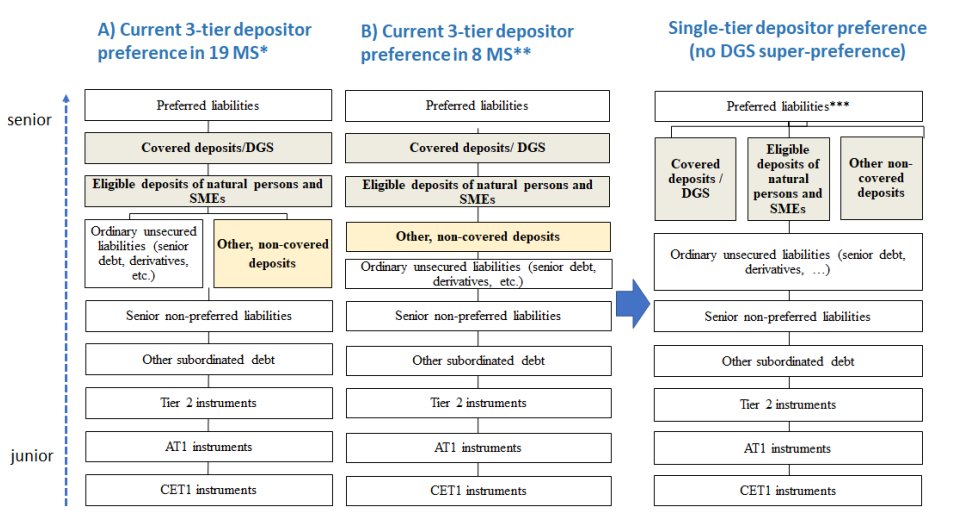
Qui comments on yesterday's EC proposal to change the hierarchy of bank claims, which is best summarized in this chart.
I think it's a very bad proposal for 3 reasons.
The "Green Transition" is here.
And it's one the most bullish events in metals and mining's history.
This month, the OECD released a paper on "Raw Materials Critical For The Green Transition."
I read it so you don't have to.
A thread on what I found most important ... 🧵
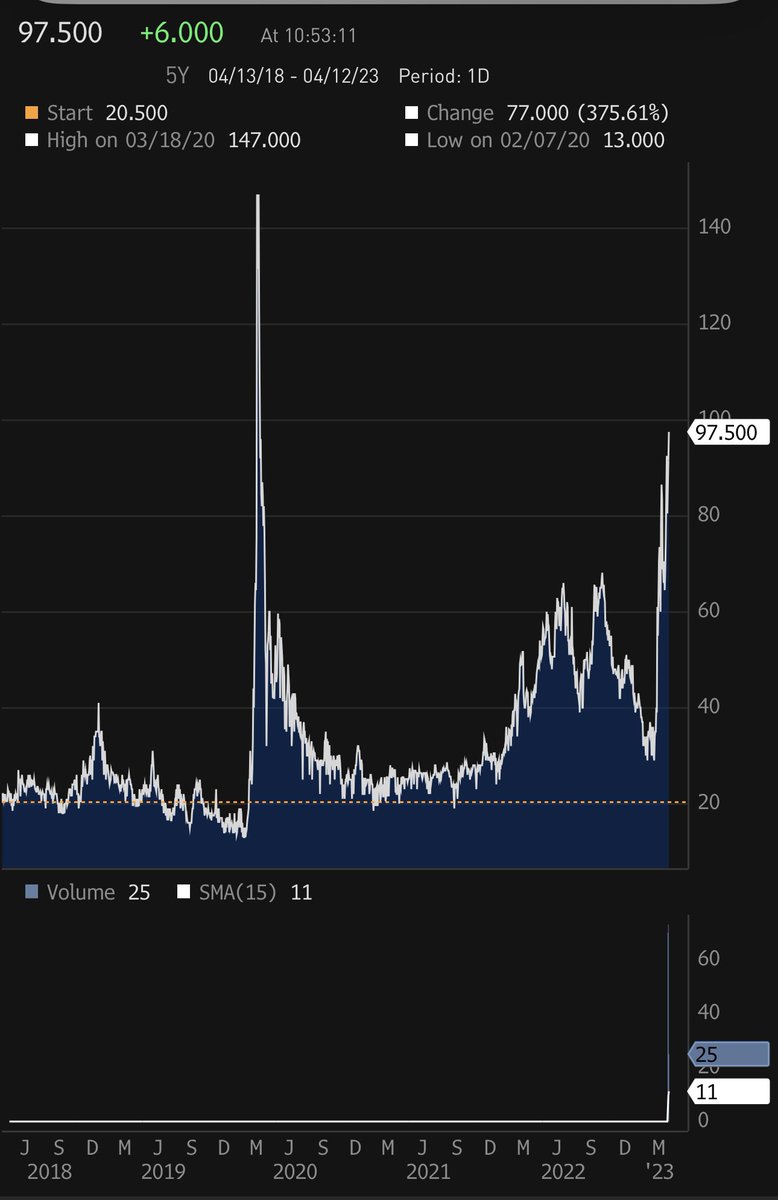
What I’m seeing today. I just sold 1yr Bank of America cds at 107.5 basis points which would rank it as the third highest spread in the investment grade index out of 125 companies. Seems way too wide to me but it speaks to just how technical the credit markets are. If it’s a company in demand from counterparty risk hedgers, the spread can be completely apart from what is justified fundamentally. As James Carville almost said, it’s the technicals, stupid.
@degiorgiod@INArteCarloDoss Money is created via bank lending. Credit is still constrained and situation will get worse , recent Fed spike is not real liquidity