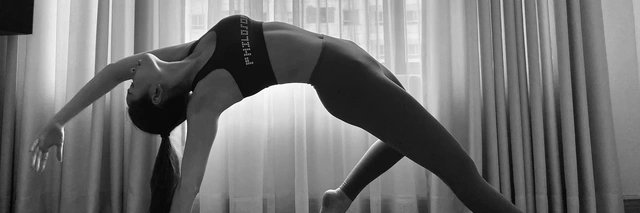
Tadasana - Mountain Pose
Tadasana, commonly known as "Mountain Pose," is a foundational yoga posture that offers numerous physical and mental benefits. Here's a guide on how to perform Tadasana and its advantages:
How to Perform:
Stand upright with your feet slightly apart and knees not touching.
Distribute your weight evenly on both feet, with ankles and knees softly engaged.
Keep your arms alongside your body, palms facing forward.
Extend your spine upward, gently lifting your head and maintaining a straight neck.
Breathe deeply and evenly, focusing on your breath.
Benefits:
Improves Posture: Tadasana enhances overall posture, helping you maintain an upright and balanced stance.
Strengthens Muscles: This pose engages various muscle groups, particularly the abdomen, thighs, and pelvic muscles, contributing to overall strength.
Enhances Mood: Focusing on breath and posture in Tadasana can help reduce stress, soothe the mind, and boost confidence.
Increases Focus and Concentration: Tadasana encourages concentration, heightening awareness of both body and mind.
Expands the Spine: The straight alignment of the spine in Tadasana promotes spinal extension, aiding flexibility and posture.
Tadasana is a simple yet effective yoga pose that can be practiced anytime, anywhere, offering holistic health benefits and bringing balance to your daily life.
Gratitude Journaling: Cultivate an attitude of gratitude. Explore the power of journaling to appreciate the little joys in life. What are you thankful for today? #GratitudeJournal#ThankfulHeart
\Intel Iris Xe Graphics
Intel Iris Xe Graphics is a line of integrated graphics processing units (GPUs) developed by Intel, a leading semiconductor company. Designed to deliver enhanced graphics performance, Iris Xe Graphics is integrated into select Intel processors, providing improved visual experiences for a range of applications, including gaming, content creation, and multimedia consumption.
Key features and aspects of Intel Iris Xe Graphics include:
Integrated Graphics:Iris Xe Graphics is integrated directly into certain Intel processors, eliminating the need for a separate discrete graphics card. This integration is particularly common in Intel's 11th generation Core processors.
Architecture:Iris Xe Graphics is based on the Xe architecture, which is Intel's graphics architecture designed to provide scalable and efficient graphics solutions across various computing devices.
Graphics Performance:Intel Iris Xe Graphics aims to deliver improved graphics performance compared to previous generations of integrated graphics. This makes it suitable for a variety of graphics-intensive tasks, including casual gaming and multimedia playback.
AI Acceleration:Some versions of Iris Xe Graphics feature Intel's Deep Link technology, which incorporates AI acceleration capabilities. This can enhance performance in certain AI-related workloads and applications.
Adaptive Sync:Intel Iris Xe Graphics supports Adaptive Sync technology, helping to reduce screen tearing and stuttering for a smoother gaming and multimedia experience when used with compatible monitors.
Quick Sync Video:Quick Sync Video is a feature integrated into Iris Xe Graphics that accelerates video encoding and decoding tasks, improving performance in video-related applications and workflows.
Multiple Display Support:Iris Xe Graphics supports multiple displays, allowing users to connect and use multiple monitors simultaneously for increased productivity and a more immersive computing experience.
Power Efficiency:Intel focuses on optimizing power efficiency with Iris Xe Graphics, balancing performance with energy consumption to enhance battery life in devices such as ultrabooks and laptops.
Software Support:Iris Xe Graphics is supported by Intel's graphics drivers and software, providing regular updates and optimizations for the latest games and applications.
While Iris Xe Graphics is not intended to compete directly with high-end discrete GPUs, it offers a notable improvement in integrated graphics performance, making it suitable for a wide range of computing devices, from ultrabooks to budget-friendly laptops. Users looking for enhanced graphics capabilities without the need for a dedicated graphics card may find Iris Xe Graphics to be a compelling solution.
Seated Forward Bend (Paschimottanasana)
Paschimottanasana, commonly known as the Seated Forward Bend, is a foundational yoga pose that provides a deep stretch to the entire back side of the body. This pose is particularly beneficial for improving flexibility in the spine, hamstrings, and shoulders.
How to Practice:
Starting Position:Sit on the floor with your legs extended straight in front of you. Ensure that your spine is straight and your shoulders are relaxed.
Grounding:Root your sitting bones into the mat, ensuring a stable foundation. Flex your feet, pressing the heels firmly into the ground.
Inhale and Lengthen:Inhale as you lengthen your spine, lifting your arms overhead. Engage your core to maintain a straight back.
Exhale and Hinge:On the exhale, hinge at your hips and reach forward with your hands. Lead with your chest and keep your back straight as you fold forward.
Hold the Toes or Shins:Reach your hands toward your toes. If you can't reach your toes, hold onto your shins or ankles. The goal is to maintain length in the spine rather than rounding the back.
Relax the Neck:Allow your neck to relax, and gaze toward your toes. Avoid straining your neck; focus on creating length in your spine.
Breathing:Breathe deeply and evenly in the pose. With each inhale, lengthen your spine, and with each exhale, deepen the stretch.
Duration:Hold the pose for 30 seconds to 1 minute, gradually increasing the duration as your flexibility improves.
Release with Awareness:To release, engage your core, inhale, and slowly rise back up to a seated position.
Benefits:
Stretches the Spine: Paschimottanasana provides a deep stretch to the entire length of the spine, promoting flexibility and relieving tension.
Hamstring Flexibility: The pose stretches and lengthens the hamstrings, enhancing flexibility in the back of the thighs.
Calms the Mind: Forward bends are known for their calming effect on the nervous system, helping to reduce stress and anxiety.
Improves Digestion: This pose can massage and stimulate the abdominal organs, supporting healthy digestion.
Therapeutic for Sciatica: Paschimottanasana can help alleviate discomfort associated with sciatica by stretching and releasing tension in the lower back.
As with any yoga pose, listen to your body, and avoid pushing yourself into discomfort. If you have any existing injuries or medical conditions, consult with a healthcare professional or a certified yoga instructor before attempting new poses.
Yoga Exercises
Yoga is a holistic practice that combines physical postures, breath control, and meditation to promote overall well-being. Here's an introduction to some common yoga exercises suitable for practitioners of all levels:
Mountain Pose (Tadasana):Stand tall with feet hip-width apart, arms by your sides, and weight evenly distributed. Engage your thighs, lift your chest, and breathe deeply. This pose promotes stability and awareness.
Downward-Facing Dog (Adho Mukha Svanasana):Start in a plank position, then lift your hips toward the ceiling, creating an inverted V-shape. Keep your hands shoulder-width apart, and press your heels towards the floor. This pose stretches the entire body.
Warrior I (Virabhadrasana I):Step one foot back, keeping the front knee bent at a 90-degree angle. Extend your arms overhead, with palms facing each other. This pose builds strength and stability while opening the chest.
Tree Pose (Vrksasana):Shift your weight to one foot and bring the sole of the other foot to your inner thigh or calf. Bring your hands to your heart or extend them overhead. This balance pose enhances focus and stability.
Child's Pose (Balasana):Kneel on the mat, sit back on your heels, and extend your arms forward with your forehead resting on the ground. This relaxing pose helps release tension and promotes a sense of calm.
Corpse Pose (Savasana):Lie on your back with legs extended and arms by your sides. Close your eyes and focus on your breath. Savasana is a restorative pose that encourages relaxation and mental clarity.
Cobra Pose (Bhujangasana):Lie on your stomach, place your hands under your shoulders, and lift your chest off the ground. Keep your elbows slightly bent. Cobra pose strengthens the back muscles and opens the chest.
Seated Forward Bend (Paschimottanasana):Sit with legs extended forward, hinge at the hips, and reach towards your toes. Hold onto your shins, ankles, or feet. This stretch releases tension in the hamstrings and lower back.
Bridge Pose (Setu Bandhasana):Lie on your back, bend your knees, and lift your hips towards the ceiling. Clasp your hands under your back, and press your shoulders and arms into the mat. This pose strengthens the legs and opens the chest.
Pigeon Pose (Eka Pada Rajakapotasana):Start in a tabletop position, bring one knee forward toward your wrist, and extend the other leg back. Lower your hips towards the ground, feeling a stretch in the hips and thighs. This pose helps release tension in the hips.
Remember to approach these yoga exercises with mindfulness and focus on your breath for a harmonious mind-body experience. Always consult with a healthcare professional or yoga instructor before starting a new exercise routine to ensure it aligns with your health status.
Yoga is a holistic system of physical and mental practices with roots dating back over 5,000 years in India. It goes beyond mere physical exercise, aiming for the overall well-being of an individual, encompassing physical, mental, and spiritual aspects. Here's an introduction to Yoga:
Origin: Yoga originated in India more than 5,000 years ago.
The term "Yoga" comes from Sanskrit and means union or integration.
Purpose: The primary goal of Yoga is to achieve a harmonious balance between the body, mind, and spirit.
It enhances health, flexibility, and reduces stress.
Methods: Yoga employs a combination of mental focus, meditation, and physical postures such as poses and breath control techniques.
There are various types of Yoga, including Hatha Yoga, Vinyasa Yoga, Ashtanga Yoga, and Kundalini Yoga, each with its own methods and objectives.
Benefits: Improves flexibility, muscle strength, and stability.
Reduces stress and enhances a positive mood.
Supports emotional and mental well-being.
Widespread Global Practice: Yoga has become a widely practiced activity globally, with millions participating in daily sessions.
Yoga is not just a form of exercise; it is a way of life that encourages mindfulness and the connection between individuals and their surrounding environment. It fosters a sense of self-awareness, promoting a healthier and more balanced lifestyle.