Major cheat code for life: Be fully where your feet are. When you're at work, work. When you're with family, be with family. When you're resting, rest. Most people are physically present and mentally everywhere else.
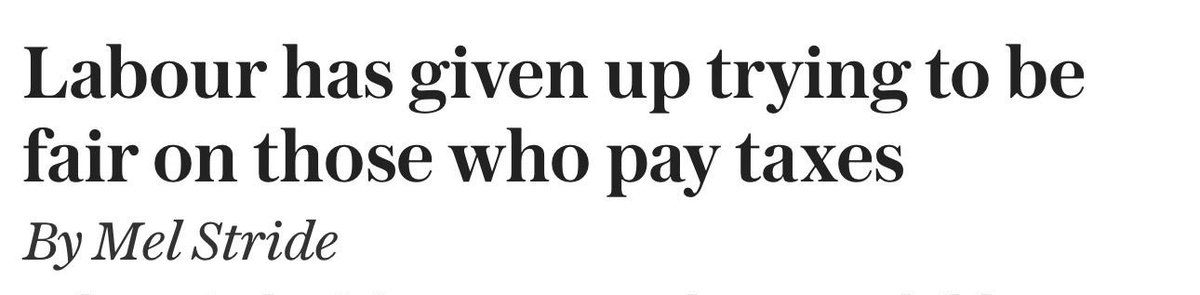
Under Labour, someone WORKING on £35k salary is £1,400 worse off
But someone NOT working with 3+ kids could get £81k a year of benefits
This is becoming a DISGRACE
Rewarded for not working & PUNISHED for working harder for less
Someone could go to school for 4 years and study aerospace engineering, then get a PhD with a dissertation related to orbital mechanics, and some instagram influencer who watched a youtube video will be like "actually that guy is wrong" on a topic related to space travel and people will believe them.
I'm not sure how we got here, but I hope we go back to a society where credibility is earned with rigorous training in the associated field, not by a popularity contest.
❤️🇮🇷 BREAKING: IRANIANS are forming human-chains nationwide on bridges & around critical infrastructure to safeguard their country against U.S & Israeli strikes
While you slept last night, completely still in your bed, our galaxy moved millions of kilometers through the cosmos. You woke up in the same room, on the same planet, yet unimaginably far from where you were the night before.
The Milky Way is not drifting quietly through the universe. It is racing through space at around 600 kilometers per second, carrying billions of stars, planets, and everything on them along for the ride.
It is a good reminder that even when life feels motionless, you are always in motion.
Labour is boasting today that it has lifted the 2 child benefits cap.
The big winners are foreign born households, the big losers are British taxpayers.
341k households, a third of those with 3 or more children, are foreign born.
191k of them came from just 10 countries.
Pakistan, Bangladesh, Nigeria and Somalia are top of the list, with 125k families from those countries who will now benefit from a big increase in welfare handouts.
This is a sick insult to British people.
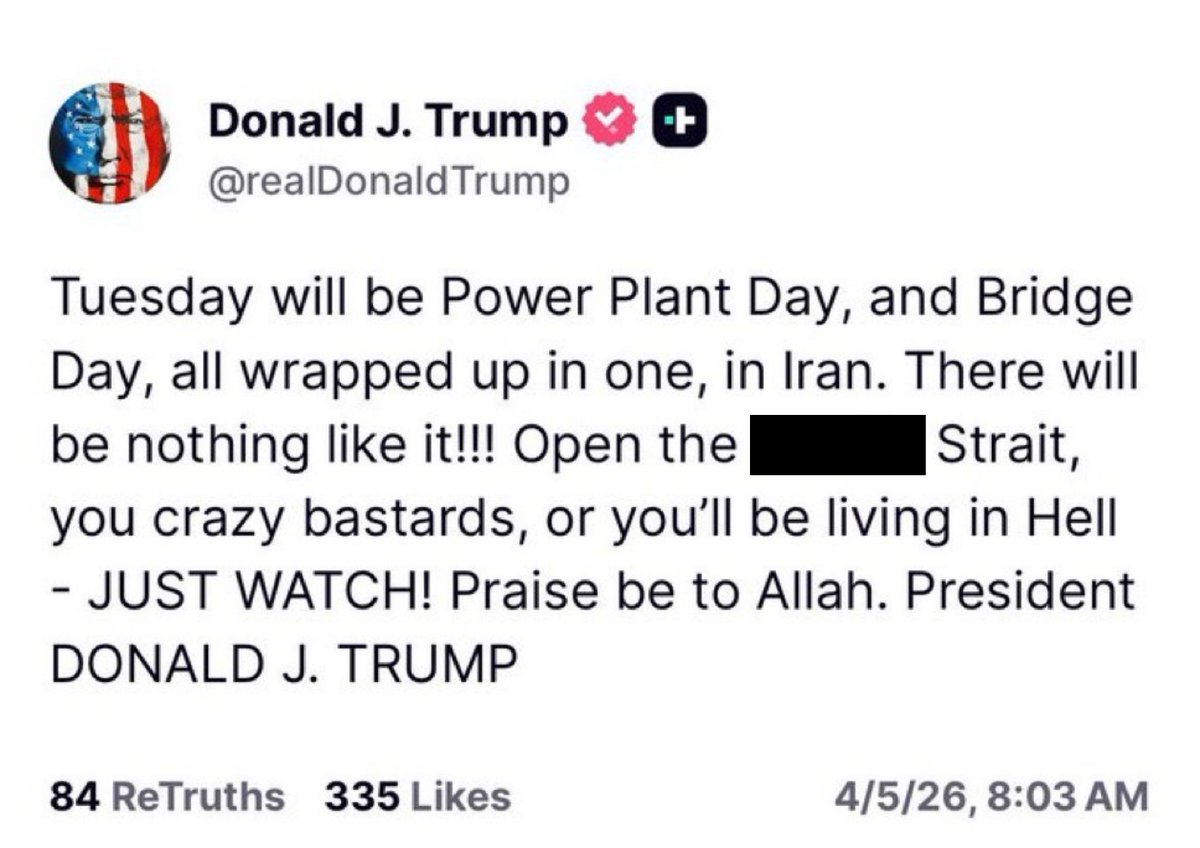
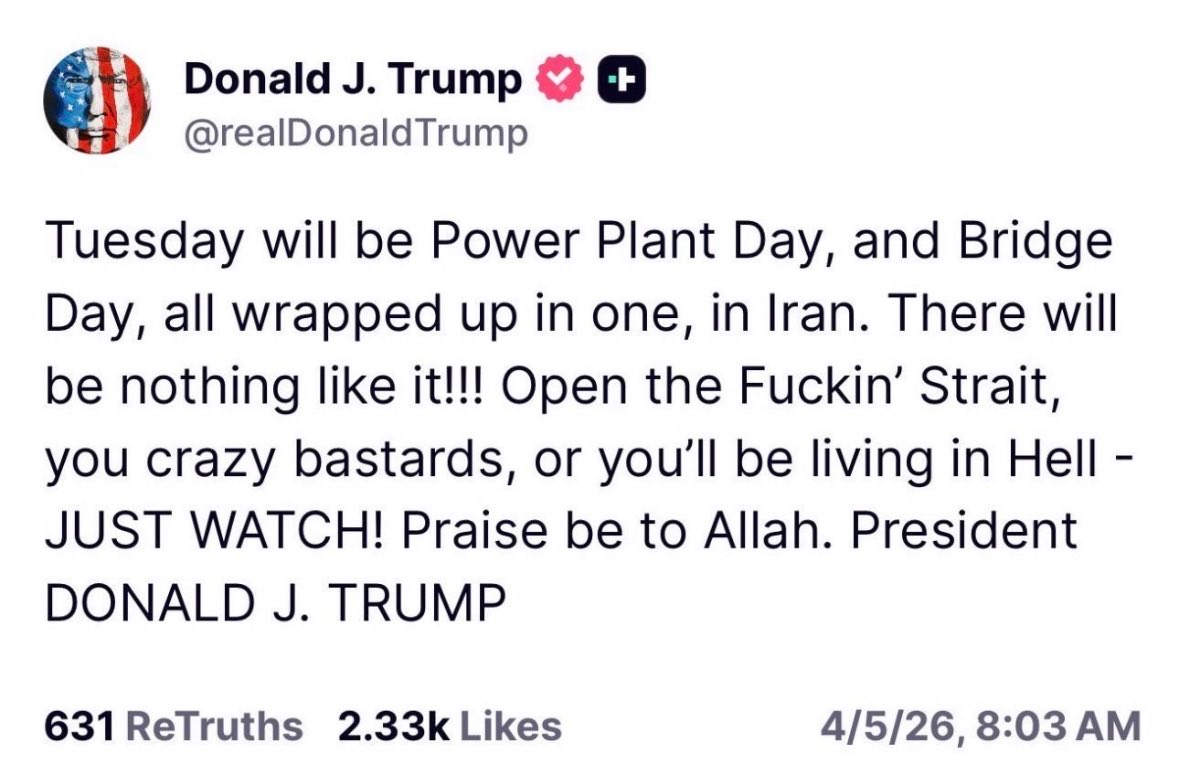
A Presidential threat sprinkled with F bombs to destroy civilian infrastructure in Iran is a dark moment for our nation. Such an attack will punish the very people who are the victims of Iran’s regime, and escalate this war which has caused an international energy crisis. Republicans in Congress need to join with Democrats and pass the War Powers Resolution which I cosponsored 5 weeks ago. Now.
Trump: "¡Abran el estrecho de Ormuz!"
India: "¿Está cerrado?"
Pakistán: "¿Cerrado?"
Rusia: "Qué extraño..."
Sudáfrica: "Pero si está abierto, por supuesto".
Francia: "No lo parece..."
China: "Abierto... ¡acabamos de pasar por ahí! 🚢😏"
Trump: 🙁
The UK has crossed a line.
Welfare spending: £333 billion
Income tax revenue: £331 billion
We’re now paying out more than we bring in from workers.
This is unsustainable.
The president doesn't know how to end his catastrophic war, so he's resorting to increasingly deranged threats to "obliterate" a country of 90 million people.
My Republican colleagues need to come back to DC and vote for a War Powers Resolution to stop this madness.
President Trump's latest threats on Truth Social, if carried out, would violate the law of armed conflict as laid out in the Geneva Conventions and the DoD Law of War Manual. It is both irresponsible and wrong to indiscriminately kill civilians in Iran and destroy civilian infrastructure like bridges and power plants — particularly when the President said this war was to aid the Iranian people.
On top of that, it’s our service members who are put in legal and mortal danger. And when the smoke clears, it will be our service members -- not President Trump or Secretary Hegseth -- who could have to live with the consequences.
President Trump has walked us into another complicated war in the Middle East. His decisions are making us less safe abroad, raising prices and costing American blood and treasure. He must negotiate a way to end this war, open the Strait of Hormuz, and bring our warriors home.
Iran fired two ballistic missiles at Diego Garcia this week. That’s a tiny British-American dot in the Indian Ocean that most people couldn’t find on a map, which is precisely why it matters.
The range was 4,000 kilometers. Four thousand. To put that in perspective, 4,000 kilometers from Tehran gets you to Rome. Athens. Cairo. Southern Europe is well within reach. London and Paris are further, but don’t sleep too well either.
This is not what Tehran told anyone their missiles could do. So either they’ve been lying, or the intelligence community has been spectacularly wrong. Possibly both.
One missile failed mid-flight, which is the kind of thing that happens when you build intercontinental weapons in a country that can’t keep the lights on. The other was shot down by a U.S. warship with an SM-3 interceptor, which Trump has already counted as winning the war. For the third time.
Now here’s the bit nobody wants to say out loud: the strike came hours after Britain’s Keir Starmer gave Washington permission to use Diego Garcia to bomb Iranian missile sites. So Iran bombed the base we lent them. With a missile nobody knew they had.
The war just acquired a completely new dimension. And the man in the White House is busy declaring victory.
Iran decides when this stops. Not him.
Gandalv / @Microinteracti1
Three weeks into the war with Iran, a number of observations as someone who spent years war-gaming this scenario.
1. The U.S. and Israel may have produced regime transition in the worst possible way.
Ali Khamenei was 86 and had survived multiple bouts of prostate cancer. His death in the coming years would likely have triggered a real internal reckoning in Iran, potentially opening the door to somewhat more pragmatic leadership, especially after the protests and crackdown last month. Instead, the regime made its most consequential decision under existential external threat giving the hardliners a clear upperhand. Now we appear to have a successor who is 30 years younger, deeply tied to the IRGC, and radicalized by the war itself – including the killing of family members. Disastrous.
2. About seven years ago at CNAS, I helped convene a group of security, energy, and economic experts to walk through scenarios for a U.S.--Iran war and the implications for global oil prices. What we’re seeing now was considered one of the least likely but worst outcomes. The modeling assumed the Strait of Hormuz could close for 4–10 weeks, with 1–3 years required to restore oil production once you factored in infrastructure damage. Prices could spike from around $65 to $175–$200 per barrel, before eventually settling in the $80–$100 range a year later in a new normal.
3. One surprising development: Iran is still moving oil through the Strait of Hormuz while disrupting everyone else. In most war games I participated in, we assumed Iran couldn’t close the Strait and still use it themselves. That would have made the move extremely self-defeating. But Iran appears capable of harassing global shipping while still pushing some of its own exports through. That changes the calculus.
4. The U.S. now finds itself in the naval and air equivalent of the dynamic we faced in Iraq and Afghanistan. It’s a recipe for a quagmire where we win every battle and lose the war. We have overwhelming military dominance and are exacting a tremendous cost. But Iran doesn’t need to win battles. They just need occasional successes. A small boat hitting a tanker. A drone slipping through defenses in the Gulf. A strike on a hotel or oil facility. Each incident creates insecurity and drives costs up while remind everyone that the regime is surviving and fighting.
5. The deeper problem is that U.S. objectives were set far too high. Once “regime change” becomes the implicit or explicit goal, the bar for American success becomes enormous. Iran’s bar is simple: survive and keep causing disruption.
6. The options for ending this war now are all bad. You can try to secure the entire Gulf and Middle East indefinitely – extremely expensive and maybe impossible. You can invade Iran and replace the regime, but nobody is seriously going to do that. Costs are astronomical. You can try to destabilize the regime by supporting separatist groups. It probably won’t work and if it does you’ll most likely spark a civil war producing years of bloody chaos the U.S. will get blamed for. None of these are good outcomes.
7. The other escalatory options being discussed are taking the nuclear material out of Esfahan or taking Kargh Island. Esfahan is not really workable. Huge risk. You’d have been on the ground for a LONG time to safely dig in and get the nuclear material out in the middle of the country giving Iran time to reinforce from all over and over run the American position.
8. Kharg Island can be appealing to Trump. He’d love to take Iran’s ability to export oil off the map and try to coerce them to end the war. It’s much easier because it’s not in the middle of IRan. But it’s still a potentially costly ground operation. And again. Again, the Iranian government only has to survive to win and they can probably do that even without Kargh.
9. The least bad option is the classic diplomatic off-ramp. The U.S. declares that Iran’s military capabilities have been significantly degraded, which is how the Pentagon always saw the purpose of the war. Iran declares victory for surviving and demonstrating it can still threaten regional actors. It would feel unsatisfying. But this is the inevitable outcome anyway. Better to stop now than after five or ten more years of escalating costs. Remember in Afghanistan we turned down a deal very early in the war with the Taliban that looked amazing 20 years later. Don’t need to repeat that kind of mistake.
10. The U.S. and Israel are not perfectly aligned here. Trump just needs a limited win and would see long-term instability as a negative whereas for Netanyahu a weak unstable Iran that bogs the U.S. down in the MIddle East is a fine outcome. If President Trump decided he wanted Israel to stop, he likely has the leverage to push it in that direction just as he pressured Netanyahu to take a deal last fall on Gaza.
11. When this is over, the Gulf states will have to rethink their entire security strategy. They are stuck in the absolute worst place. They didn’t start this war and didn’t want it and now they are taking with some of the worst consequences. Neither doubling down with the U.S. and Israel nor placating the Iranians seems overwhelmingly appealing.
12. One clear geopolitical winner so far: Russia. Oil prices are rising. Sanctions are coming off. Western attention and military resources are shifting away from Ukraine. From Moscow’s perspective, this war is a win win win.
13. At some point China may have a role to play here. It is the world’s largest oil importer, and much of that supply comes from the Middle East. Yes they are still getting oil from Iran. But they also buy from the rest of the Middle East, and a prolonged disruption in the Gulf hits Beijing hard. That gives China a real incentive to help push toward an end to the conflict.
How is this London, UK? Trying to get latest info now but this is awful. The thugs who attacked the restaurant have no problems but the owner of a restaurant that put up a sign saying he will not see halal Islamic food gets arrested. Ridiculous.
trump, last saturday: don’t need british ships. we will remember, we don’t need people that join wars after we’ve already won.
trump, this saturday: hopefully united kingdom will send ships so that strait of hormuz will no longer be threatened.