Elon Musk’s definition of capitalism:
🇺🇸 Trump protects Tesla with tariffs = PATRIOTISM 🫡
🇮🇳 Mukesh Ambani protects Jio from Starlink = MONOPOLY 😭
Apparently, Elon loves free markets…
As long as the market is free for Elon and protected from everyone else. 😂
Welcome to Billionaire Economics 101. 🍿
@narendramodi@RahulGandhi@elonmusk@reliancejio
Rupee isn’t weakening in isolation — it’s caught in a global macro storm.
Oil spike, capital outflows, and geopolitical risk are hitting all at once. India, being a large oil importer, feels this faster than most.
₹100/$ is still a tail risk, not base case — but directionally, pressure remains unless crude cools.
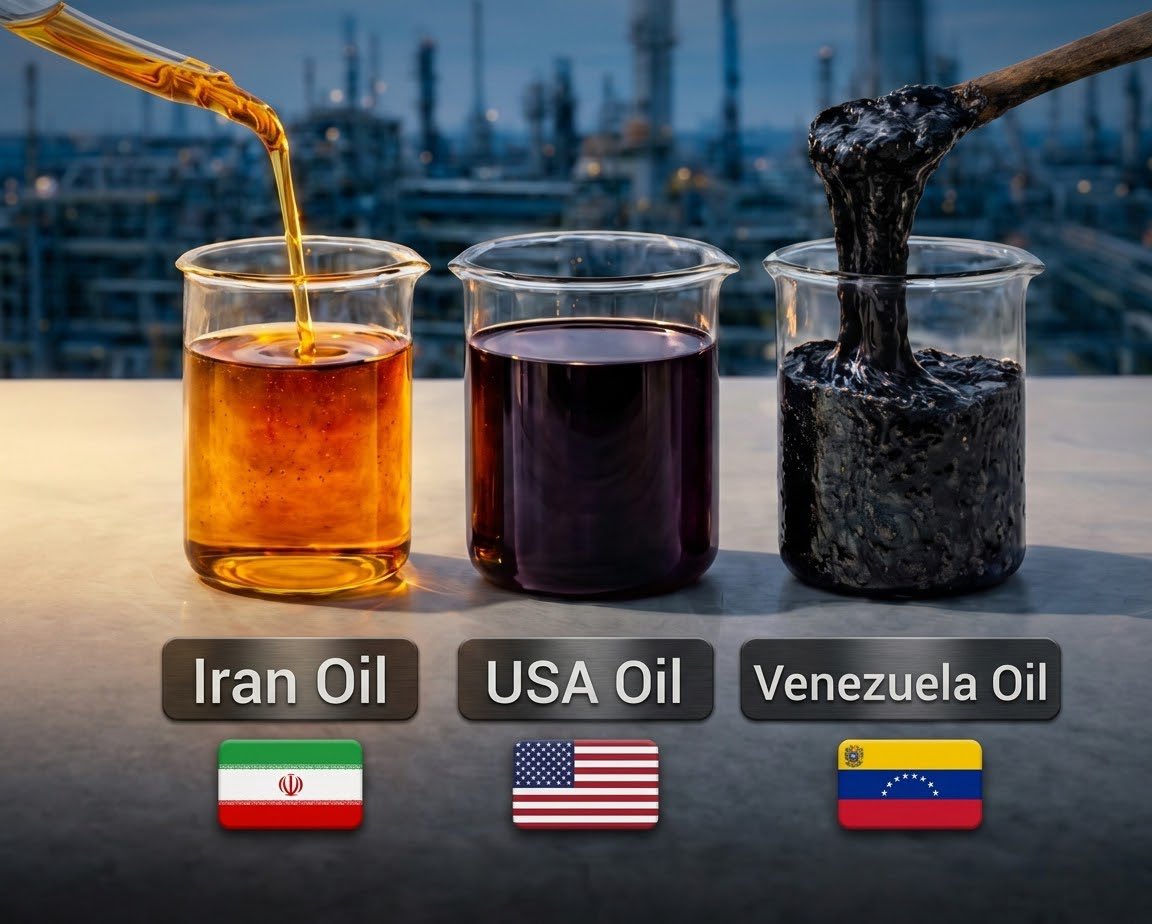
Everyone talks about Iranian oil in barrels. Nobody talks about what is inside them. That difference is why Western refineries have been running shadow networks through Dubai for twenty years to get it despite the sanctions.
Crude oil is not a uniform commodity. It is a spectrum of hydrocarbons with different molecular weights, and the composition of a given crude determines how easily it converts into the products refineries actually want to sell: gasoline, diesel, jet fuel, heating oil. The measurement that captures this is API gravity. Higher API gravity means lighter crude with shorter carbon chains, which means lower energy cost to crack, lower processing cost to refine, and higher yield of the light distillates that carry premium pricing. Lower API gravity means heavier crude requiring more energy, more processing steps, more capital equipment, and producing a higher share of lower-value residuals.
Iranian Light crude runs at 33 to 36 degrees API gravity with sulfur content between 1.36 and 1.5 percent. That is the refinery sweet spot. It is light enough to yield high fractions of gasoline and middle distillates without excessive processing costs, but heavy enough to produce the full range of products that complex refineries are designed to process. It is what petroleum engineers call an optimal blend crude.
Now compare the alternatives.
Venezuelan Merey heavy crude runs at approximately 16 degrees API gravity with sulfur between 3 and 5 percent. Refining it profitably requires a coking unit, a hydrocracker, and an extensive desulfurization train. The equipment exists. The economics work for refineries purpose-built around Venezuelan feedstock. It is not a substitute for Iranian crude. It is a different product requiring different industrial infrastructure.
US West Texas Intermediate runs at 39 to 40 degrees API with sulfur below 0.25 percent. In theory, the cleanest and easiest crude to process. In practice, it is so light that it does not yield the heavier middle distillates a complex refinery needs to run at full capacity. European and Asian refineries built around medium crudes cannot switch to WTI without blending it with heavier crudes to achieve the molecular weight distribution their process units require. WTI is not a drop-in replacement for Iranian medium.
Iranian oil fits where both US shale and Venezuelan heavy do not. It is the liquid that flows through the middle of the global refining system without requiring either the coking infrastructure for heavy crudes or the blending operations for ultra-light shale. That molecular fit is why it commands a persistent premium above comparable grades. It is why Indian refineries maintained Iranian crude purchases through every round of sanctions and negotiated the logistics to keep that flow moving. It is why the Dubai shadow banking and trading network that the UAE is now considering dismantling existed in the first place.
The Strait of Hormuz does not just carry oil. It carries the specific category of oil that the global refining system was built to process most efficiently. Closing it does not just reduce supply. It removes the grade of crude that the system runs best on and forces every refinery in the world to run less efficiently on whatever it can find as a substitute.
That is the premium embedded in the $82 oil price. Not just volume. Molecular weight.
https://t.co/ULBgEzZ3A8
Shared my perspective with Outlook Business on why the Indian rupee tends to weaken during geopolitical tensions in West Asia.
https://t.co/L91cbMFG6t
India imports the majority of its oil, so rising crude prices increase the country’s import bill and dollar demand, which naturally puts pressure on the currency. During periods of conflict, global investors also shift toward safe-haven assets like the US dollar and gold, amplifying currency volatility.
That said, India’s strong forex reserves continue to provide a buffer. The key variable remains the duration of elevated oil prices and geopolitical uncertainty.
ET yest reported Gulf based funds looking at India to raise exposure & diversify from west.
Could sense it first hand, in a room full of UHNIs, Family Office Funds gathered at the Dubai event of PMS Bazaar to discuss prospects for Indian mkts, listed -unlisted
Enjoyed the chat
Glad to be speaking at DAIS 2026 in Dubai — a premier platform bringing together India’s leading fund managers and global investors.
Looking forward to engaging discussions on markets, capital flows, and India’s evolving investment landscape.
https://t.co/ToHQZo4DgN
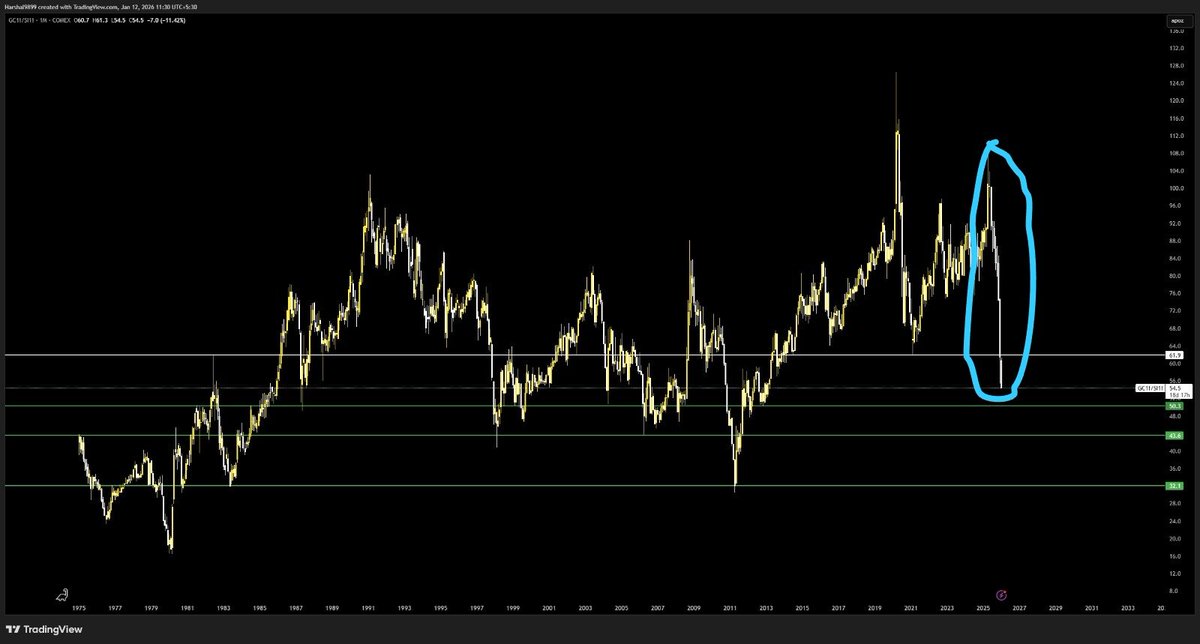
Gold to Silver Ratio Below 55.
Look at the meltdown in last few months. Gold is maintaining 4500$ constantly and silver is firing to new gihs leading to the breakdown.
You needed 107 Kg Of Silver To Buy 1 Kg Gold In April-25, Today You Need 54 Kg Of Silver To Buy 1 Kg Gold. In Less Than A Year Silver Is 2x More Valuable Now In Comparison To Gold
Process it.
China SGE/SHFE Daily Report Jan 12, 2026.
Physical Silver in China now trades at 93.27$ up by 12%
China has imposed a ban on export of Silver.
Physical Silver In China: 93.27$💀
Silver Futures In China: 93.47$💀
Silver Futures On Comex: 84$🤡
COMEX is in real problems. Spread between China and COMEX is now (93.47-84) 9.47$ that is close to 11%🎀
When Valuations Look High but Confidence Looks Higher
Every cycle has a moment when the charts say “expensive”…
but the behaviour of investors says something entirely different.
India is living that moment right now.
Nifty trades near all-time highs, valuation premiums look stretched versus emerging markets, and yet — domestic flows are refusing to slow down. SIP inflows hit a record ₹28,000+ crore in July 2025, demat accounts crossed 20 crore, and equity AUM scaled to ₹75 lakh crore. These are not the signals of a nervous market. These are signals of a market with conviction.
1️⃣ Valuations Look High — but Not Relative to Growth
India is still among the fastest-growing major economies with 7%+ GDP momentum, strong manufacturing PMIs (July 2025 print above 59), and a capex cycle backed by ₹11.11 lakh crore of Budget spending. When growth visibility is high, markets naturally assign a higher multiple.
High valuations with high earnings visibility ≠ froth.
They reflect pricing power + policy stability.
2️⃣ Confidence Is the New Liquidity
Domestic investors have become the market’s shock absorbers. Even when FIIs turned cautious, DIIs kept the bid alive. Record SIPs, rising retail participation, and the shift from physical to financial savings have created a structural floor under valuations.
This is not speculative money. It is systematic, sticky capital.
3️⃣ The Real Trigger? Predictability.
Rate cuts began in June 2025. Bond yields softened below 6.5%. Inflation is steady. FX reserves are near $689 billion.
In a world of volatility, India offers something rare: macro predictability with long-term upside.
Valuations may look high on the surface.
But confidence — domestic, institutional, and global — is even higher.
That’s the real story of this market cycle.
Not the number.
The belief behind the number.
https://t.co/emeEGtFle3
https://t.co/BfLxmfLJqk
Recently had the opportunity to share my market outlook for 2026 on CNBC Awaaz.
While 2025 has been more about consolidation and sectoral churn, 2026 could shape up to be a broader-based year, provided investors stay selective and disciplined. Small caps may participate, but valuations still matter — leadership is likely to come from quality businesses rather than sheer size.
I discussed why financials, autos, metals and capital-market-linked businesses appear better positioned, while caution is warranted in highly volatile or overheated segments that led the previous cycle.
As always, the focus remains on risk-adjusted returns, balance-sheet strength and earnings visibility, rather than chasing themes.
India’s New Financial Infrastructure: Broking, Depositories, and the Democratization of Wealth
There’s a silent revolution underway in India.
It isn’t happening in boardrooms.
It’s happening in demat accounts, SIP mandates, mobile trading apps, and settlement rails that now move money faster than many global markets.
We’re watching the birth of India’s new financial infrastructure — and it’s fundamentally rewriting who gets to participate in wealth creation.
1️⃣ Broking Has Shifted From Access to Empowerment
A decade ago, opening a trading account felt like paperwork.
Today, it’s a 15-minute digital onboarding with real-time KYC, instant UPI funding, and zero-friction execution.
Discount brokers expanded the market, but the real unlock was cultural:
Markets stopped looking intimidating. They started looking inclusive.
This didn’t just reduce costs.
It dismantled the “expert-only” gatekeeping around investing.
2️⃣ Depositories Became the Backbone of Trust
CDSL and NSDL now manage 20+ crore demat accounts, a number unimaginable even five years ago.
But it’s not the scale alone — it’s the confidence these rails created.
T+1 settlement made India the world’s fastest major market.
T+0 pilots signalled the next leap.
Investors don’t just invest because returns look good.
They invest because the system feels safe.
3️⃣ Participation Is the New Economic Moat
Record ₹28,000+ crore monthly SIP inflows.
Massive retail turnover.
Equity AUM at ₹75 lakh crore.
India has built something no policy, reform, or macro event can replicate quickly:
A deeply engaged investor base with long-term behaviour.
When participation becomes structural, markets stop depending on foreign flows for direction.
They build their own gravity.
India’s financial infrastructure isn’t just modernising — it’s democratising wealth at scale.
And in the next decade, the countries that win will not be the ones with the biggest exchanges…
but the ones with the widest participation.
India is already there.
The moat is already built.
https://t.co/sKuS0287WG
Shared my insights with Moneycontrol on why income growth and job stability will be central to sustaining India’s earnings and economic momentum.
While affordability has improved through tax reliefs and lower rates, long-term consumption depends on how much households earn—and how secure that income feels. Steady employment and wage trends will support corporate revenue visibility across sectors like FMCG, autos, real estate, and discretionary spending.
In the current environment of strong domestic liquidity, resilient earnings, and macro stability, a successful India–US trade deal could provide the next leg of the market uptrend.