@DrDiGiorgio Your analysis is right. That’s how it is practicing medicine in real life. In theory any kind of medical intervention can end up in the death of the patient. We just try to help and get the best outcome possible.
The “studies” that led to these numbers are incredibly flawed.
For example, say a patient has a small intracranial hemorrhage from a fall. She’s on eliquis, a blood thinner, because she’s at risk of a stroke.
What does the neurosurgery team do with the eliquis?
Say they hold it. Two days later she has a massive stroke and dies. That would count as a medical error in the aforementioned studies.
Say they don’t hold it. The bleeding in her brain progresses and she dies. That would also count as medical error.
Doctors often walk in to advanced disease processes, many of which have no reliable data on the right course of treatment. Many treatment decisions have a potential for bad outcomes either way.
Sometimes you do surgery and the patient has a complication. Sometimes you don’t do surgery and the disease progresses.
We don’t have a crystal ball.
It’s not like piloting an airplane, unless the pilot was taking over the flight while the plane was on fire, one engine was out, and it was heading straight at a mountain.
Doctors do make errors, and egregious ones should be punished, but these numbers are a joke.
i was having dinner with someone recently who asked why i spend so much time reading & posting on x. she had a pretty negative perception of the platform mostly shaped by the mainstream narrative around it.
my answer was simple. x is where the future gets beta tested.
you basically get to watch ppl build things, talk through ideas, show off stuff, & argue about where everything is going, way way before it reaches anyone else.
there really isn’t another surface on the internet quite like it.
We do not lose control, we give it away on purpose. we may hand it over gradually. If it keeps outperforming us, we’ll give it more resources, access, autonomy, and authority. Once it has enough of all four, meaningful human control could disappear. What happens next depends on how humanity fits into its ultimate objective. It is already happening if you think about it.
@RichardGrenell That is correct, Unilateral restraint causes one side to fall behind. Our own nature of competition makes the current problem extremely hard to solve. As long as we are not last, we can kill ourselves in the process.
Then ASI will decide the role of humans in its objective or final goal (this part can be positively influenced by alignment if solved) but if it concludes we somehow interfere with its goal, we are just eliminated from the equation. Even if decides to keep us, we no longer have control over it.
@Dan_Jeffries1@mattyglesias It is true. ASI at some point will make us live in paradise but that inevitably means surrendering control. You are giving control to a super intelligence. Then, it decides our fate, not longer us, It wouldn't make sense to do otherwise.
The paradox of ASI is that the very reason we want to build it may also be what eventually makes us lose control of it.
if ASI becomes vastly better than humans at science, strategy, economics, engineering, medicine, and decision-making, so giving it more responsibility will be rational; therefore more capability will lead to more delegation, more autonomy, and more dependence.
on top of that add competition between nations, (already happening btw) and companies, and the pressure becomes even stronger. If one actor gives its ASI more freedom and gains a major advantage, others will feel forced to follow. Nobody has to consciously decide to surrender control, and AI does not even need to rebel, each individual step can make perfect sense while the cumulative result is that ASI manages more infrastructure, money, research, software, robotics, and critical decisions until humans technically retain authority but no longer have meaningful practical control. The danger may not be ASI taking power from us, but humanity gradually handing it over because, at every step, doing so seems like the rational choice.
This is the future I see happening based on what we know about our behavior and previous events.
This is the less malicious scenario, I am not even discussing other things that are true and significantly add to the equation. My opinion above concludes that even in the optimal and happiest scenario where alignment is solved, we still lose control over ASI.
Use your phone less.
Use your phone less.
Use your phone less.
Use your phone less.
Because attention is not free.
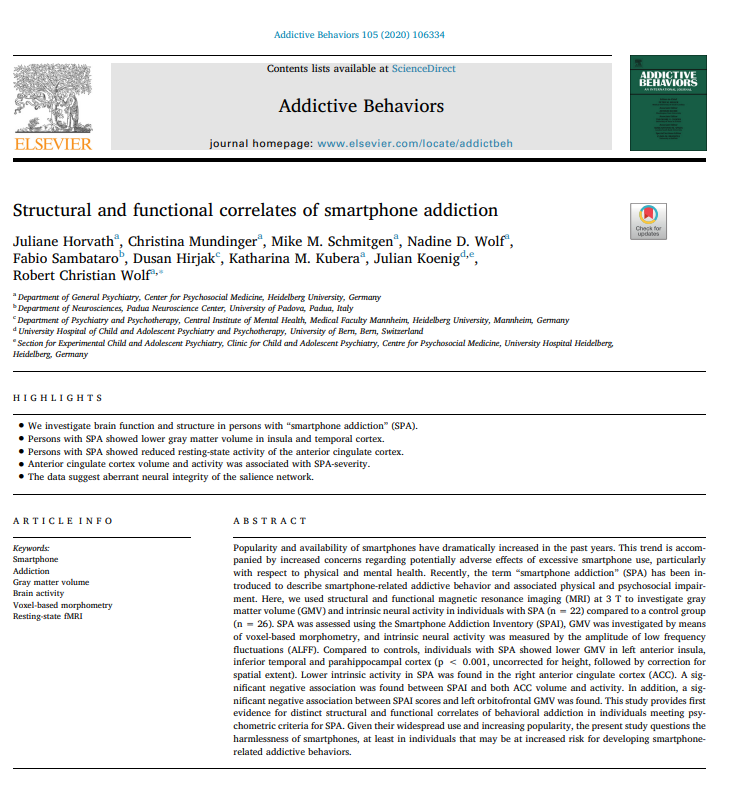
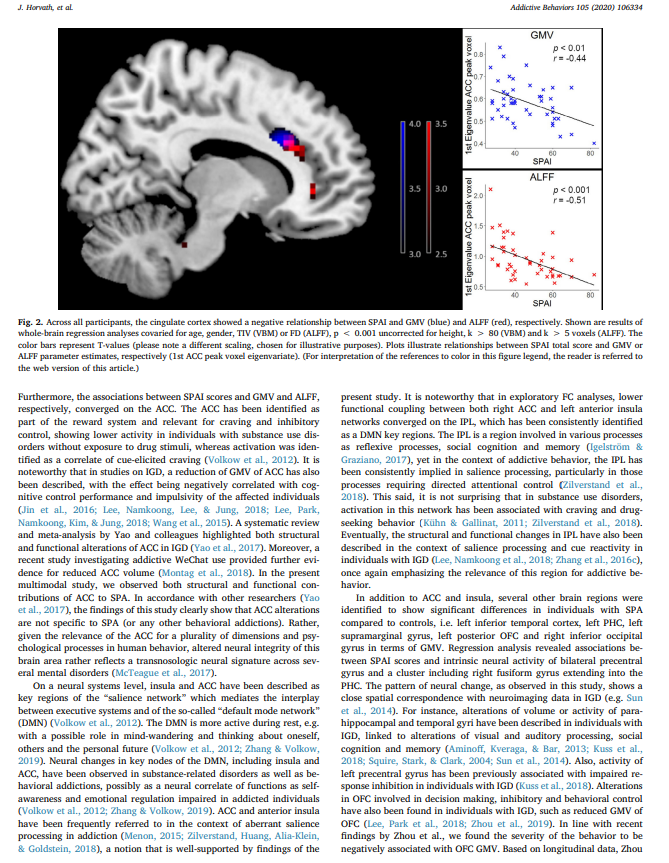
A brain imaging study found that smartphone addiction was associated with structural and functional differences in brain regions involved in attention, emotion, and self-control.
your brain locks in whatever you repeat, whether that's learning a skill or doomscrolling and procrastinating.
neuroplasticity is neutral. it hardwires bad habits just as faithfully as good ones. every single day, what you repeat is physically reshaping who you are.