🎨 Excited to share my submission for the Agents-MCP-Hackathon: AI Art Historian! This intelligent system transforms anyone into an art expert by analyzing uploaded artworks with museum-level expertise.
https://t.co/ve053iw6jb
My first iOS app is live!
I built My Pocket Library to track my books across different locations. Scan books, organise shelves, track your reading, and start book clubs with friends.
Get 30% off a year of Pro with below, until Nov 15 👇
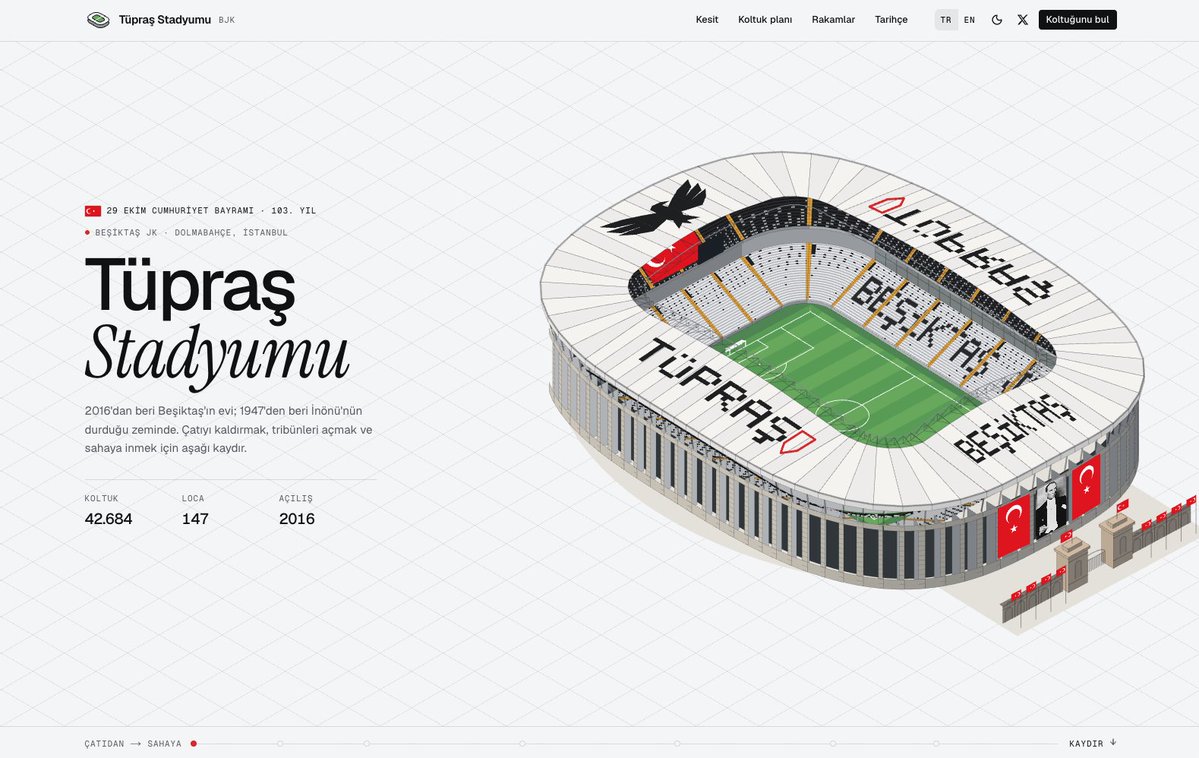
Stadyum konusu bu kadar gündemdeyken, eski Vodafone Arena sitesinin ne güzel olduğu günleri andım. Benim için İstanbul’un en güzel yeri olan stadımız için bu siteyi yaptım. Tekrar kavuşacağımız günü özlemle bekliyorum 🦅
https://t.co/zIxoZhPnD0
Most AI systems still treat thumbs up/down feedback as a simple UX feature.
However, in production-grade AI systems, these signals can evolve into powerful indicators for reliability, governance, and decision quality when combined with:
• statistical scoring
• semantic clustering
• confidence & risk analysis
As AI agents become increasingly autonomous and integrated into real-world workflows, the ability to systematically analyze and learn from feedback will become just as important as model capability itself.
Robust feedback infrastructure is no longer optional for scalable and trustworthy AI systems.
Here is the link👇🏻
https://t.co/UGoGhWVMUG
Haftanın trend repolarından olan Chrome Dev Tools MCP sunucusunu Cursora ekleyip istediğim frontend senaryolarını yazdım ve açılan tarayıcıdan büyülenmiş şekilde video izler gibi izledim.. İlgili bugları tespit edip hızlıca düzeltmemi ve ayrıca sayfanın genel performans metriklerini de detaylı bir şekilde analiz etmemi sağladı.
End-to-end testler için mükemmel bir gelişme
https://t.co/YZzVeLLG4p
Today I had the chance to thoroughly test GPT-5.3 Codex. For complex coding tasks, I personally find it stronger than Opus 4.6 (especially in terms of speed, consistency, and overall execution) while also being more cost-effective at $1.75 / $14 compared to Opus 4.6’s $5 / $25 pricing.
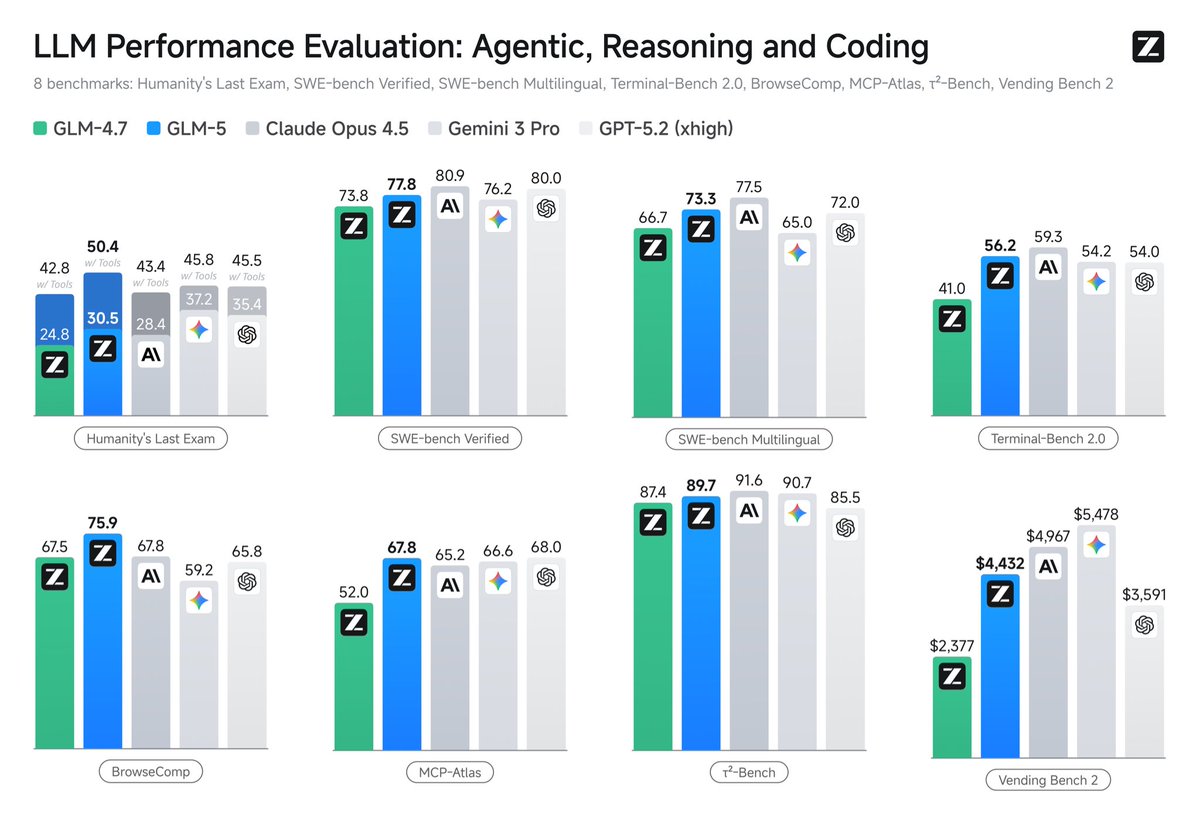
From a pricing standpoint, GLM-5 is even more impressive at just $0.80 / $2.56, making it dramatically cheaper than both. While there is no direct benchmark comparison yet between GLM-5, GPT-5.3 Codex, and Opus 4.6, the early benchmarks available suggest GLM-5 performs very competitively in coding and agentic tasks, especially considering its cost. I’ll be testing GLM-5 as soon as possible..
Has anyone here already tried it and noticed areas where it clearly stands out in terms of performance or results?
Türk bilim insanı Duygu Kuzum'un geliştirdiği bu RRAM mimarisi tam olarak AI'ın geleceğinin nereye gittiğini gösteriyor...
Herkes daha büyük model, daha fazla GPU, daha çok bulut kapasitesi diye bağırırken asıl devrim bellekte yapılıyor.
Sinir ağlarını doğrudan bellek içinde çalıştırmak demek buluta bağımlılığı ortadan kaldırmak demek. Düşük güç tüketimi, yerel çalışma, 40 nanometreye ölçeklenebilme...
Ve bunu yapan kişi Türk bir araştırmacı.
Bu tarz donanım seviyesindeki atılımlar yazılım tarafındaki her şeyi değiştirir ama kimse modeller kadar heyecanlanmıyor donanım için.
NotebookLM just ended manual AI paper reading.
They’ve released a new version for arXiv papers and it’s insane.
It doesn’t just summarize papers.
- It studies thousands of related sources
- Connects the research for you
- Explains everything back in audio like a real mentor
And yes… it’s completely free.
The paper, written by Meta and collaborators, focuses on how to scale the compute (e.g., GPU hours) used during the reinforcement learning (RL) phase of LLMs.
It introduces a sigmoid scaling law that shots RL performance increases predictably with the amount of compute. Thanks to this law, the performance of much larger and more expensive RL trainings can be predicted based on results from smaller experiments.
Building on this idea, the proposed method—called ScaleRL—confirms this predictability even in trainings requiring 100,000 GPU hours. In other words, RL is becoming a scalable scientific process rather than a trial-and-error one.
Wish to build scaling laws for RL but not sure how to scale? Or what scales? Or would RL even scale predictably?
We introduce: The Art of Scaling Reinforcement Learning Compute for LLMs