A new CIRES and @INSTAAR-led study found Greenland's "firn" - the spongy layer between ice and snow - is more sensitive to warming than cooling. The paper was led by CIRES and @CUBoulder PhD graduate @GlacialMeg and CIRES Fellow @JenKayCU Read the story: https://t.co/ndOCANIJ66
📢 Exciting Announcement! The firn Symposium's review paper is out in @NatRevEarthEnv, shedding light on the crucial role of firn in Greenland and Antarctic ice sheets 🏔️❄️ 🌊 [1/n].
📰 https://t.co/BB6BxXmV1k [Behind 💰-🧱, so DM if you want a copy]
New preprint in TC on our work developing high-resolution maps of grain size and ice layer stratigraphy in firn cores! Check it out to see more about the method, dataset, and an application of these maps to document firn structure changes after extreme melt. Feedback is welcome!
For this week’s #HumansOfCIRES, meet Megan Thompson-Munson, a PhD student @CUBoulderATOC. Megan uses models to study how climate change affects the #Greenland Ice Sheet, and her favorite food is apple pie w/ extra-sharp cheddar cheese! Read the interview: https://t.co/dFpgkGnvRI
Our new article led by @naomi_ochwat @CIRESnews is open for discussion in the @EGU_TC: "Triggers of the 2022 Larsen B multi-year landfast sea ice break-out and initial glacier response"
https://t.co/AjVOip6W3F
@NSIDC@INSTAAR@MLMaclennan @gsnowph @sebamarinsek@exploreice
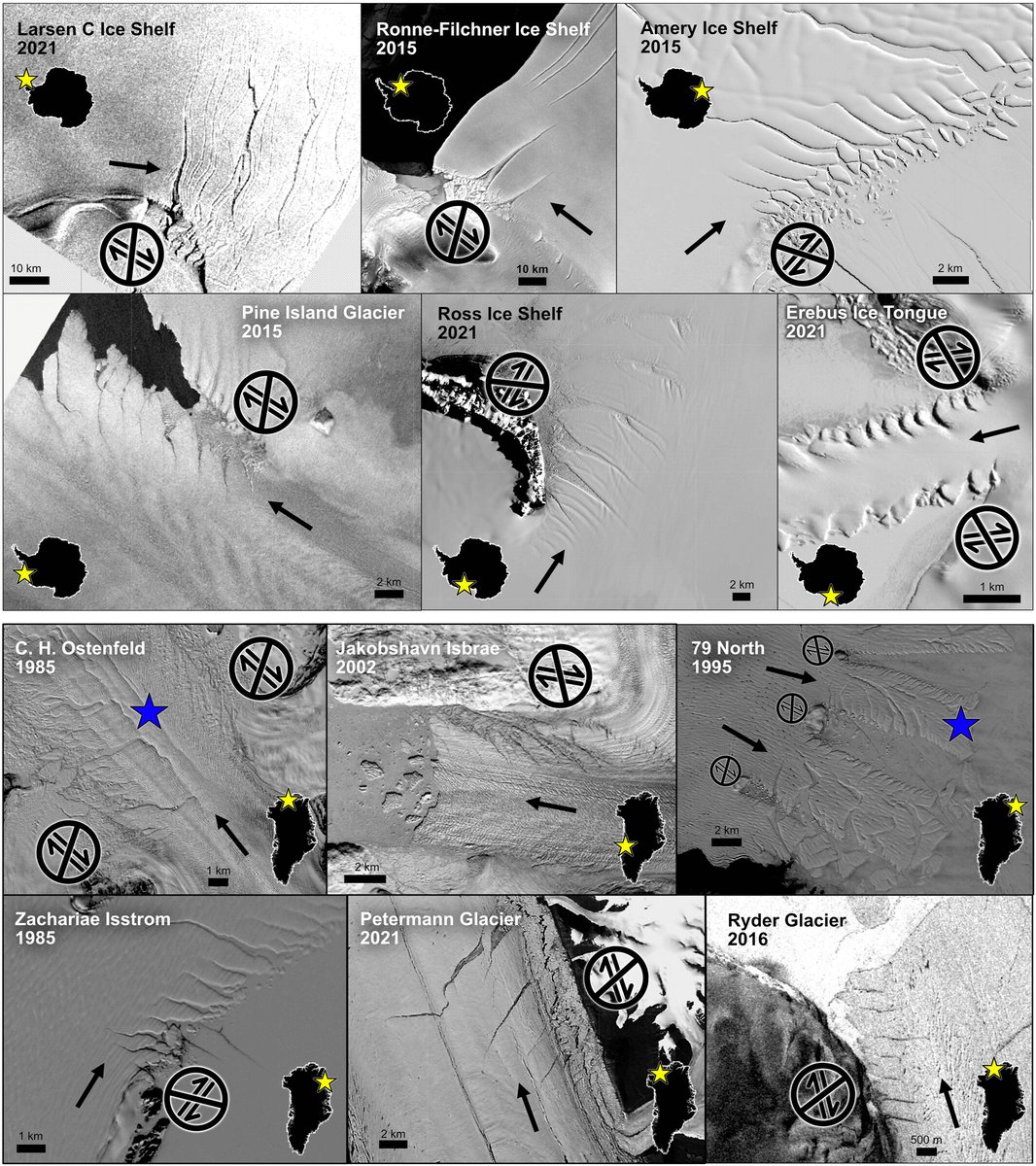
Ever wondered why the edges of floating ice tongues look feathered? Check out this paper by @TimBartholomaus's former PhD student Chris Miele: https://t.co/5cn35BGddW Chris used the icepack model (https://t.co/8uTaZPBQfV) to show loss of side friction causes extension & rifting!
In a very wholesome moment at our research group dinner yesterday, we reminisced about the best #clouds ☁️ we'd ever seen. In case anyone's wondering, these are my top 3 📷
🔥 pyrocumulus in Colorado, 🛸 lenticular on Mt. Rainier, & 🏔️ a perfect band of clouds on the Tetons
Out today! Our new study in #AGUpubs: “Quantifying Antarctic-Wide Ice-Shelf Surface Melt Volume Using Microwave and Firn Model Data: 1980 to 2021” https://t.co/3sL1BHdu0u
W/ co-authors N Wever, @DevonDunmire & @gsnowph
@CIRESnews@NSIDC @CUArtsSciences @AGU_Cryo@ProtectWinters
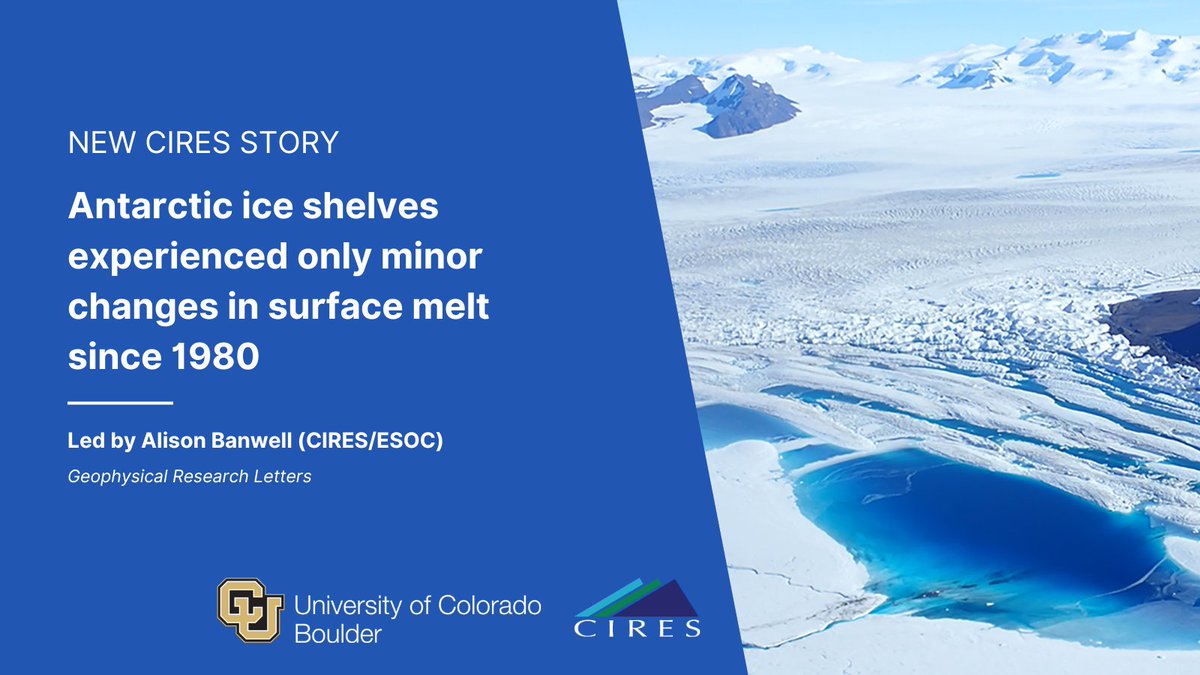
Antarctic ice shelves experienced only minor changes in surface melt since 1980, according to a new CIRES/@CUBoulder-led assessment. But the authors of the paper expect melt to increase in the coming decades. Read the story: https://t.co/1YPWNsMAYA
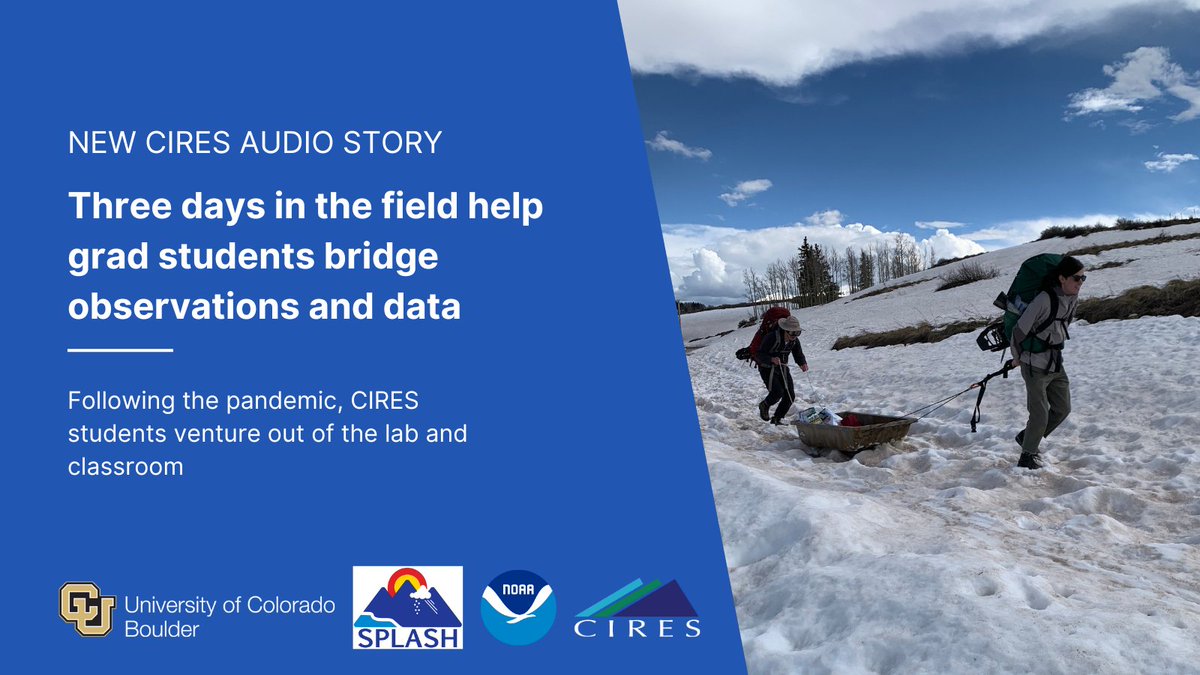
🎙️ New CIRES audio story — Three days in the field help grad students bridge observations and data! Listen or read the story by CIRES' @SMaltarich: https://t.co/M7dA3hkxzo
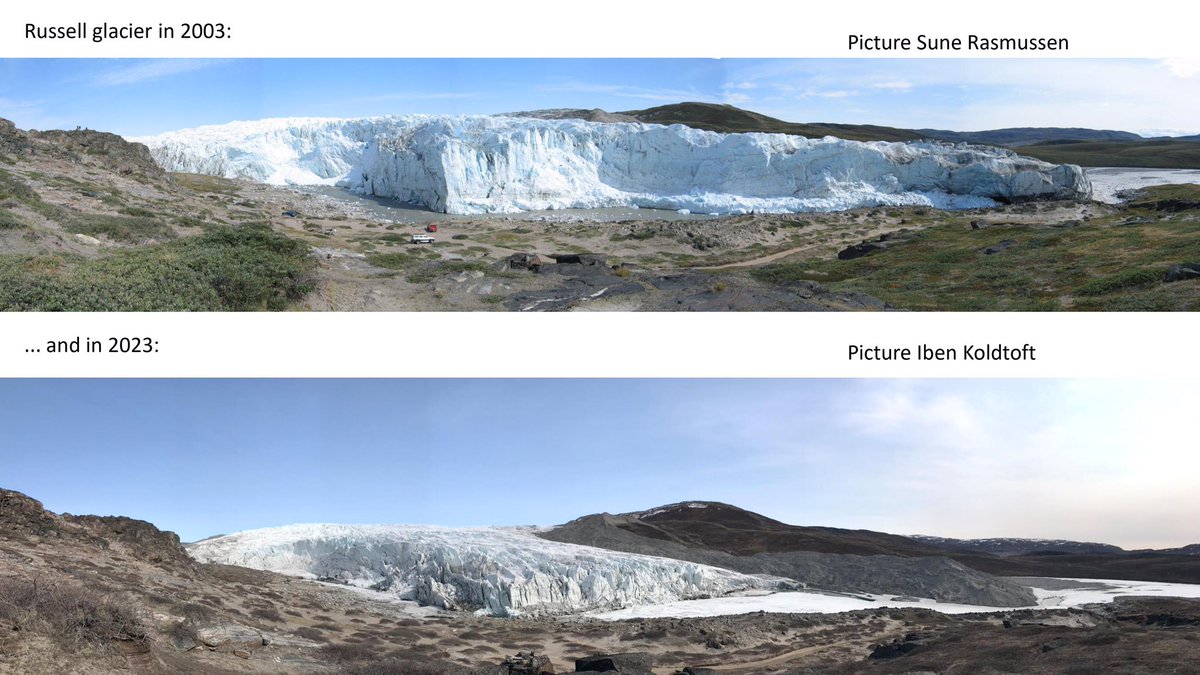
Today we show the 20-year development of the Russell glacier that can be visited from Kangerlussuaq and that many of our field participants have visited over the years. The glacier is connected to the Greenland ice sheet and is a popular sightseeing spot as it is quite impressive








![StefLhermitte's tweet photo. 📢 Exciting Announcement! The firn Symposium's review paper is out in @NatRevEarthEnv, shedding light on the crucial role of firn in Greenland and Antarctic ice sheets 🏔️❄️ 🌊 [1/n].
📰 https://t.co/BB6BxXmV1k [Behind 💰-🧱, so DM if you want a copy] https://t.co/qnhoV2VPaW](https://pbs.twimg.com/media/GEmHBpnXYAAJjLo.jpg)