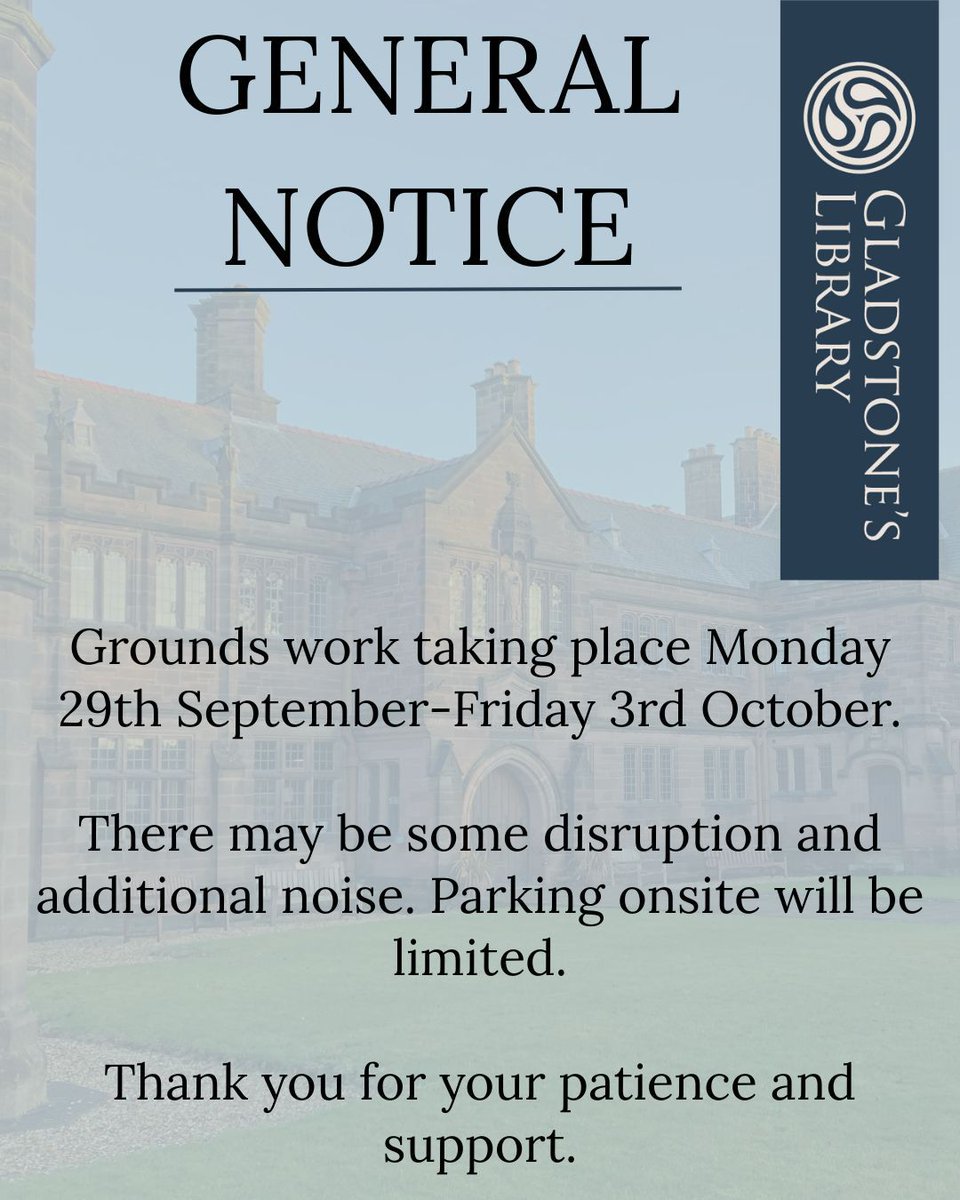
We have grounds work taking place (mainly outside the building) from Monday 29th September until Friday 3rd October. There may be some disruption and noise, and parking will be limited.
Thank you for your patience. We look forward to telling you some exciting news soon!
Enjoy a sit-down lunch or snack in our Food for Thought restaurant. We have plenty of toilets on site, including an accessible toilet with baby changing facilities.
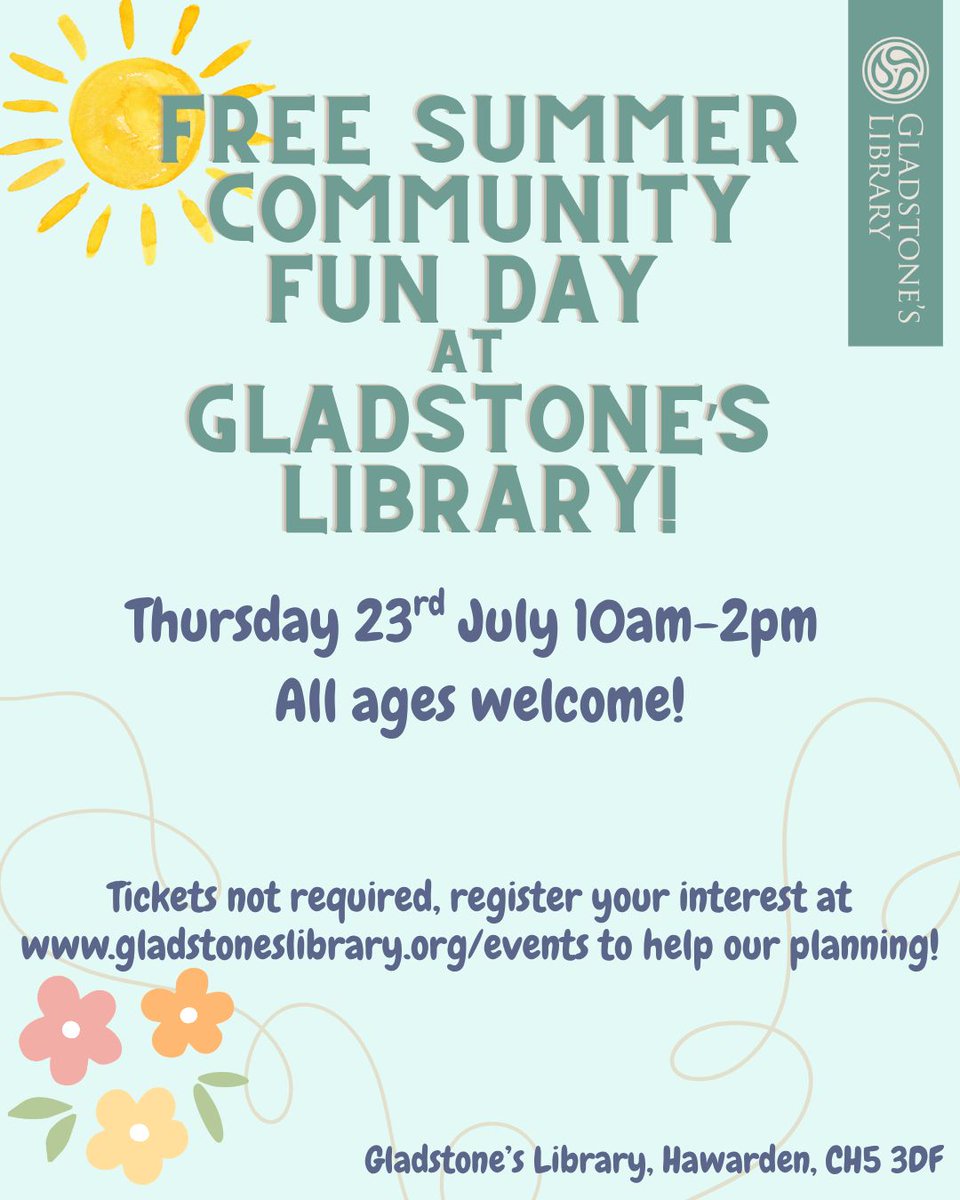
Come along to our second free Summer Community Fun Day on Thursday 20th August 10am-2pm!
Join us for a fun-filled day for all ages! Travel along our story trail finding activities like clay model making, sun printing, badge making, mini book making, and more!
🗓️Thu 23rd July
🕑️Drop in 10am-2pm
🎟️Free. Register your interest on our website to help our planning!
📣 New: The Mary McCullen Scholarship, awarded for any piece of work, broadly interpreted, that reflects Gladstone’s vision of relations between Britain and Ireland
✨️One week scholarship
✨️Competitive application scheme
✨️Deadline 3rd August
Visit our website to apply!
Gladfest is now a month-long celebration! This year, get involved with our Gladfest Writing Competition, Gladfest Fun Day (Thursday 20th August 10am-2pm), and Friends-Exclusive Afternoon Tea with the Warden. Keep an eye out on our website, newsletter and social media for details!
📖 Gladfest Literary Festival: Tickets Now Available!📖
🗓️ Saturday 29th August 2026
🕑️ 10am-9pm
🎟️ Full Gladfest Ticket: £130 (includes all events, lunch, dinner and refreshments)
🎟️ Day Only Ticket: £100. (includes the day-time programme, lunch and refreshments)
We bring together beloved voices, emerging talent and passionate readers for a day of stories and conversation. Whether you’re a longtime Gladfest attendee, a Gladstone’s Library supporter, or discovering us for the first time, we can’t wait to see you.
New: The Peter C. Erb Scholarship in Nineteenth-Century Studies in honour of the Canadian academic Peter C. Erb
One-week scholarship for an early career postgraduate researcher or academic working on 19thC British studies or the relationship between Church and State.
APPLY NOW!
Did you know?
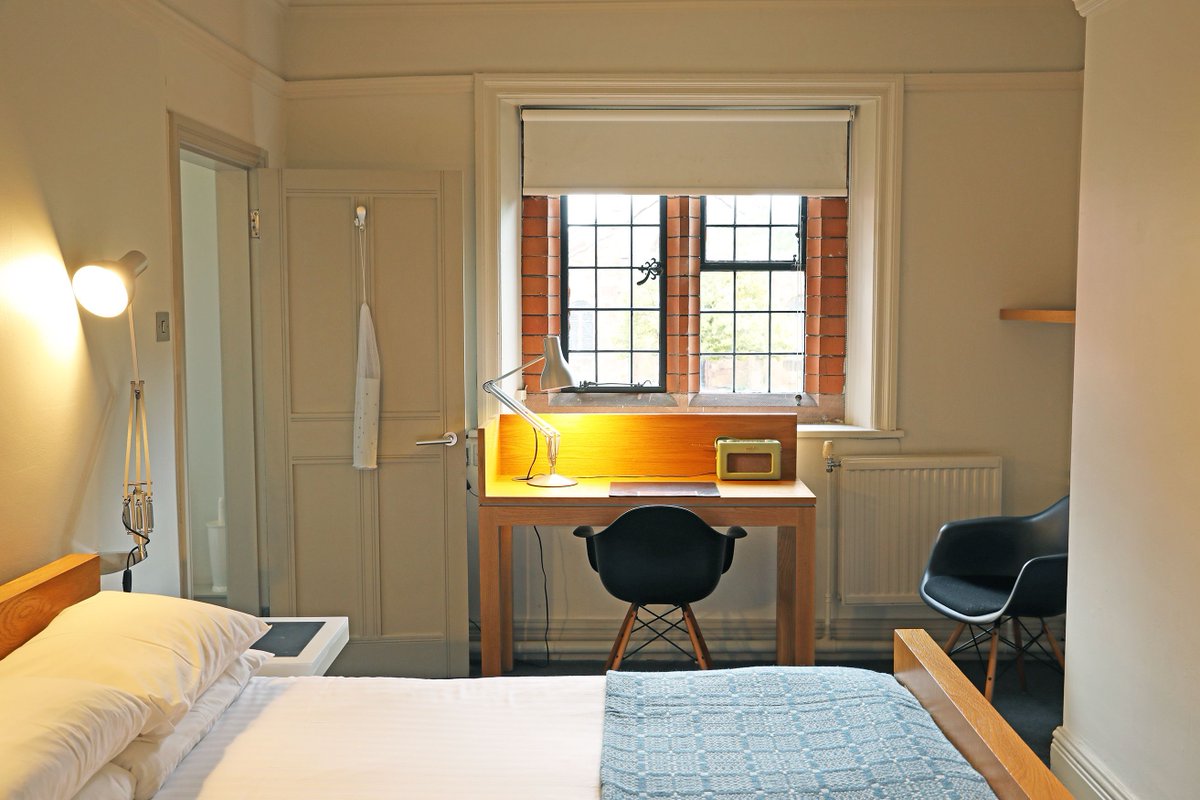
Gladstone's Library is a residential library! We have 26 bedrooms, an on-site restaurant and a comfortable guest lounge and residents can access our silent Reading Rooms from 9am-10pm 7 days a week!
🗓️ Book today by going to our website and clicking 'Rest'.
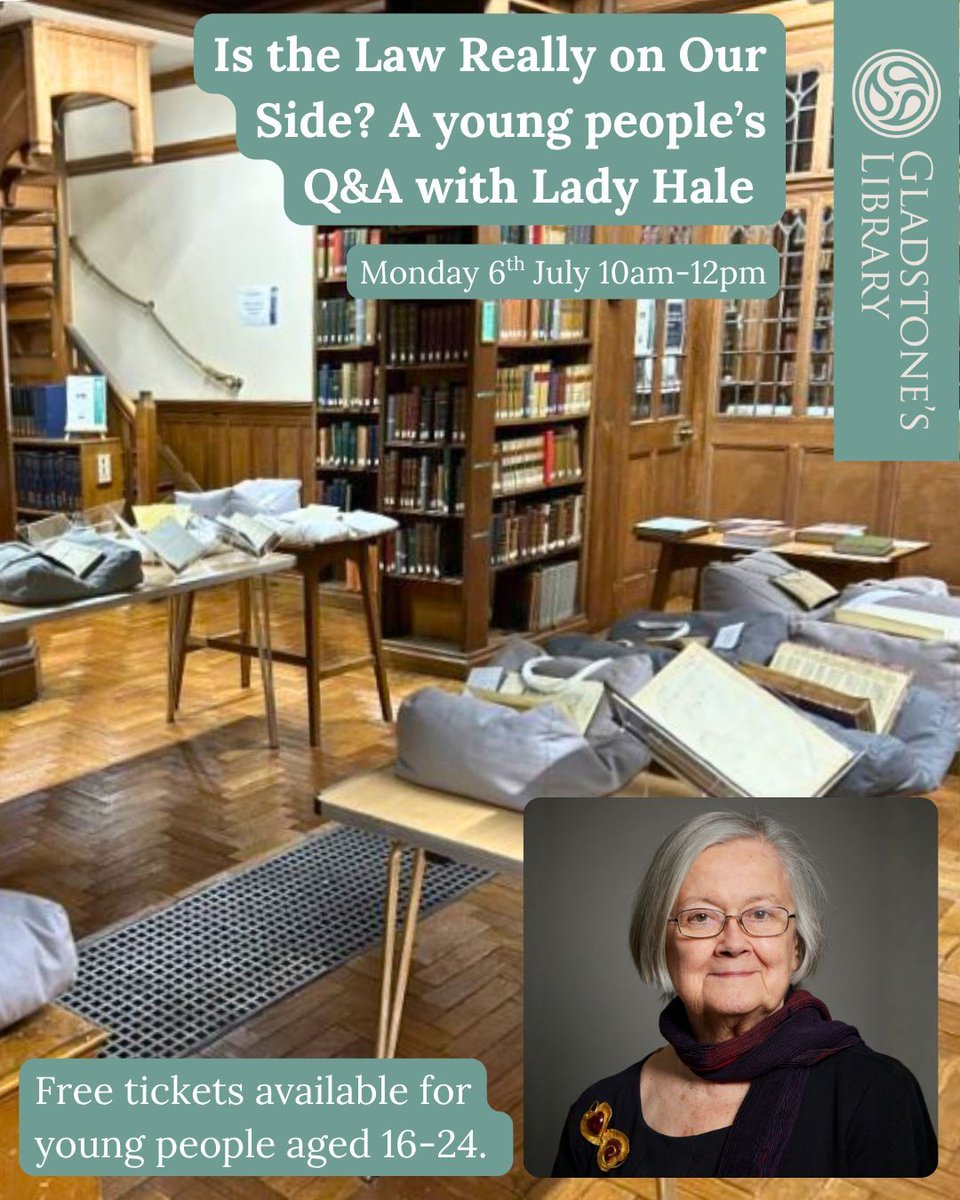
Is the Law Really on Our Side? A young people’s Q&A with the first female President of the UK Supreme Court, the Right Honourable the Baroness Hale of Richmond DBE.
🗓️ Mon 6 Jul
🕑️ 10am-12pm
📍 Gladstone's Library
📖 For ages 16-24
🎟️ Free tickets here: https://t.co/WDYJCL3VTC
📣 Gladstone's Library Scholarships: Applications for 2027 Now Open!📣
- Two new scholarships
- 23 scholarships available
- Go to our website -> Scholarships and Residencies for information and to apply
APPLY NOW! Applications close at 11.45pm on Monday 3rd August 2026.
📣We're Hiring: Reading Room Assistant
You will work front of house in the Library’s busy Reading Rooms in a team of four. This part-time role is front-facing and includes lots of interaction with the public.
Visit our website to apply. Application deadline: 7th July at 10am.
Tickets for Saturday morning are £40, and includes:
📖 Lectures from Gladstonian researchers and enthusiasts
✉️ An exhibition from the Reading Rooms team
🥪 A two course lunch in our Food for Thought Restaurant
To purchase tickets please visit our website, link in bio!
There are still morning tickets available for Gladstone Umbrella, a friendly and engaging conference dedicated to William Ewart Gladstone, the Victorian statesman affectionately known as the “Grand Old Man”.
Is the Law Really on Our Side? A young people’s Q&A with the first female President of the UK Supreme Court, the Right Honourable the Baroness Hale of Richmond DBE.
🗓️ Mon 6 Jul
🕑️ 10am-12pm
📍 Gladstone's Library
📖 For ages 16-24
🎟️ Free tickets here: https://t.co/WDYJCL3VTC
📢 General Notice 📢
Due to our Alibis in the Archive crime writing festival taking place this weekend, the Reading Rooms will be closed from Friday 5th June - Sunday 7th June.
We apologise for the inconvenience.
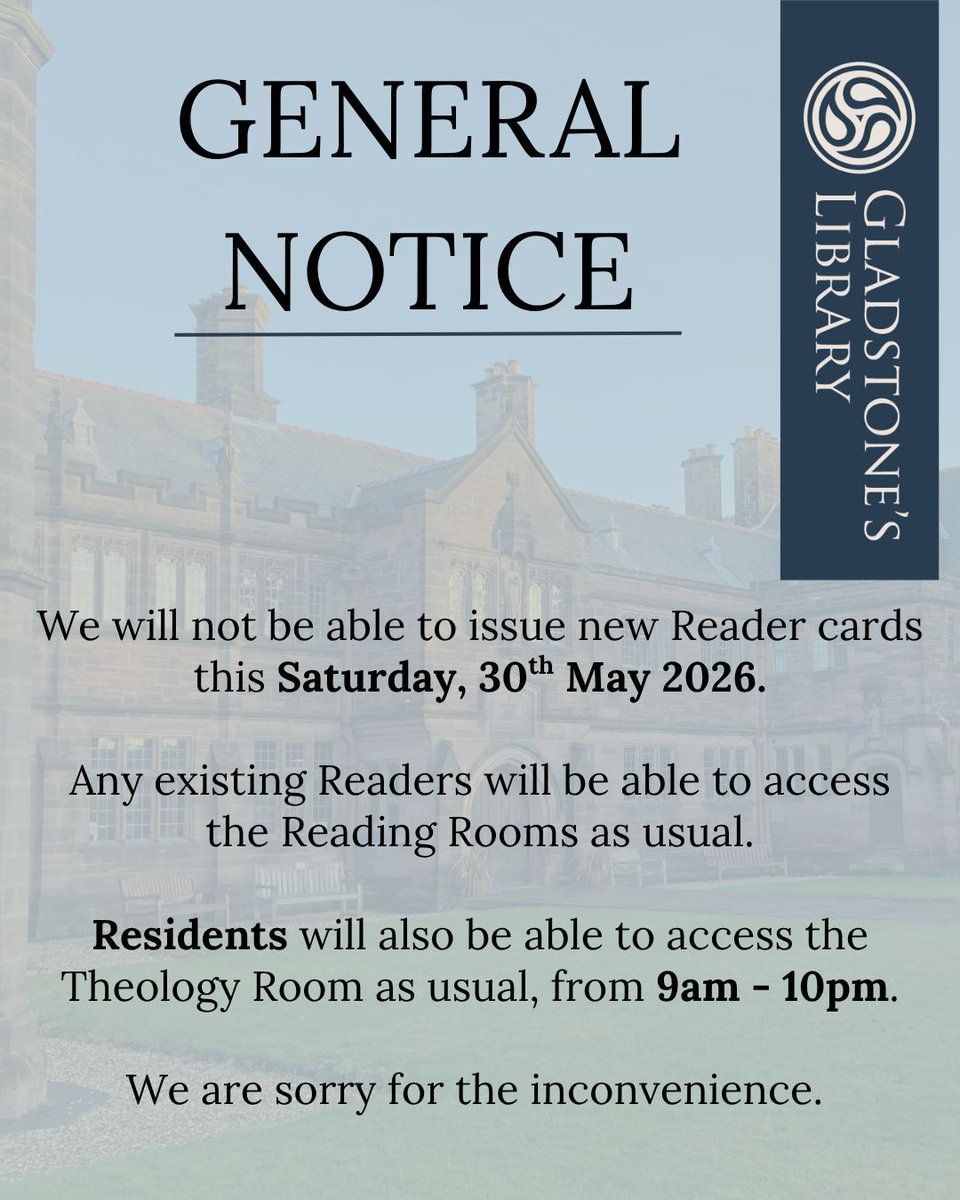
📢 General Notice 📢
We will not be able to issue new Reader cards this Saturday, 30th May 2026.
Any existing Readers will be able to access the Reading Rooms as usual. We will be able to issue new cards from Sunday, 31st May.
We are sorry for the inconvenience.
Residents can enjoy our Theology Room until 10pm daily. Find somewhere cosy to sit and enjoy our peaceful surroundings, in the morning, afternoon or evening!
To book a stay please visit our websitr (link in bio!) or call our Reception on 01244 532350.