Just watched a video where boris from claude code talks about his insanely hands-off dev workflow.
It's cool to see how excited he is about the future of engineering
And it makes me really want to dedicate some time to nailing my skills and routines and such so that i'm maximizing my dev output.
Building Nero has made me realize that hiring is the most important part of a business.
It's feels like an obvious take but it's been interesting experiencing it for myself.
We sucked without the smart, hard-working, high agency people that work at Nero.
And the primary thing between us and a successful business is hiring more of them.
Hiring a contractor in Latam has boosted our shipping speed by 30-40%
Here's the story:
I was so against hiring a contractor cuz of a shitty experience I had with one while at my corporate SWE job. He was super lazy and only finished 1 ticket in 3 months.
It gave me a terrible impression of contractors for the longest time. I forgot that they fall onto the same bell curve of competence as the rest of humanity ... most of them suck at their job, some are decent, and some are great.
Flash forward, 2 months into the hiring process for our full-time engineer at Nero, and I'm frustrated with the inaction we're succumbing to ... I just want projects DONE. So, I decided to hire a contractor in the meantime.
A few weeks into it, here are my thoughts -
He isn't a CMU or MIT grad, I can't trust him fully with shipping features end-to-end ...
But he can take features that I've been dreaming about to 80% completion. And that makes all the difference between a product that stays stale and a product that's constantly improving.
Not sure if I'll keep him after I hire a full-time eng, but it's the best $5,000 I've spent in the eng org so far.
So Nero's come a long way since November.
We now have 650k MAU and paid out over $3.5M to artists.
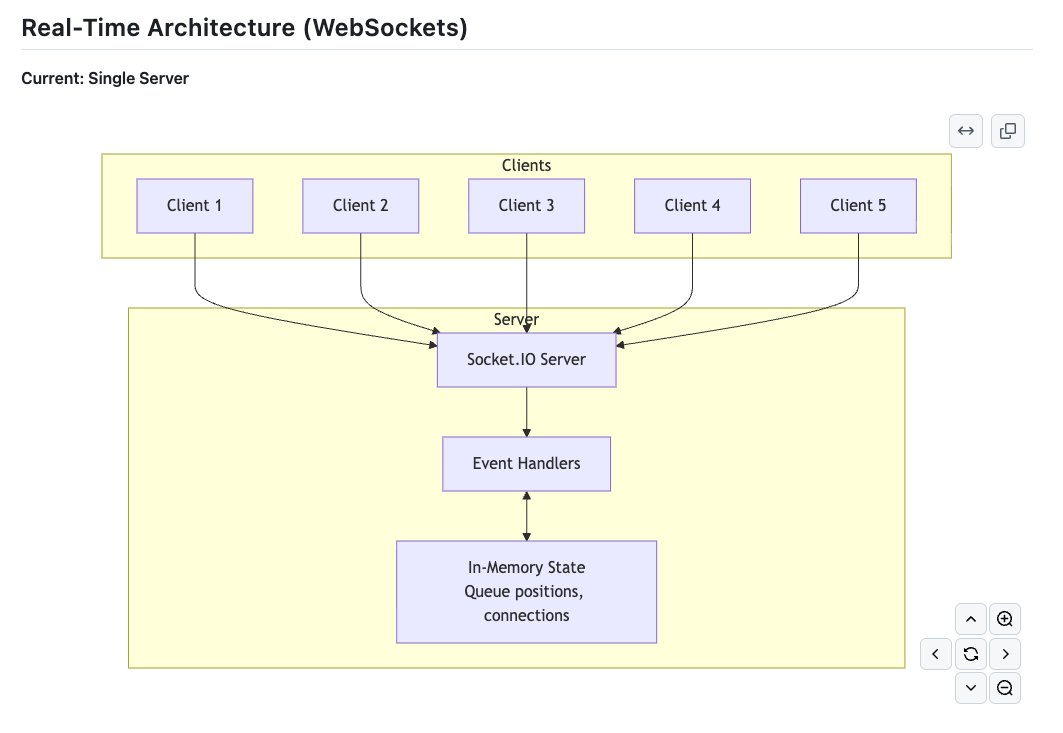
But it's not the most robust system yet -- with this kind of traffic, our current queue architecture won't hold up forever.
I knew it's gonna break but I wasn't sure when or where the breaking point was. Like ...
- how many submissions / sec can we handle?
- how large can sessions get before it lags?
- how many connections can each session handle?
So instead of waiting, I decided to break it myself!
I built a stress testing suite with artillery that slams our staging app (which has same resources as prod).
But that was basically a black box - so I added timers to everything.
These tracked the ms duration of every important action taken -- DB writes, Redis mutations, web socket broadcasts, etc.
So the plan was simple -- slam our server with scaling submission speeds + connections and watch what breaks first.
And it worked really well :D
We don't have to guess when or how our system will break anymore!
And based on our historic growth, we can estimate how many months we have before a refactor is necessary woohoo
you realize you can negotiate with them right?
they took significantly less than that from our company, even when we were below $50k MRR
surprisingly, they really want to keep startups from jumping to other payment processors
I really want to buy this wine red Les Paul.
But I'm still saving up for it. So instead, I used Gemini to will it into existence.
It generated me with symmetrical features, lower BF %, sharper jawline, curlier hair AND with my dream guitar AND in a cool lil living room playing it.
I always thought visualization / goal setting was cringe af but some of it is actually backed by research ... sooo new target acquired?
I used @claudeai Opus 4.5 to generate architecture and sequence diagrams and the results were incredible.
I used to spend days making shitty visuals at my previous SWE job.
This is an underrated use case for LLM dev.
I'm hiring a founding engineer at https://t.co/M3A7JPmkX3!
Offering $140k-180k + equity for in-person SF.
We're working on really cool technical problems AND helping creators make money on livestreams.
https://t.co/FOzbyzsIJ9