"Norway play England on Saturday. Whatever the score, the fish has already made its point. Turns out the marginal gain the sports scientists keep hunting for was just food that hadn't been to a factory". @SamaHoole
Norway brought their own fish to the World Cup, and America took it personally.
Roughly five hundred and eighty kilos of it, flown across the Atlantic by a chef who has cooked for the team for thirty five years. Salmon, trout, halibut, brown cheese, a hundred kilos of Jarlsberg, king crab, snow crab, the lot. Four meals a day for sixty people, all shipped into a country with more food than anywhere on earth, on the apparent grounds that none of it could be trusted.
You can see their point. They landed in the nation that looked at cheese and invented a version that comes in a spray can. That looked at bread and made it sweeter than cake. That put corn syrup in the salad dressing and called the bin lorry a food truck. Somewhere in Greensboro there is a team chef who took one look at the local options and quietly ordered a pallet of halibut.
The internet decided this was arrogance. Searches for the Norway diet went up by thousands of percent. A journalist actually asked the coach whether they had enough fish to last to the final, which is the single most Norwegian sentence ever spoken at a press conference.
And here is the joke underneath it. A team eating fresh fish and real cheese has become an international talking point, a novelty, a faintly eccentric Viking eating disorder. Not because it is strange. Because everyone else is running on gels, powders and a fizzy drink the colour of a warning label, and a plate of actual food now looks like performance art.
Norway play England on Saturday. Whatever the score, the fish has already made its point. Turns out the marginal gain the sports scientists keep hunting for was just food that hadn't been to a factory.
Seems like Norway's Erling Haaland doesn't really believe in the low-fat, "Prudent", "heart healthy", high carbohydrate, "Mediterranean", "athletic" diet. He must be the modern dietitian's absolute worst nightmare.
Allegedly this is what he eats:
"What's on the plate: - Beef heart and beef liver, by choice, from the butcher - Tomahawk, ribeye, short ribs, the fattier the better - Eggs, most mornings, on sourdough - Salmon, mackerel, sea bass - Raw milk, by the glass, in the coffee, blended with greens - Raw honey - Butter, rice, sourdough - His dad's lasagne before every home game. A kebab pizza once a year, if he's lucky What never touches it: - Seed oils - Fizzy drinks - Alcohol, near enough none - Protein powders and processed supplements. Not one - Ultra-processed anything - Tap water. He filters it The official guidance spent fifty years telling you to fear that plate. The best striker alive built it on purpose and is knocking the five-time champions out of a World Cup with it".
Joe Rogan gets so excited when sunlight expert Rowan Jacobsen tells him coffee is the best supplement that exists today:
ROGAN: “Is coffee actually good for you?”
JACOBSEN: “Coffee is SHOCKINGLY good for you. It’s crazy how powerful the evidence is.”
ROGAN: “I’ve read that it’s bad for you, but I dismissed it because I’m biased. I love coffee. It tastes too good and feels too good.”
JACOBSEN: “It’s the best supplement in the world.”
ROGAN: “Really? What makes it so good?”
JACOBSEN: “It improves mitochondrial function. I think caffeine is a major part of it, but coffee contains other compounds too. Tea doesn’t seem to deliver the same benefits.”
ROGAN: “That’s interesting.”
JACOBSEN: “Plants actually produce caffeine to kill insects. It makes their mitochondria run completely out of control until they basically blow up.
Humans have systems that slow down that reaction, so we get the energy boost without the explosion. It helps us produce energy more efficiently with less wear and tear.”
ROGAN: “That’s all I needed to hear. I’m in. I love coffee and I’m never giving it up.”
🤔 What if fatty liver disease isn't a liver problem?
A new study in Hepatology suggests that metabolic dysfunction is the real driver, and that a ketogenic intervention may stop it before it starts. @AdamWolfberg joins @bschermd to break down new research.
Most people think the true physiological problem only appears during maximal exercise.
It may not.
Emerging physiology suggests the hidden dysfunction may appear during sustained work around FatMax / VT1 — the exact zone where the body should still be comfortably aerobic.
In healthy athletes:
lactate remains controlled,
ventilation stable,
muscles resilient,
autonomic regulation coordinated,
and the brain receives a “safe to continue” signal.
But in individuals with impaired mitochondrial or neuro-metabolic adaptability, the SAME zone may expose:
abnormal fatigue,
reduced fat oxidation,
blunted lactate responses,
ventilatory inefficiency,
autonomic instability,
PVC amplification,
brain fog,
post-exertional crashes.
Importantly:
many of these abnormalities may NOT appear during:
maximal stress ECG,
routine scans,
structural investigations,
or standard blood tests.
Internal case studies in Cape Town demonstrated this clearly:
maximal CPET defined the physiological boundaries, but sustained training around FatMax / VT1 exposed the hidden instability.
The emerging hypothesis:
FatMax / VT1 may function as a physiological “signal amplification zone” where the nervous system continuously evaluates whether stable aerobic energy production remains safe.
This aligns remarkably with:
@ProfTimNoakes’ central regulation model,
Dr Marius Bakken Norwegian threshold model,
and Prof George Brooks’ lactate shuttle physiology.
The question may no longer simply be:
“How hard can the body go?”
The more important question may be:
“How stable can the body sustain energy production under controlled physiological stress?”
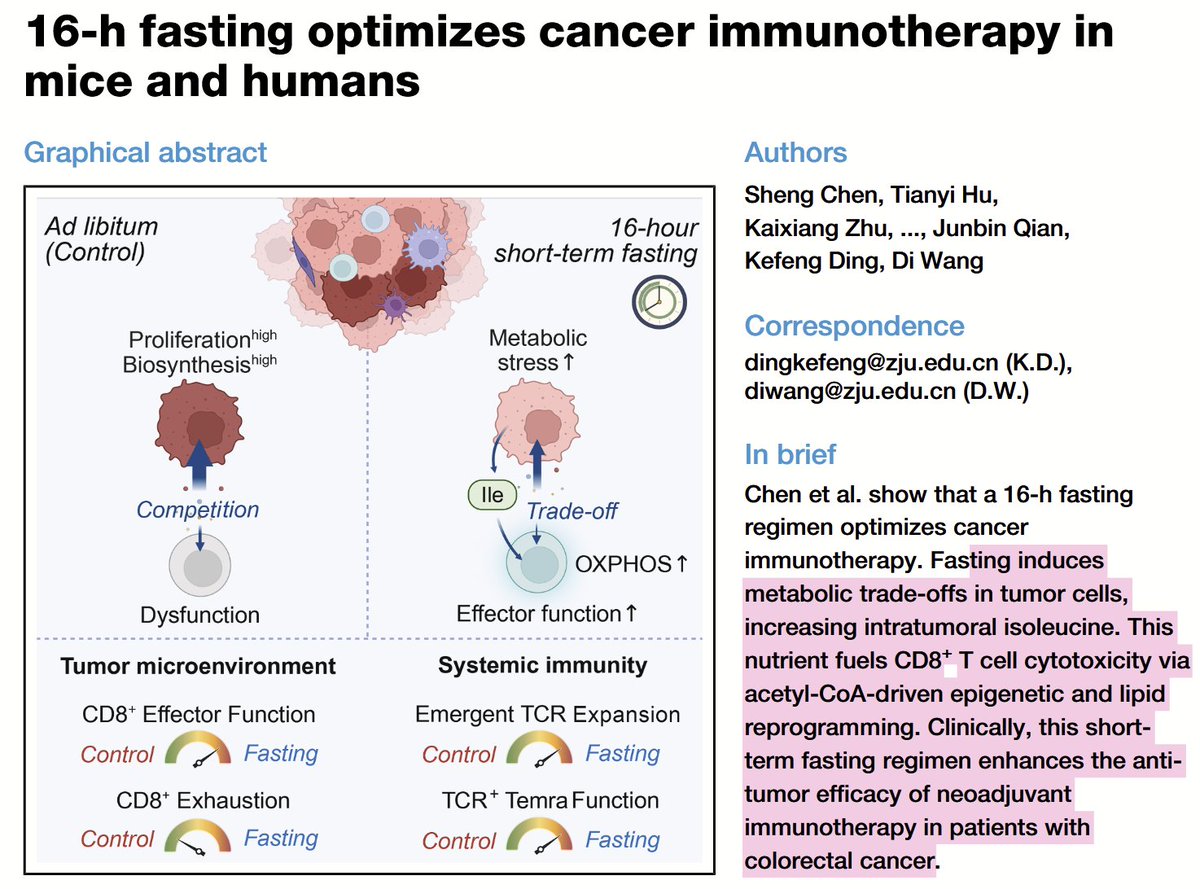
A 16-hour fasting regimen may boost cancer immunotherapy. Transient nutrient stress reshapes tumor metabolism, increasing isoleucine in the TME and enhancing CD8+ T cell function. In mice & patients, short-term fasting improved immune response—offering a feasible way to strengthen treatment.
#Fasting, #immunotherapy, #cancer,
https://t.co/gFZCA0Ig2h
Two dietitians reported a doctor for telling diabetics to eat butter.
Two years later, the government sided with the doctor.
Dr. Annika Dahlqvist. Family physician in northern Sweden. She started recommending low-carb high-fat eating to her overweight and diabetic patients. They lost weight. Diabetics dropped insulin. Some came off medication entirely.
Two dietitians did not like that.
They filed a malpractice complaint with Sweden's National Board of Health and Welfare. The charge: recommending fat to diabetics endangered their lives.
The Board could revoke her license.
Her own clinic fired her in November 2006. She spent two years in professional limbo. The Board reviewed the science. Slowly. While Sweden's diabetes and obesity rates kept climbing.
January 2008. The verdict came back.
Dr. Dahlqvist had done nothing wrong. The Board ruled, in writing, that low-carb high-fat eating was fully compatible with current science.
The dietitians wanted her shut down. The science shut them down instead.
That single ruling cracked Sweden open. LCHF spread through the country in a way it had nowhere else on earth. Kostdoktorn (Diet Doctor) was founded the same year. Within a decade, surveys showed roughly one in four Swedes had tried low-carb. It is now one of the most popular diets in the country.
When two dietitians filed that complaint, they thought they were ending her career.
They were starting a movement.
#AnnikaDahlqvist #LCHF #LowCarbHighFat #DiabetesReversal #Sweden #DieticiansVsScience #FoodIsMedicine #RealFood #ButterNotMargarine
Agreed. This is all part of an anti-human perspective. If you view humans as a plague on the planet, this is justified. If you views humans as the reason for the planet, it isn’t. Humans need meat and animal products to thrive.
All life, of any kind, requires death. Too many want to pretend otherwise.
Is 4 cups the sweet spot for cellular longevity? ☕📈
A 2025 study found an inverted J-shaped curve between coffee intake and telomere length, a key marker of biological aging.
Up to 3–4 cups per day was associated with telomeres equivalent to a biological age roughly 5 years younger than non-drinkers. Beyond that, the advantage disappeared.
The Science
The proposed mechanism fits the hormesis model: polyphenols in coffee appear to reduce oxidative stress and activate adaptive cellular defense pathways, but only at moderate doses.
Excess intake may generate reactive oxygen species that counteract those same protective effects.
One important caveat: This specific study was carried out in patients with severe mental disorders, a population already at elevated risk for accelerated cellular aging.
Whether the 3–4 cup threshold applies equally to the general population requires further research.
If you're already hitting 3–4 cups, you're likely in the zone. Going beyond it doesn't appear to buy you more biology.
#CoffeeScience
#CoffeeHealth
Source: Aas, M., et al. (2025). Coffee consumption and telomere length in individuals with severe mental illness. BMJ Mental Health.
Could coconut oil support brain function in Alzheimer’s?
Many people with cognitive decline experience issues with glucose uptake in the brain. As a source of ketones, coconut oil may provide an alternative fuel for the brain.
Research is early, but compelling. 🥥🧠
Rhonda Patrick just dropped a bombshell at Natural Products Expo 2026.
Just 1 gram of omega-3 a day slows biological aging at the DNA level and reduces invasive cancer risk by 61%.
This could be the biggest longevity finding of the decade.
Here's everything you need to know:
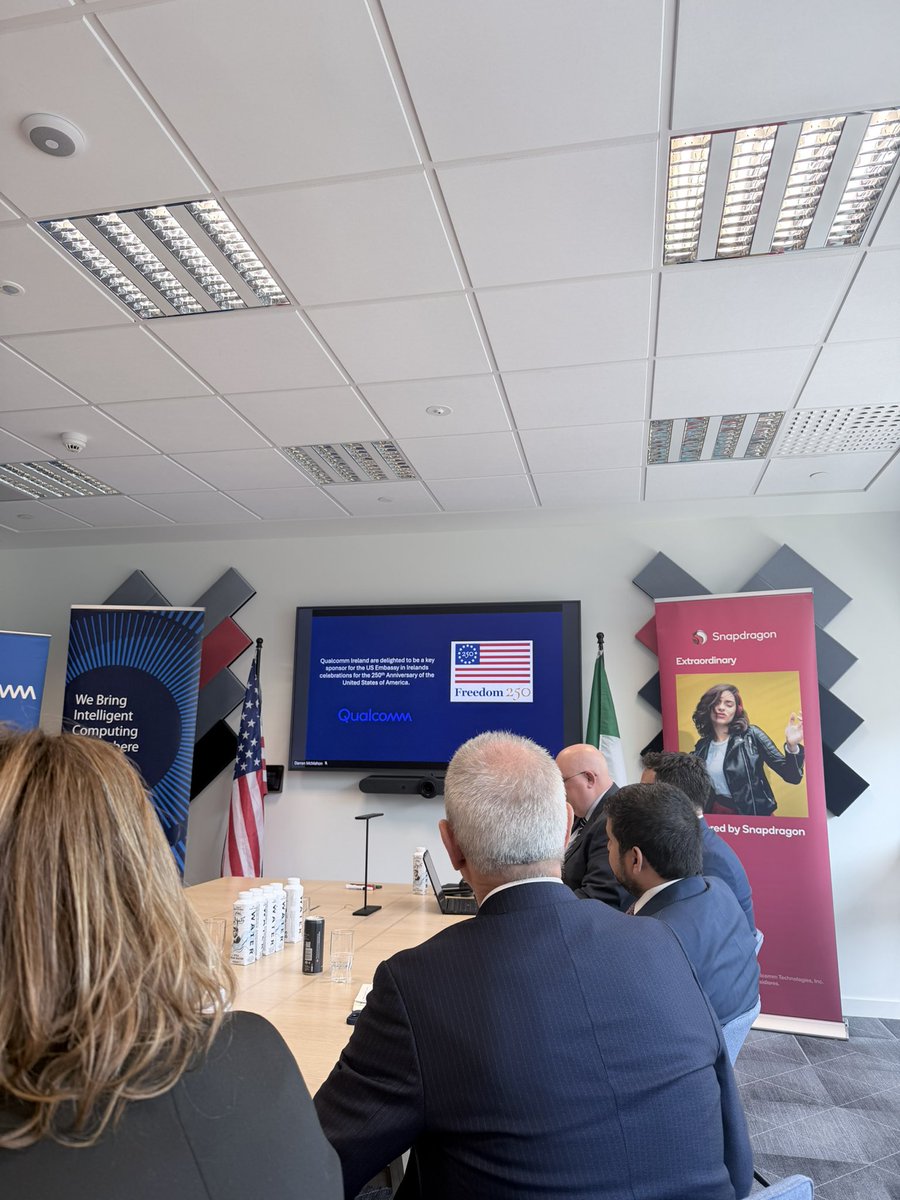
I was delighted to visit @Qualcomm@Qualcomm_EU to hear about its exciting work developing new AI technologies at its R&D hub in Cork. Good to see their operations in the region are making @Qualcomm more innovative and more competitive globally. 🇺🇸 🇮🇪
Great writing on energy, health, and the human experience.
"health isn’t just something we build through better inputs — better diets, better habits, better routines — but something we experience as the quality of energy moving through us. And the difference between feeling alive and merely being alive may come down to how well we learn to notice and work with that flow."
Thank you Jasna Hodzic @bigthink
https://t.co/jHKAvq7DQ6