GLOBAL LABOUR JOURNAL is an open access, peer reviewed online journal serving as a forum for diverse scholarly work emerging on labour activities worldwide.
Marco Marrone reviews Ruth Dukes and Wolfgang Streeck's "Democracy at Work", writing "the 'sociology of labour law' lucidly developed by [the authors] may not only open a new field of... studies, but also provide key tools to pursue 'Democracy at Work'": https://t.co/tc1sXTYTkL
Jaseok Kim reviews "Dying for an iPhone" by Jenny Chan, Mark Selden and Pun Ngai, a book whose "purpose... is to inform people of labour issues hidden behind the transnational chains that combine production with consumption.": https://t.co/dDaBXfjK4r
Pierre Rouxel and Karel Yon, in "From Pension Reform to Regime Crisis: The Social Movement of 2023 in France", examine both the role and limits of organised labour and its mobilisation within the landscape of France's current industrial and protest action: https://t.co/erraqPWykT
Siviwe Mhlana, in "Precarious Work and the Gendered Individualisation of Risk in the South African Manufacturing Sector, 2002–2017", argues that the gender composition of precarious work is key to addressing persistent inequalities in today's South Africa: https://t.co/4VEblprxsp
In A Regime Analysis: Evidence from Sri Lankan Migrant Domestic Workers' Journeys to Saudi Arabia, Wasana S. Handapangoda examines the Sri Lanka-Saudi care regime and its reproduction by the relations between family, the state and capitalist market forces: https://t.co/AgWX0SNakp
Jean-Christophe Graz, Patrícia Rocha Lemos, and Andréia Galvão answer the titular question of their article "Do Labour Standards Improve Employment Relationships in Global Production Networks? A Cross-sector Study of Brazil" with an emphatic "no": https://t.co/L442jzcAmj
Edward Cottle deploys Lenin's quantitative method as a framework to better analyze qualitative aspects of South African strike dynamics and worker mobilisation in "Industrial Action in South Africa (2000-2020): How to Read Strike Statistics Qualitatively": https://t.co/ekDt3QEt0Y
In "Commercial Surrogacy: Invisible Reproductive Workers in Ghana", Owusu Boampong, Sabina Appiah-Boateng, Nana Yaw Osei, and Richard Ametefe explore the labour conditions faced by surrogates, arguing for greater regulation for these reproductive workers: https://t.co/2ZgxiN76pk
Thomas Klikauer reviews Nithya Natarajan and Laurie Parsons’ (eds) "powerful collection on the issue of global warming and labour", "Climate Change in the Global Workplace - Labour, Adaptation and Resistance": https://t.co/s2pyxblQ5l
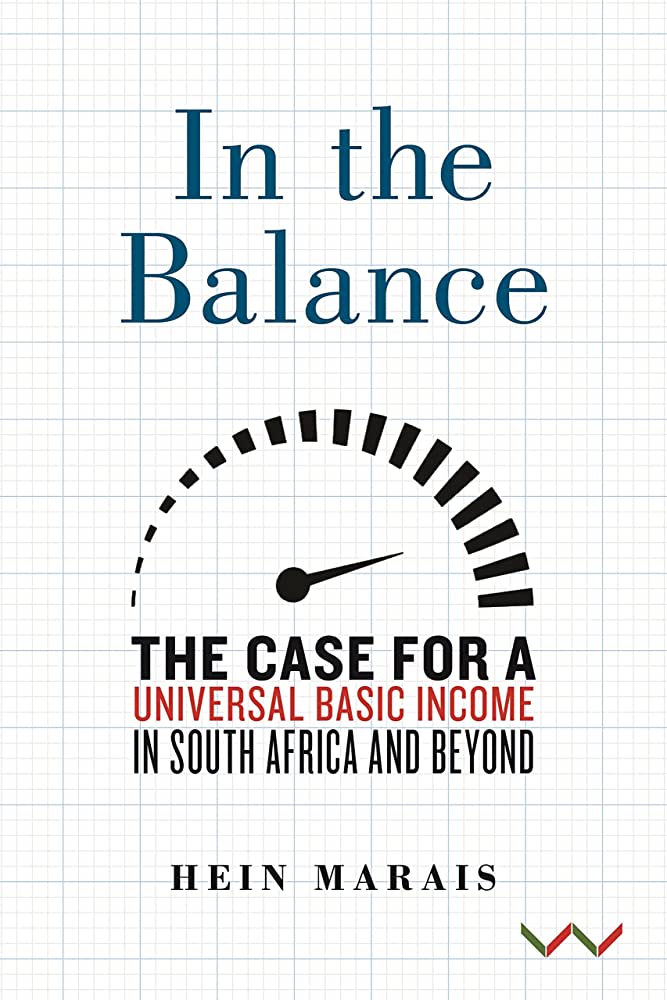
Larry Liu reviews "In the Balance: The Case for a Universal Basic Income" (2022) by Hein Marais, who "makes an exciting case for the introduction of a universal basic income in South Africa": https://t.co/GSXiCZ6QRB
@PadraigCarmody reviews "The Digital Continent: Placing Africa in Networks of Work" by @ibalilebali and @geoplace, describing the book as "a highly original contribution given its focus and empirical depth": https://t.co/JcevQtKGek
In "Lula's Third Term: National Reconstruction in Difficult Times", Jörg Nowak delineates the challenges faced by the third Lula gov't, including the threat of right-wing populism, needed labour code reform, and prior regimes' ultraliberalist policies: https://t.co/4yLQqgrgUz
In "Contesting Digital Technology through New Forms of Transnational Activism" @sociologymadala & Carmen Ludwig explore the role of global union federations in opposing tech-driven privatisation and digitalisation at both the local and global levels: https://t.co/fhFHWiLYC8
Rie Miyazaki explores Italy's ratification of the Domestic Workers' Convention (C189), arguing that tripartism and a top-down ratification process which excluded migrant domestic workers has perpetuated the undervaluation and exploitation of said workers: https://t.co/mKtvejarQH
"As I concluded two decades ago, the fight against poverty has spiralled down to a fight against the poor... this metamorphosis was and still is the real crisis of world capitalism." Read Jan Breman's article "A Short History of the Informal Economy" here: https://t.co/jcZTS5zsDe
In "Water Grabbing, Capitalist Accumulation and Resistance: Conceptualising the Multiple Dimensions of Class Struggle" @Andreas_Bieler and @Madelainefmoore argue that water struggles are potential forms of class struggle against capitalist accumulation: https://t.co/lgN4Q6RqaH
The editorial board thanks Alexander Gallas and Maria Lorena Cook for their service as editors and welcomes Maurizio Atzeni and Nicolas Pons-Vignon to the Board: https://t.co/TGK5rHfwdY
The submission deadline for the 8th Regulating for Decent Work Conference has been extended to Feb 7. The conference will be held July 10-12, with a theme of "ensuring decent work in times of uncertainty". The call for abstracts can be found here: https://t.co/UkpsCB0EqM







![GlobalLabour's tweet photo. Marco Marrone reviews Ruth Dukes and Wolfgang Streeck's "Democracy at Work", writing "the 'sociology of labour law' lucidly developed by [the authors] may not only open a new field of... studies, but also provide key tools to pursue 'Democracy at Work'": https://t.co/tc1sXTYTkL https://t.co/Ywj5svaSKU](https://pbs.twimg.com/media/F0EHvhHWIAIeUJW.jpg)