Dedicated to international and interdisciplinary research that advances new theory, presents novel empirical work, and informs organizational and public policy.
Can algorithms manage care and gain our trust?
Valeria Pulignano, Claudia Mara & Milena Franke (KU Leuven) and Mathew Johnson (U. of Manchester) explore the “digital moral economy” of care in ILR Review.
https://t.co/Wb3GBYCpqZ
📷 Hannah Busing/Unsplash
Studying South Korea’s auto sector, Columbia University’s @dongwooparkk finds that worker networks mobilize quickly, while traditional unions provide the coordination needed to secure lasting gains. Read: https://t.co/4JHnuKkvK4
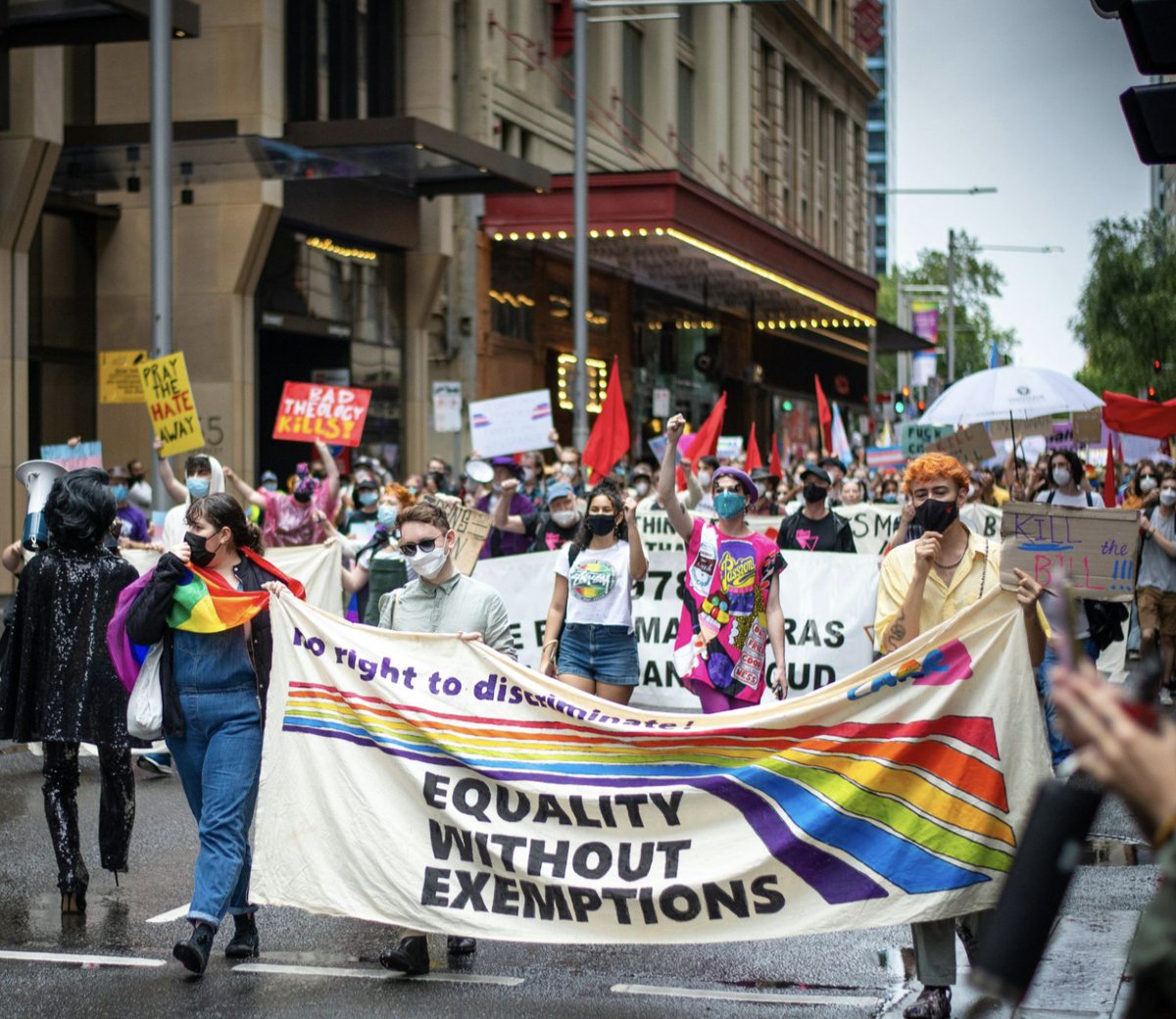
When the law recognizes equality, does the labor market follow?
Honorata Bogusz (@ University of Warsaw) and Jan Gromadzki (WU Vienna) examine same-sex couples’ labor-market outcomes across 8 countries.
Read in @ILRReview: https://t.co/KL5Wlhv4AO
When recession hits, who is better positioned to keep their job? In ILR Review, David E. Frisvold University of Iowa) and Sun Hyung Kim (Ohio State) examine how cognitive and social skills shape workers’ outcomes during downturns. Read more: https://t.co/4HPnlzHKhP
What does the minimum wage have to do with racial justice?
In a new @ILRReview book review, @gracabi examines Ruben J. Garcia’s Critical Wage Theory: Why Wage Justice Is Racial Justice—exploring wage laws, racial justice, labor law & inequality.
🔗 https://t.co/4lctu3qyWd
What happens to hiring when workers become harder to find? Mario Bossler (@NurembergTech) & Martin Popp (@iab_news) examine how tight labor markets, recruitment costs & worker reallocation shape firms’ labor demand in Germany.
📖 Read
https://t.co/W5JDP4brrJ
#ILRReview
What happens when racial myths about “laziness” are given an economic explanation? A new #ILRReview by Darity, Jr., Durfee, Hamilton, L. Myers, Jr., N. Price, and Xu revisits race, work effort, and wage inequality.
Read: https://t.co/zusXIU25xu
#ILRReview#LaborEconomics
John Kallas, Assistant Professor at @IllinoisLER, examines how LGBTQIA+ Starbucks workers turned identity, lived experience, and shared workplace concerns into #union power.
Based on 53 interviews.
Read: https://t.co/R3jl7arl3W
#LaborMovement#StarbucksWorkersUnited
What actually helps workers recover after losing a job?
JensStegmaier & Richard Upward take on the question in a new @ILRReview study of Germany’s transfer companies. Safety net or helping hand?
https://t.co/Qv6Z69VozE
#LaborEconomics#JobDisplacement
Young workers aren’t waiting for the future of labor. They’re organizing it. New in ILR Review: @_ericblanc (Rutgers) examines the 2021–2024 union uptick and what’s driving young-worker organizing.
Read: https://t.co/NP2T6WsblZ
Back to campus 🎓 What happens when you graduate into a recession? Anstreicher (Nebraska–Lincoln) & Lois Miller (South Carolina) explore how college quality shapes recession scarring in #ILRReview. 🔓 August issue is #OpenAccess: https://t.co/Z0ZqTGuFz3
How can #tradeunions shape technological change before it reaches the workplace?
Cassandra Bowkett (@OfficialUoM) & Christian Lévesque (@HEC_Montreal) examine unions, regional institutions & #digitalization in Canadian aerospace.
Read in @ILRReview: https://t.co/F2vsZQn1MA
Read the latest issue of ILR Review free unitl Sep 12! 📚Vol 79, Issue 4 features new research on work, employment, labor markets, and industrial relations from scholars across the field. https://t.co/Z0ZqTGuFz3 #ILRReview#Work https://t.co/N1y2n571Jk
Can raising the minimum wage narrow wage inequality?A new @ILRReview study by Francine D. Blau, Isaac Cohen, Matthew Comey, Lawrence M. Kahn, & Nikolai Boboshko examines four decades of U.S. evidence.📖 https://t.co/YvYVSVEVId #LaborEconomics�
How can #LaborGovernance build worker power? New #ILRReview research by Rutgers’ Mark Anner and El Colegio Mexiquense’s Diego Bautista Páez examines workers in Honduras and Mexico—and how enforcement can strengthen #CollectiveBargaining.
https://t.co/lMuLZx5k0D
Why do we tip, and what determines how much? Service quality explains only about 5% of differences in tip amounts. What explains the rest?
@RU_SMLR’s Michael C. Sturman reviews Michael Lynn’s The Psychology of Tipping.
https://t.co/oLVjLIflXJ
#Tipping
📚 Read @Columbia scholar Dongwoo Park’s review of Abe Walker’s Reassembling the UAW. It shows how organizing and union democracy helped @UAW turn two Chattanooga defeats into a 73% victory.
https://t.co/66h3P4sE5C
#UnionOrganizing#Labor
New in ILR Review: @ColinMang@McMasterU & Amar Anwar @cbuniversity finds working from home #WFH has a modest positive effect on employee productivity. Meta-analysis: 82 studies/3,574 estimates. Effects vary by #hybrid#remote#workstatus & #region. https://t.co/A2ZEarStVB
New research published in our current issue by Mario Bossler @utn_nuremberg and Martin Popp shows that #labor#market tightness signaled by high #hiring costs reduces demand for new hires in organizations as well as overall #employment.
https://t.co/cL9z18MP72