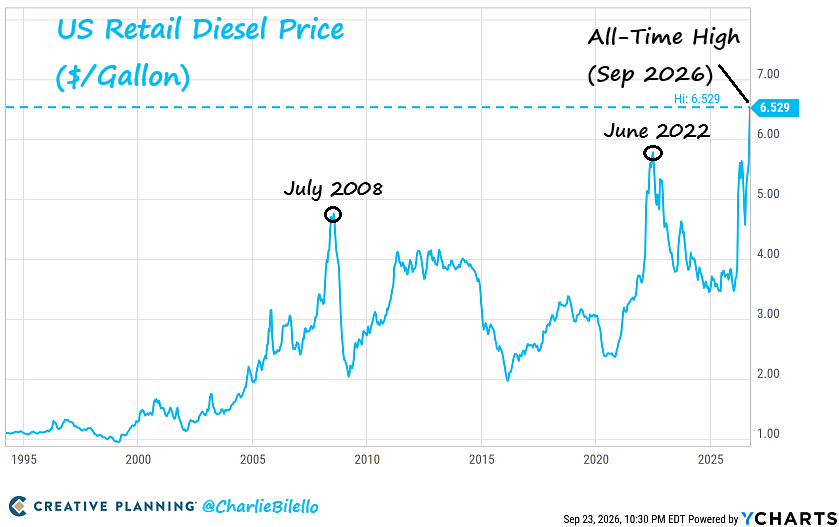
US Diesel prices hit another record high today at $6.53/gallon, up 74% since the Iran war began.
The damage from skyrocketing diesel prices won’t stop at the pump.
Higher freight, farming & shipping costs will ripple through the entire economy, raising consumer prices on almost everything.
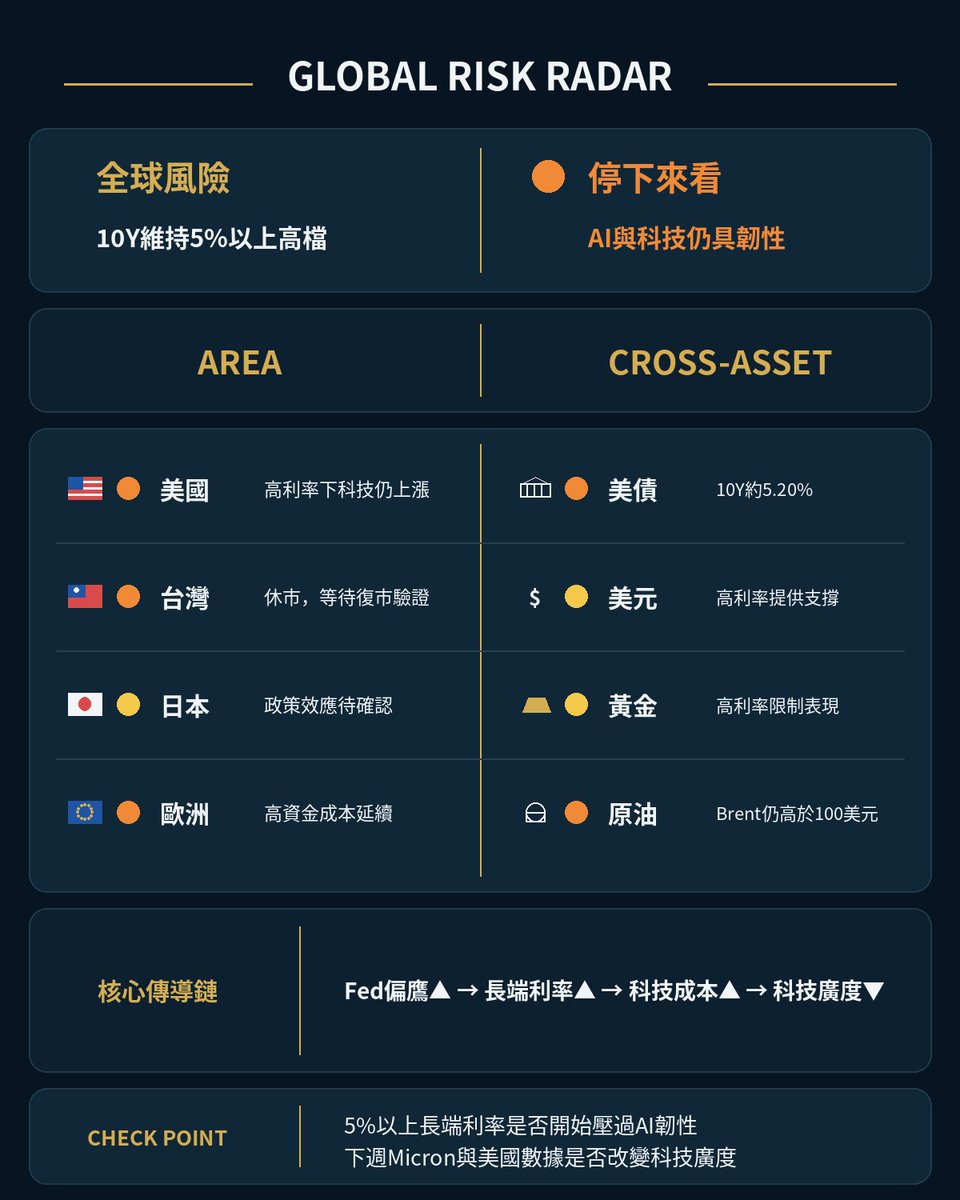
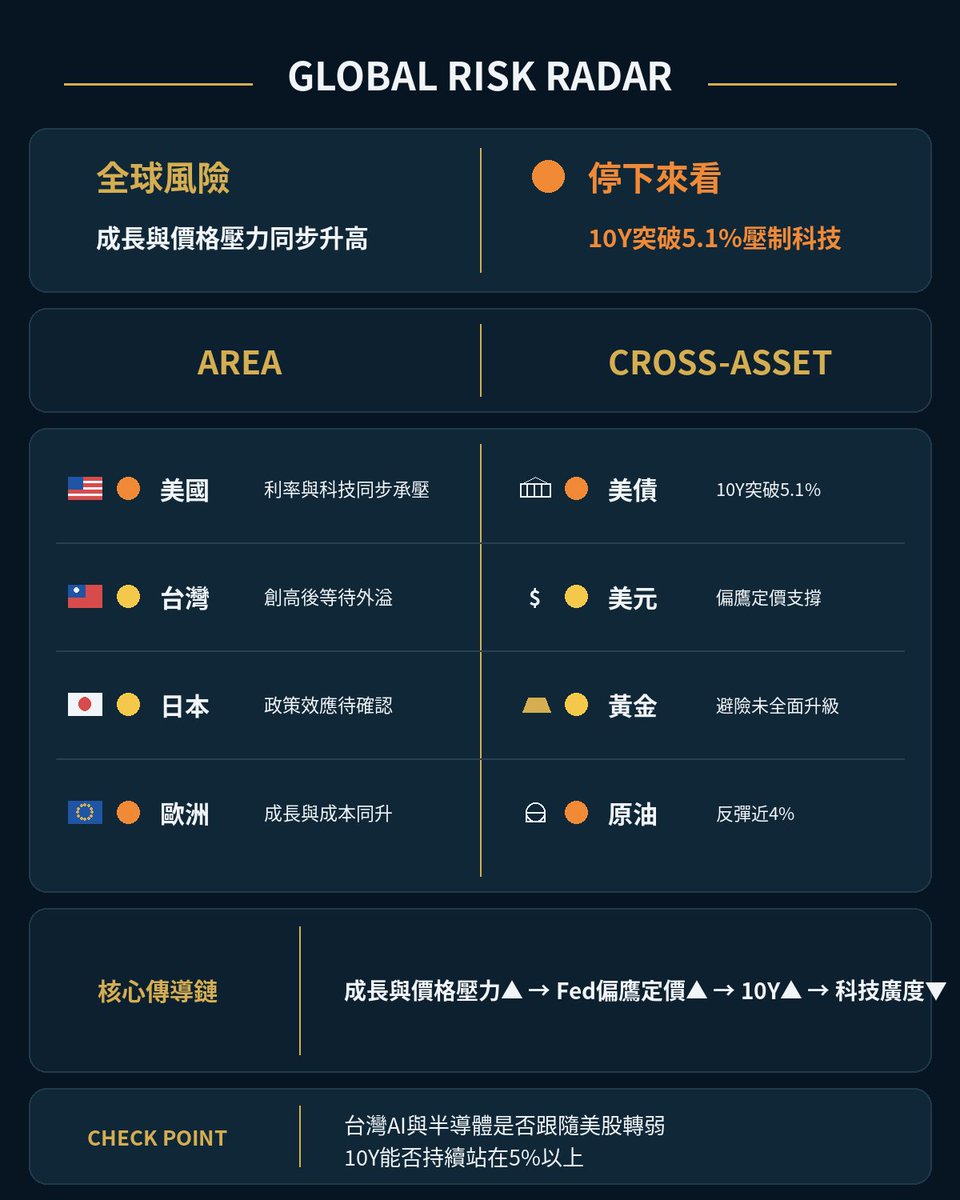
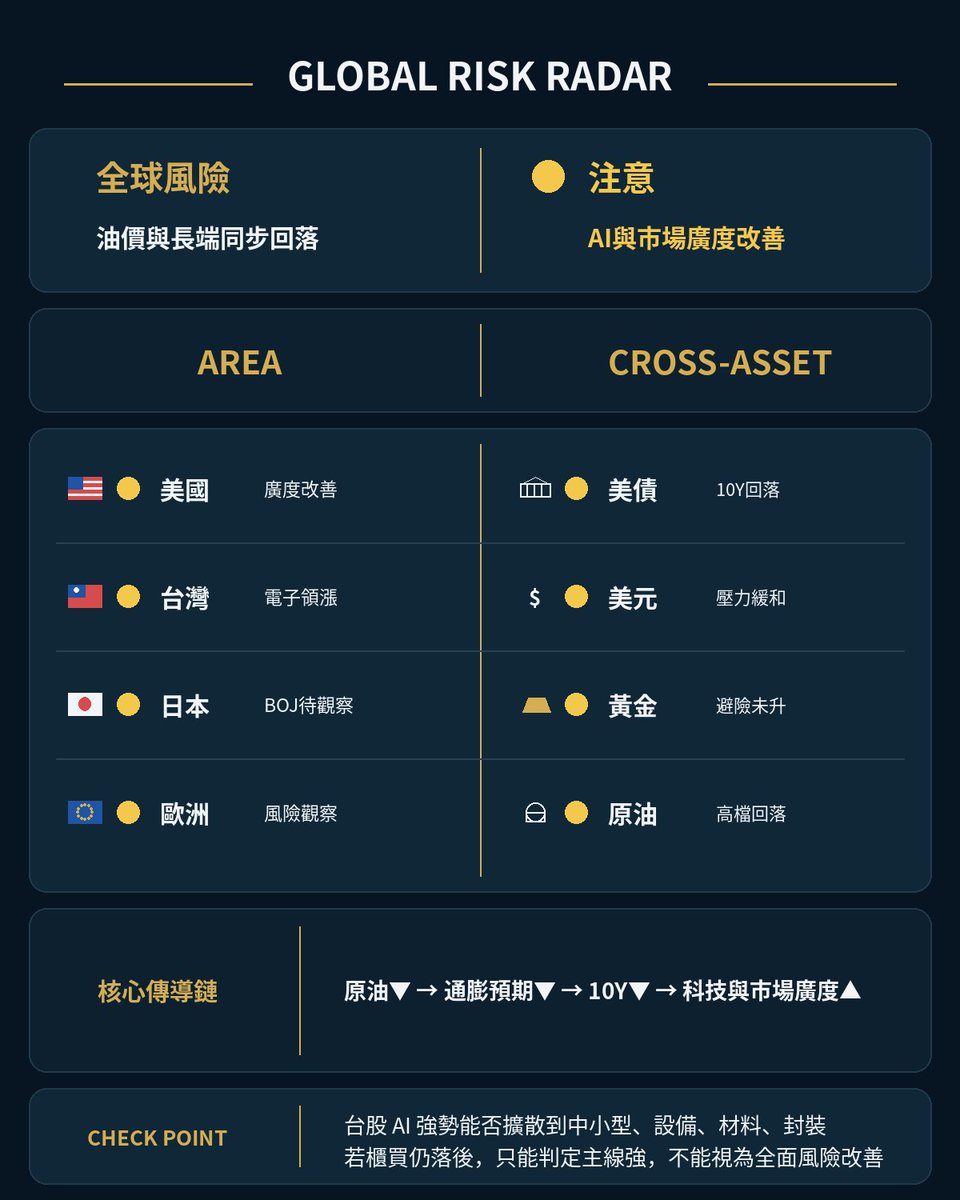
📡 9/23 Global Risk Radar
🌐 🟡 全球風險
Nasdaq 再創新高,但美股與台股都開始出現同一個分歧:AI 還強,市場廣度卻沒有繼續擴散。
📌 今天需要改變策略嗎? 不需要。維持 🟡,但不把指數創高直接視為全面風險偏好改善。
今天優先驗證:
A. AI 與半導體強勢繼續向市場廣度擴散
B. 指數維持高檔,但強勢繼續集中在少數科技與 AI
今天真正重要的不是指數還能不能創高,而是哪一邊開始成立。
All right $META Muse is cooking.
I can hear all the $AMD, $INTC, and $ARM CPUs vrrrring in the background.
Along with the memory + components (NICs, SSDs, DRAM) needed for all the browsers/VMs
When I ask it to do a bunch of long form tasks…
Intel CEO also said recently that CPU demand is so strong they can only support 50% of what customers need, so there’s some signals there.
I’m also curious how much $AMZN or $NBIS is involved with running Muse, or if Meta hosts everything inhouse.
Kinda an ADHD post but Meta beat my expectations with this release.
Will keep trying it out
Samsung Electronics to Double HBM4 and HBM4E Production Next Year
Samsung Electronics is expected to at least double its production of the HBM4 family next year compared with this year, including sixth generation high bandwidth memory (HBM4) and seventh generation HBM (HBM4E). This follows its plan to raise demand for "glass carriers," the glass supports that hold wafers while DRAM for HBM is thinned, to 2.5 times this year's level.
According to the semiconductor industry on the 20th, Samsung Electronics will increase its outsourced cleaning volume of glass carriers, which are essential to the HBM production process, from 20,000 units per month this year to 50,000 units per month next year. Only 10,000 glass carriers per month were needed last year, which means the volume doubles this year versus last year and rises 2.5 times next year versus this year.
A glass carrier is a support temporarily attached to the underside of a DRAM wafer for HBM to keep the wafer from warping or cracking while it is ground thin and holes are drilled through it. Because HBM must stack multiple DRAM dies within a limited thickness, wafer thinning technology and warpage control processes become more important as the stack count rises.
HBM4 and HBM4E, for which Samsung Electronics is especially preparing to expand production, center on high stack products of 12-High and above. The industry's analysis is that, even after accounting for the fact that glass carriers are reused after cleaning and that usage varies with how they are deployed at each process step and with yield, a 2.5 times increase in the related volume makes it highly likely that HBM4 and HBM4E production will be at least double this year's level.
In February this year, Samsung Electronics began mass production shipments of HBM4, which applies sixth generation 10nm class (1c) DRAM and a base die built on a 4 nanometer (nm, one billionth of a meter) process. In May, it also provided HBM4E 12-High samples to customers including Nvidia.
The industry expects Samsung Electronics' HBM production scale, measured by monthly average wafer input, to grow nearly 40% from about 180,000 wafers this year to about 250,000 wafers next year. In terms of shipment mix by product, some also forecast that the HBM4 family will rise from around 40% this year to about 80% next year as HBM4E mass production gets into full swing. An industry official explained, "As Samsung ramps up HBM production, it appears to be placing HBM4, a high value added product, at the center."
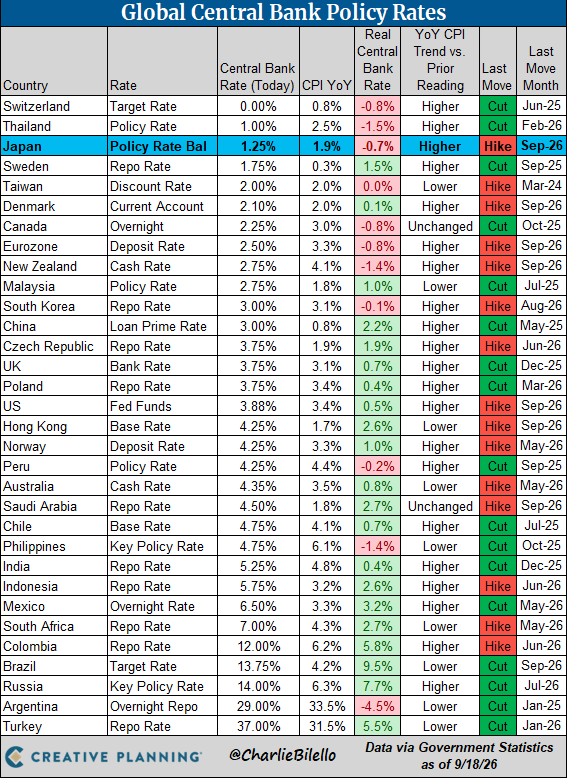
Global Central Bank Update:
-The Bank of Japan hiked rates for the 6th time in the cycle with a 25 bps increase to 1.25%. This is their highest policy rate since 1995 but they remain far behind the curve.