New to $NEAR?
Use @MeteorWallet. Trust me, it's worth using. It comes with quantum-resistant support.
You can also trade solana:8SMMso8Muv8d6i4WmMDthKt6TN1ysN6937sx3DKLXZqB inside the wallet.
Every swap is powered by @rhea_finance
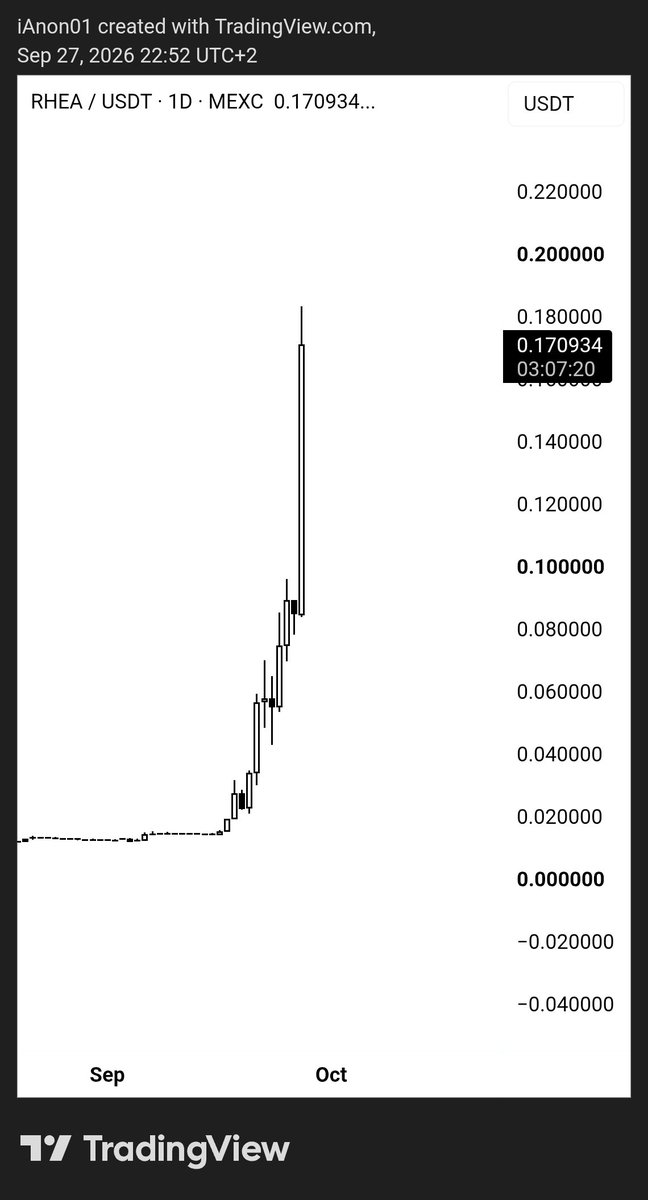
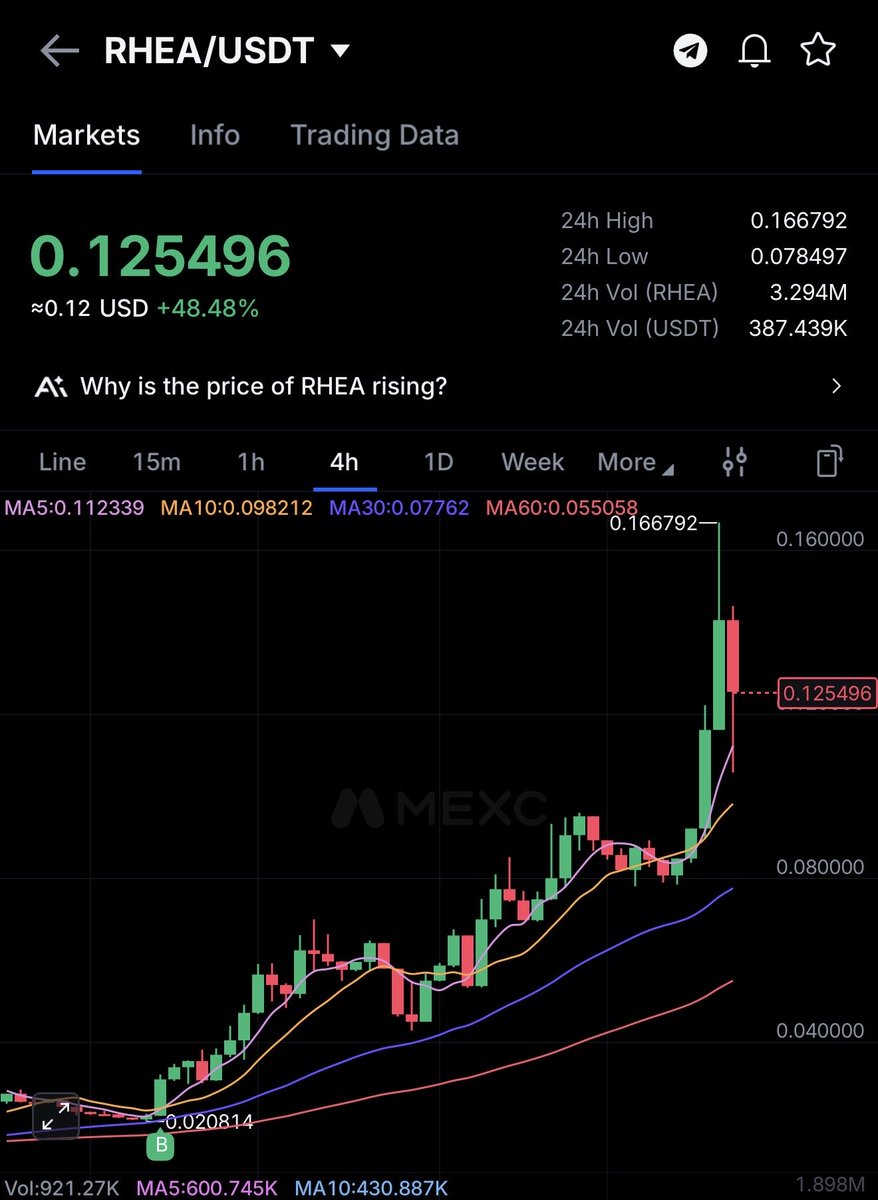
$RHEA is up over 500% in a week.
Some numbers from the last 30 days
$1.26B in DEX volume
$703K in fees
$156K in protocol revenue
Around $24M in active loans today
Rhea came from the merger of Ref Finance (created by Illia Polosukhin) and Burrow on NEAR.
They’ve since expanded into Zcash, letting people borrow USDC against their ZEC through Noir.
You can keep your ZEC and borrow against it instead of selling.
(disclaimer: holding rhea)
Hormozi says the list is king in cold outbound.
If you have a bad list, you will get no results, and he is completely right,
So I just broke down lead lists + everything else in cold outbound and GTM that you need to know:
- The boundary
- Mapping the full TAM
- Qualification and scoring
- Enrichment and contact stacking
- Segmentation and messaging
- Multi channel
- Reading the response
- Maintaining the map
- Etc
$70M+ in pipeline and 30,000+ leads from this system.
Full breakdown is in the article below:
Marc Zuckerberg explained how Muse AI works.
It can book reservations, make payments, and keeps your passwords and card details secure.
If the agent messes up a payment, it's insured so you'll get paid back.
It works via a chat interface in its own Muse app (and on WhatsApp).
---
Let's say you want to book a movie or pay for something:
1. @Stripe Link mints a single-use virtual card scoped to the purchase you approved. Muse never sees your real card.
2. If Muse makes a mistake, a refund guarantee covers it. XCover (Cover Genius) underwrites it, Link pays the premium.
3. Eligible purchases get price protection and damage or loss cover up to $500 per claim, plus no-fee returns up to $250.
Only 9% of consumers say they'd let an agent complete a purchase for them (Accenture, June 2026). I mean, if an agent buys the wrong flight, that sucks! The question holding agentic commerce back is who eats that loss.
An insured agent can be wrong and people will still let it spend. Insurance is the killer app for agentic commerce.
Card networks answered it in the 90s. People typed card numbers into websites because zero liability and chargebacks made a bad merchant the bank's problem. The difference there was the user was involved. The card networks will absolutely want to own this kind of protection. The industry needs to get ready for that.
On the business model, Zuckerberg told Alex Heath: Muse gives 100 million free tokens a week to win market share, $20 or $100 a month for power users, and eventually "a very small cut of whatever the transaction is."
So subscription plus payments.
There's a SURPRISING privacy-forward approach here:
He and Nat Friedman recruited Moxie Marlinspike, Signal's founder, to build a Confidential VM where "even Meta cannot see the content." That ships later this year.
And we already saw a privacy backlash with Instinct, which was storing your passwords and card credentials in its own vault. In the last two weeks it added Stripe Link and 1Password. Muse launched with both.
(You have to credit the partnerships folks at Stripe and 1Password here, locking in the personal agents super early.)
Where's Google in all of this personal agents discourse?
Google has the email, the calendar, the cards and the search history. Apple has a strong bit of user trust. Neither has shipped a personal agent.
This will become your control center and your interface. The everything app.
Is your consumer service ready for Muse as a customer? Is your Neobank? Your bank?
Is Meta a fintech now?
Is all AI fintech?
guys and gals we’re COOKING, and WAY MORE coming soon
the muse kitchen is ON FIRE, can’t wait for y’all to see what is coming next
we will not REST until muse is changing all of your lives 🥳
All-In Summit: Bill Gurley
(0:00) Bill Gurley takes the stage at the All-In Summit
(1:29) Bill's Presentation: Searching for Feynman
Links to additional resources mentioned in talk and used in research:
https://t.co/LrixEr9Bw6
@bgurley
Three SpaceXAI employees are building a company in 3 days with Grok Bot. This is Day 1.
Matt Palmer (@mattyp), Lauren Tan (@poteto), and Roshan Sadanani (@roshan_s) start with research, a plan, and a product.
Live now, plus sessions for engineering, product, and founders.
https://t.co/eV3Tfd5Bf2
Jack Dorsey, co-founder and Head of Block, Inc, on the biggest mistake companies are making with AI right now:
"I think most of the industry is thinking about AI as like a co-pilot, as something that is augmented onto rather than like how do you just rebuild our whole company with this as the core."
@jack believes this mindset of treating AI as an add-on rather than a foundation is where most companies are going wrong.
And he draws a sharp line between those who will thrive and those who won't.
It comes down to one question: does your business understand something deep about human nature?
"Are you building a business that understands something of human nature deeply and it gets deeper every single time, and that's a real tangible signal that just doesn't go away. If you are, then I think you can build your company as an intelligence. If you're not, then it's probably an add-on to something else."
And for companies whose AI strategy starts to resemble what the frontier labs are already doing, he has a blunt warning:
"If you end up being or looking very similar or rhyming too closely with the frontier labs, then I think it's going to be very, very challenging to differentiate and survive."
This urgency isn't theoretical for Jack.
Since January 2025, when agent coding tools like Goose and Claude Code became available, he's dedicated three hours every morning to testing their boundaries firsthand.
"That whole year I just spent every single day for three hours every morning just pushing myself like can I get it to do something that I didn't think it was capable of or I didn't think I was capable of. Every single day it worked, every single day I was surprised."
It's that daily, compounding experience that fuels his conviction. He's watched these tools exceed expectations repeatedly, and yet he sees most leaders failing to grasp how fast things are moving.
"The compounding nature of this is pretty incredible, so being able to see that, understand it, and then shift your company to be ahead of it, I think is absolutely critical right now."
His sharpest words are for those reducing AI to a simple efficiency play:
"They're just living in this abstraction of like, oh yeah, these tools will make everyone in our company 10x more productive. I don't think this is a productivity thing; I think it's a structural thing that needs to shift."