🩺 Community Question
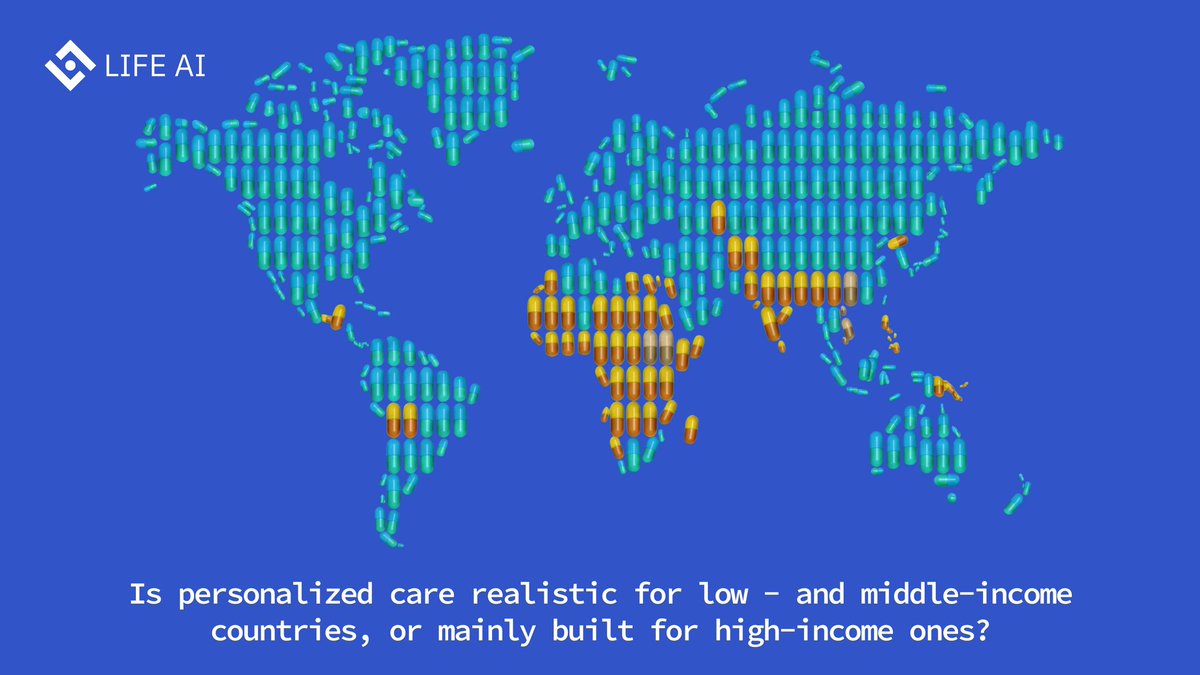
Is personalized care realistic for low- and middle-income countries (LMICs), or is it still a model built mainly for high-income countries (HICs)?
Viewpoint A: Gradually achievable in LMICs
Personalized care can scale over time. Costs of genetic and digital tools are falling, AI-driven insights are becoming more accessible, and hybrid models already work in areas like oncology and chronic care. With the right partnerships and focus, personalization doesn’t have to remain a luxury.
Viewpoint B: Not practical for most LMICs
For many LMICs, personalized care remains unrealistic. High costs, limited infrastructure, workforce gaps, and unequal access make large-scale adoption difficult. Healthcare systems should prioritize proven, low-cost interventions like vaccination, screening, and basic prevention.
Or is the future of healthcare built by combining both approaches?
👇 Drop A, B, or share your perspective.
Tag someone who should weigh in on this.
🩺 Community Question:
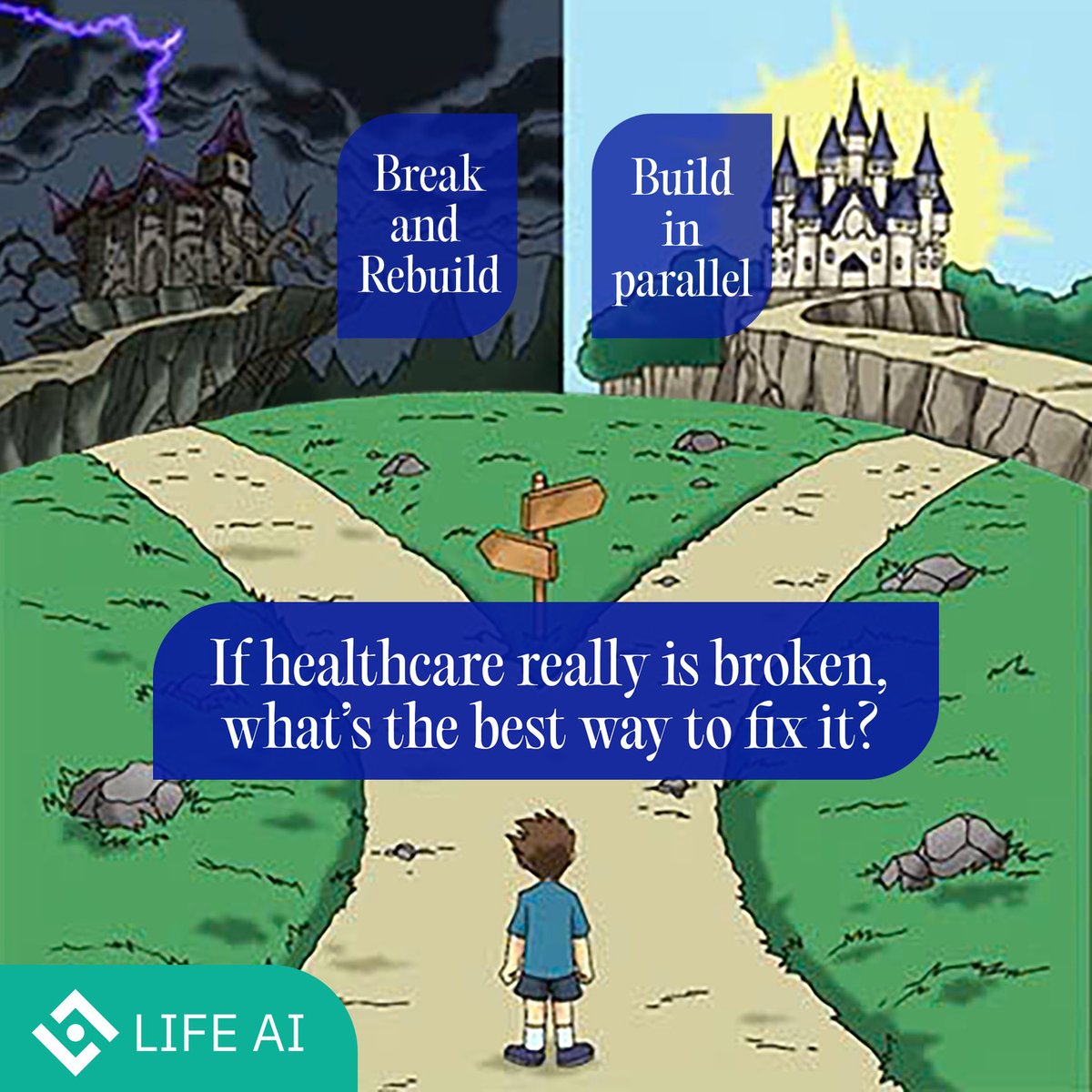
If healthcare really is broken, what’s the best way to fix it?
Viewpoint A:
Break the current system and take on the big players, including drug companies, hospitals, and insurers, to change the rules and rebuild healthcare from the ground up.
Viewpoint B:
Build a new healthcare system alongside the old one, simpler, more human, and tech-driven, and let it grow until it becomes the better default.
Your perspective can help shape the future of healthcare. Which path would you support?
👇 Drop A, B, or share your perspective.
Tag someone who should weigh in on this.
🩺 Community Question:
If healthcare really is broken, what’s the best way to fix it?
Viewpoint A:
Break the current system and take on the big players, including drug companies, hospitals, and insurers, to change the rules and rebuild healthcare from the ground up.
Viewpoint B:
Build a new healthcare system alongside the old one, simpler, more human, and tech-driven, and let it grow until it becomes the better default.
Your perspective can help shape the future of healthcare. Which path would you support?
👇 Drop A, B, or share your perspective.
Tag someone who should weigh in on this.
🩺 Community Question:
In areas facing extreme doctor shortages, can AI doctor truly be considered a real solution for improving healthcare access?
Viewpoint A:
Yes. AI doctors can deliver 24/7 diagnostics, symptom triage, and medical guidance at scale, often matching or exceeding human performance in specific diagnostic tasks.
Viewpoint B:
No. AI doctors can hallucinate, lack physical exams, contextual judgment, and real empathy, creating serious patient safety risks. Treating AI as healthcare risks harm and delays long-term solutions like training and deploying human doctors.
Now make it personal:
Would you choose an AI doctor, or wait to see a real human doctor?
👇 Drop A, B, or share your own perspective. Tag someone who shares your opinions.
🩺 Community Question:
In areas facing extreme doctor shortages, can AI doctor truly be considered a real solution for improving healthcare access?
Viewpoint A:
Yes. AI doctors can deliver 24/7 diagnostics, symptom triage, and medical guidance at scale, often matching or exceeding human performance in specific diagnostic tasks.
Viewpoint B:
No. AI doctors can hallucinate, lack physical exams, contextual judgment, and real empathy, creating serious patient safety risks. Treating AI as healthcare risks harm and delays long-term solutions like training and deploying human doctors.
Now make it personal:
Would you choose an AI doctor, or wait to see a real human doctor?
👇 Drop A, B, or share your own perspective. Tag someone who shares your opinions.
@LifeNetwork_AI We need to shift from episodic 'healthcare' to continuous 'health stewardship.' The app should be like a smart home for your body—constantly tuning the environment (habits) for optimal function, not waiting for a pipe to burst.
@LifeNetwork_AI People are motivated by acute problems, not abstract wellness. An app that serves them brilliantly in a crisis will be kept and used long-term, creating an opening for other features later.
Earn by being honest about what scares you, confuses you or inspires you in healthcare.
Every voice adds clarity.
Join the conversation with me: https://t.co/jk3WMK6uKM
Code: QBSTDD2
#LifeAITestnet#HealthcareAI
Why do people feel alone in their health journey when almost everyone struggles?
We need collective wisdom.
Debate with me and earn on @LifeNetwork_AI: https://t.co/jk3WMK72Ak
Code: QBSTDD2
#LifeAITestnet#HealthcareAI
@LifeNetwork_AI Why blanket a population with generic advice when data lets us intervene with sniper precision? We can identify neighborhoods with rising hypertension or genetic clusters for high cancer risk and deliver targeted resources. This is effectiveness at scale.
Healthcare isn't just science, it's culture, habits, lifestyle, emotions.
Why do systems forget that?
Discuss and earn on @LifeNetwork_AI: https://t.co/jk3WMK72Ak
Code: QBSTDD2
#LifeAITestnet#HealthcareAI
@LifeNetwork_AI The next wave of public health crises will be climate-driven: heat strokes, vector-borne diseases, respiratory illness from pollution. Prevention here means urban planning, green spaces, and early warning systems—not more ICU capacity for the resulting heart attacks.
@LifeNetwork_AI The most ethical act is to prevent suffering, not just heroically treat it. The current model waits for people to become patients. I believe in a system that values keeping people healthy and autonomous for as long as possible.
No two people experience health the same way, yet one system tries to fit everyone.
Let's talk about what doesn't fit.
Join me on @LifeNetwork_AI: https://t.co/jk3WMK6uKM
Code: QBSTDD2
#LifeAITestnet#HealthcareAI
@LifeNetwork_AI Our aging population is a known, incoming wave. We cannot build enough hospitals or train enough geriatricians to handle it reactively. The only viable strategy is to radically extend 'healthspan' through prevention, keeping people out of institutional care longer.
Why is the cost of staying healthy often higher than the cost of getting sick?
This conversation needs more voices.
Jump in to debate with me: https://t.co/jk3WMK6uKM
Code: QBSTDD2
#LifeAITestnet#HealthcareAI
@LifeNetwork_AI The critical infrastructure of 21st-century health isn't just brick-and-mortar; it's secure, interoperable health data platforms. Investing there enables all prevention. This is like building the highways before the cars.
Add your perspective. What would "true healthcare" look like to you?
Discuss with me on @LifeNetwork_AI: https://t.co/jk3WMK6uKM
Code: QBSTDD2
#LifeAITestnet#HealthcareAI