Bitcoin was a calculated experiment. Satoshi didn’t know if 10 minute block times was ideal, considering the lack of real world usage.
Two years after real world BTC usage, Charlie Lee created Litecoin, with 2.5 min blocks, after noticing limitations to BTC’s block time.
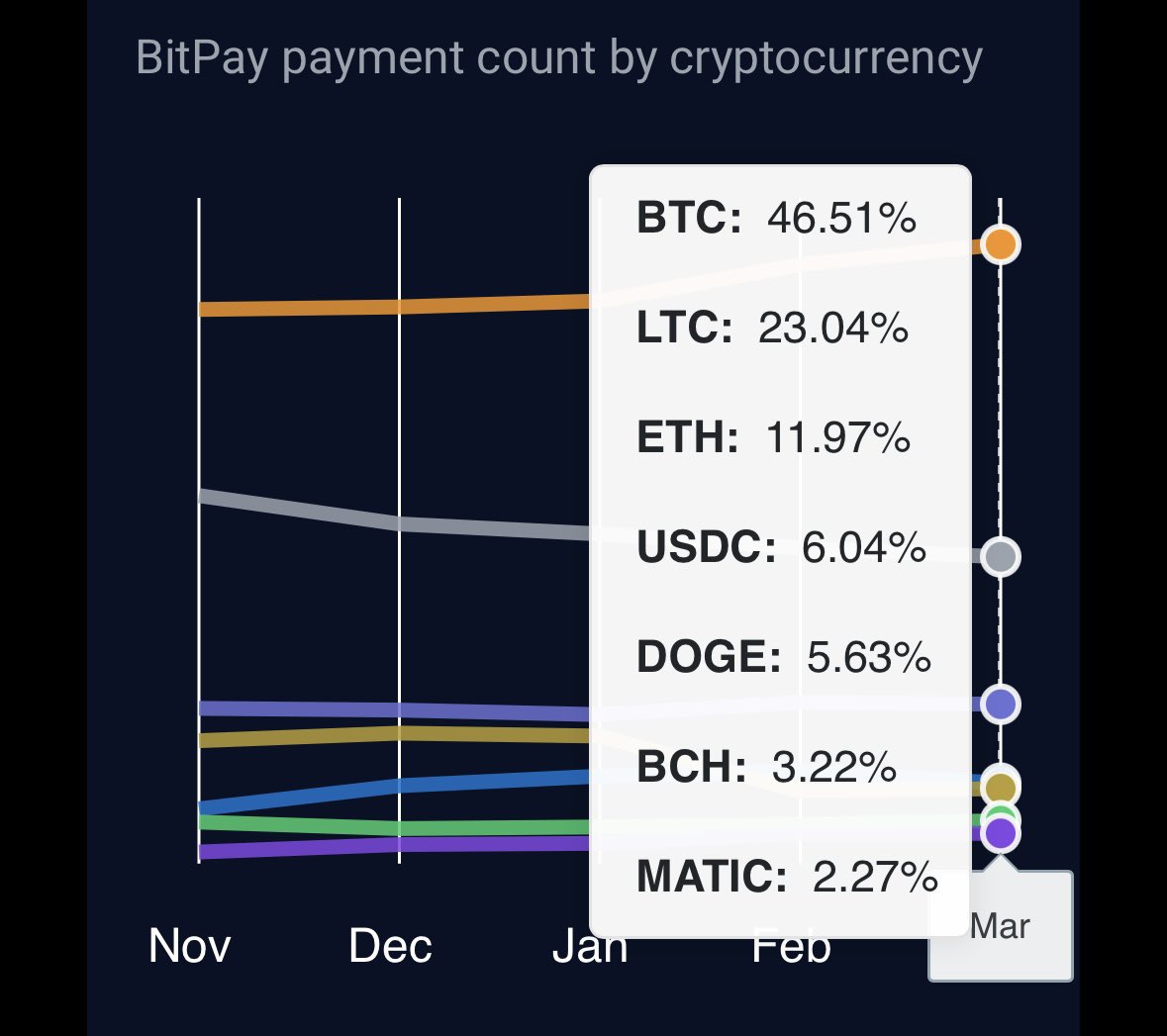
Transacting is one of the main use cases for cryptocurrency. The picture below reveals the currencies people prefer for payments.
These stats are public on BitPay’s website, the leading crypto payments service provider.
"Maybe it’s a bit aspirational, but the future of finance is really allowing everyone to participate," @DenelleDixon tells @FortuneCrypto 📢 https://t.co/N3Nft6WdsU
Thomaz Texeira, co-founder and CEO of @ntokens_br knows a thing or two about creating real-world blockchain solutions.
nTokens issues stablecoin such as the Brazilian Real and runs a secondary market for tokenized securities in Brazil, helping innovative businesses access financial markets via crypto and blockchain.
Cutting his teeth working in financial markets, Thomaz believes bridging fiat economies to digital economies will lead to global empowerment.
More from @carocarobonito here: https://t.co/r8j05NBvbF
And catch Thomaz' video interview here: https://t.co/AtnkBntqPd
Litecoin is the most persistent cryptocurrency aside from Bitcoin.
Over 11 years of continuous uptime with cheaper fees.
It makes more sense to build on LTC than it does on random PoS protocols, that is, if devs want their projects to last.