Associate Professor of Physics at the University of Milano-Bicocca @unimib. Previously postdoc at @EPFL and @Caltech. PhD from @polimi and @Polytechnique
@skdh Thank you @skdh for the excellent breakdown! Relativity is perfectly safe. To expand on the physics: 1.04c was actually just our average superluminal measurement. We tracked individual phase singularities reaching up to 3c right before they annihilated. 🧵👇
Dark spots break speed-of-light limit. Kind of.
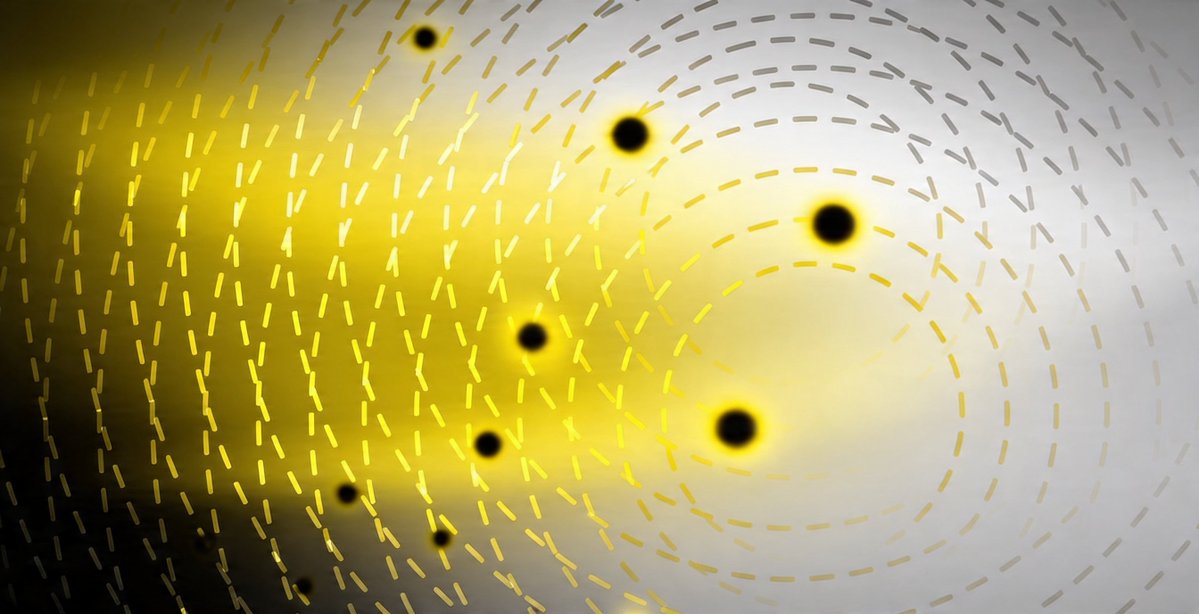
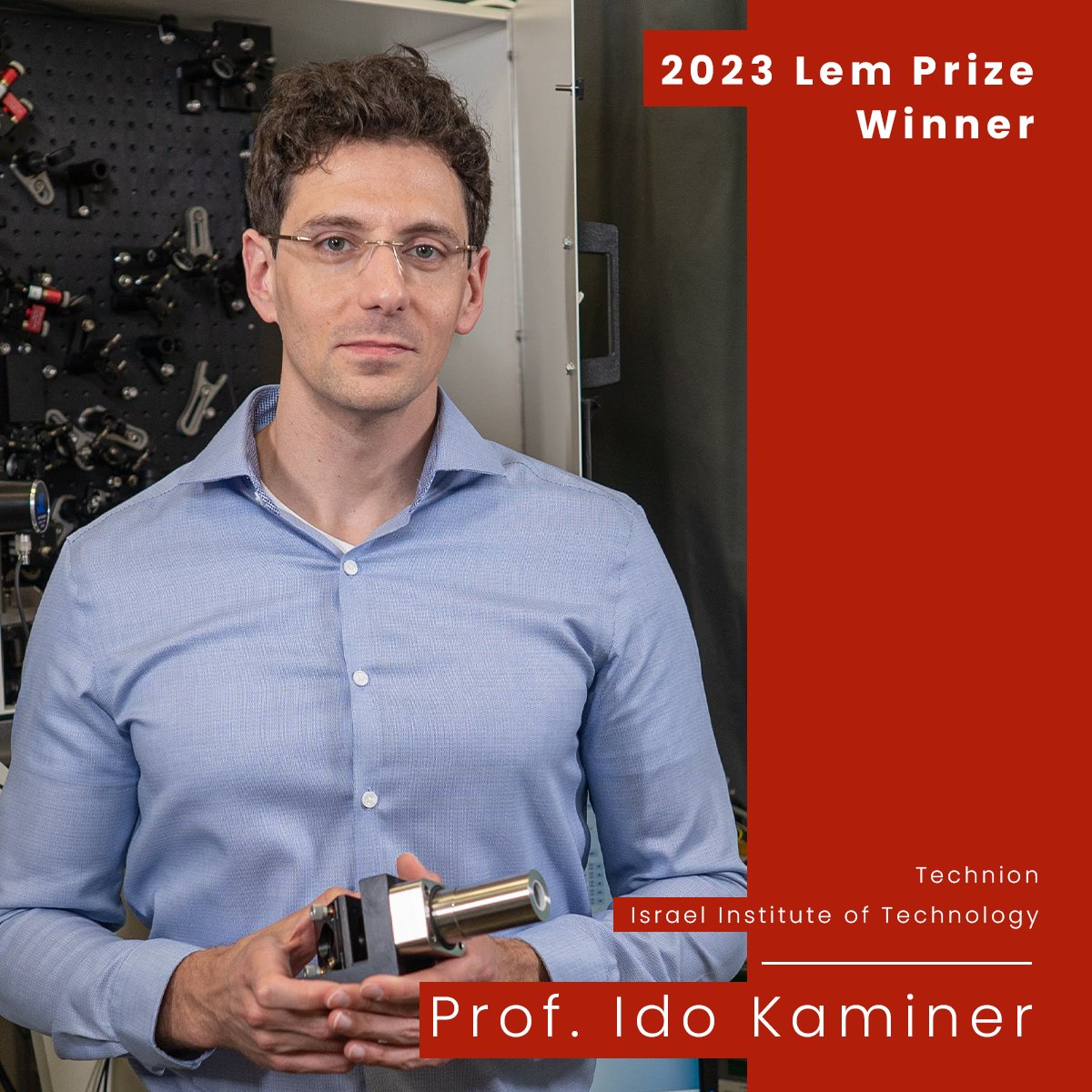
Researchers from Technion in Israel have filmed the motion of tiny dark spots that move faster than light. These dark spots are places where the light wave’s intensity drops to zero due to interference. They had the light propagate on a material (boron nitride) where it couples to the vibrations of the material. Then they measured the speed with ultrafast electron microscopy to confirm that it broke the speed of light limit. Concretely, they measured that the dark spots moved at 1.04 times the speed of light in vacuum.
This is possible because the dark spots themselves are patterns, and not physical objects. They can move faster than light just like the image of a laser pointer, swept across a distant surface, can move faster than light: Because the image is not a physical object, it is just a pattern formed from physical objects which themselves obey the speed of light limit. So this is a very neat demonstration, but it does not violate any known physical principle and no, it does not allow us to send information faster than light.
Dark spots break speed-of-light limit. Kind of.
Researchers from Technion in Israel have filmed the motion of tiny dark spots that move faster than light. These dark spots are places where the light wave’s intensity drops to zero due to interference. They had the light propagate on a material (boron nitride) where it couples to the vibrations of the material. Then they measured the speed with ultrafast electron microscopy to confirm that it broke the speed of light limit. Concretely, they measured that the dark spots moved at 1.04 times the speed of light in vacuum.
This is possible because the dark spots themselves are patterns, and not physical objects. They can move faster than light just like the image of a laser pointer, swept across a distant surface, can move faster than light: Because the image is not a physical object, it is just a pattern formed from physical objects which themselves obey the speed of light limit. So this is a very neat demonstration, but it does not violate any known physical principle and no, it does not allow us to send information faster than light.
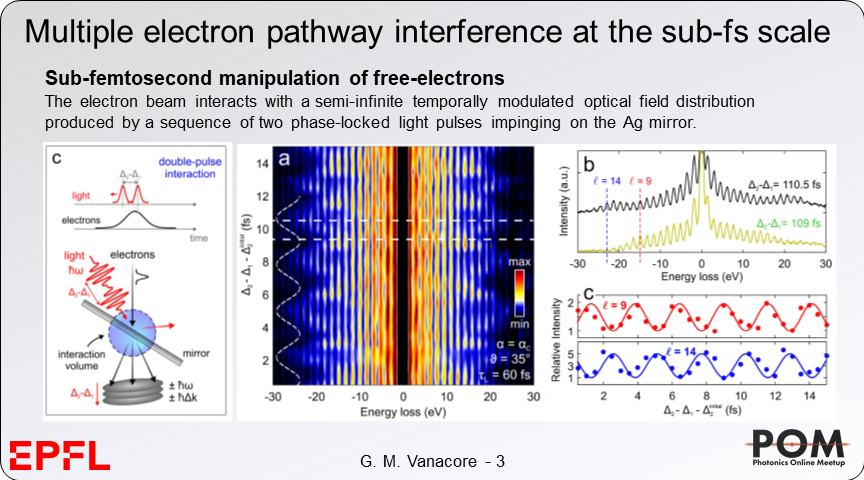
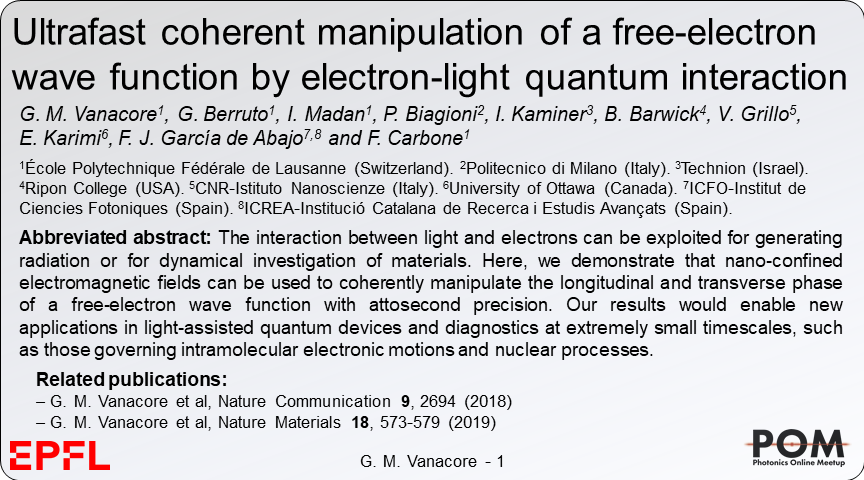
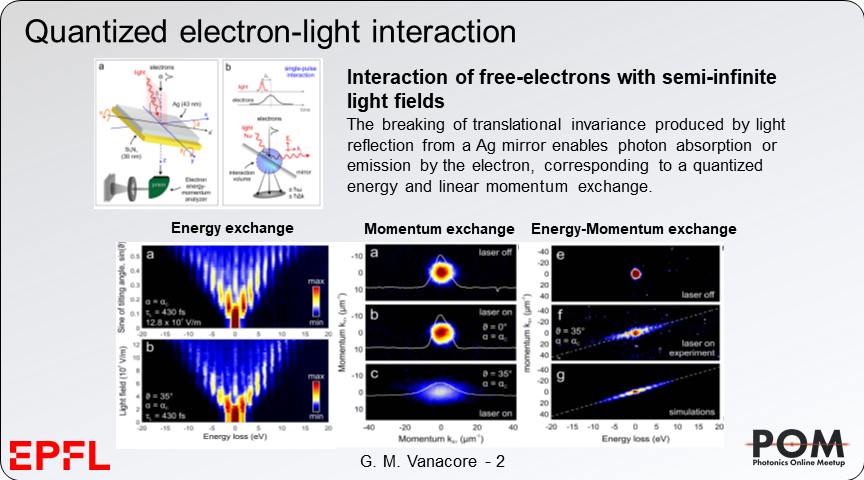
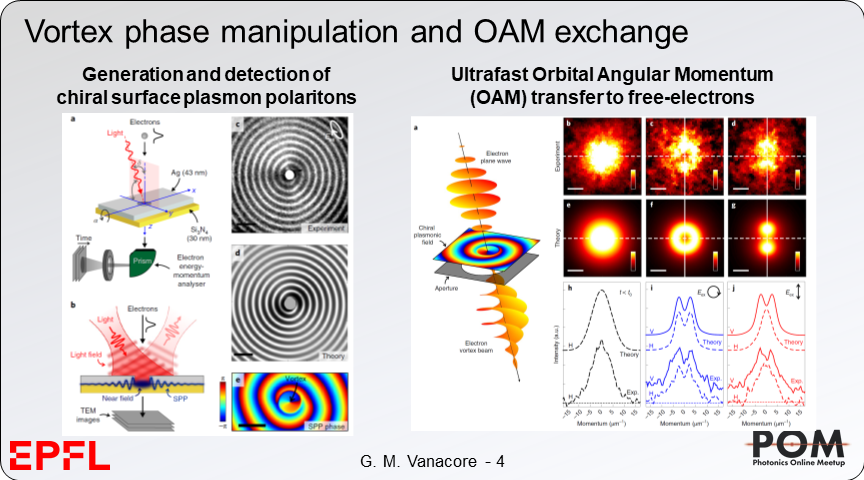
@GMVanacore recently presented his talk on Ultrafast Coherent Manipulation of Free Electrons at the FEMMS Conference in Catania! Exciting advancements in quantum interactions and imaging were shared.
📸 Check out the photos below! More info: https://t.co/DyQ1L1EsHO
#FEMMS2024
Ahmed Zewail, the founder of femtochemistry, developed methods for studying chemical reactions in detail. He was awarded the 1999 chemistry prize for his research using femtosecond spectroscopy.
Soon this year's #NobelPrize in Chemistry will be announced here at @NobelPrize.
So far, when it comes to LK-99, everyone is behaving like the cliché:
China: a bunch of university labs worked to replicate as fast as possible
US: a private company sponsored a replication as a marketing gimmick
Russia: cat girl, but whole thing is unclear
Europe: on holiday
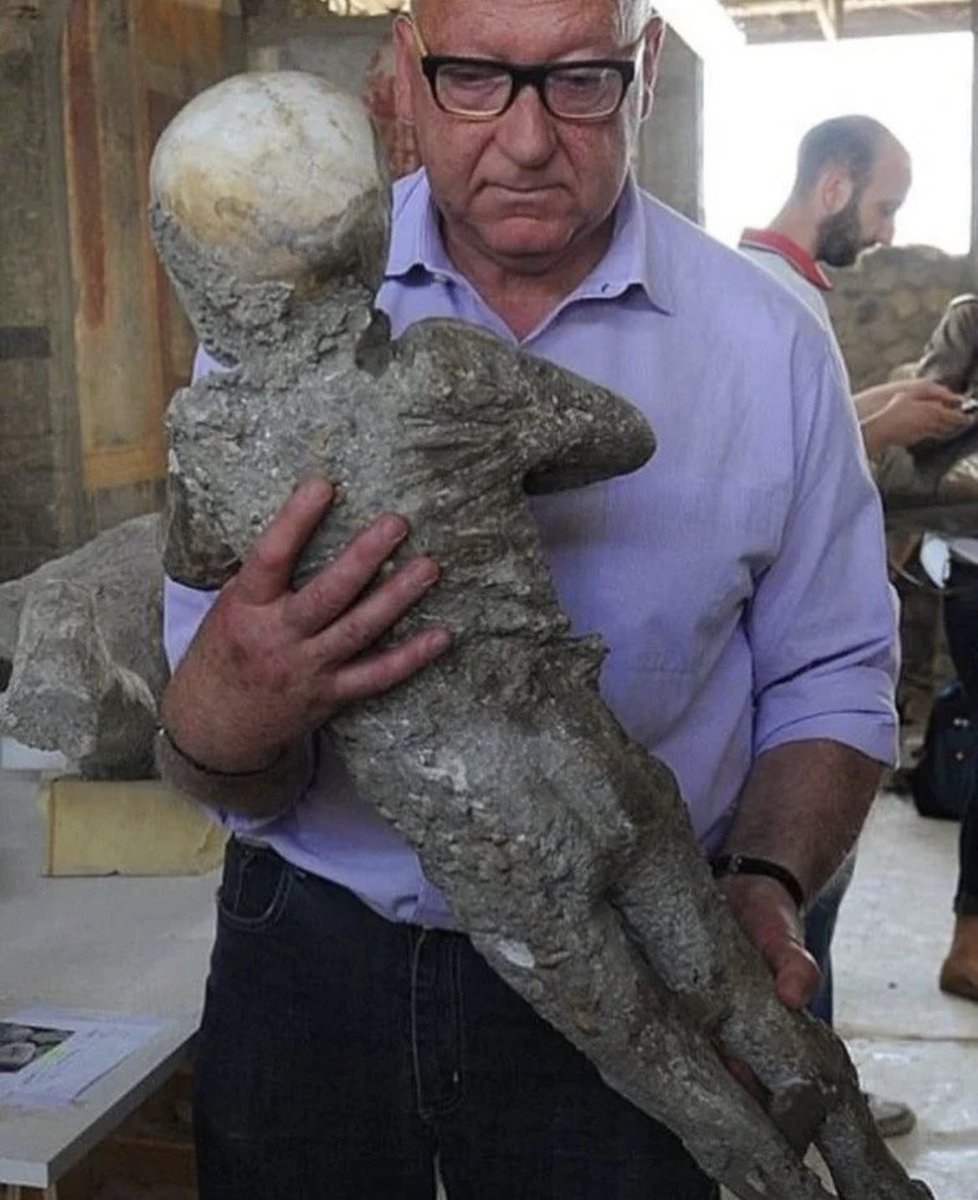
An archeologist carefully cradles a plaster cast of a child lost during Pompeii in his hands, feeling the weight of history and tragedy within it. The cast is a sad representation of the horrifying event that unfolded nearly two millennia ago in the ancient Roman town of Pompeii. Preserved in time by the catastrophic eruption of Mount Vesuvius, the cast captures the final moments of a child and their mother, forever frozen in a haunting embrace.
The eruption of Mount Vesuvius in 79 AD was a catastrophic event that shook the region and left an indelible mark on history. Pompeii, once a thriving city located near the Bay of Naples, was abruptly engulfed by a torrent of volcanic ash and debris. The city's inhabitants, going about their daily lives, were suddenly faced with a deadly cataclysm they could not escape.
The child, estimated to be just four years old, was among the countless victims of this disaster. As the volcano unleashed its fury, burying the town in a thick blanket of ash, the child found solace in the loving arms of their mother. The intense heat and toxic gases caused by the eruption quickly overwhelmed them, leading to their tragic demise. The child's plaster cast serves as a poignant reminder of the immense human suffering that unfolded during those fateful hours.
It is worth noting that the cause of death for most Pompeii residents was not direct contact with molten lava or volcanic bombs, but rather the suffocating ash and scorching temperatures that accompanied the eruption. As the ash cloud billowed into the sky, it descended upon the city, filling the air with fine particles that made breathing impossible. Many succumbed to asphyxiation, while others fell victim to the searing heat, which rapidly incinerated organic materials and caused widespread devastation.
Today, the ruins of Pompeii stand as a testament to the destructive power of nature and provide invaluable insights into the daily lives of ancient Romans. The plaster casts, meticulously created by pouring liquid plaster into the voids left by decomposed bodies, offer a haunting glimpse into the final moments of those who perished. They serve as a poignant reminder of the fragility of life and the transient nature of human civilization, urging us to reflect on the past and cherish the present.
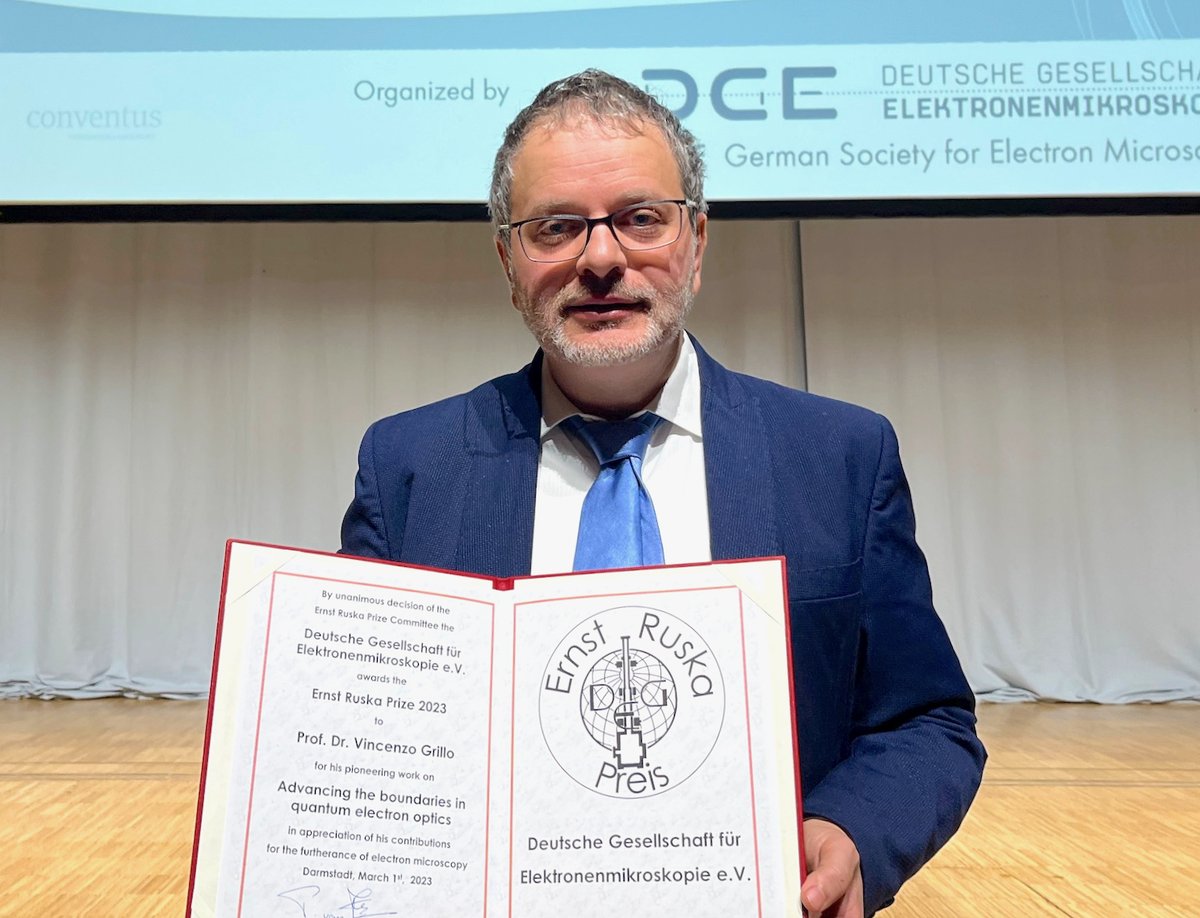
Today we're proud to celebrate one of our principal investigators, Vincenzo Grillo, for being awarded the #ErnstRuskaPrize 2023 by the German Society for Electron Microscopy at the Microscopy Conference 2023 in Darmstadt! Congratulations! 🎉 #microscopy#research#DGE
Huge congratulations to our own Dr. Grillo on receiving the prestigious #ErnstRuska2023 award! Your pioneering work in quantum electron microscopy is truly inspiring. Keep making waves and pushing boundaries in your field. #teamgrillo#sciencerockstar 🔬🚀 @AthinaZampara@unimib