@ivanfioravanti It is okay for anybody to keep their own code/model private, it becomes a problem when someone wants to stop OTHERS to open theirs, and it is what's happening now.
@tablefourthree@stratechery Yes, their CEO openly talked about that, for multiple times, that the regulators should regulate unsafe ai more. Basically claiming they are the only company that provides safe ai that can be trusted.
The fact their frontier model is the first one being regulated is funny though
@extliqprovider@anemll They don’t have to if they are on the cloud. This is designed to address the constraints that a mobile phone simply cannot load 20B model fully in memory with reasonable precision.
@nimlot26@ErrorRaffyline0@tnculp Don't get me wrong, I'm not "anti DLSS" guy. I do think upscaling technologies are beneficial but from all the demos we can see currently, something is off and I cannot honestly say they look good. And yes the wording is vague, "frame color" does not mean "geometry" in my head.
@nimlot26@ErrorRaffyline0@tnculp In the marketing material, they even used more limited scoped wording: DLSS 5 takes a frame’s color and motion vectors as input to deliver photoreal lighting and materials that are deterministic, temporally stable and anchored to the game’s content
@nimlot26@ErrorRaffyline0@tnculp If this is the case, the answer to the question “Is this model limited to screen space? Or does it have any awareness of the environment outside of what is visible in an individual game frame?” Would be more than “only takes rendered frame and motion vectors”
@ErrorRaffyline0@nimlot26@tnculp I did not intend to make a twitter war, I'm just surprised that he claimed that it is not a post process effect while nvidia representative said otherwise. Maybe he missed that answer so I gave him the exact timestamp for reference.
@nimlot26@ErrorRaffyline0@tnculp If you actually watch the video, Nvidia representative literally answered this(11:07):
DLSS 5 only takes the rendered frame and motion vectors as inputs. Materials are inferred from the rendered frame.
So either you or Nvidia is wrong. Or "rendered frame" has different meaning.
@ivanfioravanti@DemirciMesut@huybery My source says they and the company have fundamentally different visions for Qwen’s future. The company is demanding a leadership overhaul and team restructuring—a move that’s deeply unsettling for core team members. Even if the current leaders stay, they will have less control
@SebAaltonen@nekomatasaren Game studios producing exclusive are usually paid by the console vendor, or directly owned by the console vendor as a first party game creator. In some region like Japan, it also used to have a special market where console games outsells PC games enough to not do a pc port.
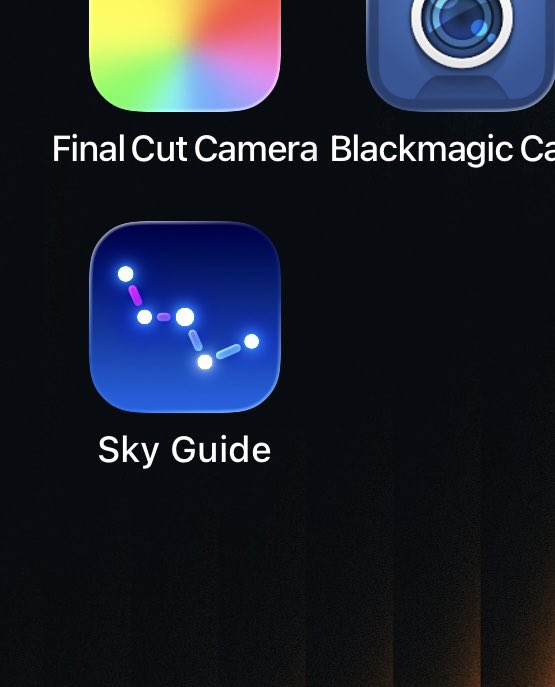
Analyzed with false color LUT and the star dots are indeed mapped to almost 200nit luminance color in ST2084. This is not "that" HDR bright but not within the usual <100nit SDR range either. The Bose icon above is full grayscale, means every pixel is <= 100nit.
Today I learnt, iOS 26 lets developers create HDR Icons
the stars in this app icon(Sky Guide) for example are very bright in contrast to other apps, and it goes back to SDR when it’s in low power mode
@ivanfioravanti Software. AMD's short term goal should be that to make developers think "It is also okay to get AMD for developing" but its software is not complete enough to make that impression and therefore they require dedicated team from big companies to.
@ivanfioravanti The problem is the pricing tough, as for the similar pricing you could get M4 Max doubling the bandwidth and having a much faster CPU with same RAM size, or you could half the price to get AMD AI Max with same bandwidth.
@ivanfioravanti Ollama made the poor implementation yet again.
Fixed llama.cpp yields much better results which is much closer to the expectation and the generation speed is in the similar class for the systems with similar bandwidth: https://t.co/HK6AkxFMwq