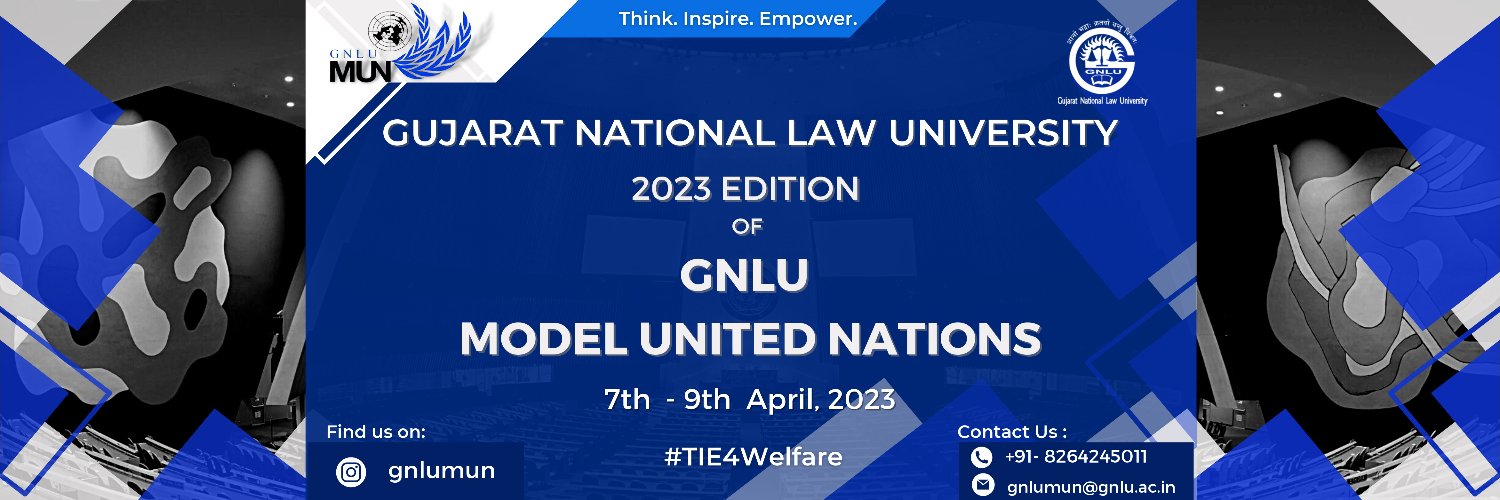
Ever wondered how you would've solved the pressing international problems? or if I were there, I would've contributed to mitigate the crisis. If yes, then we at @gnlumun have got you! Gear up for GNLU MUN coming up at GNLU on 7-9 April, 2023 #TIE4Welfare Registrations Open Now!
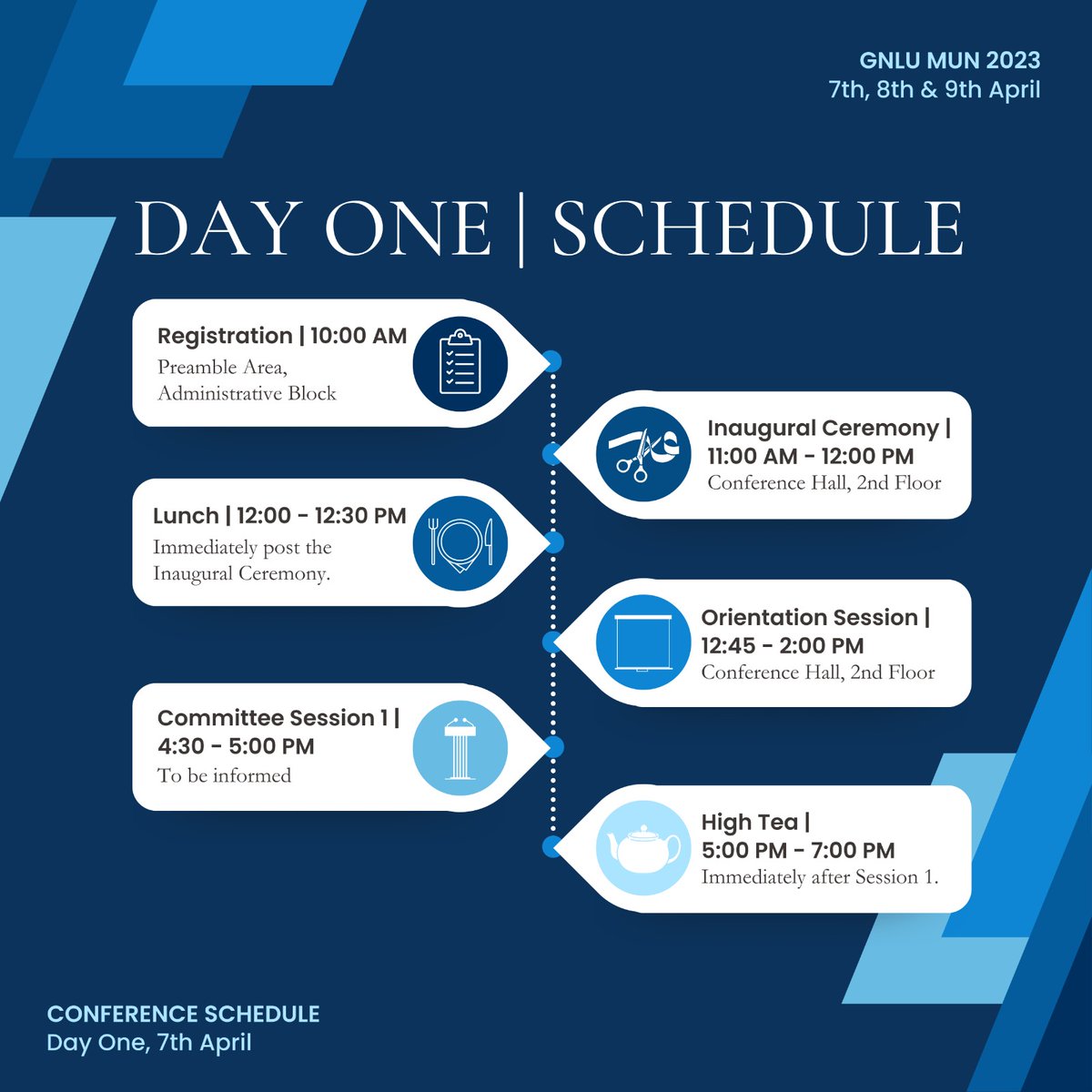
We are ready! The Itinerary for tomorrow's event is out! Check out and be the part of the inaugural ceremony of this great event! See you all! #TIE4Welfare
By the time we gear up to host you, Its time for you to gear up for exciting prizes for the winners of the event! We announce our prize pool for this year. Register now of you haven't and Get ready for a grand diplomacy experience at @gnlumun#TIE4Welfare
Mr. Ravikant is questioned on the contribution of youth in civil society.
Mr. Ravikant is optimistic about the youth and believes in their power to bring change. He emphasises on empathy and sensitivity towards victims.
He asserted on the significance and relevance of our Constitution and termed it as an 'ideological religion'.
He concluded that system doesn't work by itself, it has to be given a push from outside by supporting the cause.
Mr. Anil said that there is no lack of institutions and laws. He throws light on the kind of work done by police He encouraged people to joining police services and interacting with police.
In the concluding stage, the panelists gave their advice to the students. Ms. Geetanjali said that we are brought up in a very protective environment. She said that we are not emphatic. We need to have empathy
Mr. Ravikant was asked about challenges in prevention, rescue and rehabilitation. Mr Ravikant emphasised on creating awareness in adolescent children through an example of West Bengal.
Mr Anil Pratham talks about the available data whereby the rate of detection is 93%. He states that in cases of missing persons, the presumption is in the favour of trafficking.
He accentuated that major chunk of children are between 14 to 18 years which needs special emphasis.
She explained about the rehabitation of the victims through protection homes. They are not government funded.
She highlighted the cross border nature of trafficking and aggravated trafficking which implies trafficking for forced labour, begging, sexual exploitation.
Ms. Geetanjali explained that 1966 was the first time when India enacted a law against human trafficking. The law never defined trafficking. Goa was the first state to come up with the Goa Children's Act.
She also said that consent of the trafficked person doesn't matter.