Am not sure I understand this #activism vs who takes the credit phenomenon.
Has it always been like this? It’s really strange hearing younger activists fight and question other actors in civil society space based on… “they stole the idea” … “they hijacked this” etc etc.
When did activism become so transactional? Who cares who takes credit for what? I think part of the challenge the drive to put an “entrepreneurial model” to everything — an exhibition against corruption in parliament becomes a project, a garbage exhibition becomes an idea perceived as an incubator project!
If the ideas are transactional- then the fights too take on a pecuniary nature. Who received what money and surely they benefited as individuals! Otherwise why did they start this in the first place? There’s the expectation that there’s a “return of investment” —- and talk about “tangible results”
You are doing complex systems change work and after a couple of weeks of making noise you expect “tangible results” - are you out of your mind?? 🤦♂️ How long do you think it’s taken to entrench corruption (as a norm and in practice) that we see across government systems? Again— it’s that idea ==> incubation ==> test/transition ==> scale up mindset applied on social phenomena!
An opportunity to learn all around for those that really want to make change possible — there is no shortcut to these things. Buckle up, and have the humility to understand that you will not always know or find answers to complex social problems. You do your part — chip away, and let others do what they can. Collective solutions to collective challenges.
The dust ‘seems’ to be settling but now more than ever do we need to be engaged citizens. I shared my thoughts via @africasacountry drawing on insights from @SpireJim & @nickopiyo
https://t.co/LJt5yFtKEt
When they call all of us ‘our children’ or ‘Bazukulu,’ they are seeking to alter our relationship with the State. All of us are citizens in equal measure and terms - non above others - at least when talking about the governance of the country.
It is patronizing and quite candidly condescending to think of citizens as one would their children and grandchildren. Altering our relationship with those in power or anything other citizens is illegal and disingenuous. We all must reject it.
We are citizens, not your children or grandchildren and demand to be treated as such. those in public office - elected or appointed- hold those offices in delegated capacity. They are our servants and must serve the public interest.
Translating survivor-centredness into pedagogical approaches to training on sexual violence in conflict and emergency settings: A case study | International Review of the Red Cross | Cambridge Core https://t.co/wEoBUs7OHz
@ongwechd@gnuwagira@DavidTshimba@jpurcell7@WarwickGSD
This evening I had the pleasure of walking with @gnuwagira
We spoke about leadership, succession and transition, holding and sharing power, the vulnerability of a leader and letting go.
We spoke about how to harness resources for giving, starting from the family. I shared with him an idea about doing resource mapping at a family level.
Imagine if each family plotted the tangible and intangible resources they have - past and present and trying to quantify these. I think it’s a way to enrich our family tree while also plotting how generosity is done and/or can be improved.
I believe we would be blown away by how much we have, how much we’ve given and how much we have to contribute to advance our communities.
@I_Rugambwa is spot on. @mtnug should examine how folks are rolling back usage of MM. The ‘unbanked’ have no reason to use MM anymore. Why would a boda add a charge on their daily fuel consumption?
@mtnug a quick CBA will show you that the tariffs work against you and Ugandans.
Often, we focus (rightly)on the government's missteps, but perhaps we should pay as much attention to the responsibility of the Private sector in enabling innovation & progress or frustrating the same. Moves such as this from @mtnug in addition to its already exorbitant Mobile Money charges, are an example of short-term thinking that will rollback years of progress towards a fintech- driven cashless economy.
Join us in Kampala, Uganda for our next Junior Scholars Workshop on "Decolonization and its Critics" in collaboration with the amazing Makerere Institute of Social Research @MISR_Mak!
@TheMutaD I am studying public and urban policy & the spatial evolution of Kampala and other cities is of interest to me - what is the full title of the paper I’d love to read it.
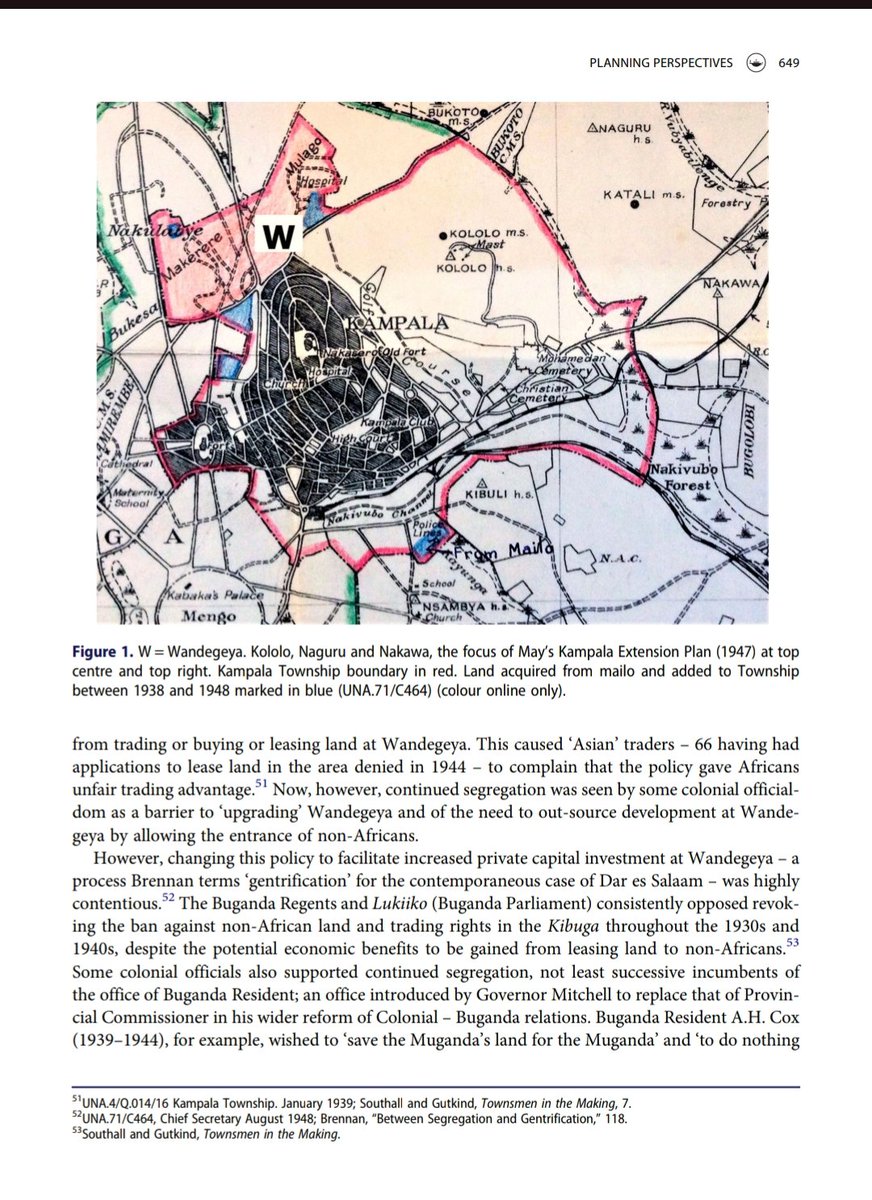
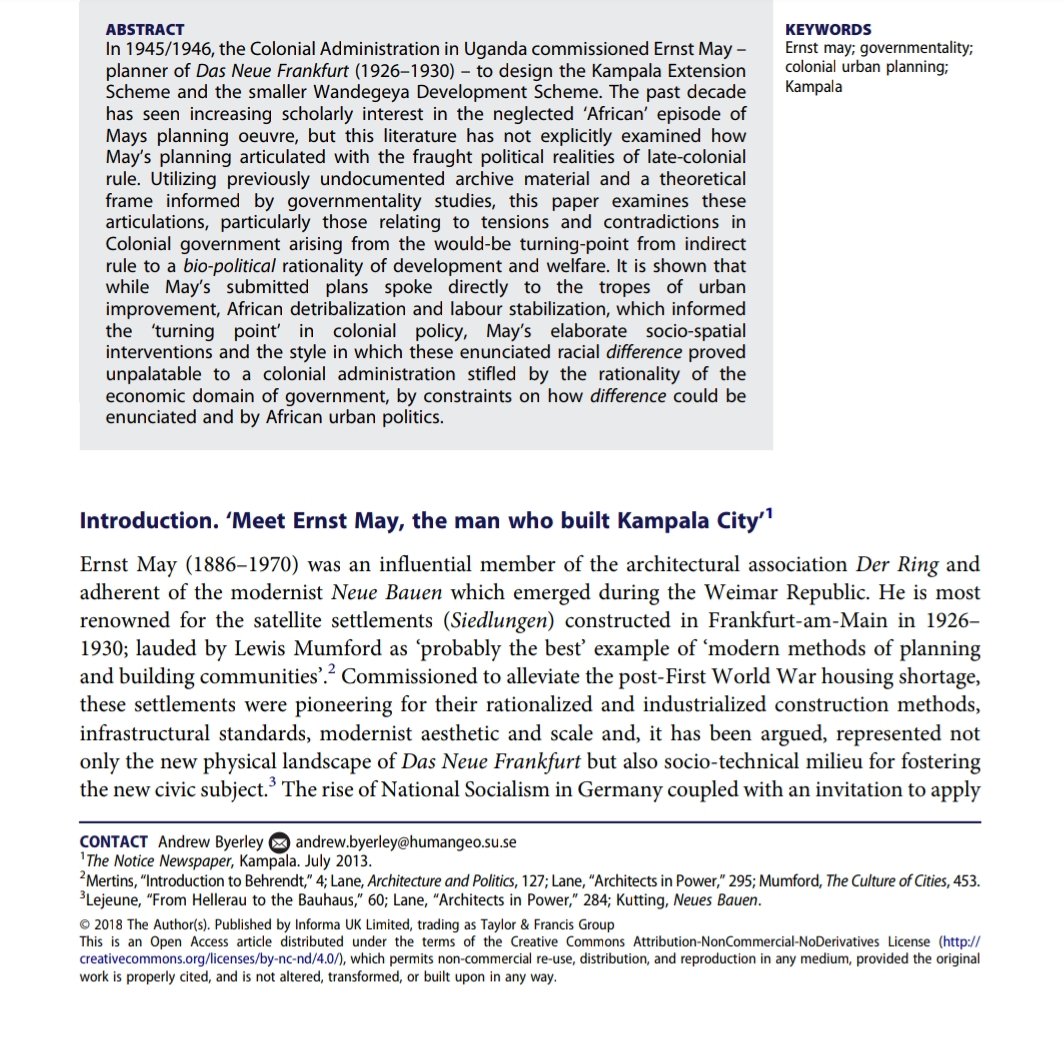
Kampala, the original fortress-like enclosure with police stations at Wandegeya, Jinja Road, Kira Road and Clock Tower (to keep the undesirables at bay), was designed by Ernst Georg May , a German. The Brits commissioned him.
Oh I remember @TheMutaD - he gave a 2 min lecture at the beginning of prep while we were making noise. To this day I still remember his presence (and tell stories) - he modeled excellence with humility.
Congratulations @TheMutaD
First met @TheMutaD in 2006. He was @Ntare_School ‘s Head Prefect when I joined in S.1. He was the model student & leader - Smart, confident, & articulate. That year, he was one of the school’s top students at A Level. No surprises he’s where he is. Congratulations Ssebo.
If there is a soulful writer whose work you should engage with this month - it is @KhananiDaniella
Please check out her blog Resolute Scribbles https://t.co/WjnhR0GAxt & you will find your next read
@ProsperByamungu@fredriechyiga@ProsperByamungu do current house/home building regulations factor in tiny homes? Is it legal to construct a tiny home esp in Kampala considering the ongoing demolition/closure of container kiosks by @KCCAUG
cc @jj_twin