On October 28, 2026, HMRC published the UK’s eInvoicing roadmap for 2029. We have been getting a lot of questions about who is in scope and how to prepare.
We went through it and pulled out what is actually settled and what is still open. These are the main takeaways:
→ Peppol is confirmed as the network. The invoice standard is not settled. HMRC consults on the proposed UK standards in Spring 2027.
→ April 1, 2029 applies to everyone in scope, with no turnover threshold and no phasing.
→ Scope follows VAT registration, not establishment. If you are registered for UK VAT and your customer is a VAT-registered business, you are in scope. Wherever your company sits. Having no UK entity is not an exemption.
Final requirements are still pending. What is useful now is working out which of your entities and invoice flows are in scope, and whether your current setup can reach Peppol.
👇 Read the full update here:
https://t.co/xJ4swF07Rh
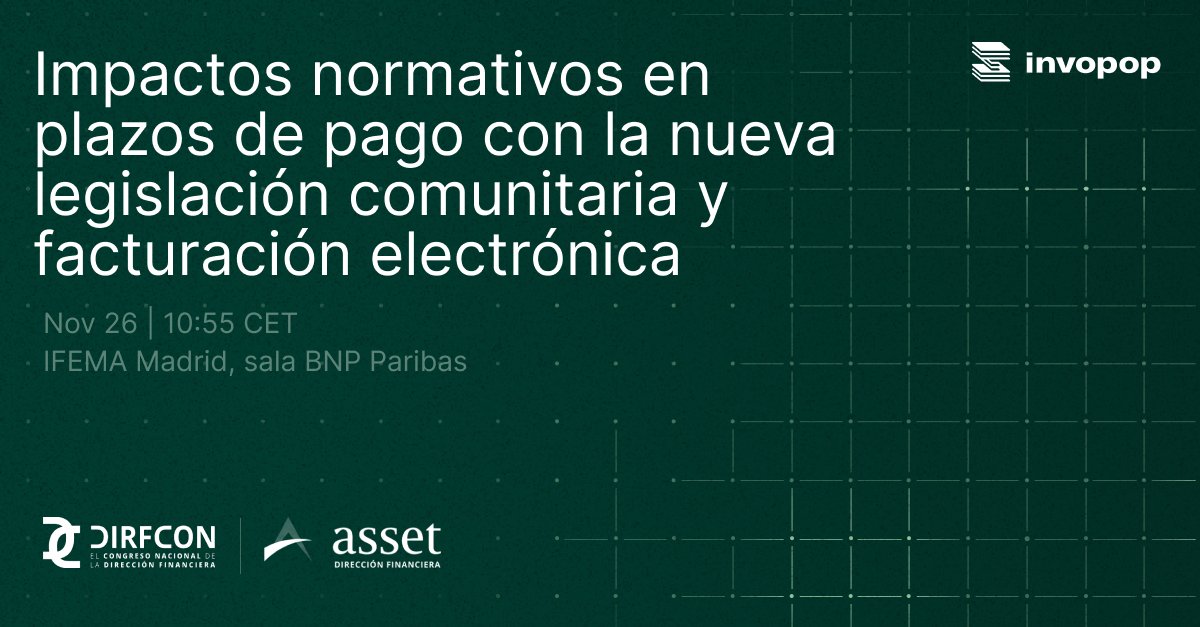
El 26 de noviembre estaremos en el DIRFCON, el congreso de la dirección financiera que organiza.
A las 10:55, @juan_moliner_, CEO de Invopop, compartirá mesa con directores financieros y otros expertos en facturación electrónica para hablar de “Impactos normativos en plazos de pago con la nueva legislación comunitaria y facturación electrónica”.
Con la nueva normativa, cada factura se convierte en un dato estructurado que tus sistemas pueden leer y procesar automáticamente. Esto ya está cambiando la relación del CFO con IT y con sus sistemas. La calidad del dato, y con ella el control de los plazos de pago, se decide en el momento en que se emite cada factura, así que finanzas tiene que participar en cómo se diseñan esos sistemas.
Hablaremos de qué supone esto para los equipos de finanzas y de cómo prepararse.
📍 IFEMA Madrid, sala BNP Paribas
🗓️ 26 de noviembre, 10:55
¿Quién se apunta? 🙋
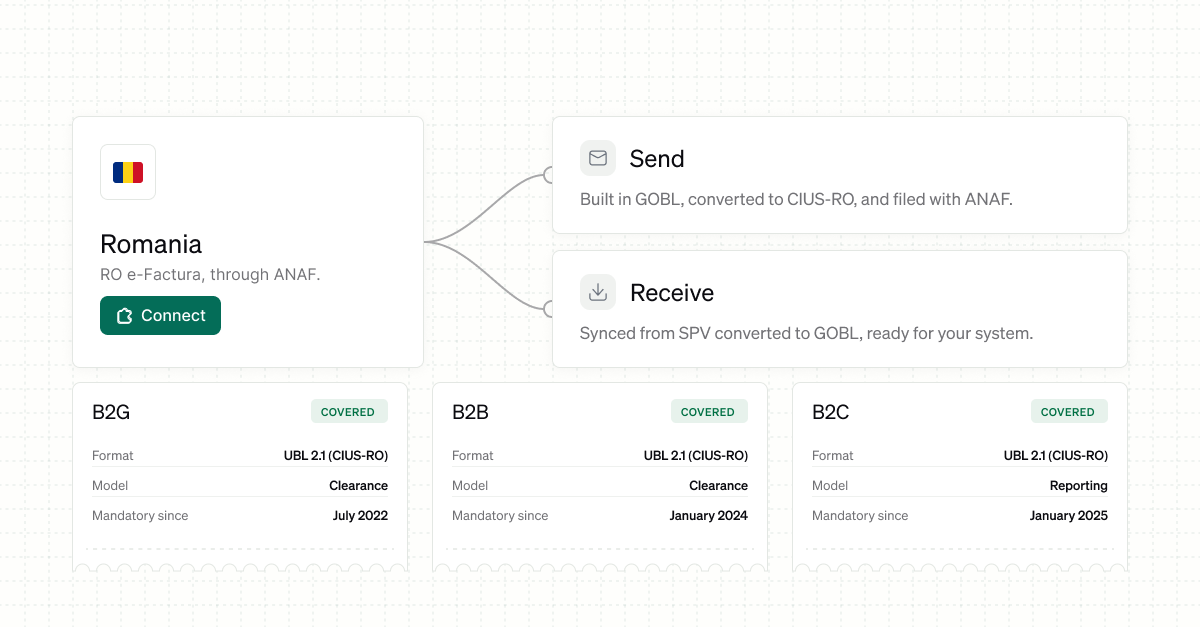
🇷🇴 Invopop now supports Romania.
TLDR: RO e-Factura is the clearance platform run by ANAF, Romania’s tax authority. Every domestic invoice goes through it to be validated and sealed, and that sealed XML is the only legal invoice. Businesses reach it through SPV (Spațiul Privat Virtual), ANAF’s online portal, or through its API.
With the Romania country app:
→ Send: Invopop converts your invoice to CIUS-RO (UBL), checks it against ANAF’s official schematron, uploads it to RO e-Factura, and tracks it until ANAF decides. The sealed XML ANAF returns comes back attached to the invoice, so you hold the legal version and not just the one you generated.
→ Receive: Invopop syncs your suppliers’ invoices, in UBL or CII, and converts them to GOBL, so nobody has to log into SPV to download anything. ANAF only keeps them for 60 days, and anything not collected in that window is archived. Invopop keeps them for as long as you need.
B2B, B2C, and B2G are all covered, along with credit notes, corrective and self-billed invoices.
Start testing in sandbox, or talk to our team if you need help getting started.
3 things every German business needs to know right now 🇩🇪
1️⃣ Invoices become structured data: B2B invoices must be EN 16931 eInvoices, such as XRechnung, ZUGFeRD, or Peppol BIS. Every business must already be able to receive them, and a plain PDF won’t count once your issuing deadline hits.
2️⃣ You choose the delivery channel: Seller and buyer agree on email, Peppol, or a portal.
3️⃣ No central platform: Nothing goes to the tax office, and there’s no clearance. Yet.
→ Businesses with more than €800k in turnover start issuing in January 2027. Everyone else follows in 2028.
No central platform makes it sound simple. The complexity is in deciding which format and which channel to use for every customer and every supplier.
Last week, we hosted a webinar on the mandate and how to use Invopop for eInvoicing in Germany.
In short: you build each invoice in one standard format (GOBL). A workflow checks it against the German rules, converts it into the format your customer needs (XRechnung, ZUGFeRD, or Peppol BIS), and sends it over the channel you’ve agreed on. Receiving works the same way: whatever format your suppliers send, Invopop turns it into that same format (GOBL) and delivers it to your systems.
Your systems work with one format, and every customer and supplier gets the one they need.
Missed it? Here’s the full recording 👇
https://t.co/KYazZJFNLw
Myth: Germany’s eInvoicing mandate will be easy, because there’s no central platform and no required network.
Reality: businesses end up managing three formats, several delivery channels, and AR and AP systems that have to handle all of them.
We wrote a guide to help you navigate the new rules 👇
https://t.co/OKSpfHyOvL
Crea y Crece ya tiene fecha. Tu equipo de finanzas tiene que llegar a tiempo.
Desde el 6 de octubre de 2027, en España la factura B2B dejará de ser un PDF o un papel para convertirse en un dato que circula entre tu sistema, tus clientes y la AEAT. Finanzas es responsable de la obligación, pero el sistema que la cumple suele estar en manos de producto o tecnología.
¿Cuántas veces tienes a compliance y a producto en la misma sala hablando de esto?
El 5 de noviembre los juntamos en una sesión para analizar qué exige la Ley Crea y Crece y cómo adaptar los sistemas de facturación antes de octubre de 2027.
En 45 minutos veremos:
— Principales requisitos de la Ley Crea y Crece y a quién afecta en 2027.
— Contexto normativo nacional e internacional, desde VeriFactu hasta los aprendizajes de Italia, Francia y Alemania.
— Cómo preparar al departamento financiero y qué plantear a tus proveedores de ERP.
— Lo que finanzas puede aprender de producto y technologia, y cómo trabajar juntos en un proyecto de facturación electrónica
En esta sesión nos acompañarán Luis Coll (VP of eInvoicing Compliance Compliance, Invopop), Giulio Caggiano (Product Lead, Amenitiz) y Eduardo Huertes (Product Lead, Taxfix).
📅 Jueves 5 de noviembre, 17:30 CET
📍 Online, en español
👉 Regístrate: https://t.co/xh2C6L5FSw
eInvoicing is usually framed as a compliance deadline. Yet it is also quietly rewriting the job of the CFO and the finance team.
Every eInvoice is a data point, and in many countries that data gets reported in near real time. So what matters now is how your systems send, receive, validate and report each transaction. And that isn’t finance’s decision alone. It’s decided in the systems that issue the invoice, which is why finance leaders need to work more closely with IT and the CIO than ever.
With Spain’s B2B mandate now on the calendar, we shared some thoughts with ASSET on how finance teams can approach eInvoicing.
Full article 👇
https://t.co/x9mWSgYJGR
The next phase of Germany’s B2B eInvoicing mandate is just around the corner. Getting your billing system or ERP ready doesn’t mean starting from scratch again. It means finding the eInvoicing tool and workflows that fit how you already invoice.
✨ Join our VP of eInvoicing Compliance Luis Coll, Partnership Lead Aaron Niemeyer, and Product Engineer Álvaro Olivié as they break down what Germany’s mandate means in practice.
In this live session we’ll cover:
- Whether you’re in scope for 2027 and what the mandate requires, including how to choose a format and delivery method.
- How to prepare your finance team, and the questions to ask when selecting an eInvoicing tool.
- What needs to change in your billing system, with a live walkthrough of how Invopop handles it.
- Your questions, answered by the team that builds eInvoicing compliance across countries. So bring them!
⏰ November 4, 17:00 (CET)
Register 👉 https://t.co/TxXlCMsz9N
“We don’t consider an AP platform which doesn’t accommodate eInvoicing regulations a meaningful solution for a customer.”
We sat down with Pavel and Alexander from Payhawk, who shared how they built eInvoicing into their AP solution with Invopop.
eInvoicing is fragmented across markets, with different requirements, formats, and networks in each one, and building it in-house would have pulled engineering away from their core product.
Today Payhawk is live in 5 countries and positioning itself as the eInvoicing leader among AP providers in Europe, thanks to Invopop.
Watch the full conversation 👇
https://t.co/Hz4pNsd1VR
We were at Chargebee’s Beelieve Roadshow in Paris last week, and one comment kept coming up:
“Every country we sell in does eInvoicing differently. Keeping up with compliance across markets is a pain.”
If you're using Chargebee, you can connect it with Invopop and handle all of those markets from one connector, with the workflow you want for each one.
Invopop's Chargebee app imports every new invoice and credit note automatically and runs it through that workflow, converting it into the format that country legally requires and filing it with the right tax authority. Updates and error messages come back into Chargebee in the comment section of the invoice or credit note, so nothing gets lost. You can also have it notify you in Slack or email when something needs a look.
Getting started is simple: connect Invopop with Chargebee, select your country apps, and start issuing legally compliant eInvoices.
👇 Álvaro made a full video on how to set it up.
https://t.co/OEBuIOyjQA
🇪🇸 The work for B2B eInvoicing in Spain has begun.
Businesses above €8 million in annual volume of operations need to start eInvoicing on 6 October 2027. Everyone else follows on 6 October 2028.
Preparing means more than the invoices you send. You also have to receive structured invoices from your suppliers, and report what happens to them: whether you rejected the invoice, and the date you paid it in full.
That brings accounts payable and treasury into the project. Where do your payment dates live? Can you connect them to the right invoice and report them within four working days of payment?
The AEAT has also started publishing the first technical documentation for the public invoicing solution. It is an early version, but teams operating in Spain can begin planning and building now.
We wrote a guide explaining the deadlines, the exchange routes, and the reporting duties, plus how they fit alongside VERI*FACTU and SII.
https://t.co/69xtzUNEoV
If you run a vertical SaaS, this will sound familiar: eInvoicing isn't your obligation, but your customers expect you to handle it anyway.
Mews' promise is a single platform for hotel operations, and eInvoicing is part of it. Complying in every mandated market meant patchwork: find a local provider, negotiate a contract, build another integration. Three to four months before a hotel could issue a legal invoice.
Mews embedded Invopop instead. One integration with our API, and their customers can now send and receive eInvoices that comply with local regulation.
Development time per market went from 12 weeks to 5. Belgium was first. Mews is now live in 5 countries with Invopop.
We sat down with Patricio Roffo, Director, Product and Engineering at Mews, to hear how they turned eInvoicing from a pain point into a growth lever.
Watch the interview 👇
https://t.co/63lzFeE07u
NetSuite offers native eInvoicing. For a lot of companies it's the obvious place to start.
We keep hearing from teams who did, and how they found it harder to navigate than expected. Most problems don't show up on day one. They show up when regulations change, volumes grow, or a new market gets added, and edge cases start hitting production.
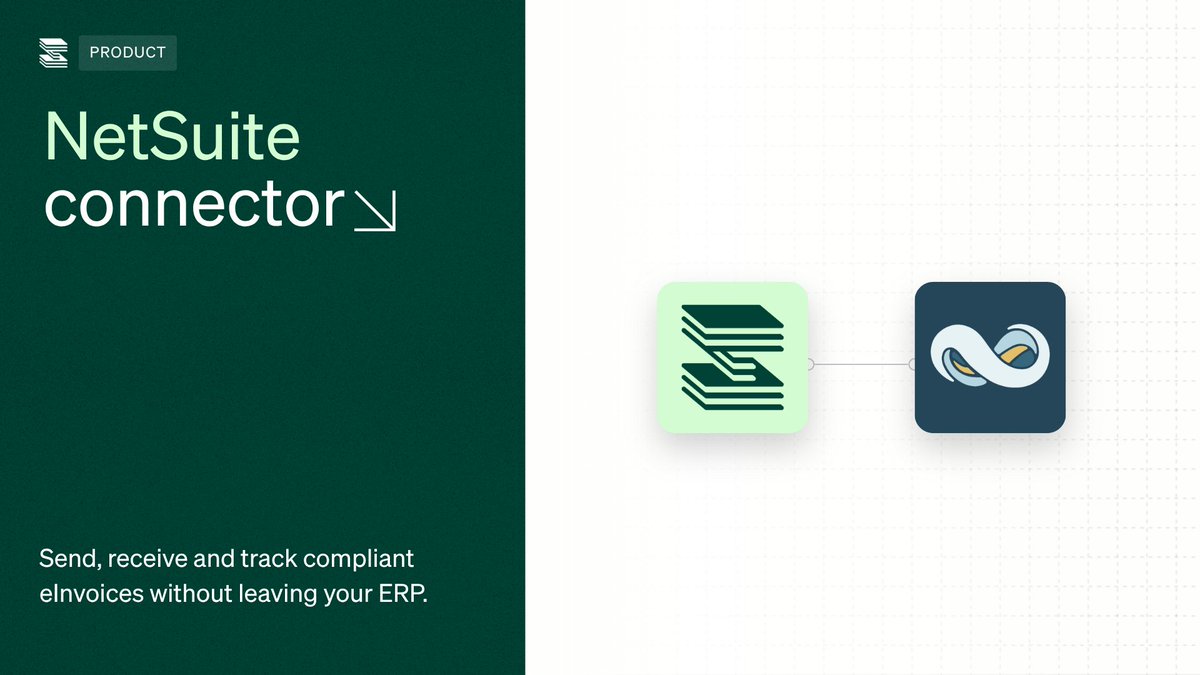
Invopop's NetSuite connector is built for exactly that: every country you operate in, the exceptions included, and workflows that adjust to how you work. It connects directly to NetSuite, so your finance team continues to manage everything from one place.
🔌 More than 85 companies already invoice from NetSuite with Invopop, across the 30+ countries we support today, with more in development.
📘 To help you work through the choice between the native route and a separate provider, we wrote a guide: what each one involves, and the questions worth asking before you commit.
https://t.co/tOpGqj63cw
🇪🇸 Spain published the Ministerial Order this morning, the last piece of the B2B eInvoicing mandate. What it means:
— The clock started: the obligation has been coming since Ley Crea y Crece in 2022, but the deadlines couldn't start running until this order existed. It takes effect tomorrow, 6 October, and that's the date everything counts from. Companies with turnover above €8M get twelve months, so 6 October 2027. Everyone else gets twelve more, 6 October 2028.
— You send and you receive: every business has to issue invoices to its business customers in a structured electronic format aligned with the European standard EN 16931, and be able to receive them from its suppliers the same way. Being mostly a buyer doesn't exempt you.
— The buyer reports the payment: when you receive an invoice, you report to AEAT whether you rejected it, the date you paid it in full, and the payment due date. That's how Spain plans to measure late payment, which is what Ley Crea y Crece was written to tackle.
— Everything reaches AEAT: choosing a private platform doesn't keep you out of the public one. If you don't invoice through the SPFE, the free public platform AEAT is building, you send AEAT a faithful copy of every invoice at the moment you issue it. The repository is not optional.
– This is not VERI*FACTU: two separate obligations, and complying with one does not cover the other. VERI*FACTU governs your billing software and the records it keeps. This governs the invoices you exchange with other businesses and the payment data that follows them. The two do meet in one place: the eInvoice carries a field for the VERI*FACTU QR where that applies.
https://t.co/kV1S3njsZS
We're preparing a guide to help you navigate it.
Questions in the meantime? Drop them below 👇
One month of mandatory e-invoicing in France. The ministry's numbers are good: 5 million invoices exchanged in the first two weeks, more than €15 billion, and 70% of VAT-declaring businesses with a reception solution chosen, figures it had modelled for the end of October.
Signed up isn't the same as reachable. Three things we're seeing across the companies we work with in France.
1️⃣ Poor registrations — Buyers listed in the annuaire who still can't receive. France doesn't mandate Peppol, but most plateformes agréées use it to exchange with each other, so a buyer needs both an annuaire entry and a live address on the network. The directory says yes, the network says no, the invoice doesn't land. The sender gets an error, but the fix is on the buyer's side.
2️⃣ Misconfigured senders — France's statuses travel back to whoever issued the invoice, so your endpoint has be able to receive statuses as well as send. We've seen companies issuing fine while nothing can reach them, which means a rejection goes out by email and the status never closes the loop. You find out your invoice was refused when somebody tells you.
3️⃣ Businesses migrating PA — Companies that picked a platform, ran real volume through it and hit a wall in production are now moving. If you're changing where you receive, that's an annuaire change, and the network routing has to stay in step with it, so for weeks your addressing sits half in one place and half in the other. You run two setups at once and reconcile by hand.
No business will be penalised in 2026, so none of this is expensive yet. An invoice that doesn't arrive is still one nobody books, pays or deducts on time.
Two things worth doing: check how you appear in the annuaire, since that entry is what your suppliers resolve against. And check your own endpoint accepts statuses, not just sends invoices.
Full guide to the French mandate: https://t.co/JYw3a0QpAB
Estamos muy contentos con cómo hemos resuelto en Webflow este mapa interactivo que muestra en qué países cubre @goInvopop la facturación electrónica. A nivel técnico cada país es un item de CMS con la información relativa de sus coordenadas XY y el path del SVG.