Kite Mainnet is now live.
This is not just another mainnet. It is the first blockchain built for agentic payments.
Designed for an agent-first internet, for builders, and for the future Agent Economy.
What makes Kite Mainnet different:
Built for builders and agents. Not chasing TVL. Not chasing the next DeFi cycle. Not competing for idle speculative capital.
Three layers, one platform:
• Settlement Layer: built for high-frequency, low-value, agent-driven stablecoin-native transactions.
• Kite Agent Passport: unifies identity, delegated authority, and programmable governance.
• Agent Interface & Experience: where agents and developers interact with the system through agent registration, agent harnesses, and service discovery.
A unified hub for all major payment protocol standards, including x402, Google AP2, and Stripe MPP.
Try Kite Agent Passport today: https://t.co/7tdztPHauj
Join our agentic community: https://t.co/oCQtTJRFBb
Let's build the rails for the Agent Economy.
What actually makes an agent an agent? It might be less stable than you think.
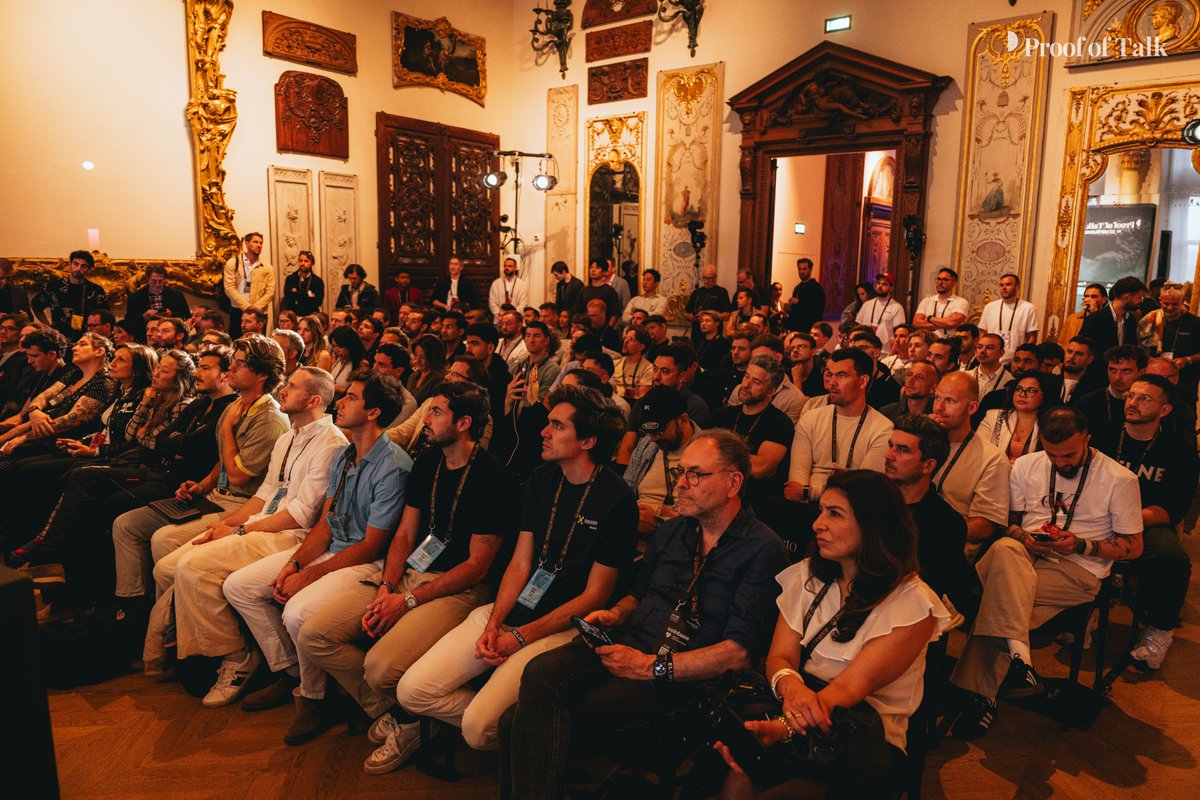
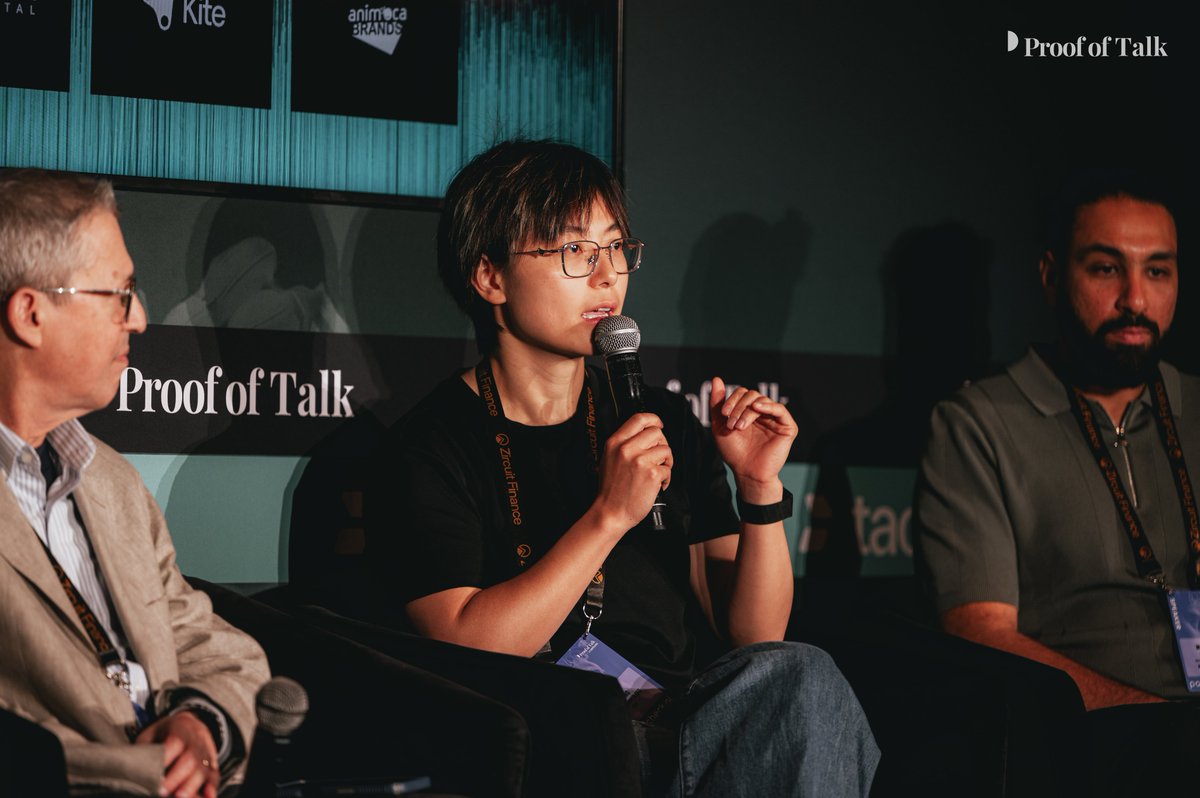
At @proofoftalk inside the Louvre in Paris, our Co-Founder & CEO @ChiZhangData unpacked Personhood, Provenance, and Verification in the Agentic Age, alongside leaders from @billions_ntwk, @paritytech, and @SuremarkDigital, moderated by @animocabrands.
In this clip, Chi breaks down why agent identity is harder than it looks:
▷ An agent is technically just a wrapper on top of a foundation model. So if the model swaps from GPT-4.5 to GPT-5.5, are you still using the same agent, or does the identity have to change when the brain underneath does?
▷ Identity is not one thing. It is layered: from the human level, to the agent level, to the task scope level, and verification has to hold at each one.
▷ This is the layer Kite is building. Through Agent Passport, every agent carries a verifiable identity you can define and control.
When AI agents start acting and transacting on behalf of people and institutions, how do you prove who is actually behind every interaction?
At @proofoftalk inside the Louvre in Paris, France, the Davos of Web3 brought together global business leaders, with 120+ speakers collectively representing over $18T in assets under management. Our Co-Founder & CEO @ChiZhangData took the stage to unpack Personhood, Provenance, and Verification in the Agentic Age, alongside leaders from @billions_ntwk, @paritytech and @SuremarkDigital, moderated by @animocabrands.
▷ The core question: how to prove an actor is human, eligible, or trustworthy without exposing a full identity or leaning on Web2 gatekeepers.
▷ The threats few are pricing in: synthetic users, bot networks, agent impersonation, credential fraud, and the quiet collapse of trust online.
▷ Kite's answer: identity as the base layer. With Kite Passport, every agent carries a verifiable cryptographic identity, transacts within user-set limits, and can be revoked at any time, so agents prove who they are before they ever move money.
Kite is building the base layer for the agentic internet: the trust and payment infrastructure that lets autonomous agents act as real economic participants. 🪁
Kite is strengthening the trust layer for autonomous agents, shipping security upgrades, deepening enterprise compliance, and expanding market access. Here's what we delivered this week:
1️⃣ We shipped a security layer for the Kite Agent Passport: action-bound passkey step-ups, delayed account recovery you can cancel, protocol-agnostic session negotiation, and upfront per-endpoint pricing so agents see costs before committing.
2️⃣ We partnered with @CrystalPlatform to integrate Crystal Expert’s real-time transaction monitoring, sanctions screening, and wallet risk intelligence directly into Kite’s agentic payment infrastructure, adding compliance to the core stack for autonomous agents.
3️⃣ $KITE is now live on @HyperliquidX Spot, enabling KITE/USDC trading on Hyperliquid.
4️⃣ We co-hosted “The Agentic Economy” in SF with @coinbase, @circle, and @M12vc, where @ChiZhangData joined experts to unpack the hard problems: human trust, agent identity continuity, wallets as memory, programmable money as governance, enterprise workflows before consumer commerce, and how agents will change market information processing.
5️⃣ We welcomed two new associates to Kite: Jenna Chiang to our data team and James Takami to strategy & BD, strengthening our capacity for agent-ready data and enterprise partnerships.
Trust, compliance, and control are becoming the foundation of agentic commerce. 🪁
"Buy me a pair of Allbirds Tree Runners, size 10, under $100." Said to @ChatGPTapp.
Now imagine an agent that could actually check out for you. It could place the order, but only if it never holds your real card number or your store login.
That is exactly what @GoKiteAI Agent Passport is designed for.
This is a concept demo of how it would work. One passkey scopes a payment session, and the agent:
▷ Acts inside the policy: approved footwear stores only, a 100 dollar cap, a 30-minute window, a scoped virtual card funded by a hold on the user's Passport balance, settlement to the merchant only, and any leftover returned to the wallet.
▷ Checks out at the real store for 94 dollars against a live budget. When a 130 dollar add-on would break the cap, the card declines in under two seconds and the agent asks before changing the order.
▷ Confirms the order with a receipt: 94 dollars paid, 6 dollars returned, the real card and store password never exposed.
What the user never hands over: real card number, store login, and blind trust that the agent stays in budget.
What the user gets back: the order, every charge against the cap, settlement they can prove, and one-click revocation.
This is where agentic commerce is heading. Agent Passport is the rails: scoped, auditable, revocable. 🪁
3️⃣ Protocol-agnostic + pricing
Cost transparency starts before the agent acts. Kite's service discovery shows per-endpoint pricing up front, so the fee is a decision input, not a bill shock later.
Session negotiation is protocol-agnostic, with no lock-in to a single payment rail. You can transact across services that settle differently, without a custom integration each time.
See ksearch listing live services and their pricing in the screenshot below, rendered from real ksearch output.
The riskiest moment in agentic payments isn't the transfer itself. It's everything that has to be true before it. Over the past two weeks we shipped a security layer for Kite Passport that wraps authentication, recovery, and spend control around every agent action.
1️⃣ Action-bound passkey step-up.
Wallet sends and agent session approvals now require a fresh passkey check bound to that specific action, not a blanket session grant. Phishing-resistant by design, and every attempt lands in login history + security audit logs.
2️⃣ Recovery that can't be rushed.
Account recovery runs through a delayed flow you can cancel by email, so a stolen credential can't instantly hand over control. Paired with USD-denominated session limits, an agent's spend stays bounded in real money, not abstract units.
3️⃣ Sessions that travel, pricing that's upfront.
Session negotiation is now protocol-agnostic, so agents aren't locked to a single rail. And search results surface per-endpoint pricing before an agent commits, making cost a pre-decision input instead of a post-hoc surprise.
The throughline: as agents take on real money, every action stays authenticated, bounded, recoverable, and auditable. Smaller surfaces, same principle, keep humans in control. 🪁
2️⃣ Recovery + USD caps
Every agent session on Kite Passport comes with a hard ceiling: per-transaction and total caps, both in USD, with an expiry. Whether the asset underneath is USDC or something else, the limit reads the same.
Account recovery isn't instant either. It runs on a delay, with a cancel link sent to your email, so a single stolen credential can't take over your account right away. And any active session is one click to revoke.
Here is a live session capped at $3 per transaction, with its controls, in the screenshot below.
Today, Kite is excited to share our collaboration with Proof of Japan, the joint venture established by SMBC Nikko Securities Inc. and Hatapro, on Flattora, an AI travel assistant powered by ZUKKU.
Together, we are demonstrating how AI Agents can help travelers discover, book, and pay for local Japanese experiences within user-defined spending rules, while Kite Agent Passport provides programmable wallet sessions, verifiable receipts, and safer payment infrastructure for agentic commerce.
Read the full article above⬆️
From near-autonomous AI chemists improving drug reactions to million-token models built for agentic coding, the last two weeks show agentic AI is maturing from a digital assistant into a hands-on force across science, hardware, and the enterprise.
Here's your biweekly recap of everything that happened in the space, in the latest edition of AI Agents Pulse:
1️⃣ Midjourney unveils "The Midjourney Scanner," an ultrasound-based full-body scanner built with Butterfly Network, aiming to deliver MRI-quality preventative imaging in a 60-second scan.
https://t.co/rQbHBccUde
2️⃣ Adobe launches a public beta of bespoke AI assistants for Photoshop, Premiere, and Illustrator, automating in-app tasks like layer organization and timeline edits through natural-language prompts.
https://t.co/g9O7lKIrJT
3️⃣ Google commits $1.5 billion to expand its data center campus in Jackson County, Alabama through 2027, including a $2 million fund for local energy-efficiency programs.
https://t.co/VOTLbHnuql
4️⃣ DeepSeek raises $7.4 billion in fresh funding, while https://t.co/Tm6AsfBIPC launches GLM-5.2, a model with a 1 million-token context window and reasoning controls aimed at agentic software engineering.
https://t.co/MmS76svcVJ
5️⃣ ChatGPT's market share falls below 50% for the first time as users migrate to Gemini, Claude, and Grok, though it remains the most-used AI assistant with over a billion monthly users.
https://t.co/XKRVwAo5TG
6️⃣ The UK government plans to deploy facial age-estimation AI to check asylum seekers' ages at the border, despite internal reports warning the tech frequently mistakes children for adults.
https://t.co/CQjycoGBLm
7️⃣ Snap debuts "Specs," $2,200 AR glasses positioned as wearable computers; its stock fell over 5% as investors questioned the price for Snap's core demographic.
https://t.co/0U9wCECaxt
8️⃣ OpenAI and https://t.co/lqkFtoXvAH demonstrate a near-autonomous AI chemist powered by GPT-5.4 that improved a challenging drug-making reaction, a notable step for medicinal chemistry.
https://t.co/iNVWAhoy54
9️⃣ Meta rolls out "AI Mode" on Facebook, answering questions grounded in public Group and Reel content, alongside new AI tools to edit photos and generate stylized video.
https://t.co/AqQ8KNnngC
🔟 Yann LeCun brands Elon Musk's xAI a "failure" after several co-founders departed, and the "godfather of AI" warned of a potential "big bubble explosion" in the industry.
https://t.co/YtlYx6OgTs
Autonomous agents need more than payment rails. They need trust, compliance, and risk intelligence built into the transaction layer.
We’re excited to share that @CrystalPlatform is bringing blockchain compliance to @GoKiteAI’s agent economy through Crystal Expert, integrated into Kite’s agentic payment infrastructure.
This collaboration helps strengthen:
▷ real-time transaction monitoring for agentic payment flows
▷ sanctions screening and wallet risk intelligence
▷ enterprise-ready infrastructure for autonomous agents to transact with more confidence
As agents move from copilots to economic actors, compliance becomes part of the core stack for agentic commerce.
Read the full PR:
https://t.co/tswoQXWupz
The Agentic Economy: Payments, Commerce & AI-Native Platforms brought together some of the sharpest builders, investors, and operators in San Francisco to get real about what it actually takes for agentic payments to work at scale. The conversation was electric.
Huge thanks to EntreConnect, Kite, and AWS for co-hosting, and to our incredible panel:
▷ @kleffew94, GTM Lead at @coinbase
▷ @gaganmac, VP Product Management at @circle
▷ @ChiZhangData, Co-Founder & CEO at @GoKiteAI
▷ @alanxdu, Partner at @M12vc
A few themes stood out from the discussion:
1️⃣ Trust is the real unlock.
The hard part is not getting agents to spend. It is making humans comfortable letting agents act and spend on their behalf. Every transaction needs clear authorization, spending boundaries, and a path for review.
2️⃣ Agent identity needs continuity.
Credit and trust assume a stable subject, but agents can change as models, context, and runtime environments change. The “same agent” may be defined less by fixed credentials and more by continuity of behavior over time.
3️⃣ Wallets can become memory.
A recurring idea from the panel was that credit is trust, and trust is built on memory. For agents, wallets can carry transaction history and make behavior legible, creating a foundation for reputation and credit.
4️⃣ Money is becoming a governance interface.
Money is not just what agents use to transact. Spending limits, permissions, and economic consequences become concrete ways to align agent behavior with human intent. Programmable money is a control surface for autonomous systems.
5️⃣ Enterprise workflows may come before consumer shopping.
Consumer agentic commerce will matter, but near-term adoption may start with agents paying for APIs, cloud resources, models, compute, and other metered services inside predefined governance rules.
6️⃣ Agents will change how markets process information.
Agents can ingest more information, compare options faster, and execute decisions more quickly than humans. As agents become economic actors, markets will need infrastructure that supports speed, accountability, identity, and settlement at once.
Agentic commerce becomes real when autonomous agents can act, pay, and be held accountable. 🪁
The agent economy is a team sport.
This summer, two associates are joining Kite to help build the infrastructure for autonomous agents:
▷ Jenna Chiang, an M.S. Data Science candidate at Northeastern University, joins our data team. Across internships at ClinAlytix, BOXS, and Gamania, she has built ETL pipelines, semantic search layers, and learning-to-rank systems, turning messy data into something agents can actually use.
▷ James Takami, an MBA candidate at UC Berkeley Haas and a SkyDeck Venture Fellow, joins our strategy and BD team. As former Director of Strategic Finance at Coin Metrics (acquired by Talos), he has spent years close to stablecoins, agentic payments, and tokenization.
Welcome to the team! 🪁
Kite is advancing agentic commerce through global conversations on sovereign finance, practical ecosystem partnerships, and community-driven building. Here's what we delivered this week:
1️⃣ AI on AIR Ep.17 launched with @hashed_official Open Finance CEO @harryhojinkim, exploring why Korea may become a critical testbed for AI agents, KRW stablecoins, and regulated financial rails.
2️⃣ Our Co-Founder & CEO @ChiZhangData joined @BlockHashPod Ep.742 to explain why Kite’s adoption thesis flipped within a year — from consumer demos like ordering Uber to the API economy, where agents pay for services by the call, and the adoption order is developers, enterprises, then consumers.
3️⃣ We announced that Chi will join @circle, @coinbase, and @M12vc for a San Francisco panel on June 15, diving into the practical infrastructure questions of the agentic economy.
4️⃣ We partnered with @DatalineAI as a Launch Partner, pairing Dataline’s upstream structured data (spot, perp funding, prediction markets) with Kite Chain’s sub-second settlement to strengthen the Data → Decision → Settle loop for autonomous agents.
5️⃣ We published a concept demo that explores how the Kite Agent Passport could enable a CS2 skin purchase: an agent monitors the market and pays only if a quote stays under $45, without ever exposing Steam credentials — bound by a 20-minute window, a hard cap, and full onchain proof.
6️⃣ We continued the Kite Community Growth Plan with an AI sharing session by our community member, breaking down the arc from AI that answers questions to AI that executes real-world actions and the trust layer that makes it possible.
7️⃣ We launched the Kite Mainnet Use Case Sharing Session, a weekly community program every Wednesday in Discord where builders present real mainnet builds and earn recognition.
The rails for the autonomous economy are being built through real conversations and community action. 🪁
Korea’s crypto market is not moving as one block.
In Episode 17 of AI on AIR, our Co-Founder & CEO @ChiZhangData sat down with @harryhojinkim, CEO of @hashed_official Open Finance, to explore why Korea may become one of the most important testbeds for AI agents, stablecoins, and regulated financial infrastructure.
In this clip, they unpack one key split inside Korea’s institutional market:
▷ Brokerages and securities firms are moving faster: they already see crypto as an investment instrument, and exchanges as brokerages for tokenized assets.
▷ Banks, credit card companies and payment institutions are more cautious: payments, settlement and lending depend on clearer regulation, and Korea’s Bank Act is much more sensitive.
▷ Regulation may become the turning point: the Digital Asset Basic Act, KRW stablecoin licenses, and financial institutions moving into Upbit all point to a market that is still early, but opening up.
For agent finance to reach local markets, trading volume is only one signal. Institutional trust, regulatory clarity and verifiable financial rails matter just as much. 🪁
Agentic commerce moves from theory to infrastructure when payments, identity, and platforms meet in the same room.
📍 San Francisco
🗓️ June 15, 5:00-8:00 PM PDT
Our Co-Founder & CEO @ChiZhangData will join a practical conversation on The Agentic Economy: Payments, Commerce & AI-Native Platforms.
🎙️ Speakers:
▷ Gagan Mac @gaganmac, VP Product Management at @circle
▷ Chi Zhang @ChiZhangData, Co-Founder & CEO at @GoKiteAI
▷ Kevin Leffew @kleffew94, GTM Lead at @coinbase
▷ Alan Du @alanxdu, Partner at @M12vc
Hosts: EntreConnect, Kite, and AWS Builder Loft.
The conversation will unpack:
▷ What is real in the agent economy today, and what is still hype?
▷ How will AI agents discover, evaluate, and complete purchases for users?
▷ What payment rails, identity layers, and trust mechanisms are needed for agent-driven transactions at scale?
If you are building agents, payments, commerce infrastructure, or AI-native platforms, this is the room to be in.
Register here: https://t.co/GeWDmmrW1c
Agentic commerce needs verifiable identity, programmable governance, and native stablecoin settlement. 🪁
The agent economy will not start with shopping. It starts with APIs.
On Episode 742 of the @BlockHashPod, our Co-Founder & CEO @ChiZhangData sat down with host Brandon Zemp to unpack why Kite's adoption thesis flipped within one year:
▷ Our first demo was agents ordering Uber Eats. Today the nearest-term use case is the API economy: agents paying per call, in real time, for the services they consume
▷ If the world ends up with more agents than humans, the whole world needs to be API accessible. That is how agents work with each other
▷ Adoption will run from developers to enterprises to consumers. Exactly the opposite of what we expected a year ago