A great display of sports(wo)manship by Taipei boxer in the way she congratulated and hugged Parveen after losing the gold medal bout to her. Great to see such comradery between two competitors.
Genuinely big day for India's private space sector. SpaceX's Transporter 18 is carrying two Indian satellites and an Indian hosted payload into orbit, all authorised by IN-SPACe.
Among them, @satleolabs TAPAS-1, India's first commercial thermal imaging payload built by a private company. Thermal sensing picks up what ordinary optical cameras cannot, from crop stress to forest fires to urban heat. A new layer of Earth intelligence, now opened up by Indian industry.
Alongside it, @tm2space's MOI-1A brings AI computing to orbit, running models on the satellite itself, and @DhruvaSpace's LEAP-2 flies four payloads, demonstrating its platform for hosting others in space.
Orbital computing, thermal intelligence, and a homegrown hosting platform, all on a single flight. This is the range and ambition of India's private space ecosystem today.
Congratulations to all three teams. Wishing you a clean deployment and a long innings in orbit. @isro@INSPACeIND@PMOIndia
Good to meet the @astrobase_space team today. They started in 2024, and have made impressive progress in just two years.
The Everest engine, an 800 kN full-flow staged combustion engine, will be a first for India. I am told FFSC is among the hardest architectures in rocketry, attempted by very few anywhere. They are also building a manufacturing unit with one of India's largest metal 3D printers.
First orbital lunch is planned in just over 2 Yrs. Ambitious target but the team is confident and committed. @isro@INSPACeIND
Some of the most exciting conversation I had at Bengaluru Space Expo 2026 was not with the CEOs or the veterans but with students.
@INSPACeIND invited some of the young teams competing in the CAN-7USAT and Model Rocketry Competition 2026, and they blew me away. They explained their rockets, CANSATs and mission designs with the poise of seasoned engineers, talking through complex systems as though they had been doing it for years.
I walked away certain of one thing. Somewhere in that hall today stood a future ISRO scientist, and very likely the founder of a space company we will all be proud of a decade from now.
This is what the future of Indian space looks like. And it looks very bright. @isro@INSPACeIND #BSX2026
From the outside, ISRO is mostly seen through its launches and satellites. Behind them sits a great deal of very high quality R&D that rarely gets spoken about.
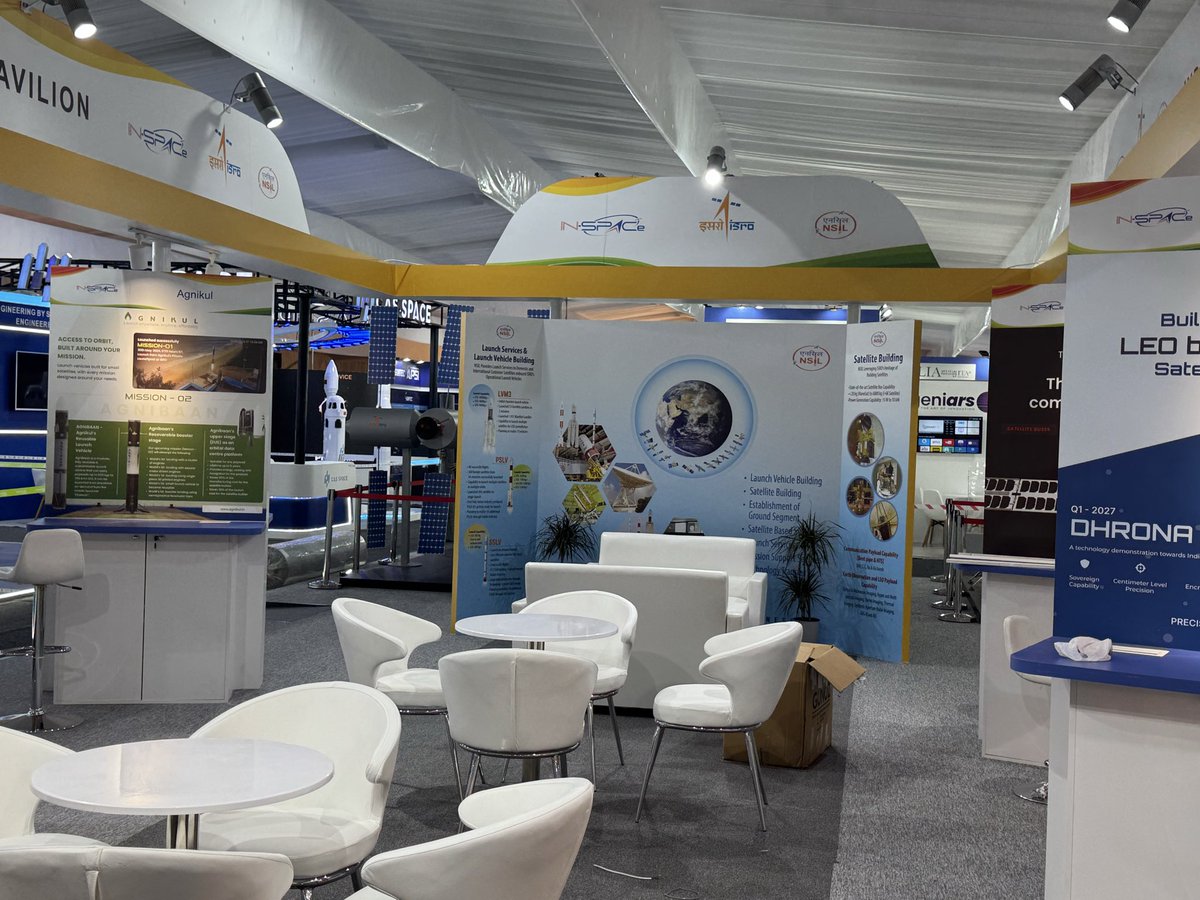
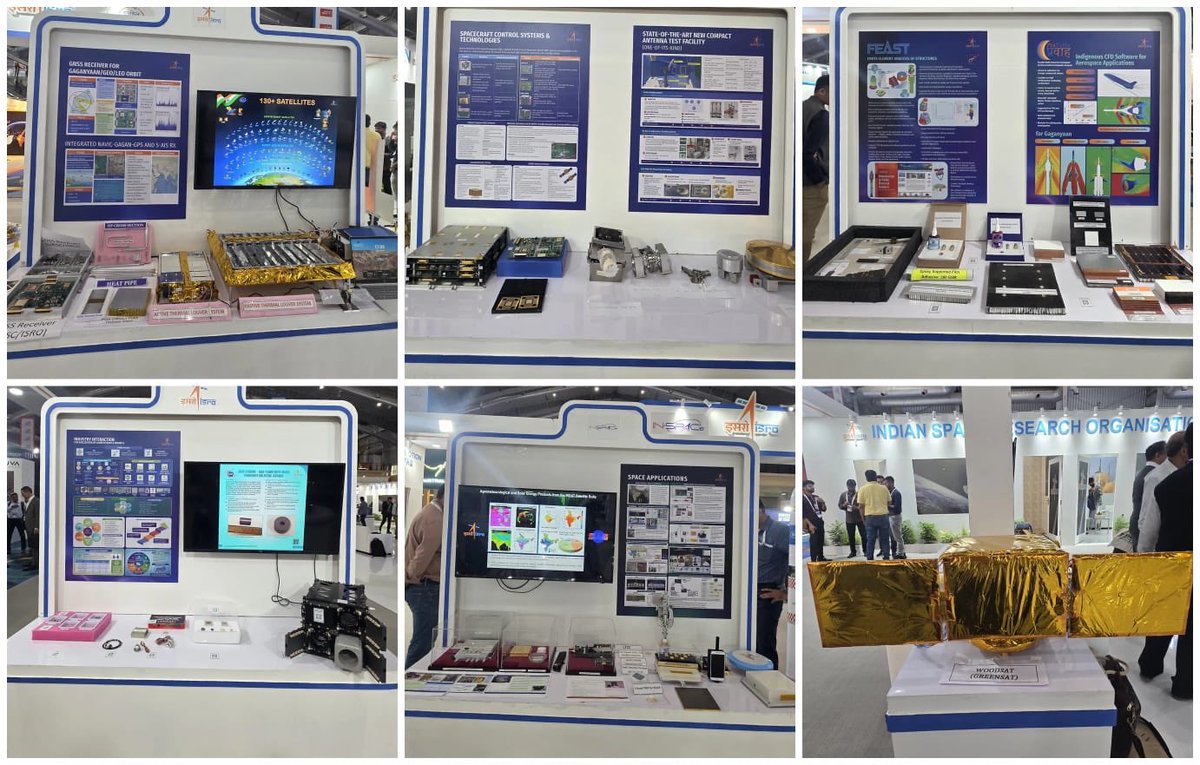
That thought stayed with me walking the ISRO pavilion at Bengaluru Space Expo 2026, where so much of that work was on display. Navigation receivers for our human spaceflight programme, thermal and control systems, indigenous simulation software, and much more, each a glimpse of the institutional rigour behind India's space ambitions.
Quiet, painstaking work, and every bit of it adds to what India can do, and has done. Kudos to our scientists and engineers who are quietly pushing the envelope of science and technology. @PMOIndia@isro@INSPACeIND #BSX2026
Space is, by its very nature, a global endeavour, and advances made by one nation creates opportunities for the entire world.
On the sidelines of BSX 2026, engaged with JAXA, Myanmar Space Agency, NSAS Singapore and the Ambassador of Italy to India to discuss strengthening bilateral ties and expanding collaboration across commercial space, technology, investments and industry partnerships.
India’s global standing in space has been built over decades through the pioneering efforts and achievements of ISRO. Today, a new generation of Indian space companies is joining this journey.
@isro@INSPACeIND@MEAIndia@PiyushGoyal
#IndiaInSpace
India's space sector is entering a new era of scale, ambition and global opportunity. #BengaluruSpaceExpo2026 captures that momentum. 300 exhibitors, 15,000 participants and delegates from 21 countries. This scale would have been unimaginable five years ago.
As @isro Chairman Dr. V. Narayanan rightly said, India's space ecosystem is growing with the support of industry and international partners. Private capital, launch capability and a growing ecosystem are changing the game.
The next phase is about scale: building a full-spectrum space economy where ISRO, industry, startups, academia and investors reinforce each other. India's ambition is not to build a closed space ecosystem, but an open and trusted one.
India is positioning itself as a global hub for space manufacturing, technology, launch services and resilient supply chains. The opportunity now is to move from MoUs to joint missions, and from discussions to shared programmes. MSMEs, startups and large industry each have a defining role in taking Indian space capabilities to global markets.
The six enablers are clear: capability, capacity, capital, demand, enabling policy and global partnerships. India's space story will be built through a whole-of-nation effual to reach, with ISRO remaining its backbone as the country pursues an unprecedented frontier of exploration and commercial growth.
@PMOIndia@DrJitendraSingh@isro@INSPACeIND
There has been some misleading narrative in the media around the future role of ISRO. Let me say it unequivocally: ISRO’ s role is by no means diminishing. It will remain the bedrock of Indian space sector.
The reforms since 2020 are about expanding India’s overall space ecosystem.
IN-SPACe will facilitate and authorise greater non-government participation, while NSIL will help commercialise mature capabilities.
The idea is to let industry increasingly manufacture and scale mature launch vehicles, satellites and other systems, while ISRO focuses on what it is uniquely placed to do: advanced R&D, scientific missions, strategic missions, new technologies, and infrastructure that is too complex for the private sector to develop on its own.
ISRO will remain at the core of India’s space programme leading frontier research and the next generation of national missions, including the Bharatiya Antariksh Station by 2035, an Indian crewed mission to the Moon by 2040, next-generation launch systems, and sustained lunar and planetary exploration.
The direction is not a smaller ISRO. It is a larger Indian space ecosystem, with ISRO pushing the technological frontier. @isro@INSPACeIND
Five years ago, when India opened up its space sector, we had two clear objectives: enable ISRO to conquer new frontiers and empower our private industry to scale up.
Today, we are seeing both take shape.
EOS-05 is a major achievement by ISRO, and this is just the beginning.
At the same time, from barely a handful of space startups five years ago, India today has over 450. Indian private industry has already flown a rocket to orbit.
Now comes the real test: scaling up.
We have set ourselves an ambitious target of 50 launches a year by 2030.
A goal of this scale cannot be achieved by one organisation alone. Government and private industry have to build this future together.
ISRO’s research will continue to push the frontiers of what is possible. Private industry must translate that momentum into manufacturing at scale: more rockets, more satellites, more launch capacity and new technologies.
That is how we will build a complete space ecosystem and create the capacity to match our ambition.
The opportunity before us is immense: build in India, launch from India and serve the world from India.
We are well on our way to taking India’s space sector to a new orbit, figuratively and literally. @isro@INSPACeIND
Well said Chairman @Isro - The reward for hard work is more work. It is the “more work” of Team ISRO that continues to make our nation proud and gives us a place of prominence in global space pecking order. Thank you. Onwards and Upwards. @INSPACeIND
Congratulation Team @ISRO for yet another successful GSLV mission. India now has a powerful imaging capability in the geosynchronous orbit, 36000 km above. @INSPACeIND
Space knows no boundaries, and human potential has no limits! 🛰️✨
Inspiring to see #MissionShaktiSAT unite and empower brilliant young women from 108 nations to master satellite design—a powerful reflection of India’s desire for space inclusiveness. This hands-on, "learning by doing" milestone is an exciting leap forward as these future leaders journey from the classroom straight to the launch pad. Keep aiming for the stars! I wish I was there to witness firsthand the energy of youth on display. Thank you Dr Mrs Kesan for this initiative. 🚀🌍🇮🇳 @INSPACeIND
#WomenInSTEM #SpaceDiplomacy #SpaceTech #INSPACe #ShaktiSAT
Thermal imaging from space is a hard problem, and @satleolabs is building the satellites to do it, from Ahmedabad, first launch due this October and a constellation to follow. Good to see them use @INSPACeIND's technical facilities along the way. Heat mapping for our cities, crop stress for our farmers, early alerts for forest fires, the potential is wide open. Indian space industry is gaining real depth. @PMOIndia
Met one of the founders of @CosmoserveSpace, a Hyderabad team working on active debris removal: autonomous spacecraft to capture and bring down dead satellites and a mother satellite to refuel the retriever satellite. Brilliant. Only a handful of companies in the world are even attempting this. This is exactly the kind of hard, frontier work we want Indian startups taking on. Wishing this young team well. @INSPACeIND@PMOIndia
Spent time with few space companies today. @vassar_labs, one of the oldest space company founded in 2014, is using satellite data and deep tech to serve agriculture and disaster resilience. They are working with several States and Central Govt Depts. But this is only the beginning. The demand for such downstream solutions- for our farmers, our cities, our disaster preparedness is vast and still largely untapped. I encourage more of our entrepreneurs to take on these problems. The opportunity is immense, and so is the impact. @INSPACeIND
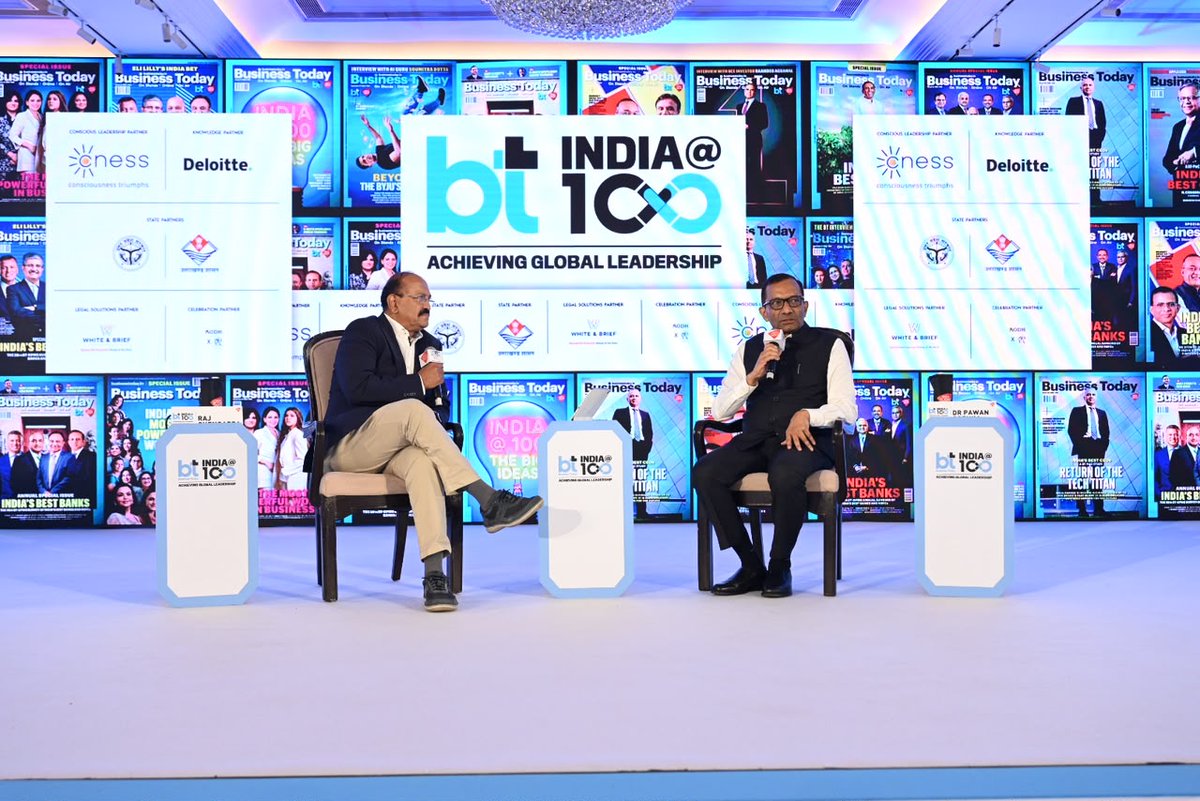
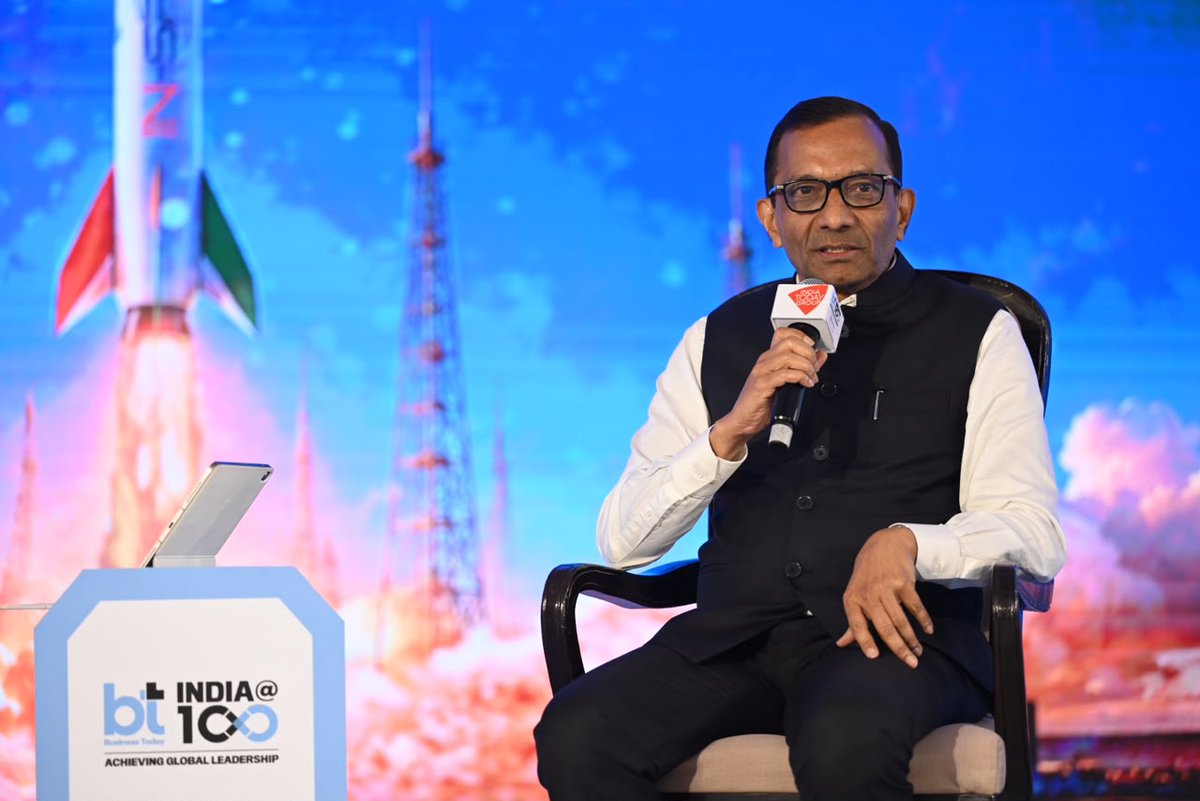
🚀💡 #BTIndiaAt100 - #InPics | ‘Championing India's Spacetech Lift Off’ — Dr Pawan Goenka (@GoenkaPk), Chairman, In-Space (@INSPACeIND), decoded India’s #spacetech ambitions and the opportunities emerging from a rapidly expanding #space ecosystem while exploring how spacetech can become a powerful growth engine and help position India among the world’s leading space economies by 2047, in a conversation with Raj Chengappa (@rajchengappa), Group Editorial Director (Publishing), India Today Group, at @business_today’s marquee event.
Watch the full session on BTTV: https://t.co/T6dvssM0aa
@CNESSSuperApp | @DeloitteIndia | @_InvestUP | @ukcmo | @ABDL_India
#IAH26
A truly special start to #NSpD2026
Hon PM Shri @narendramodi spent 2 hours wd 20 of India's space startups, listening, exchanging ideas, exploring their exhibits & encouraging our young founders.For these entrepreneurs, this means a lot.The sky is just the beginning.
@PMOIndia
Wow. So nice to read this. Mahindra and Tata are the top 2. Indian Automotive Engineering now is not behind any one. Someone should also plot selling price as a function of battery size. I won’t be surprised if Mahindra Tata are in top 2. @TataMotors @MahinRise
Indian Automakers just topped the world in EV efficiency. Not Tesla. Not BYD. Tata and Mahindra.
Among the world's 22 largest automakers, Tata Motors and Mahindra posted the lowest energy consumption per km in 2025, beating Tesla and BYD on efficiency.
Indian engineering, built for Indian roads, is now setting the global benchmark.
Study and Chart credit: @TheICCT & @restofworld@TataMotors@Mahindra_Auto
An interesting story of how homegrown technology is helping Indian athletes perform better. This is just the beginning. @iitmadras
https://t.co/K2u03o3kxO