🌍🇸🇦 من السعودية إلى العالم
منصة ذهب متاحة للتحميل والاستخدام في 190 دولة حول العالم، ولديها حاليًا مستخدمون في 100 دولة.
🇸🇦🌍 From Saudi Arabia to the world
Gold Platform is available for download and use
in 190 countries worldwide, and currently has users across 100 countries.
استنادًا إلى بيانات التوزيع الجغرافي للمستخدمين عبر Google Analytics.
User geography based on Google Analytics data.
Gold Is No Longer as Safe as We Once Believed. Or Have We Misunderstood Financial Security?
In January 2026, 24-karat gold reportedly reached $181.33 per gram before declining to approximately $114.67, a contraction of 36.8% and a loss of nearly $66,667 per kilogram.
For an asset historically regarded as a sanctuary for wealth, such a decline raises a fundamental question: Has gold fundamentally changed, or have we misunderstood the meaning of financial security?
The Illusion of Permanence
Gold’s scarcity and historical significance have long sustained its reputation as a store of value. Yet history reveals its vulnerability. Gold experienced declines exceeding 60% during the early 1980s and approximately 45.5% between 2011 and 2015.
Its physical permanence has never guaranteed financial stability.
The Paradox of a Safe Haven
Gold’s valuation is increasingly influenced by monetary policy, institutional capital, speculative activity, and global liquidity.
An asset acquired to protect wealth during uncertainty may itself become a source of vulnerability when uncertainty intensifies.
During financial distress, investors may liquidate gold to meet obligations or offset losses elsewhere. Its scarcity remains unchanged, yet its market value fluctuates alongside the broader financial system.
The distinction is fundamental: the permanence of an asset does not guarantee the preservation of capital invested in it.
Beyond the Illusion of Wealth
Financial markets frequently equate rising asset prices with growing prosperity. Yet appreciation does not necessarily translate into greater purchasing power or economic independence.
Genuine financial resilience rests upon sustainable income, disciplined consumption, adequate liquidity, and independence from excessive debt.
True wealth is measured not only by what we possess, but by how little our security depends upon continuously acquiring more.
Rethinking Financial Security
Gold has not lost its scarcity or historical relevance. Its decline, however, challenges the assumption that any single asset can provide unconditional protection.
Whether the current contraction reflects monetary pressures, excessive valuations, or deeper structural changes remains a question requiring evidence.
Perhaps the misconception was never about gold itself, but about our expectation that security could be purchased through ownership alone.
Financial security is not the absence of volatility. It is the ability to withstand uncertainty without surrendering independence.
Ultimately, true wealth is not merely what we accumulate, but the freedom we preserve when the value of what we own changes.
الذهب لم يعد آمناً كما كنا نعتقد.. أم أننا فهمنا الأمان بشكل خاطئ؟
في يناير 2026، وصل سعر غرام الذهب عيار 24 إلى نحو 680 ريالاً سعودياً بحسب الأسعار المتداولة، وبعد أقل من عام أصبح الحديث عن مستوى 430 ريالاً للغرام.
نحن أمام تراجع يقارب 36.8%، أي خسارة 250 ريالاً في الغرام الواحد، و250 ألف ريال في كل كيلوغرام من الذهب.
هذه ليست حركة سعرية عادية بالنسبة لشخص وضع مدخراته في الذهب اعتقاداً منه أنه يحمي أمواله من التضخم وتقلبات الاقتصاد.
لكن السؤال الحقيقي ليس: لماذا هبط الذهب؟
السؤال هو: كيف يمكن لأصل نعتبره ملاذاً آمناً أن يفقد أكثر من ثلث قيمته خلال أشهر؟ وهل الذهب يتغير، أم أن مفهومنا للأمان المالي هو الذي يحتاج إلى إعادة نظر؟
التاريخ يقول إن الذهب ليس محصناً من الانهيار
شهد الذهب موجات هبوط قاسية عبر التاريخ، منها:
1980–1985: تراجع تاريخي تجاوز 60% في بعض المقارنات بين القمة والقاع.
2011–2015: انخفض الذهب من نحو 231.6 ريال إلى 126.3 ريال للغرام، بما يعادل خسارة تقارب 45.5%.
2026: وفق المقارنة بين 680 و430 ريالاً للغرام، بلغت الخسارة 36.8%.
الأرقام التاريخية المحولة للريال تقريبية، وتعتمد على أسعار الذهب العالمية وسعر الصرف المستخدم في الحساب. كما أن أسعار الثمانينيات المحولة بسعر صرف اليوم لا تمثل بالضرورة أسعار البيع الفعلية في السعودية آنذاك.
إذن، الذهب سبق أن انهار، وسبق أن احتاج إلى سنوات طويلة حتى يستعيد قممه السابقة.
لكن ما يحدث الآن يعيد طرح سؤال مهم عن طبيعة الذهب في النظام المالي الحديث.
هل تحول الذهب من مخزن للقيمة إلى أداة مضاربة؟
الذهب معدن نادر، ولا يمكن إنتاجه بلا حدود كما يمكن توسيع المعروض النقدي. لكن ندرته لا تعني أن سعره ثابت أو أن قيمته السوقية لا يمكن أن تنهار.
اليوم يتأثر الذهب بأسعار الفائدة، وقوة الدولار، وتدفقات الصناديق الاستثمارية، والمضاربات، واحتياجات المستثمرين للسيولة.
وهنا تظهر المفارقة:
الأصل الذي يشتريه الناس هرباً من الخوف قد يضطرون إلى بيعه عندما يشتد الخوف.
وهذا لا يثبت أن الذهب فقد وظيفته التاريخية نهائياً، لكنه يكشف أن الحماية التي يوفرها ليست مطلقة، خصوصاً على المدى القصير.
المشكلة ليست في الذهب وحده، بل في مفهوم الأمان
عندما نشتري الذهب عند مستويات مرتفعة جداً، قد نكون ندفع ثمناً كبيراً مقابل شعورنا بالأمان.
وإذا تراجع السعر بعد ذلك، نكتشف أن الأصل الذي اشتريناه لحماية مدخراتنا أصبح سبباً في خسارة جزء منها.
فهل كانت المشكلة في الذهب نفسه، أم في السعر الذي قبلنا دفعه؟
وهل الارتفاع المستمر دليل على القوة الحقيقية، أم قد يكون أحياناً نتيجة خوف جماعي ومبالغة في التقييم؟
لا يمكن الجزم بأن كل ارتفاع فقاعة، ولا بأن كل هبوط انهيار دائم. لكن من الخطأ اعتبار أي أصل آمناً عند أي سعر.
الثروة الحقيقية ليست رقماً على شاشة
هناك حقيقة يغفل عنها كثيرون:
ارتفاع سعر الذهب لا يعني بالضرورة أننا أصبحنا أكثر ثراءً، كما أن ارتفاع أسعار الأصول لا يعني تلقائياً تحسن القدرة على المعيشة.
القيمة الحقيقية للثروة تظهر في قدرتها على توفير الاحتياجات الأساسية، والاستقلال عن الديون، والحفاظ على القوة الشرائية بمرور الزمن.
ولهذا فإن تقليل الاستهلاك غير الضروري، وبناء مصادر دخل منتجة، وامتلاك احتياطي مالي مناسب، قد تكون عناصر مهمة للأمان المالي بقدر أهمية امتلاك الذهب، وربما أكثر لبعض الناس.
الخلاصة
الذهب لم يفقد ندرته، لكنه أثبت مجدداً أن الندرة وحدها لا تضمن استقرار السعر.
والهبوط الكبير لا يكفي لإعلان نهاية الذهب باعتباره مخزناً للقيمة، لكنه يكفي لإسقاط الاعتقاد بأنه أصل لا يمكن أن يسبب خسائر قاسية.
قد يكون ما نراه تصحيحاً بعد ارتفاع مبالغ فيه، وقد يكون نتيجة تغيرات في السيولة والسياسات النقدية، وقد يكشف مع الوقت عن تحول أعمق في سلوك المستثمرين.
لكن الحكم على ذلك يحتاج إلى أدلة، وليس مجرد مراقبة السعر.
ربما الحقيقة التي يجب أن نواجهها ليست أن الذهب لم يعد آمناً، بل أنه لم يكن يوماً ضماناً مطلقاً للأمان.
فالأمان المالي الحقيقي لا يأتي من امتلاك معدن واحد، ولا من توقع ارتفاع سعره باستمرار، بل من تقليل الاعتماد على الاستهلاك والديون والمضاربة، وبناء حياة لا تنهار قيمتها كلما تغيرت أسعار الأسواق.
والسؤال الذي يستحق أن يبقى مفتوحاً: هل نبحث عن أصل يحفظ ثروتنا، أم عن طريقة حياة تجعلنا أقل اعتماداً على تقلبات المال نفسه؟
الذهب يواصل تراجعه اليوم الأربعاء 18 نوفمبر 2026، مسجلًا أدنى مستوياته منذ أكثر من عام.
• التراجع اليومي: نحو 2%.
• سعر الأونصة: 14,168 ريالًا.
• سعر جرام الذهب عيار 24: نحو 455.50 ريال.
• التراجع منذ بداية 2026: نحو 13%.
• التراجع من قمة يناير التاريخية: نحو 32.5%.
• الفضة تتراجع اليوم بنحو 3% إلى 172.50 ريالًا للأونصة.
اللافت أن الذهب فقد قرابة ثلث قيمته منذ قمته التاريخية، ويتجه لتسجيل أسوأ أداء سنوي له منذ 2015.
كيلوغرام الذهب | قراءة سعرية خلال 7 أشهر
بلغ أعلى سعر مرصود 562 ألف ريال في مايو، مقابل 491 ألف ريال في 11 نوفمبر 2026، وهو أدنى مستوى خلال الفترة.
وبذلك تراجع سعر السبيكة بنحو 71 ألف ريال، أي 12.6% من أعلى مستوى مرصود.
وتوضح المقارنة حجم التغير في قيمة كيلوغرام الذهب، وأهمية متابعة الأسعار على فترات زمنية مختلفة.
البيانات وفق متوسط أسعار السبائك لدى محلات الذهب، في يوم 11 من كل شهر.
الذهب يعوّض جزءًا من خسائره بعد موجة الهبوط الأخيرة.
سجّلت أونصة الذهب 15,165.88 ريالًا، بارتفاع قدره 461.23 ريالًا مقارنة بالأمس، أي نحو 3.14%.
وبلغ سعر غرام الذهب عيار 24 نحو 487.65 ريالًا.
ما الذي يستحق المتابعة؟
ليس حجم الارتفاع وحده، بل قدرة الذهب على الحفاظ على مكاسبه خلال الأيام المقبلة؛ فالارتداد السعري بعد هبوط حاد لا يعني بالضرورة انتهاء الاتجاه الهابط.
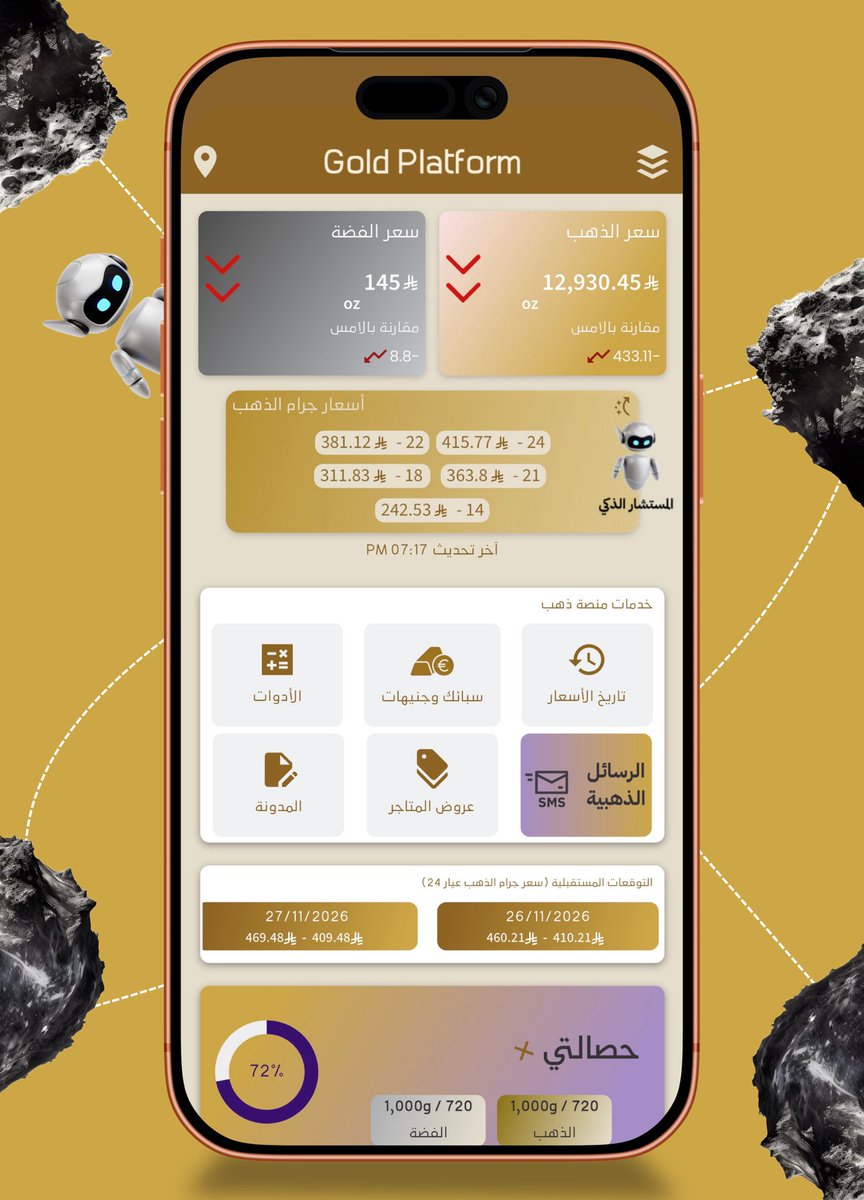
في تطبيق منصة ذهب، تتحدّث أسعار الذهب والفضة كل دقيقة، مع أدوات لمتابعة الأداء التاريخي والتغيرات السعرية.
الذهب يواصل تراجعه وسط تقلبات حادة في الأسعار.
ومع تسارع حركة السوق، تتحدّث أسعار الذهب والفضة في تطبيق منصة ذهب كل دقيقة، بما يعكس أحدث التغيرات السعرية.
في موجات الهبوط، توقيت المعلومة مهم.
ماذا يعني تثبيت الفائدة الأمريكية عند 3.75%–4.00% لسوق الذهب؟
لا يرتبط أداء الذهب بقرار الفائدة وحده، بل بتوقعات الأسواق بشأن مسار السياسة النقدية الأمريكية.
هناك سيناريوهان رئيسيان:
تزايد توقعات خفض الفائدة: قد يدعم الذهب، خصوصًا إذا تراجعت عوائد السندات الأمريكية والدولار.
استمرار الفائدة عند مستويات مرتفعة: قد يشكل ضغطًا على الذهب، نتيجة ارتفاع جاذبية الأصول المدرة للعائد.
القراءة الأهم: لا تحدد الفائدة وحدها اتجاه الذهب، بل يتحدد تأثيرها من خلال العوائد الحقيقية، وقوة الدولار، وتوقعات السياسة النقدية المقبلة.
الذهب خلال عام | من 679 إلى 482 ريالًا للغرام
شهد الذهب تقلبات كبيرة خلال عام، إذ بلغ أعلى سعر له 679.39 ريالًا للغرام، قبل أن يتراجع إلى 481.87 ريالًا حاليًا.
ماذا تعني هذه الأرقام؟
من اشترى 100 غرام عند أعلى سعر خلال العام، دفع نحو 67,939 ريالًا.
وتبلغ قيمة الكمية نفسها بالسعر الحالي نحو 48,187 ريالًا.
الفرق: 19,752 ريالًا، بانخفاض 29.1%.
هذه المقارنة توضح أثر توقيت الشراء على قيمة الذهب، حتى عند امتلاك الوزن والعيار نفسيهما.
الحسابات وفق أسعار الغرام، دون احتساب المصنعية وفروق البيع والشراء.
Rooted in Saudi Arabia. Connected to the world. 🌏
Gold Platform stands in unwavering solidarity with the Kingdom, its people, and its security and stability.
أداء الذهب خلال 5 سنوات | 2021–2026
ارتفع سعر غرام الذهب من نحو 212 ريالًا إلى 502 ريال خلال خمس سنوات.
مؤشرات الأداء:
ارتفاع القيمة: +290 ريالًا للغرام
العائد التراكمي: +136.4%
مضاعف القيمة: 2.36 مرة
معدل النمو السنوي المركب (CAGR): 18.8% سنويًا
النطاق السعري خلال الفترة:
أعلى سعر: 663.34 ريالًا للغرام
أدنى سعر: 195.11 ريالًا للغرام
ارتفاع تراكمي يتجاوز 136% خلال خمس سنوات، رغم التقلبات السعرية التي شهدها الذهب خلال الفترة.
References
This article draws upon the following authoritative sources to verify information regarding precious metals markets, industrial demand, liquidity, and taxation:
World Gold Council — Gold as a Strategic Asset: Gold’s investment characteristics, strategic role, and contribution to portfolio diversification.
World Gold Council — Central Bank Gold Reserves Survey: Central bank gold holdings, reserve management strategies, and the motivations behind institutional gold ownership.
The Silver Institute — World Silver Survey: Global industrial demand, mine production, supply dynamics, and the balance between silver supply and consumption.
ZATCA — VAT Implementing Regulations, Article 36: Regulatory provisions governing the VAT treatment of qualifying investment-grade precious metals in Saudi Arabia.
Disclaimer: This article is intended exclusively for educational and analytical purposes and does not constitute personalized investment advice or a recommendation to buy or sell any financial asset. All hypothetical prices are provided solely for illustrative purposes and do not represent current market quotations.
Gold vs Silver: A Comparative Analysis of Value, Risk, and Investment Strategy
Two Precious Metals, Two Distinct Economic Roles
The comparison between gold and silver extends well beyond their respective market prices. Although both are classified as precious metals, they occupy fundamentally different positions within the global financial system, industrial economy, and investment landscape.
Gold has historically served as a monetary reserve, a store of wealth, and a strategic asset held by central banks, financial institutions, and private investors. Silver, while sharing a long monetary history, has evolved into an asset whose value is influenced substantially by industrial consumption and technological development.
Consequently, determining which metal represents the superior investment requires a comprehensive assessment of market structure, price volatility, liquidity, economic sensitivity, acquisition costs, and long-term financial objectives.
The relevant question is not which metal is universally superior, but which is better suited to a particular investment strategy.
Conclusion: Investment Superiority Depends on Strategic Purpose
Gold and silver are not interchangeable investment assets, despite their shared classification as precious metals.
Gold benefits from an established monetary role, extensive institutional acceptance, deep international liquidity, and high physical value concentration.
Silver combines precious-metal investment characteristics with significant industrial exposure, creating a different balance of opportunity and risk.
For investors emphasizing wealth preservation, liquidity, and comparatively lower volatility between the two metals, gold may represent the more suitable choice.
For those prepared to accept greater price fluctuations in exchange for exposure to industrial demand and potentially larger percentage movements, silver may offer a different strategic proposition.
Ultimately, neither metal is inherently superior under all economic conditions.
Sound investment decisions require an understanding of the underlying asset, its market structure, acquisition costs, liquidity characteristics, and contribution to a clearly defined financial strategy.
The objective is not to select the more prestigious or less expensive metal, but to identify the asset whose economic characteristics best serve the intended purpose.