I'm a cardiologist. I've been in the room when the heart monitor goes flat.
I've watched the moment a family realizes there are no more conversations. No more chances. No more time.
And I've noticed something that haunts me more than the dying. It's what the living say afterward.
It's never "I wish he'd worked more." Never "I wish she'd had more followers." Never "I wish we'd made more money."
It's always the same five words:
"I wish I'd told them."
I wish I'd told them I loved them. I wish I'd forgiven them. I wish I'd called. I wish I'd shown up. I wish I'd said the thing I spent years rehearsing and never delivered.
After twenty years of watching hearts stop, here is what I know — not as a physician, but as a human being who has held the boundary between alive and gone more times than I can count:
Tell the people you love that you love them. Today. Not eventually. I've pronounced time of death on patients whose families were mid-argument. The conversation they thought they'd finish tomorrow became the last conversation they ever had.
Spend more time with your parents. I've watched grown adults collapse at a bedside, realizing their parents were growing older while they were busy growing up. The visits you keep postponing are numbered. You just don't know the number.
Forgive yourself for being human. You were never meant to live without mistakes. I see patients destroy their health carrying guilt, shame, and regret for decades — the stress hormones alone cause measurable cardiac damage. Chronic unforgiveness is a cardiovascular risk factor. That's not a metaphor. It's physiology.
Let yourself cry when life hurts. I've treated men who hadn't cried in thirty years and carried their grief in their blood pressure, their cortisol, their arterial stiffness. Suppressed emotion doesn't disappear. It becomes inflammation. I see it on every lab panel.
Heal the wounds you keep hiding. Unhealed pain shapes your relationships, your choices, your sleep, your appetite, and your heart — literally. The ACE study proved it: adverse childhood experiences predict cardiovascular disease decades later. Your biography becomes your biology.
Stop postponing your happiness. I've watched patients survive a heart attack, swear they'll change everything, and six months later be back to the same life that was killing them. The urgency fades. The habits return. And then they're on my table again — except this time, some of them don't leave.
Learn to enjoy your own company. If you cannot sit peacefully with yourself, there are parts of your life still running on autopilot. I wrote recently about how the Default Mode Network — the brain's background narrator — drives anxiety, rumination, and compulsive behavior. Stillness isn't empty. It's where you finally hear what matters.
Get outside. Into trees. Into sunlight. Into nature. I just wrote about a Japanese immunologist who proved that two hours among trees boosts your natural killer cells — your cancer-fighting immune soldiers — by 50% for a full month. Nature isn't a luxury. It's medicine your ancestors took for free every single day.
Help someone who cannot repay you. The data on generosity and cardiac health is striking — acts of compassion lower cortisol, reduce blood pressure, and improve heart rate variability. Giving without expectation is one of the most measurable longevity interventions that exists.
Love something with your whole heart. A person. A purpose. A craft. Life becomes richer when your heart is fully engaged — and I mean that both ways. The cardiology data on strong social relationships reducing mortality as much as quitting smoking isn't soft science. It's published, replicated, and powerful.
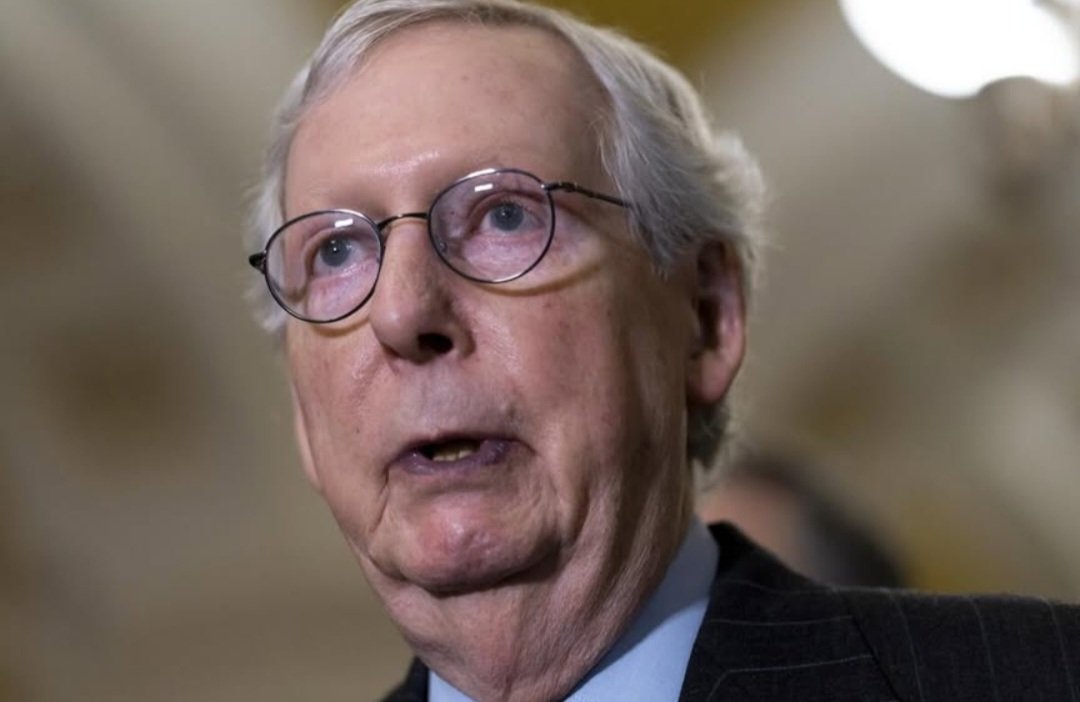
Your reminder that this sonofabitch Mitch McConnell, stole not 1 but 2 SCOTUS seats and packed the lower court with right-wing fanatics and refused to persuade Republican Senator's to convict Trump in both impeachment trials. He's responsible for this fucking nightmare.
January 1995. Emma Thompson had no idea.
She and Kenneth Branagh had been one of the most admired couples in British theater and film for nearly a decade. They had met in 1987 on the BBC drama Fortunes of War. They had married in 1989. They had built careers and a life together that seemed, from the outside, like something from a film.
From the outside.
While Emma was working, while she was being exactly the devoted and trusting partner she believed she was, Kenneth had grown close to actress Helena Bonham Carter on the set of Mary Shelley's Frankenstein the previous year. Emma did not know. She did not even suspect.
""I was utterly, utterly blind,"" she later told The New Yorker. ""What I learned was how easy it is to be blinded by your own desire to deceive yourself.""
When the truth arrived, it broke her. She described herself as feeling half alive. Any sense of being lovable or worthy had gone completely. Her heart, in her own words, felt like a pile of shattered dishes.
Here is what she did next.
She did not give angry interviews. She did not cry on chat shows. She did not seek public revenge. She gathered the broken pieces of her heart, put them in a drawer, her own words, and went back to work.
The work was a screenplay she had been writing for five years: an adaptation of Jane Austen's Sense and Sensibility. She was also going to star in it, playing Elinor Dashwood, a young woman who must hide her heartbreak from everyone around her. A woman who stays composed in public while her world falls apart inside. A woman who cries only when completely alone.
There was something almost unbearably precise about this. Emma Thompson, in the worst year of her life, was writing and then performing a woman whose entire struggle was the dignified suppression of grief.
She was not acting that character. She was living her.
Filming began in April 1995. By September, she and Kenneth officially announced their separation. The tabloids tore what remained of the fairy tale apart. She was depressed, alone, and the press was watching. She kept showing up to set.
On that set, something gentle happened. A kind actor named Greg Wise was in a smaller role. He and Emma slowly grew close. In her own words, he was the man who picked up the pieces and put them back together.
Sense and Sensibility was released in December 1995. On March 25, 1996, less than a year after her marriage had publicly ended, Emma Thompson walked onto the stage of the Academy Awards and won the Oscar for Best Adapted Screenplay.
She stood at the podium and said she was accepting it on behalf of Jane Austen, who had been dead for 180 years and deserved one.
That win made her something no one has been before or since: the only person to win Oscars for both acting, for Howards End in 1992, and writing. She had written a masterpiece in the worst year of her life.
She married Greg Wise in 2003. They have a daughter, Gaia, born through IVF, and a son, Tindyebwa, a Rwandan refugee they adopted as a teenager. In 2018, she was made a Dame.
Then came Love Actually, and the scene where her character slips away to the bedroom, puts on a CD, sits on the bed, and cries quietly, completely, for just a few moments, before composing herself and going back downstairs.
Emma Thompson has said those tears were real. ""I had my heart very badly broken by Ken. So I knew what it felt like to find the necklace that wasn't meant for me.""
She has spent her career giving her grief somewhere useful to go.
The truest lesson of her life is not about dramatic resilience. It is quieter than that. It is about what you do in the year when everything breaks, when you feel unlovable and half alive.
Emma Thompson wrote Sense and Sensibility in that year. She showed up to set every day. She let the pain shape the work instead of stop it.
What breaks you is not the same as what defines you.
Those are two entirely different things.
Let me tell you what just got reported, because you will not believe it until you see it laid out.
The Trump administration cut a billion-dollar tungsten deal with Kazakhstan. Tungsten is the metal we need for missile warheads, fighter jets, and computer chips. Trump himself got on the phone to close it. Commerce Secretary Howard Lutnick worked it from the inside, sending letters, leaning on the Kazakh president, lining up as much as $1.6 billion in federal financing.
Within weeks of those negotiations, investors tied to a firm partly owned by Donald Trump Jr. and Eric Trump took a 20% stake in an entity connected to the very same Kazakhstan project their father was negotiating. Around that same time, Cantor Fitzgerald, the firm run by Lutnick’s own sons, raised $210 million for a partner in the deal and pocketed the fees.
The fathers set the policy. The sons cashed in.
Six days after the Trump sons and their partners moved their money, Lutnick signed the final deal.
The reporting found one or both families have financial ties to at least 14 companies working with the government on critical mining deals.
The total federal funding flowing toward those companies tops $8.9 billion.
This is your tax money.
It is supposed to secure our supply chains and protect our troops, not pad the portfolios of the President’s children and the Commerce Secretary’s children.
This is the most corrupt administration in American history. It is not close.
We must keep digging, and keep asking the questions they do not want asked. Republicans in Congress are unwilling to lift a finger. Mike Johnson is running a protection racket.
Either we will end the corruption, or the corruption will be the end of us.
https://t.co/yFOl7zvOhC
This week someone targeted my family for harm with a false report. We’re physically OK, but that doesn’t mean we weren’t harmed. I am beyond furious.
Whatever your politics, this is awful, wrong, and can never become normal. https://t.co/72wxaVLzVT
If Democrats are serious about winning the midterms they need to hire a seasoned spokesperson to hold daily press conferences. They need to challenge the lies and misinformation that the White House spits out every single day.
I think it was just hate.
By Sincerely, American:
"Trump supporters say, 'We suffered 8 years under Barack Obama.'
Fair enough. Let’s take a look.
The day Obama took office, the Dow closed at 7,949 points. Eight years later, the Dow had almost tripled.
General Motors and Chrysler were on the brink of bankruptcy, with Ford not far behind, and their failure, along with their supply chains, would have meant the loss of millions of jobs. Obama pushed through a controversial, $80 billion bailout to save the car industry. The U.S. car industry survived, started making money again, and the entire $80 billion was paid back, with interest.
While we remain vulnerable to lone-wolf attacks, no foreign terrorist organization has successfully executed a mass attack here since 9/11.
Obama ordered the raid that killed Osama Bin Laden.
He drew down the number of troops from 180,000 in Iraq and Afghanistan to just 15,000, and increased funding for the Department of Veterans Affairs.
He launched a program called Opening Doors which, since 2010, has led to a 47 percent decline in the number of homeless veterans. He set a record 73 straight months of private-sector job growth.
Due to Obama’s regulatory policies, greenhouse gas emissions decreased by 12%, production of renewable energy more than doubled, and our dependence on foreign oil was cut in half.
He signed The Lilly Ledbetter Act, making it easier for women to sue employers for unequal pay.
His Omnibus Public Lands Management Act designated more than 2 million acres as wilderness, creating thousands of miles of trails and protecting over 1,000 miles of rivers.
He reduced the federal deficit from 9.8 percent of GDP in 2009 to 3.2 percent in 2016.
For all the inadequacies of the Affordable Care Act, we seem to have forgotten that, before the ACA, you could be denied coverage for a pre-existing condition and kids could not stay on their parents’ policies up to age 26.
Obama approved a $14.5 billion system to rebuild the levees in New Orleans.
All this, even as our own Mitch McConnell famously asserted that his singular mission would be to block anything President Obama tried to do.
While Obama failed on his campaign pledge to close the prison at Guantanamo Bay, that prison’s population decreased from 242 to around 50.
He expanded funding for embryonic stem cell research, supporting ground breaking advancement in areas like spinal injury treatment and cancer.
Credit card companies can no longer charge hidden fees or raise interest rates without advance notice.
Most years, Obama threw a 4th of July party for military families. He held babies, played games with children, served barbecue, and led the singing of “Happy Birthday” to his daughter Malia, who was born on July 4.
Welfare spending is down: for every 100 poor families, just 24 receive cash assistance, compared with 64 in 1996.
Obama comforted families and communities following more than a dozen mass shootings. After Sandy Hook, he said, “The majority of those who died today were children, beautiful little kids between the ages of 5 and 10 years old.”
Yet, he never took away anyone’s guns........
He sang Amazing Grace, spontaneously, at the altar.
He was the first president since Eisenhower to serve two terms without personal or political scandal.
He was awarded the Nobel Peace Prize.
President Obama was not perfect, as no man and no president is, and you can certainly disagree with his political ideologies. But to say we suffered?
If that’s the argument, if this is how we suffered for 8 years under Barack Obama, I have one wish: May we be so fortunate as to suffer 8 more."
Y’all keep thinking this is ideological for me. It isn’t.
Our party has socialists, progressives, New Dems, Blue Dogs, moderates, and everything in between. I’ve worked with all of them.
Hell, I ran the House Democratic whip operation with 90 Progressives, 45 New Dems, and 45 Blue Dogs in a House where we had just a 15 seat majority. We cast more roll call votes and passed more legislation than any House in history because we understood that governing meant finding common ground.
That’s not my beef.
My question is simple: Are you working constructively to make the party better, or are you just there to piss all over it?
We already have one political party trying to defeat us. We can’t afford to spend all our time fighting a second front inside our own ranks.
If you’re on the team, be on the team. Push us. Challenge us. Make us better. But help us win.
You honestly have to stand up and give a slow clap for the absolute strategic genius of Vladimir Putin. He launched a three-day war to completely "demilitarize" Ukraine and turn it into a defenseless buffer zone. 1,600 days later, he has accidentally created the most lethal, high-tech military superpower in modern European history right on his own doorstep.. 🇷🇺🤡🇺🇦
A massive new briefing from the atlantic council confirms what military analysts have been watching unfold by mid-2026: Putin’s master plan has backfired in the most spectacular way imaginable. Back in 2014, the Ukrainian military was an underfunded ghost town. Today? They have treated the battlefield like a brutal tech start-up. By ditching old-school bureaucracy and empowering young, creative commanders with domestic tech companies, Ukraine has built a drone arsenal so advanced it is literally making NATO generals blush during joint exercises. 🚀💻
Ukraine is now an undisputed drone superpower. They have single-handedly neutralized Russia's Black Sea Fleet using homemade naval drones, and are currently executing a complete "logistics lockdown" on the ryska armén using massive mid-range drone swarms. If Putin accepts peace now, he has to live next door to a permanently hostile, hyper-militarized powerhouse. If he keeps fighting, Ukraine just keeps upgrading its sci-fi arsenal while Russian troops are still begging for diesel for their 1980s tanks. This is the Kremlin’s ultimate geopolitical nightmare unfolding in 4K. Grab your popcorn, the coping is reaching terminal velocity! 😂🍿
Source: Strategic defense analysis by the Atlantic Council on Ukraine's military evolution (June 24, 2026).
A new book by the Times reporters Maggie Haberman and Jonathan Swan provides a vivid, rigorous, and unavoidably depressing chronicle of the first year of Donald Trump’s second term in the White House. “Regime Change” is packed with news that will stay news, David Remnick writes. It is particularly strong on the Administration’s colossal financial corruption, its heedless destruction of invaluable agencies such as U.S.A.I.D., and the sordid and unhinged nature of Trump and the culture over which he presides. Haberman and Swan contend that Trump ran in 2024 for one reason above all: “This was about staying out of prison.” Read Remnick on their “exceptional” book: https://t.co/JN3cm6pxD7
I say this with no ill will or animosity: if you hate the Democratic Party, then please don’t run for our nomination.
Don’t use our resources. Don’t rely on our volunteers. Don’t use our infrastructure. Don’t ask Democrats to invest their time, money, and energy in your campaign.
Focus on building the party you actually support.
Political parties aren’t perfect, but they’re built by millions of people who knock doors, make calls, organize meetings, and fight for the values they believe in. If you don’t believe in the party, then don’t ask its members to carry you across the finish line.
I'm a cardiologist. NPR reported this morning on something that could save more lives than any drug I've ever prescribed.
One blood test. One vial. Screening for 50 different cancers simultaneously.
It's called Galleri. And the FDA could approve it later this year.
Right now, we routinely screen for exactly five cancers in the United States — breast, colon, cervical, prostate, and lung. Each requires its own separate scan or exam. For the rest — pancreatic cancer, ovarian cancer, liver cancer, esophageal cancer, gastric cancer, and dozens more — we have no routine screening at all. We find them when symptoms appear. By then, most are Stage 3 or 4. By then, for many patients, it's too late.
Pancreatic cancer has a 12% five-year survival rate — because we almost always catch it late. Ovarian cancer: 50%. Liver cancer: 21%. These numbers aren't medical failures. They're detection failures. The treatments exist. We just find the disease after the window for those treatments has closed.
Galleri changes the math entirely.
Here's how it works. Every tumor — no matter where it is in your body — sheds tiny fragments of DNA into your bloodstream as cancer cells die and divide. These fragments carry specific methylation patterns — chemical signatures that are unique to cancer cells and different from the DNA your healthy cells release.
Galleri captures these fragments from a standard blood draw and reads their methylation patterns using next-generation sequencing and AI-driven analysis. The AI doesn't just detect whether cancer is present. It predicts where it's coming from — which organ, which tissue type — with over 90% accuracy in studies. One vial of blood tells your doctor: there's a cancer signal, and it's likely originating in your pancreas, or your lung, or your liver.
Your physician then orders targeted follow-up imaging to confirm or rule out the finding. Galleri isn't a diagnosis. It's a precision compass that tells your doctor exactly where to look.
The data is building fast.
GRAIL has now sold over 475,000 Galleri tests commercially under a special FDA designation. The NHS-Galleri trial — the largest randomized controlled trial of any multi-cancer detection test in history — enrolled over 142,000 people aged 50-77 in England. The primary endpoint — an overall reduction in late-stage cancers — was not met. But by the third year of annual screening, they found a 26% reduction in Stage IV cancers in key deadly types including pancreatic, liver, lung, and gastric. The test detected four times more cancers overall when added to standard screening — catching cancers that would otherwise have been found late or not at all.
The U.S. Pathfinder 2 study — 25,490 participants — showed similar positive signals and forms the basis of the FDA submission filed in January 2026.
Congress has already acted. The Nancy Gardner Sewell Medicare Multi-Cancer Early Detection Screening Coverage Act passed in February. If the FDA approves Galleri, Medicare will begin covering one test per year starting in 2028.
The current retail price is $950. Exact Sciences' competing test Cancerguard is $659. These prices will fall dramatically once FDA approval triggers insurance coverage and competition scales.
As a cardiologist, let me tell you why this matters far beyond oncology.
Cancer is now the number one killer of Americans over 50. Not heart disease. Cancer. And the patients I lose to cancer are often the same patients whose hearts I saved — patients who survived their cardiac event, optimized their metabolic health, and then received a late-stage cancer diagnosis that nobody screened for because no screening tool existed.
I've written on this platform about GLP-1 drugs reducing cancer metastasis by up to 50%. About personalized mRNA cancer vaccines cutting recurrence by 49%. About inflammation as the common root of heart disease and cancer. About AI detecting disease years before symptoms.
Galleri is the missing piece that connects all of it.
Detect the cancer early — with a blood test. Confirm it with AI-enhanced imaging. Treat it with personalized mRNA vaccines, targeted therapy, and GLP-1 drugs that may slow progression. Monitor response with liquid biopsy in real time.
That's not five separate breakthroughs. That's one integrated system of cancer prevention and treatment that didn't exist five years ago — and could be standard of care within five more.
The shift from reactive to proactive medicine — from "we found it too late" to "we caught it in time" — has been the central theme of everything I've written on this platform. Preventive cardiology. Advanced lipid testing. Inflammation detection. AI imaging. Gene editing.
Galleri applies the same principle to cancer. And it could save more lives than all of them combined.
One blood test. Fifty cancers. FDA decision expected this year.
Prevention is the new cure. And the science just took its biggest step yet.
https://t.co/2crrETWhRa
Michelle Obama had a problem.
She was standing in Buckingham Palace, about to sit down to a state dinner hosted by Queen Elizabeth II — one of the most formally dressed women in the world, wearing jewels that had adorned British royalty for centuries — and the gift she had brought was a $50 brooch from an antique shop in Washington D.C.
It was May 2011. President Barack Obama and the First Lady were on a state visit to the United Kingdom — only the second time in history a sitting American president had been granted that honor. The palace had pulled out all the stops. Chandeliers blazing. Footmen in livery. The Queen in full regalia, diamonds catching the light.
And Michelle's gift was a small moss agate brooch from a vintage store called Tiny Jewel Box.
Barack Obama would later recall the moment with a smile. "The Queen was dressed up quite a bit for the state dinner," he said. "It was a little bit concerning for Michelle, because as a gift to Her Majesty, Michelle had selected a small, modest brooch of nominal value."
The brooch was beautiful, in its quiet way. Made in 1950 in America, crafted in fourteen-karat yellow gold, set with diamonds and pale green moss agate in the shape of a small flower. Delicate. Personal. The kind of thing you find when you're not looking for something grand — when you're just looking for something true.
Michelle presented it to the Queen that evening, alongside the official state gift — a carefully assembled album of photographs and memorabilia from King George VI and Queen Elizabeth's historic 1939 visit to the United States, something the Queen was said to have been visibly moved by as she turned the pages.
But it was the little brooch that told a different story.
The following evening, the Obamas hosted their own reciprocal dinner at Winfield House — the official residence of the American Ambassador in London. It was a room full of heads of state and royalty, an evening of its own formality and grandeur. The Queen arrived.
And on her lapel, she was wearing Michelle's brooch.
Not one of her legendary pieces. Not a diamond parure gifted by a Commonwealth nation or a sapphire set that had passed through generations of the royal family. The small American flower from a Washington antique shop — worn the very next night, in front of everyone.
Obama said: "The one thing we immediately noticed is that she was wearing the brooch that Michelle had given her. It was an example of the subtle thoughtfulness that she consistently displayed. Not just to us, but to everybody who she interacted with."
The Queen understood something that is easy to forget in rooms full of expensive things: the value of a gift has nothing to do with its price. It has everything to do with what it says. That brooch said — I chose this for you. I thought of you when I saw it. I wanted you to have something made by American hands, something personal, something that wasn't pulled from a state inventory.
The Queen heard every word of it.
She kept the brooch. It became known in royal circles as the American State Visit Brooch, and it appeared on her again on notable occasions over the years — a quiet signal, each time, of the warmth she carried for the people who had given it.
The exchange, it turned out, went both ways. The Queen gave Michelle a gift of her own that visit — an antique brooch of red coral and gold, shaped like a rose. Two women, surrounded by all the machinery of state protocol, quietly giving each other flowers.
When Queen Elizabeth died in September 2022, Barack Obama released a video tribute. He talked about how she reminded him of his grandmother — the same wry humor, the same no-nonsense grace, the same ability to make everyone around her feel genuinely seen. And he told the brooch story. The $50 antique. The state dinner. The moment the next evening when they walked in and saw her wearing it.
"She could not have been more kind or thoughtful to me and Michelle," he said.
Queen Elizabeth II owned jewels that belonged to empires. Pieces that had passed through the hands of kings and queens across centuries of history. Stones worth more than most people will ever see in a lifetime.
And when she wanted to tell someone that their gift had mattered — that the thought behind it had reached her — she pinned a small moss agate flower to her lapel and walked into the room.
That is the kind of person she was.
Kindness, when it comes from a genuine place, doesn't need to be expensive.
It just needs to be worn.
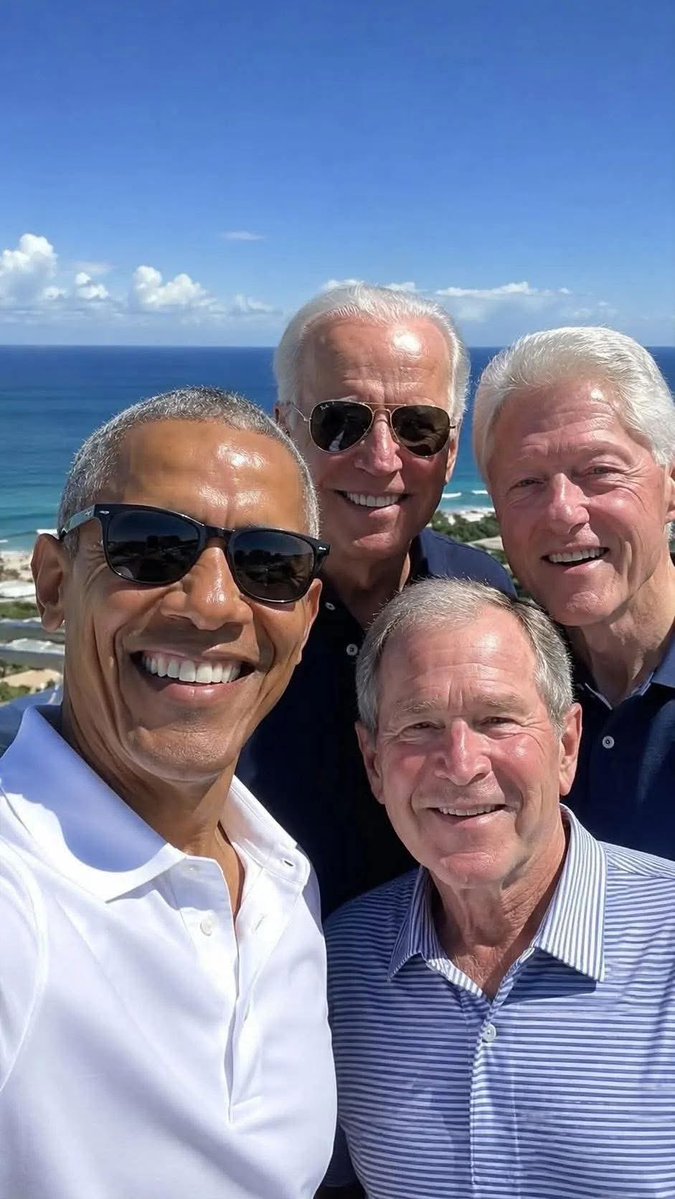
Imagine Trump ever being invited to join a photo like this — not in a million years.
Four presidents. Zero drama. Just smiles, respect, and a shared love of country. 🇺🇸
NEW: Many conservatives hoped for a standoff between New York’s Muslim democratic socialist mayor and Pope Leo XIV’s new archbishop.
Instead, a shared love of the poor — and the Knicks — is making them fast friends. https://t.co/E383CYuYHE
Over the past 19 years, I've watched @MichelleObama, who never sought a career in the public eye, become a master orator. Her speech yesterday at the opening of the Obama Presidential Center may have been her very best. Moving, direct and powerful.
To George and Laura, Bill and Hillary — we're grateful for your friendship, counsel, and devotion to this country. And to Joe and Jill, thank you for being on this journey with us.
The only thing that will bring happiness is affection and warmheartedness. This really brings inner strength and self-confidence, reduces fear, develops trust, and trust brings friendship. We are social animals, and cooperation is necessary for our survival, but cooperation is entirely based on trust. When there is trust, people are brought together—whole nations are brought together. When you have a more compassionate mind and cultivate warmheartedness, the whole atmosphere around you becomes more positive and friendlier.
The performers for the Obama Presidential Library opening on June 18 have been announced:
Stevie Wonder
John Legend
Jennifer Hudson
The Roots
Bruce Springsteen
Christina Aguilera
Marsai Martin
Common
U2’s Bono and The Edge
Eddie Vedder
Marc Anthony
Tems