The surveys of British missionary & official, William Adam in the 1830s reveal startling data directly contradicting colonial myths about Sati in Bengal.
Important 🧵 Please save for future reference.
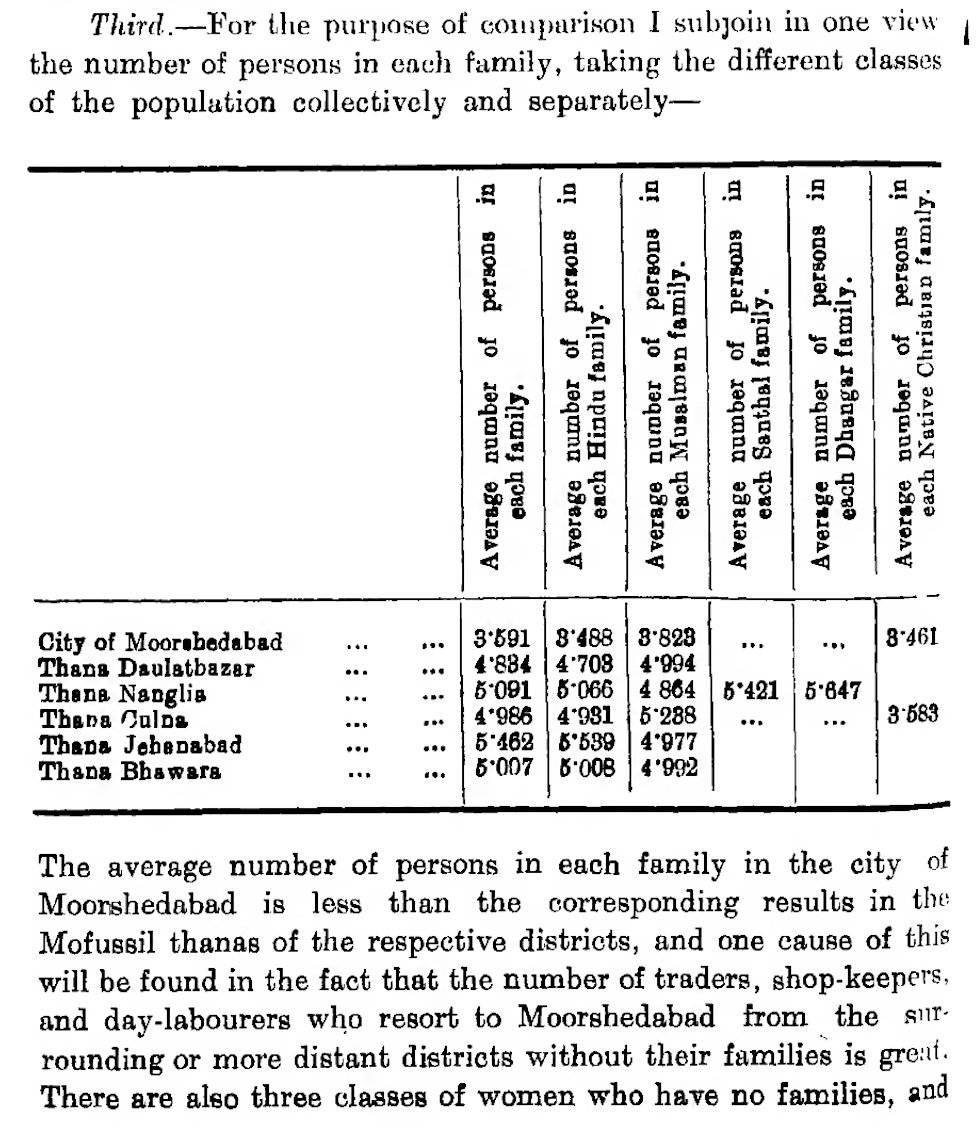
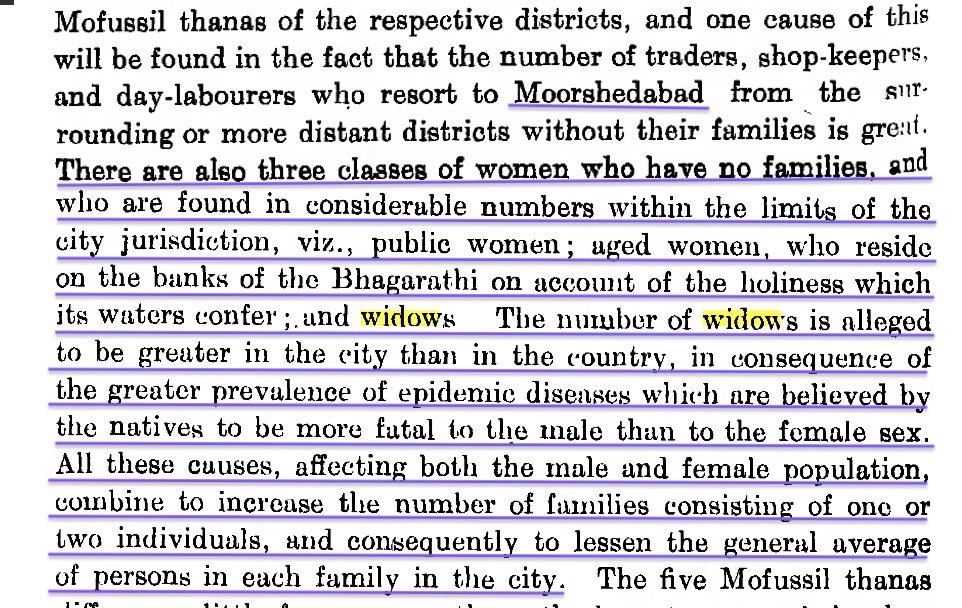
What Adam found in his surveys of the district of Murshidabad was astonishing. He explains that there were many more households with just one or two members in the city than in the surrounding countryside, for several combined demographic reasons. Besides day traders and laborers who migrated without families, he noted a large population of thousands of women living without family households of three classes: public women (prostitutes), aged women residing near the Bhagirathi River because of the river’s religious sanctity, and numerous widows.
Adam writes that there were so many widows that people said there were far more widows in the city than in the countryside, because epidemics were killing many more men than women. The demographic implication is striking: many Hindu widows were maintaining their own small households in the city rather than living within large extended family units. Hindu Bengal’s urban social landscape therefore included many widows who were not only a visible part of society but also often living independently or semi-independently with some form of income.
Many likely supported children, since they appear in Adam’s statistical category of households consisting of one or two individuals. This means widowhood was not rare or exceptional but a recognized and enduring condition of social life among Bengal's Hindus. If Sati had been the normal fate of widows, how did Adam encounter such a large concentration of them in the very heart of Bengal’s society??
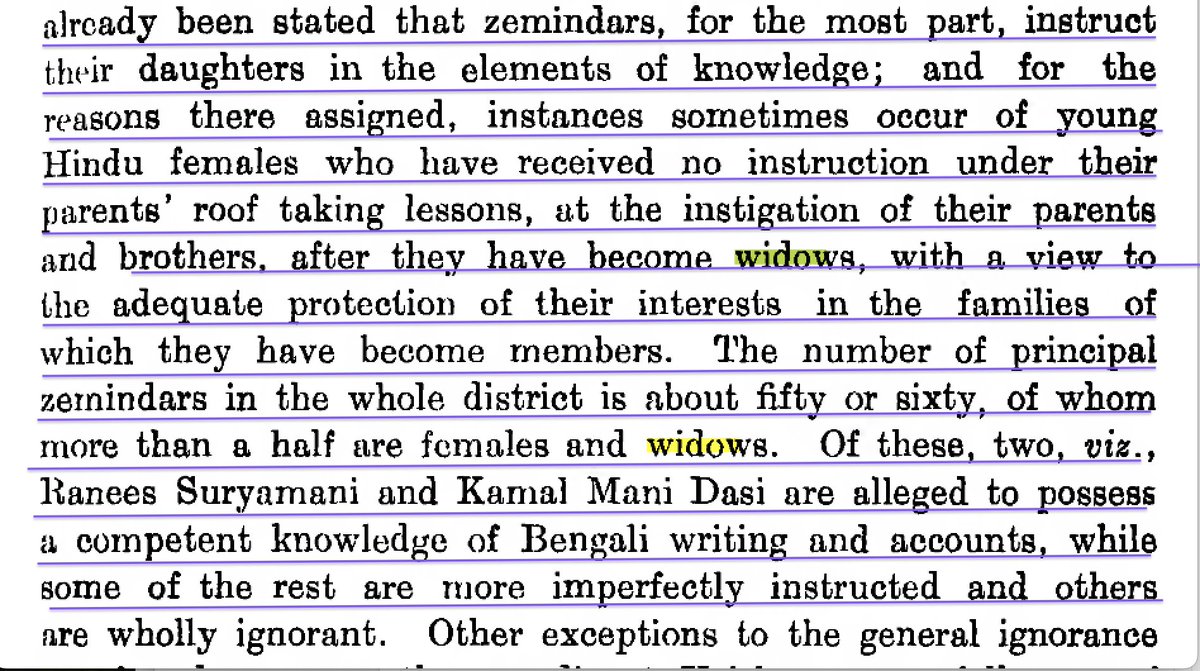
Adam also records that many Hindu Zamindar families educated their daughters in writing and accounting so that, if widowed, they could manage their estates. Some who were uneducated before marriage were even taught by parents or brothers after widowhood to protect their own interests. If Hindu families expected widows to die routinely by sati, why would they invest in educating them for estate management? The evidence suggests the complete opposite: families anticipated widowhood as a long-term social reality and prepared women to navigate property, finance, and household authority after a husband’s death.
In Adam’s survey of Natore District, he found that about half of the principal zamindars were widows. Two in particular - Rani Suryamani and Kamal Mani Das- were even known to be fully literate in Bengali writing and accounts, and several others were at least semi-literate.
The very fact that Adam could record such large numbers of Hindu widows across Bengal's districts proves clearly that widowhood was not just common but also socially accommodated. If Sati had truly been the universal fate of Hindu widows as colonial rhetoric claimed, then how were there so many widows living across multiple districts? Adam’s own observations reveal how incredibly misleading that malicious trope was. The statistical evidence he recorded instead points to a far more complex social landscape in which the overwhelming majority of Hindu widows didn't just live on instead of committing Sati - they remained embedded in society, and in many cases exercised real economic responsibility. Many even lived independently in urban areas. Their everyday visibility stands as quiet but powerful evidence against the bigoted British colonial myth of Sati as prevalent in Hindu Bengal.
It's high time we got rid of this utterly false colonial narrative of Sati which was created by the British to demonize Hindus and achieve missionary objectives - and demolish it permanently with the concrete evidence we have at hand.
Source: William Adam, Reports on the State of Education in Bengal (1835 & 1838), ed. Anathnath Basu (Calcutta: University of Calcutta, 1941).
eu acho chocante o jeito que as pessoas tem amnésia coletiva e tratam essa situação como se fosse só ele arrancando um microfone da mão dela em 2009 e não anos de assédio e um caso de assédio sexual, onde ele literalmente fez uma boneca nua dela e colocou numa cama com ele
Prakhar Gupta explains the heinous plan behind Pakistanis all of a sudden trying to claim IVC, Basant Panchami, Sarees & renaming towns & cities back to the original Hindu names 🫣
WE ARE THE CHAMPIONS OF FIH NATIONS CUP 🏆
- Defeated New Zealand 🇳🇿 2-0 in the Finals
Qualified for the FIH Women's Pro League ✅
INCREDIBLE HOCKEY BY OUR GIRLS! 🇮🇳♥️
We are pleased to see initiatives dedicated to encouraging serious engagement with Indian history.
If you have an original idea on an understudied chapter of India's past, do consider contributing submissions to @TheLongMemory
Best wishes to the team for this exciting endeavour.
> looted $45 trillion from India
> created famines resulting in deaths of millions of Indians
> forced our people to fight in World Wars
after doing all that they are surprised that Indians hate them