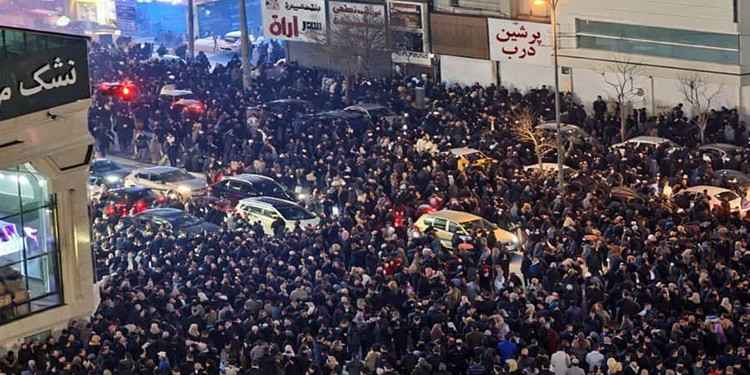
I wrote a short piece for MERIP on the political economy of #Iran’s current crisis. I argue any serious account of Iran’s crisis must confront both the external sanctions regime and the internal machinery that manages crisis through austerity and repression. 1/
NEW: Governing Crisis--Sanctions, Austerity and Social Unrest in Iran
Sociologist Ida Nikou (@golgabbeh analyzes how the relationship between the sanctions regime and austerity politics in Iran has fueled the recent protest wave.
https://t.co/Is7Zlv8roh
Looking for reliable data on Iran?
We’ve built a rich, research-grade resource at the Iran Data Portal—packed with electoral, economic, and social datasets. Dive in: https://t.co/RvnVKDAwwB
NEW: We collected 11 essays on the war on Iran and the region from our contributors and editorial committee. They encompass the political turmoil in Iran to the role of Christian nationalism in the US drive for dominance in the region.
READ NOW
https://t.co/RgDuv0ZoiP
Israel knew perfectly well how targeting the industrial hub of the *BIGGEST GAS FIELD IN THE WORLD* will lead to this exact escalation.
Netanyahu is directly responsible for your higher bills, and for crimes against humanity.
Since the US and Israeli militaries attacked Iran 3 weeks ago, they have killed at least 1,400 people and displaced more than 3.2 million, attacking hospitals, schools, residential buildings, desalination plants and oil warehouses.
I just want to tear my heart out watching an Iranian father wail like this because his home was destroyed and his daughter killed. I hope the misery that has been inflicted upon Iran and Iranians haunt the architects of this war to the end of their days.
I talked to MERIP about the possible scenarios of this war and what it means for the people of Iran.
Special thanks to @jdryan08 from making this possible.
New in Jadaliyya’s #Iran dossier I co-edited. I connect recent uprisings to #labor conflict and a regime of non-negotiability, in which wage and contract struggles meet delay, fragmentation, & repression rather than binding concessions. Unresolved claims return as street revolt.
Most accounts of Iran’s protest cycles foreground economic crisis, repression, or the cultural and political dimensions of revolt, while labor relations appear as background context at best. When workers are discussed, they are often treated as an add-on that can amplify street mobilization, often through loose analogies to the 1979 revolution. This approach misses the mechanism that ties workplace conflict to street uprisings. The question, therefore, is not whether workers “join” an uprising in solidarity, but why struggles over wages, contracts, and everyday survival so often fail to generate enforceable outcomes, and why these unresolved conflicts repeatedly reappear as broader political confrontation.
"The Politics of Non-Negotiability: Labor and the Making of Recurrent Uprisings in Iran" by Ida Nikou
https://t.co/fr9NGCAvWA
If you want analysis of #Iran’s politics beyond the mainstream headlines, read this Jadaliyya dossier I co-edited, published last week. 7 essays cover political economy, labor, womxn & ethnic questions, the environment, and diaspora/imperialist politics.
This dossier starts from a basic question. How did we arrive at a moment in which imperialist powers that have waged war across the region and enabled Israel’s ongoing genocide in Gaza, can appear as plausible agents of “freedom for Iran?”
"Iran in Crisis: Seven Essays on the Obstacles to Freedom (Introduction)" by Ida Nikou and Manijeh Moradian
https://t.co/pZLFdajXxo
میانِ مردمی که با صورتهای آفتابسوخته و چشم گریان تنِ کودکان دبستانیِ میناب را از زیر آوار بیرون میآورند و آنهایی که کیلومترها این طرفتر برای بمبارانِ همان مردم هلهله میکنند یک دریا خون فاصله است.
برای اسرائیلِ بچهکش و آمریکای خونخوار، خونشوری میکنید؟ دشمن انسانید.
In the aftermath of the Jan uprising in Iran and amid rising U.S.-led war threats, Manijeh Moradian & I co-edited a new @Jadaliyya dossier asking how we got here. Contributors discuss political economy, labor conflict, center–periphery, diaspora media & feminist mobilization.
This dossier starts from a basic question. How did we arrive at a moment in which imperialist powers that have waged war across the region and enabled Israel’s ongoing genocide in Gaza, can appear as plausible agents of “freedom for Iran?”
"Iran in Crisis: Seven Essays on the Obstacles to Freedom (Introduction)" by Ida Nikou and Manijeh Moradian
https://t.co/pZLFdajXxo
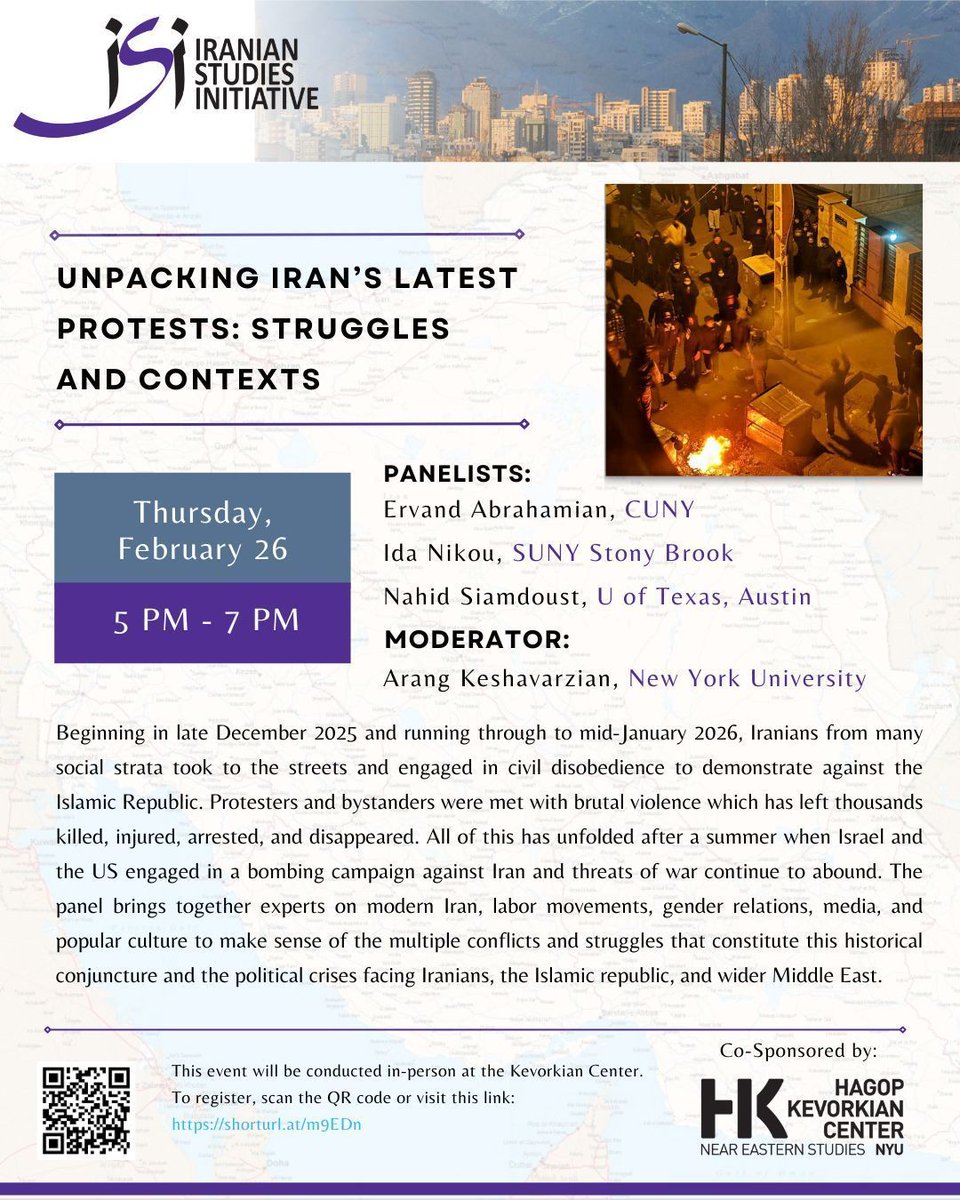
Next week, I'll be at NYU speaking on a panel hosted by the Iranian Studies Initiative, alongside Nahid Siamdoust and the one and only Ervand Abrahamian.
If you're in NY, come by say hi. Would be lovely to see familiar faces.
Ida Nikou in @meriponline "Governing Crisis – Sanctions, Austerity and Social Unrest in Iran:
Recent protests triggered by currency collapse and price shocks expose how sanctions have reconfigured state power, enabling austerity and insider accumulation rather than relief."
https://t.co/9VrWB6BLvC
Ida Nikou — Recent protests triggered by currency collapse and price shocks expose how sanctions have reconfigured state power, enabling austerity and insider accumulation rather than relief. https://t.co/9EoViTX4Sq
I wrote a short piece for MERIP on the political economy of #Iran’s current crisis. I argue any serious account of Iran’s crisis must confront both the external sanctions regime and the internal machinery that manages crisis through austerity and repression. 1/
NEW: Governing Crisis--Sanctions, Austerity and Social Unrest in Iran
Sociologist Ida Nikou (@golgabbeh analyzes how the relationship between the sanctions regime and austerity politics in Iran has fueled the recent protest wave.
https://t.co/Is7Zlv8roh
When the legitimacy costs rise, the state responds with austerity framed as “reform” including removing preferential exchange rates. The result is rapid price jumps, inflation, and eroding social protection. 5/