Heart failure (HF) monitoring programs are becoming increasingly critical as cardiovascular teams work to manage growing patient volumes, fragmented data streams, and operational complexity.
Join an upcoming @AAHFN CE webinar focused on how leading health systems are building sustainable, scalable heart failure remote monitoring programs in real-world clinical settings.
The discussion will cover:
• How to identify specific stakeholders to maximize organizational buy-in when starting a HF monitoring program
• Understanding physiologic data from CIEDs
• Billing and CMS compliance considerations for physiologic data billing
• Managing diverse data streams (CardioMEMS, CIED data, peripheral metrics) for efficient workflow management
Featuring:
• Ann-Marie McLoney, @BaptistHealth
• Jacqueline Arrasmith, Bon Secours @mercy_health
June, 16, 2026 | 4pm ET
Register now: https://t.co/JE7DzmIcIe
The continuous avalanche of cardiac remote monitoring data doesn’t just challenge traditional care models — it strains fragmented departments, limits clinical visibility, and introduces risk for revenue leakage and missed patient events.
In this recent @BeckersHR webinar, leaders across cardiovascular care discussed how unified data integration and active remote monitoring can transform patient management, clinic operations, and financial performance.
Watch the full on-demand recording to learn what it takes to move from siloed, episodic care systems to connected, team-based ecosystems that support faster decision-making, more efficient workflows, and better patient outcomes: https://t.co/AlhN6PsEvK
We’re proud to continue the tradition of the CARE Awards — recognizing healthcare institutions that achieve exceptional standards in CIED care.
The CARE Awards honor clinics that maintained 90%+ CIED care compliance throughout the calendar year, reflecting a deep commitment to patient safety, operational excellence, and high-quality cardiac device care despite increasing data complexity.
We’re honored to partner with these outstanding teams and celebrate the work they do every day to advance patient care. ⤵
Thank you to everyone who joined us last night in Philadelphia for an evening of discussion and shared learning around the evolving challenges facing today’s device clinics. From tackling staffing challenges and scaling operations to optimizing workflows and billing, the insights shared were invaluable.
At Murj, our mission goes beyond software—we are dedicated to fostering a collaborative community. We love creating spaces where clinicians can look across the table, realize they aren't alone in their daily challenges, and walk away with fresh solutions.
A huge thank you to everyone who attended, and a special shoutout to our phenomenal panelists for leading such an impactful conversation.
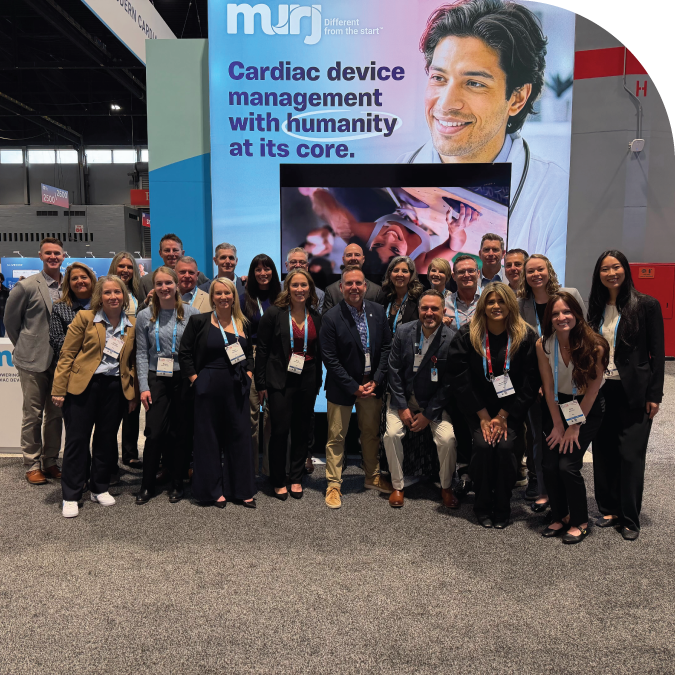
Team Murj® at this year’s @NCVHonline Annual Conference. Our team is on site discussing connected cardiac care, workflow visibility, and how integrated data can support care beyond the device clinic.
How do you turn a sea of raw data into timely, actionable clinical insight?
Ambulatory cardiac monitoring has unlocked unprecedented visibility into patient health—but for many clinics, that visibility comes with a cost: fragmented systems, manual workflows, and overwhelming data volume.
At Murj®, we believe the path from data to diagnosis should be direct, unified, and clinically intuitive.
In our latest blog, we break down how leading programs are transforming ambulatory workflows—cutting through the noise to surface what matters most, faster: https://t.co/BxGf8g5RT4
At Murj®, customer support isn’t a chatbot or a ticket buried in a queue. It’s real people providing real help, directly inside the platform.
We love seeing feedback like this from our clinics! Our goal is always to provide real-time, expert help, because the best support comes from people who know what care teams face every day. https://t.co/XxNMTenipO
A month after the closing sessions at #HRS2026, the dust has settled—but the energy from Chicago is still driving us forward. 🚀
This year’s conference reinforced something we believe deeply at Murj®: while technology continues to advance cardiac device care, people remain at the center of it.
From celebrating allied health professionals and CARE Award recipients to supporting programs like LEAP and PACES, HRS was a reminder that the future of EP depends not only on innovation — but on the clinicians, care teams, and partnerships driving it forward.
Catch up on our full recap of the people, partnerships, and clinical insights (including a look at an abstract on lead advisory management) that made Heart Rhythm 2026 unforgettable.
👉 Read the full recap: https://t.co/Pg9CnbeUeC
Last call to join us tomorrow. Cardiovascular programs are growing fast—but aligning EP, heart failure, and remote monitoring workflows is where many organizations feel the strain.
Join @BeckersHR to hear how leading health systems are managing this complexity while protecting both care quality and financial performance.
Register now: https://t.co/9vfPk8qOGj
Manual tracking is a risk. Automation is a necessity.
Great to see Murj featured in @AnswersNetwork's latest look at #HRS2026! The article highlights how our platform helped @emoryhealthcare identify missing patients during a device advisory and resolve high-risk cases in record time.
In the world of cardiac device management, the right data strategy saves lives. https://t.co/HKVRX9SIPM
We’re excited to announce a new collaboration between Murj® and Arrhythmia Technologies Institute (ATI) to launch mPower — a specialized training program for cardiac device clinics.
This initiative is built around a shared value: foundational excellence.
ATI provides the industry’s leading platform-agnostic curriculum for cardiac device technology, helping clinicians build a deep understanding of CIED management across manufacturers.
Through the mPower program, we're pairing ATI’s academic rigor with hands-on mentorship from certified Murj specialists — giving clinics a clear path to strengthen internal expertise and build confident, highly capable device teams.
Contact us to learn more: https://t.co/y4gDQCfpVf
Siloed cardiac device data doesn’t just slow teams down—it limits visibility, increases administrative strain, and introduces risk into patient care.
In our recent HRX Innovation Hub webinar, the discussion focused on what actually changes when cardiac device data is fully integrated—not just connected:
• ~5,700 hours reclaimed annually by eliminating manual workflows tied to fragmented systems
• 50% reduction in billing time, helping clinics support up to a 67% increase in patient volume
• 22.5 minutes saved per patient through a centralized monitoring ecosystem
The takeaway: interoperability alone isn’t enough. High-performing CIED and cardiac device management programs standardize and actively manage their data—turning it into something teams can actually use.
Tune into the full webinar to hear how smarter data integration and true interoperability can transform cardiac device management: https://t.co/rvWFKNb4Yc
CIED clinics are increasingly challenged not by a lack of data, but by the difficulty of turning that data into something usable.
Read more from Murj Director of Integrations Leah Savage on how conversations around interoperability are shifting—and why it only matters if it leads to action: https://t.co/Cbq6IptbeM
Congratulations to Cardiovascular Institute of the South (CIS) and Clearwater Cardiovascular Consultants (CCC) on being named 2026 @gomurj CARE Award recipients! 👏
The specialized nature of cardiac device management creates a high-stakes environment where precision and timing are everything.
But with industry-wide staffing shortages, defining the ideal staffing level is only half the battle. The real challenge is finding and keeping qualified staff in such a niche field.
Murj® offers flexible operational support models designed to help clinics navigate staffing strain, reduce manual burden, and adapt workflows to their specific needs — not a one-size-fits-all approach.
When clinics combine adaptable staffing strategies with the right technology, they can reduce burnout, maintain confidence that every transmission is reviewed accurately and on time, and create a stronger path forward for staff and patients alike.
Read more in this latest piece from Murj Director of Medical Affairs Sallie Gustafson, BSN, CCDS. https://t.co/nnZr5QkRmT
Managing an ambulatory cardiac monitoring program is constantly challenged by administrative burden. Disconnected systems, manual processes, and limited visibility quietly slow teams down and make it harder to scale.
At Murj®, we see these challenges play out across clinics every day.
On the blog, we break down five common workflow pitfalls, how to spot them in your own program, and how to solve for them: https://t.co/CFMCvbS1rI
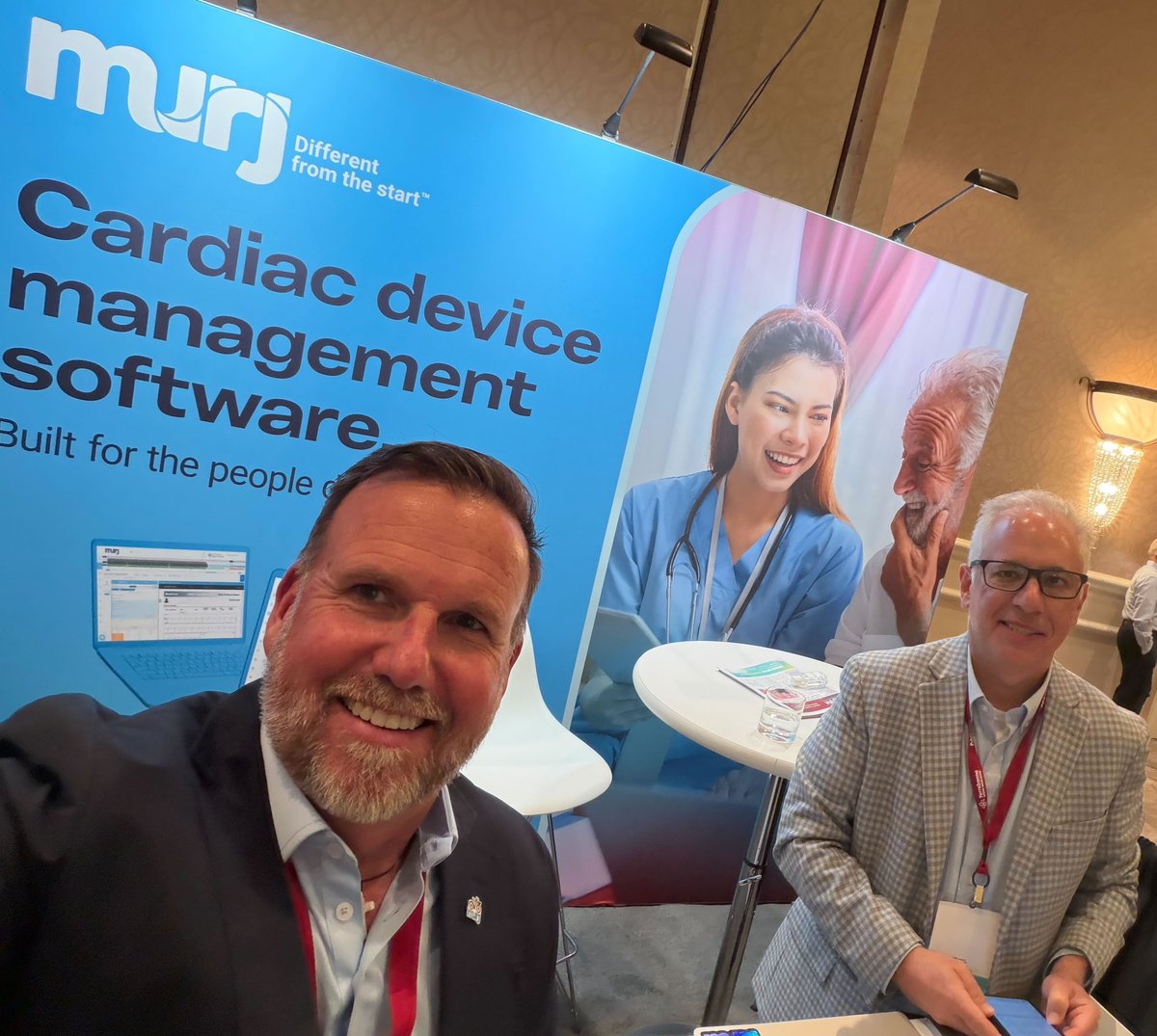
Murj® is heading to @MedAxiom's #CVTransforum this week. We’re looking forward to joining cardiovascular leaders from across the country for conversations on advancing care delivery, improving operational performance, and shaping the future of cardiovascular care.
Our team will be on site throughout the conference — reach out if you’d like to connect. https://t.co/uxDmR00Gfx
Welcome to the @HRSonline LEAP Class of 2027! We’re proud to support the next generation of allied professionals in their electrophysiology career journey.
Please join us in welcoming the LEAP Class of 2026–2027! 👏 This incredible group of allied professionals is ready to grow, connect, and lead — strengthening the future of electrophysiology one step at a time.
We are honored to walk alongside you on this journey. Get ready to LEAP forward!
https://t.co/LcxVYmUpOs
#HRS #LEAP #Electrophysiology #AlliedProfessionals #EPeeps
@Medtronic@iRhythmTech@gomurj