Electricity share of global final energy demand: 23% now, expected to reach 30% by 2035.
India's energy imports: around 40% of energy demand, including 90% of crude oil and 50% of natural gas.
India: world's third-largest primary energy consumer, with a 6.1% share.
5th year of kashi tamil sangam starting tomorrow.
Aim : to bring the two knowledge and cultural traditions (kashi and tamil) closer, create an understanding of shared heritage and deepen the people-to-people bond between the regions.
What is thirukkural about? who wrote it?
#BreakingNews | Allahabad High Court cancels the UPPCS 2025 preliminary examination result, directing the commission to prepare a fresh merit list and issue a revised result.
The ruling by Justice Manish Kumar Nigam’s single-judge bench means the Mains examination and interviews will be held again.
#UPPCS2025 #UPPSC #AllahabadHighCourt #UttarPradesh
Risky lag raha he..!
The Siang gravity dam's proposed 9.2 billion cubic metre reservoir in Seismic Zone VI could contribute to reservoir-triggered seismicity.
NHPC must re-engineer the project with specific engineering innovations to withstand an earthquake of 8.0+ magnitude.
@nhpc
@vaishnavi_69344 And,
Vithalbhai Patel was the first Indian elected as the President (Speaker) of the Central Legislative Assembly in colonial India.
• Elected: August 22, 1925
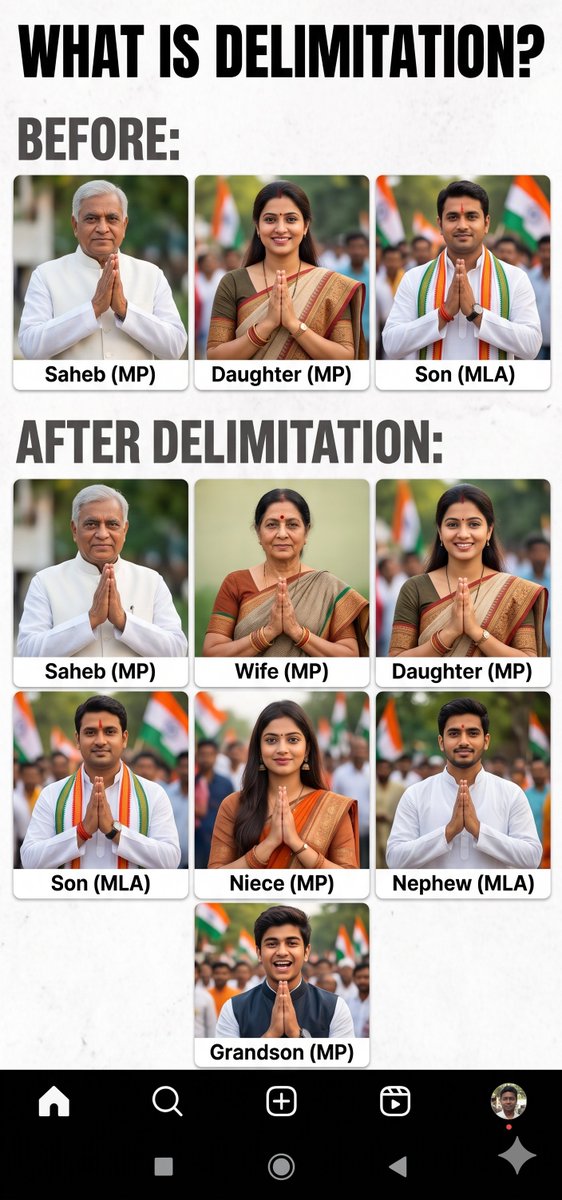
Delimitation in India: How It Works, How Many Times It Has Happened & What’s in the News
Delimitation—the process of fixing or redrawing the limits and boundaries of territorial constituencies to reflect population shifts and ensure the principle of "One Person, One Vote, One Value"—is back at the center of national politics.
1. What the Latest Report Says
The Centre has called a special Parliamentary sitting starting Monday (Nov 30), 105 days after the Monsoon Session was adjourned sine die on August 13 without prorogation (Rajya Sabha begins Dec 2; sittings end Dec 3).
The Union Cabinet is slated to clear an amended Delimitation Bill after an earlier version was defeated in April, amid shifting Lok Sabha arithmetic (including 20 TMC MPs merging with NCP backing the NDA, 6 Shiv Sena (UBT) MPs joining the Shinde-led Shiv Sena under the NDA, and SAD's lone MP returning to the NDA).
Reportedly, three key changes are being introduced:
1. A uniform 50% increase in the share of Lok Sabha seats.
2. Another 25-year extension of the freeze on using the 1971 Census for determining each State's proportional Lok Sabha seat share.
3. Using the 2011 Census to redraw constituencies within each State (modeled on the 84th Amendment Act, 2001 approach).
Congress leader Jairam Ramesh slammed the move announced on Constitution Day, calling it an attempt to secure a two-thirds majority after 105 days of "operation lotus."
2. How Many Times Has Delimitation Happened in India?
Delimitation Commissions have been set up 4 times in independent India:
1952 (under the Delimitation Commission Act, 1952 — post-1951 Census)
1963 (under the Delimitation Commission Act, 1962 — post-1961 Census)
1973 (under the Delimitation Commission Act, 1972 — post-1971 Census)
2002 (under the Delimitation Act, 2002 — post-2001 Census; orders came into force in 2008)
No Commission was constituted after the 1981 and 1991 Censuses due to the freeze designed to protect states that effectively implemented population control measures from losing parliamentary representation.
3. Constitutional Framework & The Process
Articles 81 & 82: Deal with Lok Sabha composition and readjustment after each Census via a Delimitation Act enacted by Parliament.
Article 170: Provides for readjustment of State Legislative Assembly constituencies.
Articles 330 & 332: Govern reservation of seats for Scheduled Castes (SCs) and Scheduled Tribes (STs).
Article 329(a): Bars courts from questioning the validity of laws relating to delimitation or seat allotment made under Article 327.
Commission Makeup & Procedure: Typically a three-member high-powered body (a retired Supreme Court judge as Chairperson, the Chief Election Commissioner or nominated Election Commissioner, and the respective State Election Commissioner), aided by associate members (MPs/MLAs without voting power). It publishes draft proposals, holds public sittings/hearings, considers objections, and issues final orders that have the force of law and cannot be modified when laid before Parliament or State Assemblies.
For UPSC & Indian polity watchers alike, delimitation sits right at the intersection of federalism, population equity, and constitutional design.
#UPSC #IndianPolity #Delimitation #Parliament
Constitutional morality is such a favourite topic of UPSC that it asked on the same topic twice ! that too in same year:
GS2: “Constitutional morality is the fulcrum which acts as an essential check upon the high functionaries and citizens alike…” In view of the above observation of the Supreme Court, explain the concept of constitutional morality and its application to ensure balance between judicial independence and judicial accountability in India. (15 M)
GS4: "Constitutional morality is not a natural sentiment but a product of civil education and adherence of the rule of law." Examine the significance of constitutional morality for public servant highlighting the role in promoting good governance and ensuring accountability in public administration. (10 M)
Can you write both in 20 min?
"Constitutionalism" limits government powers through rule of law, separation of powers, checks and balances, individual rights and judicial review.
Part III of the Constitution epitomises constitutionalism by guaranteeing equal rights, restricting laws that violate them and providing judicial review.