Most blockchain discussions revolve around execution.
. Faster transactions.
. Higher TPS.
. More scalability.
But underneath all of that is another layer people rarely pay attention to:
how information actually moves across networks.
Because as decentralized systems grow, communication itself becomes infrastructure.
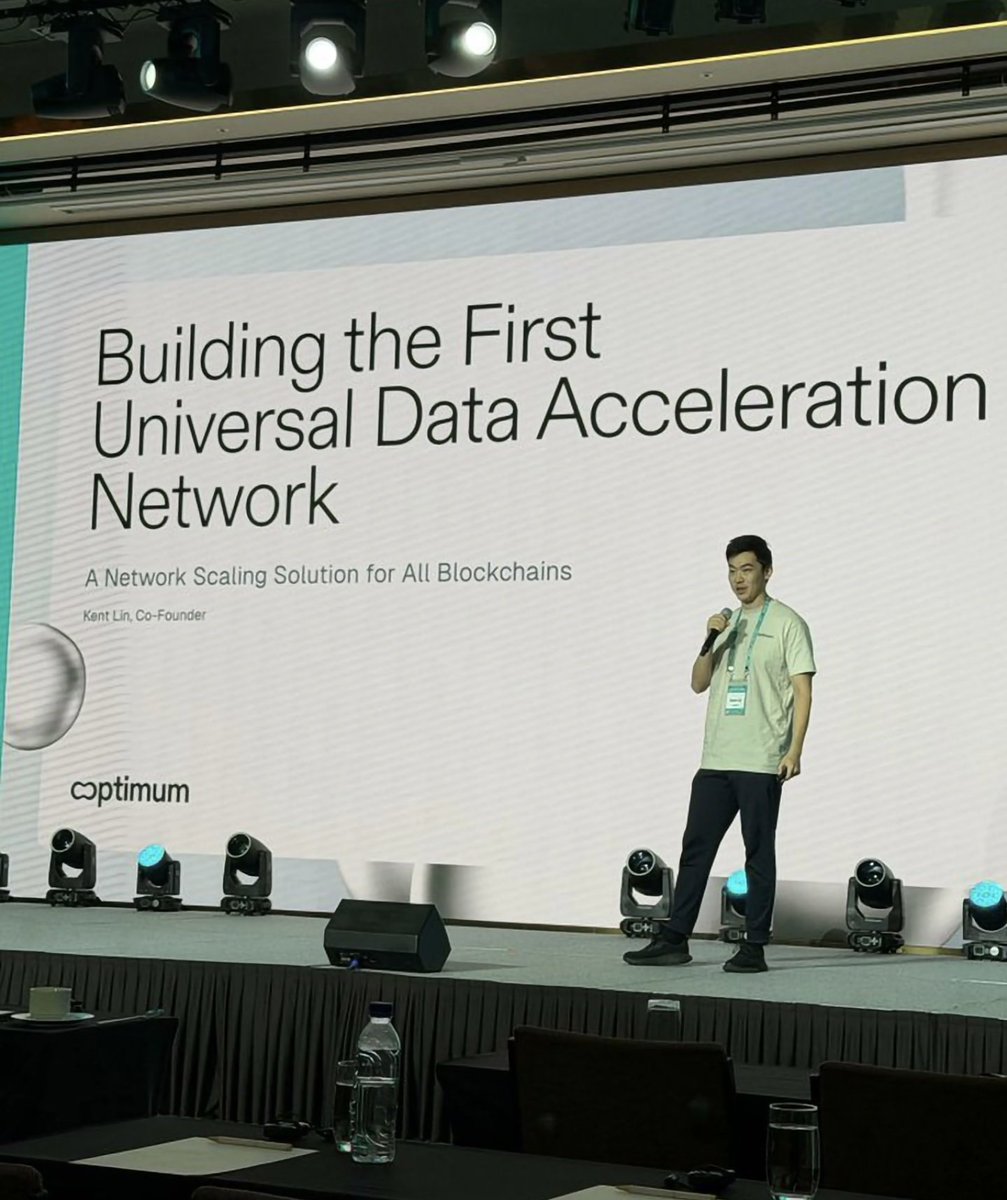
That’s the direction @get_optimum seems to be pushing toward with its Universal Data Acceleration Network.
Not just scaling computation.
Optimizing the movement of data itself.
𝐖𝐡𝐚𝐭 𝐢𝐟 𝐲𝐨𝐮𝐫 𝐞𝐧𝐭𝐢𝐫𝐞 𝐟𝐢𝐧𝐚𝐧𝐜𝐢𝐚𝐥 𝐥𝐢𝐟𝐞 𝐰𝐚𝐬 𝐚𝐧 𝐨𝐩𝐞𝐧 𝐛𝐨𝐨𝐤?
- Every transfer you make.
- Every balance you hold.
- Every loan, every payment, completely visible to the world.
- Governments watching.
- Competitors spying.
- Scammers lurking.
- Even your neighbor could know.
That is the default reality of today’s blockchains.
𝐒𝐞𝐢𝐬𝐦𝐢𝐜 𝐰𝐚𝐬 𝐛𝐮𝐢𝐥𝐭 𝐭𝐨 𝐞𝐧𝐝 𝐭𝐡𝐚𝐭 𝐧𝐢𝐠𝐡𝐭𝐦𝐚𝐫𝐞.
It’s a privacy-first Layer 1 designed for real finance, where your money can move freely across borders, but no one can see what you’re actually doing.
𝐒𝐞𝐢𝐬𝐦𝐢𝐜 𝐃𝐞𝐥𝐢𝐯𝐞𝐫𝐬 𝐖𝐡𝐚𝐭 𝐎𝐭𝐡𝐞𝐫𝐬 𝐎𝐧𝐥𝐲 𝐏𝐫𝐨𝐦𝐢𝐬𝐞:
> True protocol-level privacy by default
> Virtual bank accounts with real local routing numbers in 30+ countries
> Lightning-fast, low-cost global payments to 150+ countries
> Seamless local rails, all while your sensitive data stays encrypted and hidden.
Neobanks and serious fintechs are already building stablecoin products and payment systems on Seismic without leaking user data.
This isn’t another privacy coin experiment.
This is the infrastructure for the next era of finance, where privacy and real-world usability finally meet.
gmic
Concrete officially partnered with Royco (@roycoprotocol) to become the core yield engine for Royco’s Dawn vaults.
Concrete’s institutional grade ERC-4626 vaults now power part of Dawn’s yield strategy.
When capital flows into Dawn, it is automatically routed through Concrete for:
>Automated capital deployment & rebalancing
>Daily NAV (Net Asset Value) updates
>Permissioned roles (strategy, allocation, withdrawals)
>On-chain constraints and full auditability
>Vault shares remain composable (can be used elsewhere in DeFi) and users keep full self-custody.
In simple terms:
Royco is using Concrete’s reliable, automated vault infrastructure so they can offer more professional, structured, and sustainable yield products without having to build everything themselves.
This is a quiet but important infrastructure partnership that shows Concrete is becoming the “backend OS” for other DeFi protocols.
gmcrete !
Imagine sending money on a blockchain today.
Every transaction is exposed.
Your wallet balance, trading activity, even the protocols you interact with can often be traced publicly.
For some people, that transparency is the point.
But for others, it becomes a problem.
Traders don’t want strategies copied.
Businesses don’t want financial activity exposed.
Regular users may not want strangers tracking their wallets like public bank accounts.
That’s the gap Seismic is trying to solve.
They’re building a blockchain focused on privacy, a system where people can still use DeFi, move assets, and interact onchain without exposing every detail publicly.
Instead of treating privacy like an extra feature, Seismic treats it like infrastructure.
The idea is simple: What if blockchains could work like modern financial systems, secure and transparent where necessary, but still private where it matters ?
That means:
> balances that aren’t publicly visible
> transactions that aren’t easily tracked
> smart contracts that can process encrypted data
gmic
Seismic is a new Layer 1 blockchain (like Ethereum or Solana) that is specifically built for privacy
Normal blockchains (like Ethereum) are completely public anyone can see your balance, what you bought, who you sent money to, etc.
Seismic wants to change that.
It allows you to do private transactions by default, while still keeping the speed and compatibility of Ethereum (EVM).
Simple Analogy:
Think of normal blockchains as living in a glass house where everyone can see everything you do.
Seismic is like living in a normal house with curtains where outsiders can’t see inside, but you can still interact with the outside world normally.
I'm bullish on PRIVACY.
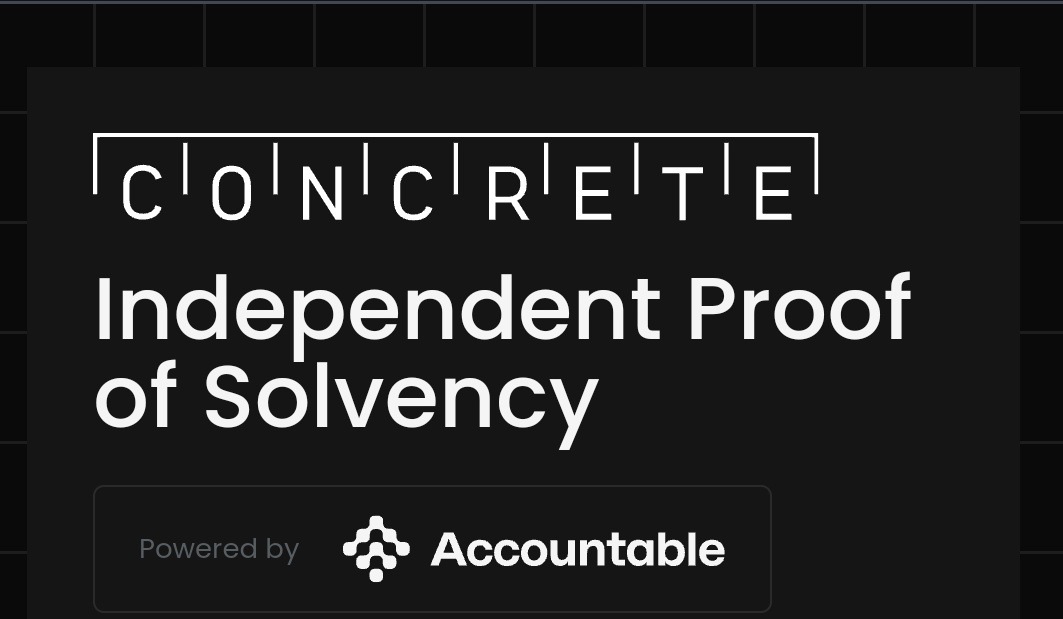
𝐂𝐨𝐧𝐜𝐫𝐞𝐭𝐞 𝐢𝐬 𝐬𝐞𝐭𝐭𝐢𝐧𝐠 𝐚 𝐧𝐞𝐰 𝐬𝐭𝐚𝐧𝐝𝐚𝐫𝐝 𝐟𝐨𝐫 𝐭𝐫𝐚𝐧𝐬𝐩𝐚𝐫𝐞𝐧𝐜𝐲 𝐢𝐧 𝐃𝐞𝐅𝐢.
While most projects ask users to “just trust us,” Concrete is actually showing proof.
𝐓𝐡𝐞𝐲 𝐫𝐞𝐜𝐞𝐧𝐭𝐥𝐲 𝐫𝐞𝐥𝐞𝐚𝐬𝐞𝐝 𝐭𝐡𝐞 𝐏𝐫𝐨𝐨𝐟 𝐨𝐟 𝐒𝐨𝐥𝐯𝐞𝐧𝐜𝐲 𝐩𝐚𝐠𝐞 𝐟𝐨𝐫 𝐭𝐡𝐞𝐢𝐫 𝐜𝐭𝐃𝐞𝐟𝐢𝐔𝐒𝐃𝐓 𝐯𝐚𝐮𝐥𝐭.
𝐎𝐧 𝐭𝐡𝐢𝐬 𝐩𝐚𝐠𝐞, 𝐚𝐧𝐲𝐨𝐧𝐞 𝐜𝐚𝐧 𝐯𝐞𝐫𝐢𝐟𝐲 𝐢𝐧 𝐫𝐞𝐚𝐥 𝐭𝐢𝐦𝐞 𝐭𝐡𝐚𝐭:
>Every ctDefiUSDT token is fully backed by real assets
>The vault’s reserves match the circulating supply
>There are no hidden shortfalls or fractional reserves
This kind of on-chain accountability is still rare in the crypto space.
It’s easy to promise high yields.
It’s much harder to open your books and let the public audit everything.
Concrete is doing exactly that.
Check the proof for yourself:
https://t.co/7zaraz90lo
gmcrete 🔥
Most people only look at the headline APY and think they’re winning.
But after gas fees, impermanent Loss, rebalancing costs, emissions dumping, and volatility….. a lot of that “high yield” disappears.
This is exactly why I moved to Concrete Vaults.
One deposit → ctASSET → the vault handles allocation, compounding, and risk management in the background.
No more manual labour.
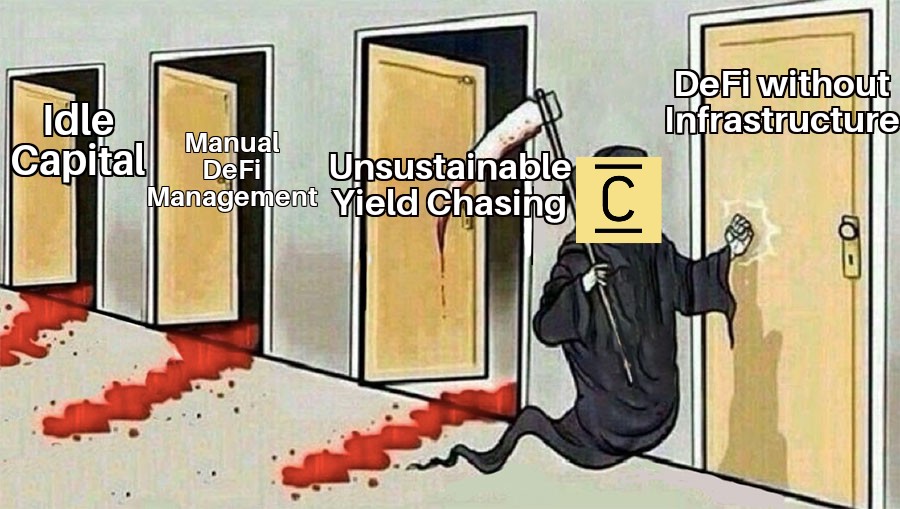
No more chasing dying farms.
Just cleaner, more sustainable yield.
Real DeFi isn’t about who has the highest APY this week.
It’s about who keeps their capital working efficiently over time.
gmcrete.
DeFi is finally getting infrastructure that actually makes sense.
@ConcreteXYZ just helped @Theo_Network launch the thUSD Genesis Vault.
What’s impressive is how clean it was:
>Liquidity got bootstrapped automatically
>Capital was deployed programmatically
>Everything is fully transparent and verifiable on-chain
No need for the team to build complex custom vault logic from scratch. They simply plugged into Concrete’s system and shipped.
This is the real power of modular DeFi infrastructure, building on top of strong, battle-tested primitives instead of reinventing the wheel every time.
Concrete is quietly becoming the default vault layer for serious projects.
The infrastructure era is here.
Why DeFi feels harder than it should.
DeFi today feels overwhelming.
Too many apps, too many protocols, constant rebalancing, bridging, chasing yields, and managing risks. It’s exhausting.
Concrete is changing that with One-Click DeFi.
One-click DeFi means you deposit once, and Concrete handles everything behind the scenes including strategy allocation, risk management, rebalancing, and compounding.
You get a ctASSET token that automatically earns yield while staying liquid and useful. No manual farming. No constant monitoring. No stress.
Just one deposit → automated, risk-adjusted yield.
@ConcreteXYZ is building the infrastructure for effortless on-chain finance.
If you’re tired of the old complicated way, try the new one here:
https://t.co/mboiTD7fHn
A few days ago, I deposited
USDT into concrete vaults and received something called ctUSDT
At first, I thought it was just another receipt. But it’s so much more.
Here's how it works in simple terms👇
When you put your money (like USDT or WBTC) into a Concrete vault, the vault doesn’t just hold it. It gives you back a ctASSET for example, ctUSDT. This token represents your share of the vault, and it automatically earns yield as the vault works in the background.
What Can You Actually Do With It ?
- Hold it and let it compound quietly
- Trade or swap it anytime
- Use it as collateral to borrow other assets
- Add it to liquidity pools
The Best Part
With ctASSETs, DeFi finally feels simple.
One deposit → one ctASSET → and the vault handles everything else. No constant checking, no manual compounding, no jumping between protocols.
If you want to see how it works for yourself, go check out Concrete vaults here:
https://t.co/Ct0Esj74dF
I remember when DeFi felt simple, find a protocol, check the APY, deposit and move on.
suddenly, there were hundreds of protocols.
New chains popping up.
Yields changing almost daily.
Strategies everywhere.
Opportunities weren’t the problem anymore, but managing them was.
I had to constantly monitor positions, check APYs, move liquidity, claim rewards and reinvest.
Everything started getting exhausting Tbh.
That’s where vault infrastructure started to make sense to me.
Instead of manually chasing strategies, systems like Concrete vaults take a different approach:
They manage capital for you.
-Rebalancing happens automatically.
-Rewards are compounded.
-Liquidity is aggregated.
-Capital is deployed continuously.
What stood out to me with @ConcreteXYZ is how it’s built.
It’s not just automation, but it’s organized capital management on-chain.
The future won’t belong to the fastest yield chasers.
It’ll belong to the systems that manage capital better than humans can.
gmcrete.
what if the system you trust isn't built the way you think ?
at first i thought a vault was just...... a vault
Deposit funds, earn yield, come back later.
But the deeper i went, the more i realized something was off
most vaults weren’t really structured systems.
They were often controlled by a single multisig, where strategy, execution, and risk all lived in one place.
That's not how real finance works
But @ConcreteXYZ vaults are different !
They act like on-chain asset managers: the Allocator deploys capital, the Strategy Manager defines what’s allowed, and the Hook Manager enforces risk...
each role separated and enforced by code, not trust.
Clear roles. Controlled risk. Smarter execution.
This is structured on-chain capital management.
Back in my early DeFi days, I’d open dashboards, sort by the highest yield, and move my funds there without thinking twice. 40%, 80%, even 200% APY it all felt like an opportunity.
At the time, it made sense.
a higher APY meant more money….. right?
Yea.... not exactly
It didn’t take long to realize that APY only tells part of the story. What it doesn’t show you is where things get dangerous.
Impermanent loss slowly eating your gains.
Gas fees stacking up.
Liquidity drying up when you actually need it.
Rewards getting diluted as more people pile in.
And the worst part?
Some of these “high-yield” strategies only work when the market is calm. The moment volatility kicks in, everything starts breaking.
That’s why structured systems like Concrete caught my attention.
It’s not about maximizing yields,it’s about managing risk.
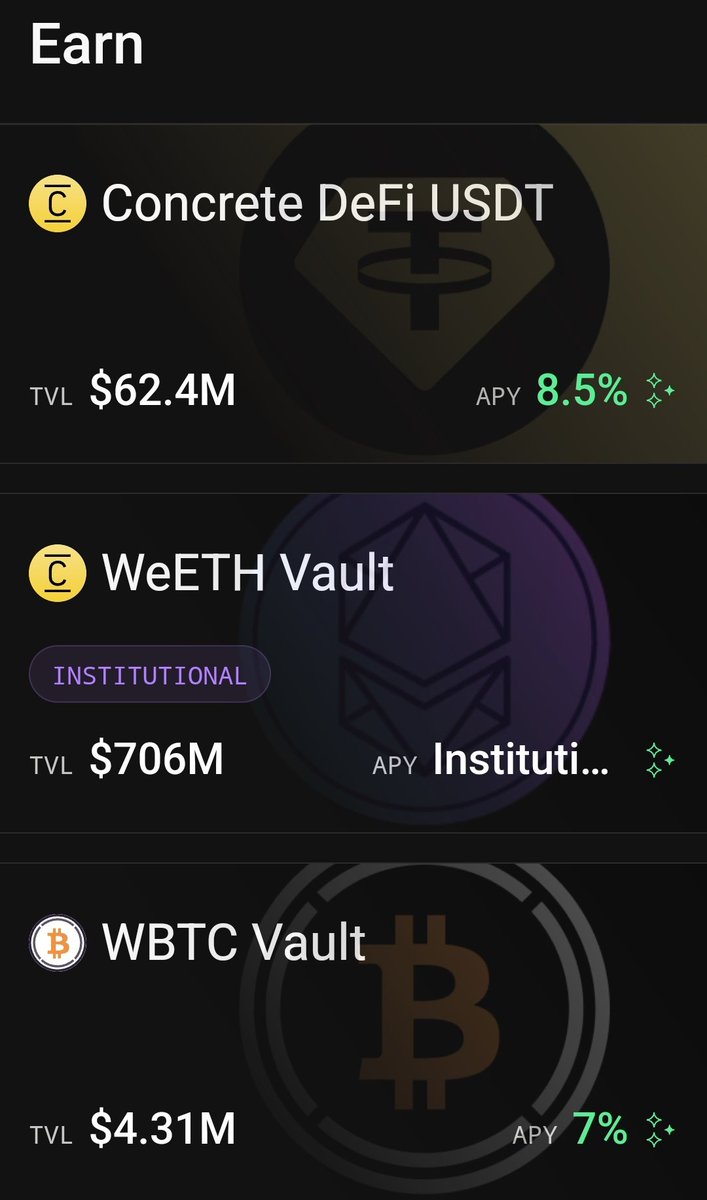
A stable 8.5% might not look exciting next to 20%…
but if it holds through volatility?
That’s real yield.
DeFi is shifting.
From chasing APY → to engineering yield.
gmcrete
Crypto's real edge isn't flashy APY.
It is that your money can quietly compound on-chain, 247 without you lifting a finger.
Most people still chase the highest yield like it’s Black Friday.
They jump from pool to pool, pay gas fees, miss compounding windows, and wonder why their portfolio isn’t growing.
Here’s the truth: Compounding beats chasing.
When your yield earns yield, small consistent returns eventually crush one-time spikes. That’s how real wealth is built.
But in practice, compounding is hard.
You have to claim rewards manually, rebalance constantly, and avoid risky short-term farms that disappear overnight.
Concrete Vaults fix this !
You deposit once.
The vault automatically reinvests rewards, optimizes allocation, minimizes idle capital, and compounds continuously and still manages risk
No manual claiming.
No protocol hopping
Just quiet, automated compounding working in the background while you live your life.
DeFi’s future isn’t about who screams the loudest APY.
It’s about who makes capital work smarter and longer.
Concrete turns compounding from a chore into a default.
I updated the website with new features
-added dark mode and an option to turn it on and off based on your preferences, sound toggle buttons and a timer.