Impossible? Let’s see. From algorithms to neuroscience to AI, Google Research strives to progress science, advance society & improve billions of people’s lives.
Over 600M people in sub-Saharan Africa live without electricity. To help scale off-grid solar, Google Research partnered with Ignite Energy Access. By using Gemini for Science and our Open Buildings dataset, we built a repeatable blueprint to scale electrification.
Read more: https://t.co/fl7kaR5ljf
Quest 3 of AI Quests is officially live! 🧠✨
Inspired by over a decade of our connectomics and neuroscience research, "Polar Peaks" invites students to step into the shoes of researchers mapping neural pathways in the brain. Created in collaboration with the Stanford Accelerator for Learning, the quest shows teens how human judgment shapes responsible AI.
Learn more: https://t.co/Ld8Q4XYLgs
Don't miss your chance to explore research career pathways and student programs at Google during @emnlpmeeting. Stop by the #EMNLP2026 Google booth (#D5) today at 4:15pm for a live Recruiting Q&A with Sunipa Dev and Nima Kalantari to ask your questions and connect with our team.
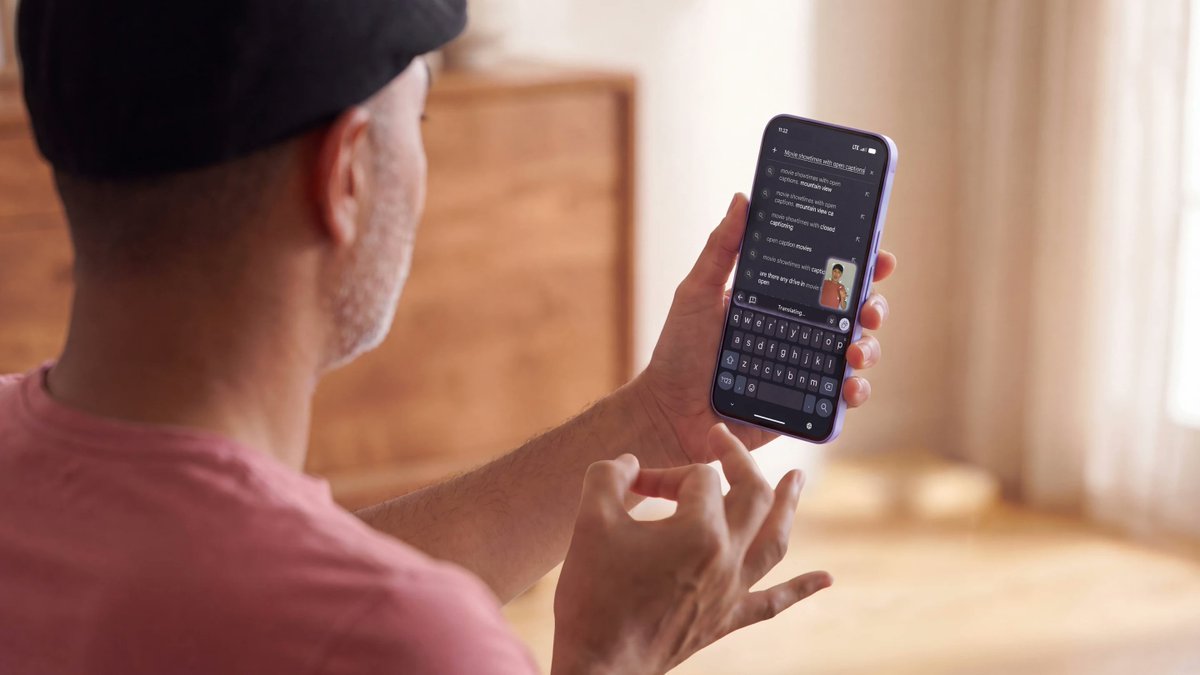
Today at 1:00pm, join Dan Garrette and Miloš Stanojević at the #EMNLP2026 Google booth (D5) for a live demo of @GoogleDeepMind SL2T, bringing ASL-to-English translation to Gboard and Live Transcribe on Pixel 11. Read the blog: https://t.co/c6VSj08mKV
How well do LLMs understand Southeast Asian languages? Today at 10:30am, join Shubham Mittal at the #EMNLP2026 Google booth (#D5) for a live demo of DEEPSEA, a benchmark to evaluate LLMs across 12 Southeast Asian languages. Read the paper: https://t.co/mOQ8OxDSm7
How can positive alignment anchor autonomous AI agents to core values rather than brittle rubrics? Join @GoogleDeepMind researcher Verena Rieser today at 9:00am for the @emnlpmeeting Industry Keynote, and visit the #EMNLP2026 Google booth (D5) afterward to connect with our team.
How do we evaluate latent capabilities across diverse domains in AI? Join Vinodkumar Prabhakaran, Piyawat L Kumjorn, and Sunipa Dev at the #EMNLP2026 Google booth (#D5) today at 3:30pm for a live demo operationalizing indicators and mapping real-world user query failures. @GoogleDeepMind
We're proud to be a Diamond Sponsor of #EMNLP2026, taking place in Budapest, Hungary. Attending @emnlpmeeting? Drop by booth #D5 (Hall H) to connect with the Google Research and @GoogleDeepMind teams and check out our live demos on language modeling and agentic systems. More: https://t.co/yuQlCG3LsP
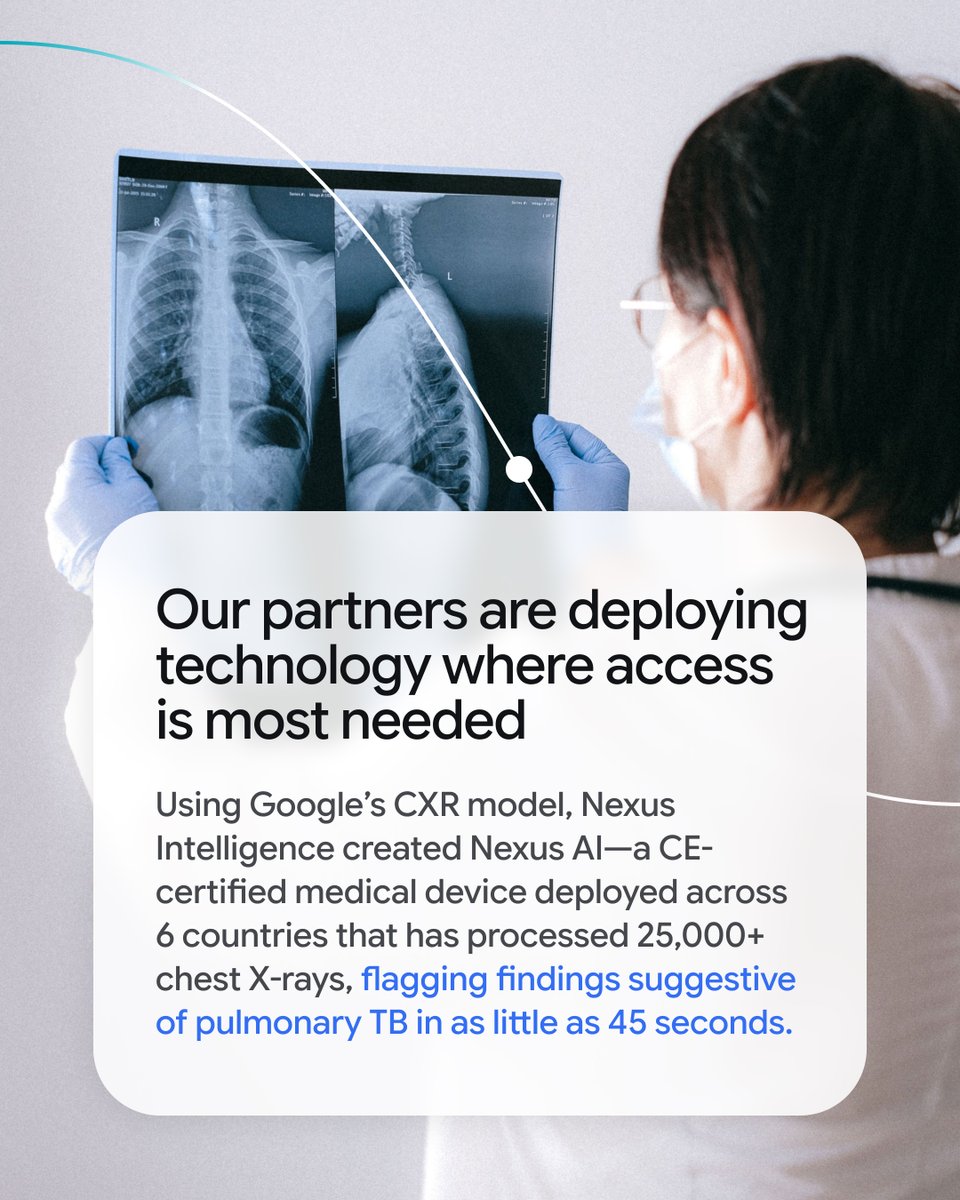
Tuberculosis (TB) remains one of the world's deadliest infectious diseases, claiming an estimated 1.23 million lives each year. This week at IDWeek 2026, we’re highlighting how open foundation models like MedGemma are bringing AI to the front lines of TB screening to broaden early detection. Learn more: https://t.co/pebymJvYMt
Around the world, scientists are using our technology to better understand and respond to infectious diseases. From mapping outbreaks to screening patients, researchers are making progress faster than ever.
A new Nature paper by our teams on the Personal Health Agent (PHA)—the foundational multi-agent AI architecture behind Google Health Coach. By orchestrating specialized agents across wearable and biomarker data, we're establishing a benchmark for safe, personalized health AI—and open-sourcing the framework for the community.
Nature paper: https://t.co/pc047QW3O0
Huge congratulations to Google's Dr. Marian Croak on being honored by the New York Hall of Science (@nysci) for her incredible leadership in tech and commitment to STEM! 🔬✨
Learn more & support the gala: https://t.co/STglKDttd0
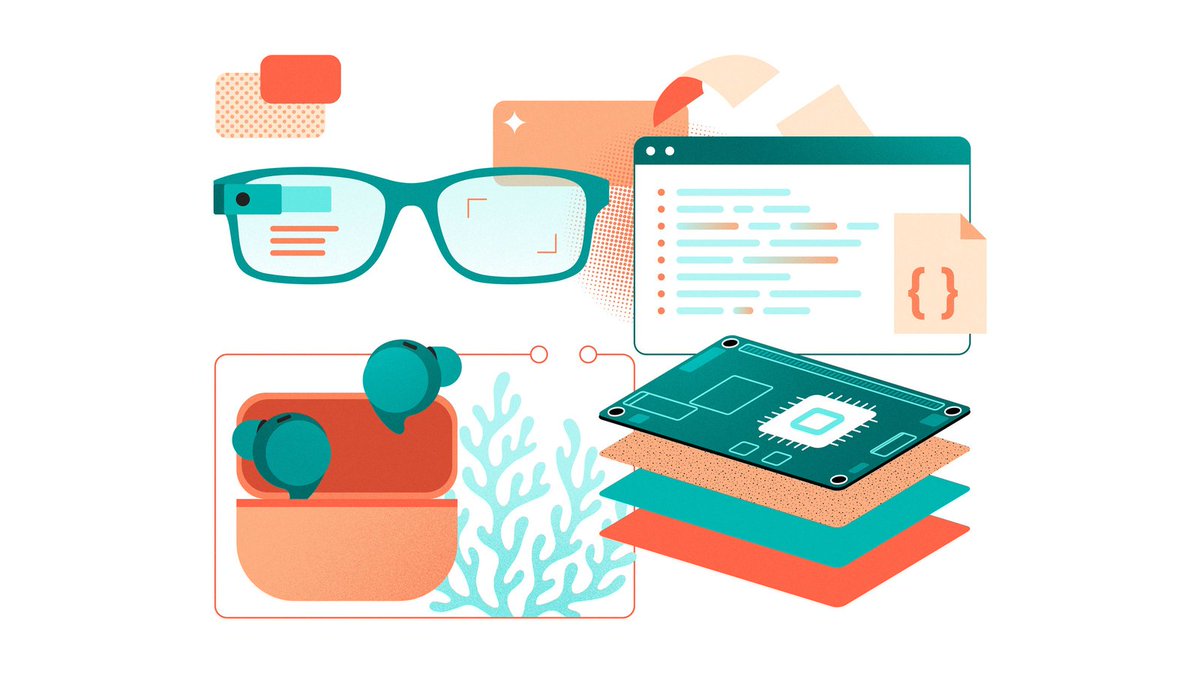
Building for wearables and IOT shouldn't mean rewriting your model for every chip.
Today we're completing the 32-bit open-source Coral NPU architecture (up to 1 TOPS under 10 mW), releasing our v1.0 compiler, and launching new Coralboard devkits with Synaptics: https://t.co/CIXUd5sNRu
Our new research shows how blind sweep ultrasound AI generalizes to new care settings, enabling non-sonographer operators with low-cost probes to deliver clinical-grade gestational age assessments, expanding life-saving maternal care globally. Read the blog: https://t.co/Vs0aIixc9x
How does @GoogleResearch choose its next moonshot? 💡
@SineadBovell joins Michael Brenner & Lizzie Dorfman to share their 3-part framework:
1️⃣ Is it a big problem?
2️⃣ Can tech address it?
3️⃣ Is Google built to solve it?
🎬 Watch: https://t.co/baCCey48Ip
Subscribe: https://t.co/Yo5mJBJury
Will AI "solve science" — or expand it? 🔬
On Ep 2 of the @GoogleResearch Podcast, @SineadBovell, Michael Brenner & Lizzie Dorfman explore the role of technology in discovery.
The big takeaway: generative models accelerate breakthroughs, but human curiosity drives the vision.
👉 https://t.co/baCCey48Ip
This week at our Research@ flagship event, we announced new updates for our experimental Geospatial Reasoning agent and Earth AI capabilities.
Following promising tests with partners, we are expanding early access to our experimental agent to more partners.
In a new technical report, we demonstrate how combining domain-specific foundation models, spatial tools, and upfront planning enables a Geospatial Reasoning agent to carry out complex spatial analysis and planetary prediction that standalone LLMs can’t.
Highlights from this work👇🧵
Last week we announced the 17 recipients of the $36M https://t.co/ziaNEioOT2 Impact Challenge: AI for Science! These nonprofits & academic teams are taking on some of science's hardest problems, from disease prevention to mapping the natural world.
Meet the recipients: https://t.co/FeunUhORso
We are bringing agents to the wet-lab bench at Google Research to navigate complex biological landscapes. Learn how we are grounding agents in physical lab robotics to run fast closed-loop molecular design cycles, ultimately discovering single-digit nanomolar protein binders for cancer targets →https://t.co/iPesR5MXCd