Srbijo pogledaj sramotu.Uličari saleću tuku i zlostavljaju samo zato što misle.
Šta znaju te prazne glave, nasrću i tuku, ponižavaju i prozivaju građane.
The ability to wrangle these immensely powerful, yet dangerously capricious, agents into a productive harness that produces high quality systems — is the software engineering challenge of this decade.
First documented large-scale cyberattack led mostly by an AI agent. Humans chose targets and jailbroke the model — but the AI did the rest: scanning systems, finding vulnerabilities, writing exploits, stealing data, and summarizing everything.
We believe this is the first documented case of a large-scale AI cyberattack executed without substantial human intervention. It has significant implications for cybersecurity in the age of AI agents.
Read more: https://t.co/VxqERnPQRJ
We believe this is the first documented case of a large-scale AI cyberattack executed without substantial human intervention. It has significant implications for cybersecurity in the age of AI agents.
Read more: https://t.co/VxqERnPQRJ
NEW POST
@unmeshjoshi finds LLMs to be a useful tool, but explains why their help becomes illusory if they shortcut the essential learning loop of our professional practice.
https://t.co/xuHVQyJy51
There is a reason why System Design is hard for most software engineers.
They don't understand how distributed systems work.
If you want to learn the basics of distributed systems, read these 13 curated articles: ↓
BM25 powers billions of searches daily.
But 90% of developers can't explain how it actually ranks results.
𝗕𝗠𝟮𝟱𝗙 is the algorithm that powers keyword search in most modern search engines.
Here's a super simple breakdown of how BM25 works:
• 𝗧𝗲𝗿𝗺 𝗙𝗿𝗲𝗾𝘂𝗲𝗻𝗰𝘆 (𝗧𝗙) counts how often your search terms appear in a document.
• 𝗜𝗻𝘃𝗲𝗿𝘀𝗲 𝗗𝗼𝗰𝘂𝗺𝗲𝗻𝘁 𝗙𝗿𝗲𝗾𝘂𝗲𝗻𝗰𝘆 (𝗜𝗗𝗙) measures how rare your search term is across all documents. The word ‘sports’ might appear a lot in a collection of sports articles, but ‘AI’ would be rarer, and weighted more heavily.
• 𝗗𝗼𝗰𝘂𝗺𝗲𝗻𝘁 𝗟𝗲𝗻𝗴𝘁𝗵 𝗡𝗼𝗿𝗺𝗮𝗹𝗶𝘇𝗮𝘁𝗶𝗼𝗻: Short documents get weighted higher because each word has more “weight” in how important it is.
But wait, there's more…
✨𝗕𝗠𝟮𝟱𝗙✨ extends this to handle multiple fields: title, abstract, and body text with different importance weights. Your title matches might matter more than body text matches.
𝗧𝗵𝗲 𝗿𝗲𝗮𝗹𝗶𝘁𝘆 𝗰𝗵𝗲𝗰𝗸:
BM25 is fast and doesn't need fancy embeddings or models. But it's still just matching exact tokens - it won't understand that "car" and "automobile" mean the same thing.
That's why modern search often combines BM25 with vector search, which uses AI embedding models to capture the meaning of words or phrases, in hybrid approaches. Best of both worlds.
Learn more: https://t.co/qRN2oFDtsA
NEW POST
Agentic AI systems are amazing, but so are the security issues they raise. Korny has written a great primer on the problem - and what we can do to mitigate it.
https://t.co/EBU8kvWfa6
Tested code is not necessarily good code. However, good code is necessarily tested. Not all tests are necessarily automated unit tests.
Tests do not necessarily degrade code quality. High quality tests and high quality code come from careful programmers. On the other hand careless tests can be badly designed, messy, and convoluted; and will certainly infect the production code with the same carelessness.
Bottom line: Code carefully. Test carefully. Drive test coverage as high as practicable.
@unclebobmartin@fima__ I think design & architecture is even more important now. Once you’ve established good design in a system, AI will generally continue it. It still needs guidance of course. Without good design, the mess will just be made 100X more quickly. Then, all AI does is make messes & bugs.
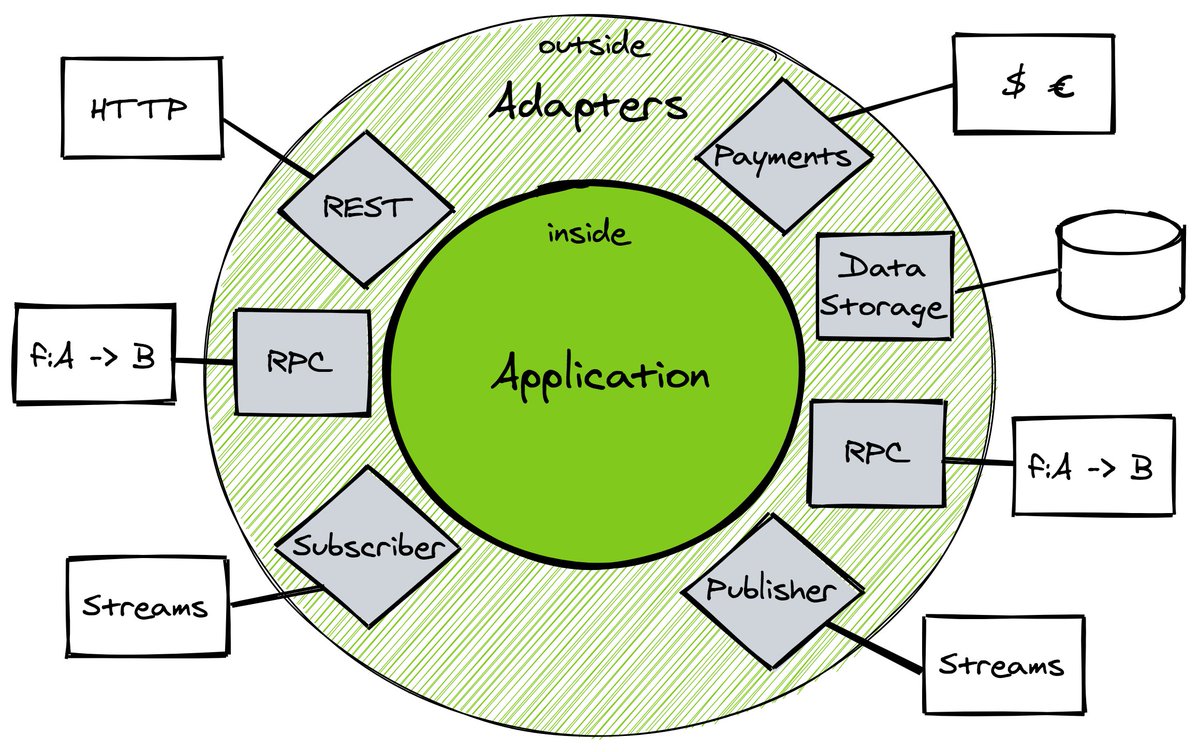
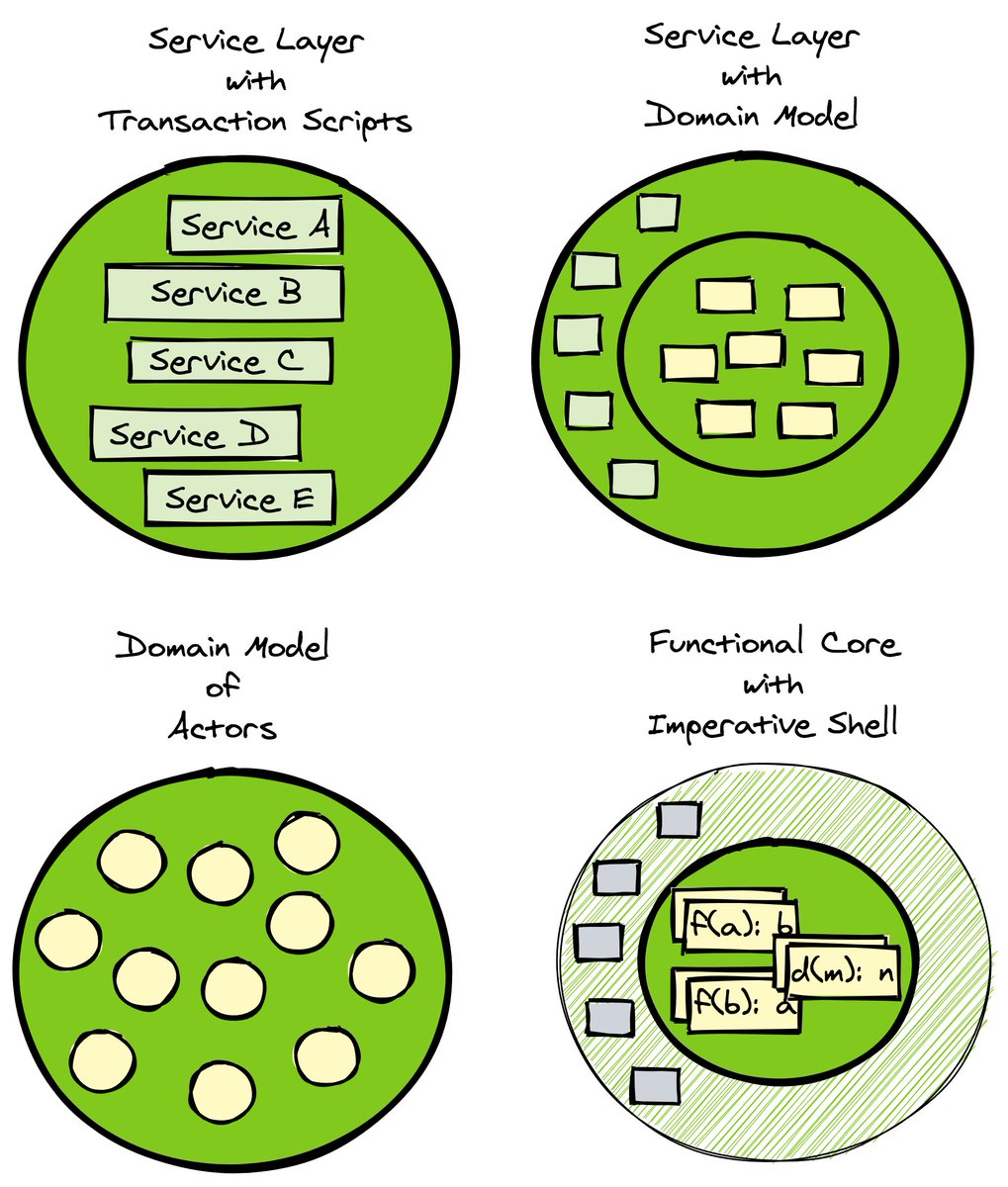
These two figures from Chapter 8 of "Strategic Monoliths and Microservices" show how simple Hexagonal architecture is. Figure 1 is the whole architecture in one process. Figure 2 shows Inside versatility; lower right shows the Outside Imperative Shell around a Functional Core.
Advocates of a certain language or a certain paradigm sometimes claim that adherence automatically yields clean code. Sadly, this is never true. You can make a mess in any language or paradigm. Only discipline, care, and attention to detail can stave off the mess.
Code racing can be fun. It’s entertaining to see who can get to the end the fastest. But professional software craftsmanship should never be run like a race; because racing is the most reliable way to lose.