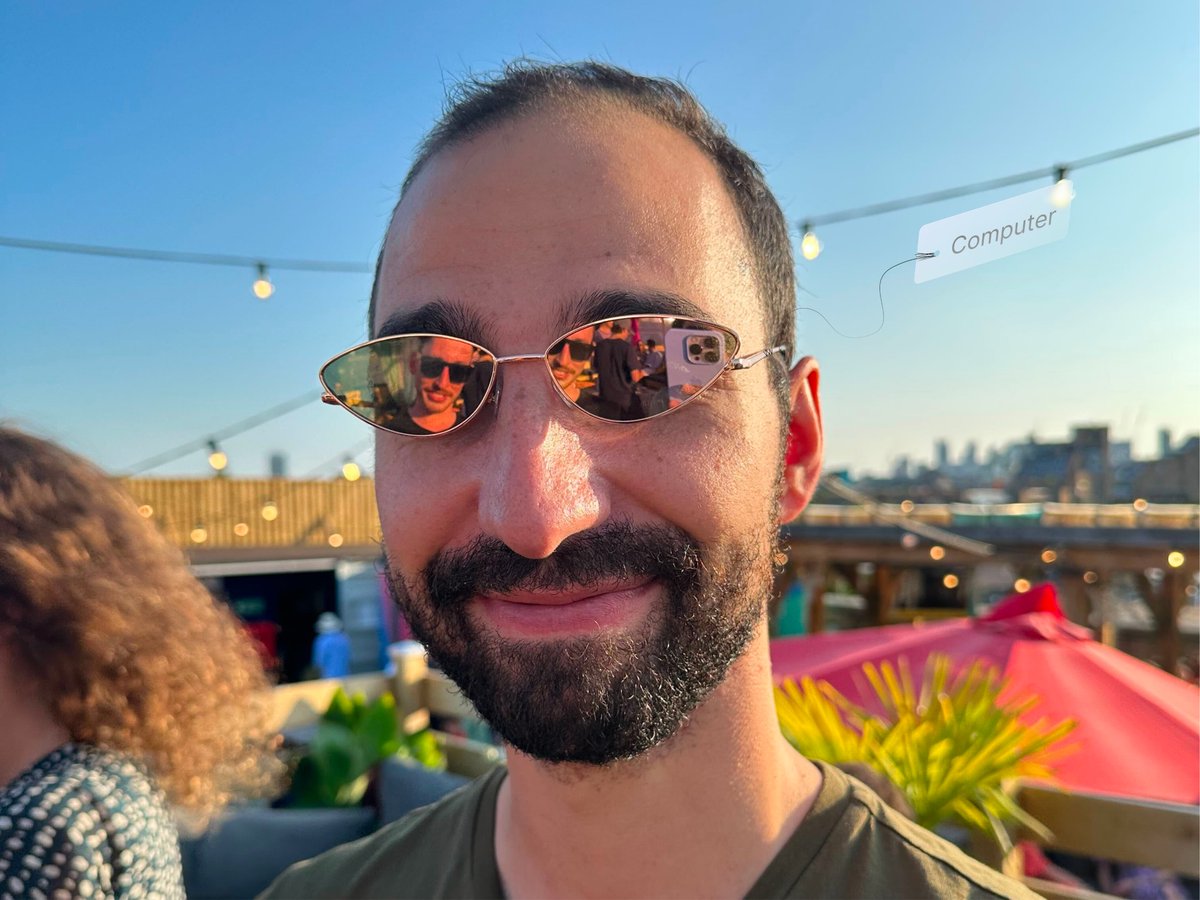
Two of us filmed this on a couple phones, and we used Atlas to turn it into a short film. This is just a clip from the @theworldlabs tech blog
Atlas is able to generate the parts of the scene that none of the cameras actually filmed.
It can freeze time, allowing you to reframe shots to positions never filmed, then resume.
View events from impossible angles because Atlas knows what was there.
PhD studentship is available in my group. Please apply if you are interested. At this time it is only open for the UK students.
I am looking for a motivated #PhD student with background in #computervision and #computergraphics with good coding skills.
https://t.co/bdEX0mXC0q
Thanks to all the participants and collaborators - our paper on assessing the generalisability of #deeplearning methods for #polyp segmentation and detection tasks led by @vision_sharib - a #multicentre study is now published at @SciReports
Full article: https://t.co/Gi1NhHce6J
Join @DemiWorkshop#MICCAI2023 - our initiative towards tackling dataset challenges in medical imaging - learn more from our excellent keynotes @james_y_zou and @QiDou_
When: October 8th
Where: Room 3, Level 1, at the Vancouver Convention Centre (online available)
🤺 Mask-RCNN vs. Per-SAM
We put two object segmentation models to the test to see how well they handle few-shot learning.
🔗 Read our blog for the results: https://t.co/YvwvUOxAOC
🆕 Introducing the Search Anything Model
Search Anything is a unified framework that combines natural language, visual property, similarity, and metadata search.
https://t.co/dktp1t2jFm