My department is hiring Tenure-Track Faculty Positions in all areas of chemistry and meeting interested candidates at San Francisco on 13 Aug 2023. Please send your CV to simply start the process. Retweets are welcome! #chemjobs#chempostdoc#Chemjobber
https://t.co/fIPmqc95Vt
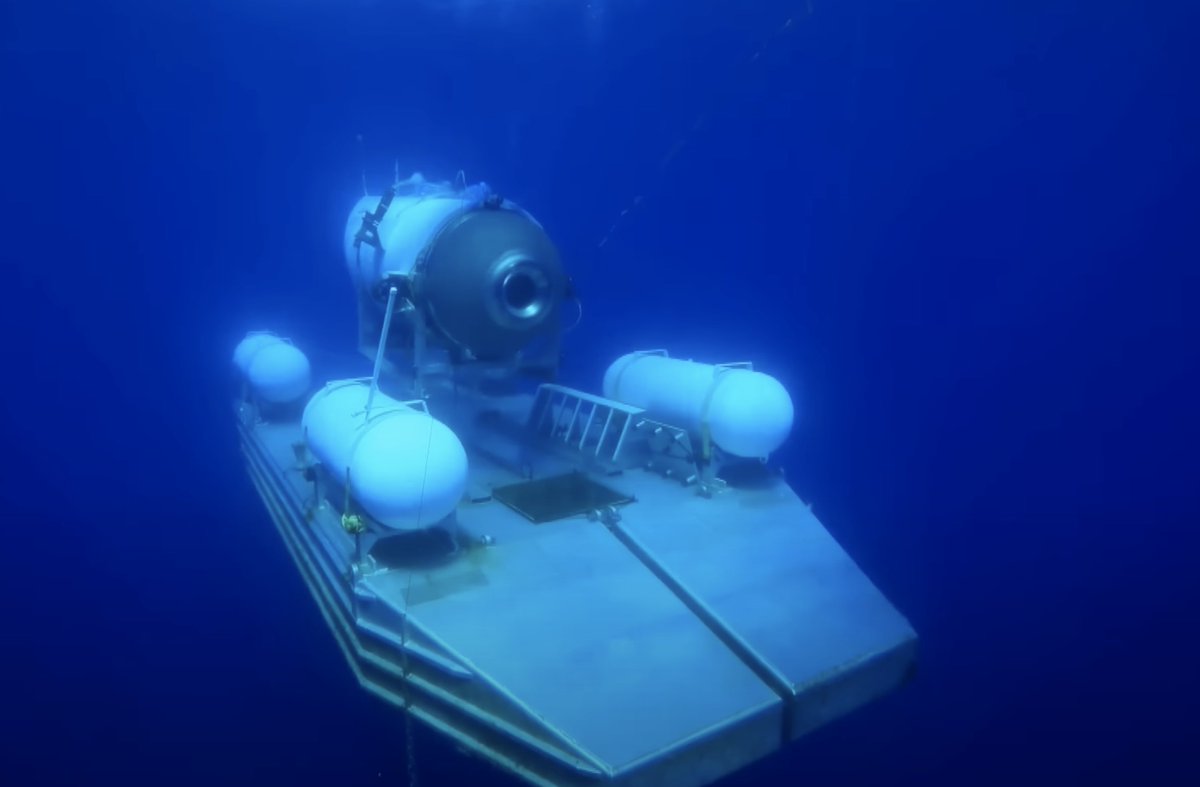
You may remember that the @OceanGateExped sub to the #Titanic got lost for a few hours LAST summer, too, when I was aboard…Here’s the relevant part of that story. https://t.co/7FhcMs0oeH
RT @Phillip_S_Grant: Come and join me! 📢We have postdoctoral, PhD, and MSc positions to fill in my group at NTU. Let’s tackle some challenging problems in organic synthesis together. Follow the link for more details:
https://t.co/yFq5JlxwGg
#chempost… https://t.co/OwXirCJXOK
Presenting your work at a conference is NOT about reporting your results.
It's about controlling the flow of logic and excitement through the minds of the audience.
At each conference, I see a lot of mistakes that make #research presentations hard to follow. Wrong visuals, wrong language, wrong style and information flow.
Communication skills are vital for your career. Conferences are an excellent playground for their development.
Below, I put a brief list of what NOT to do during presentation.
Your slides:
1. Don’t put too much on one slide!
- Too many figures on one slide make it confusing. Don’t put more than 3-4 figures. Ideally, 1-2.
2. Don't rush through slides.
- If you show a slide only briefly, you don't let the audience absorb it. Speak slower or give more details.
3. Don’t assume that every detail you say must be supported by a figure.
- This is NOT necessary. You can just tell the audience about facts and findings without providing a visual "proof" for every detail discussed. Speak, not show!
4. Stop putting logos on each slide… They clutter the space and distract.
- If you really need them, put those logos on the front and last slides.
5. Don’t put titles on each slide when they are long and useless.
- People don’t read titles that often. Titles attract attention (by defocusing the audience from other parts of the slide), so use them wisely! Obsessive titling distracts from the core data.
6. DON’T use small fonts and small figures!
- Even if others are blessed with eagle vision, small fonts/figs require don’t get into memory as easily. Also, it often annoys the audience - some rooms are big, most people don’t have perfect vision, and when you don’t see what the person is speaking about, you get upset.
7. Don’t end your presentation with the slide “Thank you!” or “Questions?” or “Acknowledgements”.
- The last slide is your most valuable one. It stays on the screen while you’re answering questions, and your audience keeps looking at it for quite some time! So, you can put your acknowledgements beforehand, but not on the last slide.
Use the last slide for (1) your most important message(s) and (2) list of your papers relevant to the talk. Encourage the audience to take a photo of it.
Your speech:
8. Don’t speak too fast. Don’t speak monotonously. Make pauses! Use excitement in your voice!
- It’s hard to analyze your slides when your speech is very fast. Plus, it’s really hard to follow for non-native speakers at international conferences. Advanced speakers also introduce emotions into their talks (surprise, curiosity, etc.).
9. Don’t speak too quietly.
- Yes, a lot of people make this mistake without realizing it! Make sure your speech can be easily heard from the back of the room. Even if you use a microphone, it doesn’t mean you are loud enough.
10. Don’t weave your laser pointer too much.
- A pointer guides the attention. But when it keeps jumping up and down on a slide, the audience is getting tired. Use it only briefly one or twice on each slide. Or better stop using it at all and introduce cool animations into your presentation.
Finally, when watching others presenting, analyze their style and how audience perceives it. Identify weaknesses and possible improvements. It will help you see your own presentations differently.
#AcademicTwitter #phdchat
📢Exciting News!🎉We're hiring! 🥳
Join us for groundbreaking research in the development of novel org./inorg. materials for multifunctional applications.🚀Positions: 7 #PhD, 1 #Postdoc, 1 #Technician.🎓
🔎Application procedures: https://t.co/xDuEPn5E3H
🔄 Please retweet! 🙏🙏