A woman is being abducted by two figures in the dark, possibly men, their faces concealed. She resists, but they overpower her. Goya conveys her suffering, depicting the scene at night with dark tones.
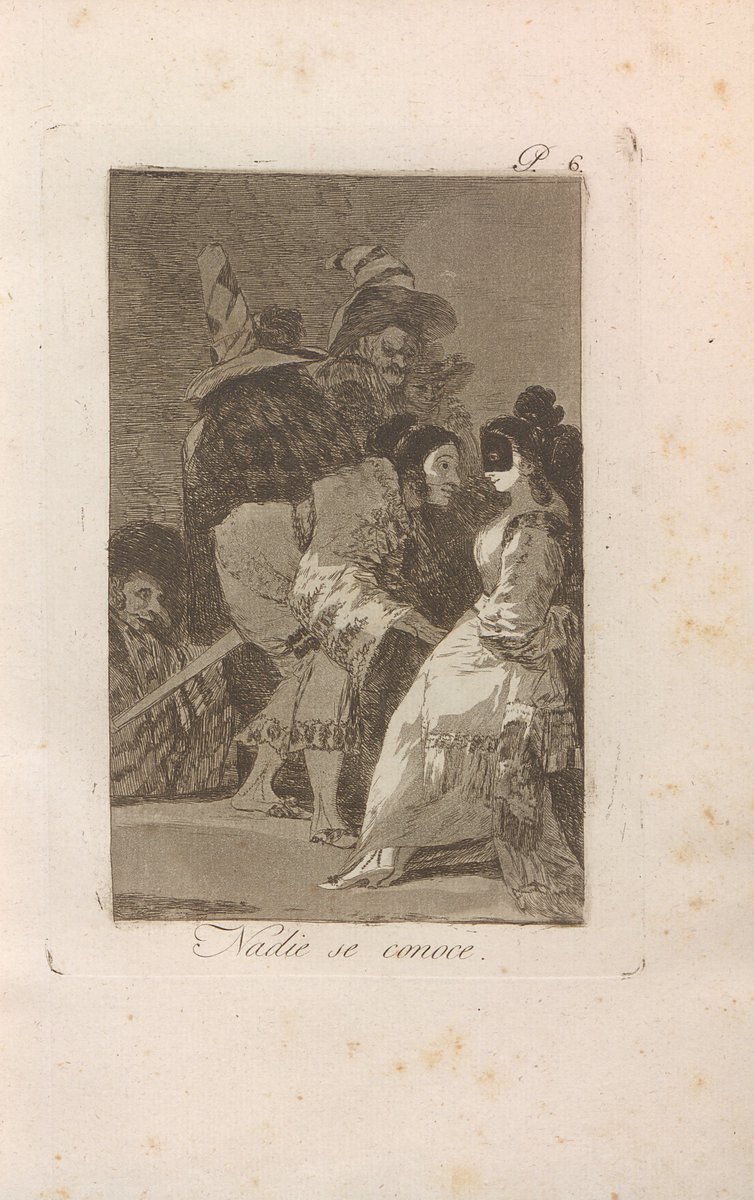
In this dark scene, people wear masks, concealing their true identities. Goya highlights the theme of deception and the uncertainty of human nature, suggesting that true selves are often hidden.
Goya uses intense black inks, suggesting a possibly nighttime setting, where the brightest areas are the women's garments and the young woman's face and generous neckline. The plate may allude to hidden intentions or the world of prostitution.
Goya mocks the man who is dressed in baby clothes, has his fingers in his mouth, and a look of terror in his eyes, though he's bearded and obviously strong. The nanny or mother grieves in the shadow behind him, so disappointed in his failure to become a man.
This plate addresses irrational fears and the power of superstition, featuring a woman warning her child about the Bogeyman. It reflects the widespread superstitions and anxieties of the time, including fear of the unknown.
Goya satirizes the practice of arranged marriages, highlighting the lack of agency and choice for young women in such arrangements. This commentary is relevant to the societal norms and gender roles prevalent in 18th-century Spain.
This plate serves as a self-portrait of Francisco Goya and introduces the theme of the artist's dream, a recurring motif in the series. It reflects Goya's anxieties and the need to express his critical views during a time of political and social turmoil in Spain.