Supreme protect us both. May the Lord nourish us both. May we both gain the ability to understand. May our studies be brilliant. May we not argue with one another. oṃ śāntiḥ
Who is GOD ?
(Purusha Sukta , Rig Veda)
The One having thousand heads and feet.
Present in every being, everywhere.
He is in every atom, every direction.
Yet, he is beyond space and time.
He is and above everything.
He alone is the Past, Present, and the Future.
He is immortal, beyond birth and death.
Yet he takes a mortal form for humans.
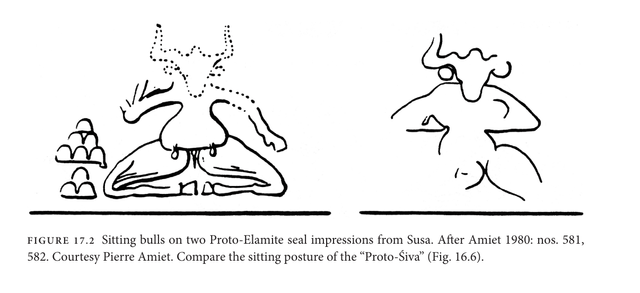
Proto-Elamite Seal Impressions from Susa (4th millennium BC) featuring a Bull in a Sitting Posture, similar to the so-called "Proto-Shiva" of the IVC. There seems to have been a prominent Cult of the Bull among the Neolithic Iranians, possibly ancestral to both Proto-Elamite and IVC/Proto-Dravidian, Proto-Sanskrit.
The meditative pose and fire rituals were not unique to Vedic Civilization.
They were common to all Indo Iranian Cultures. The deity differentiates, which culture it was. Nāpir was Elamite, Sivan was IVC, Indra was Vedic. These are all sister ideologies and cultures.
1/n
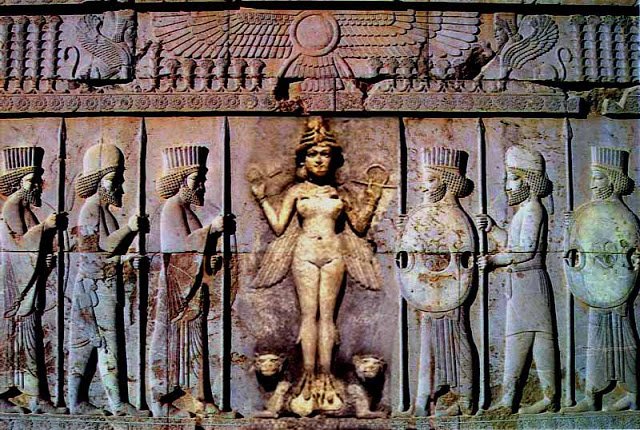
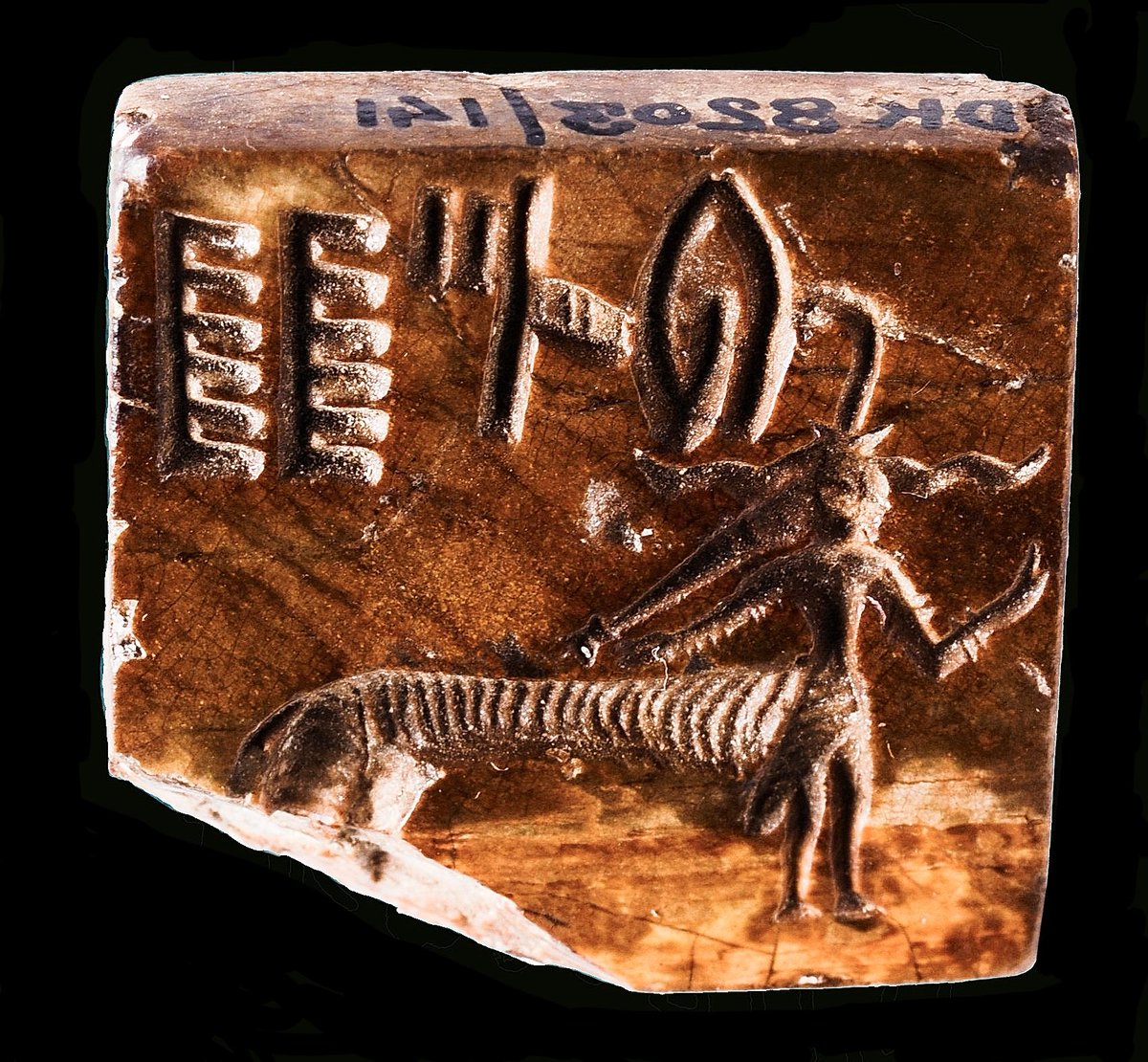
Presenting IGIGI, lesser Gods of Nibiru.
It has been said repeatedly that no names of a town, a king, a God, or any mythological creature are found in the Indus Script. Well, look no further. The mythical creature - half man half animal lesser Gods of Sumerian mythology, IGIGI - is found in Indus Script, with a similar name, and supporting iconography.
What are the chances of similar pronounciation and group of sound values representing this creature, which is mentioned in Sumerian texts ?
This is irrefutable proof of my method of decipherment, which we shall explore in the next few posts on this thread.
This is the holy grail of IVS decipherment, the litmus test, another Rosetta Stone moment.
Watch this space, expected to be concluded in the next few days.
#Indus #Valley #Civilization #Script #Decipherment #IVC #Harappa #Mohenjodaro #Dholavira #Igigi #igigu
Battle of Aratta 2650 BCE
This cylindrical seal impression from Kalibangan has virtually no script.
It shows two men with harpoon like spears in combat mode, whilst a female figurine, a Goddess, is in between the champions holding their hands. Another female figurine with a body of a tiger attached to her; looks on, watching the ensuing scene.
Now, this scene some Indologists suggest is a depiction of two Asuras - Sunda and Upasunda fight for the Apsara Tilottama. However, that doesn't explain why the female figurine was holding the hands of the demons, plus the half female half tiger figurine can not be explained with this story. The two demons killed each other, and that was why Tilottama was sent. So, why would she hold their hand, suggesting to stop the fight ?
Also, in another seal, showing the half human half tiger figurine, had Indus Script. This script was reconstructed as the Sumerian lower Gods the "Igigi," with a remarkably close reading "Ijijvi Aga" or the 7 Igigis, and indeed there were 7 main Igigvi leaders/ figures
So, it seems the explanation of this seal points at a Sumerian myth.
The three triangular inscription points to a mountainous location, with meș trees.
The story of battle between a Champion of Uruk sent by it's priest king Enmerker, with a champion of Aratta, in which Inanna stopped the dual and brought both under her reign, with Igigi watching over the whole episode, or one of Inanna's creatures, could explain this seal.
It has a Mesopotamian depiction written all over, especially since it is a cylindrical seal, but with Indus style.
Cylindrical seals were more popular at Mesopotamia than Indus.
This is not the only seal with Sumerian / Mesopotamian influence.
There are many other seals that clearly have a Sumerian influence
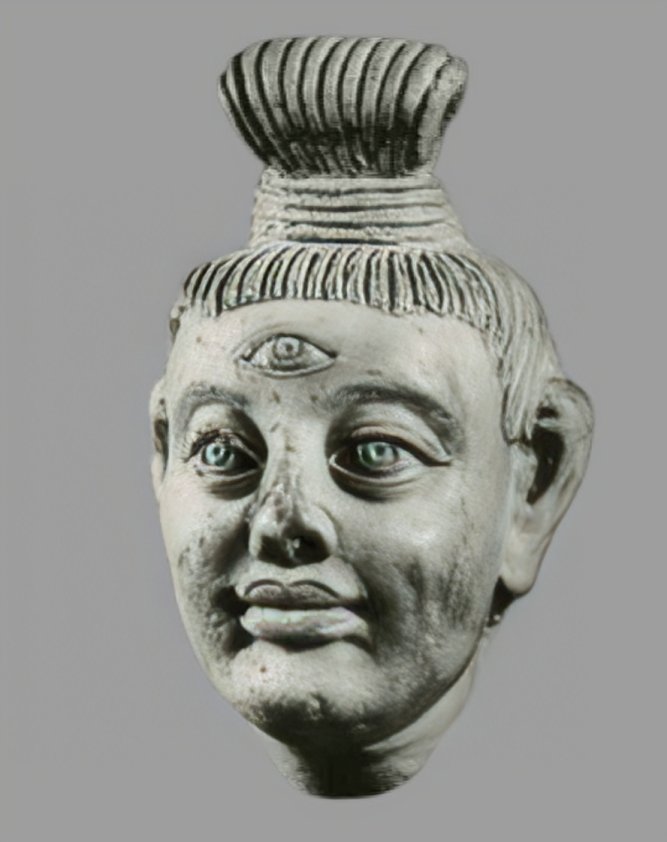
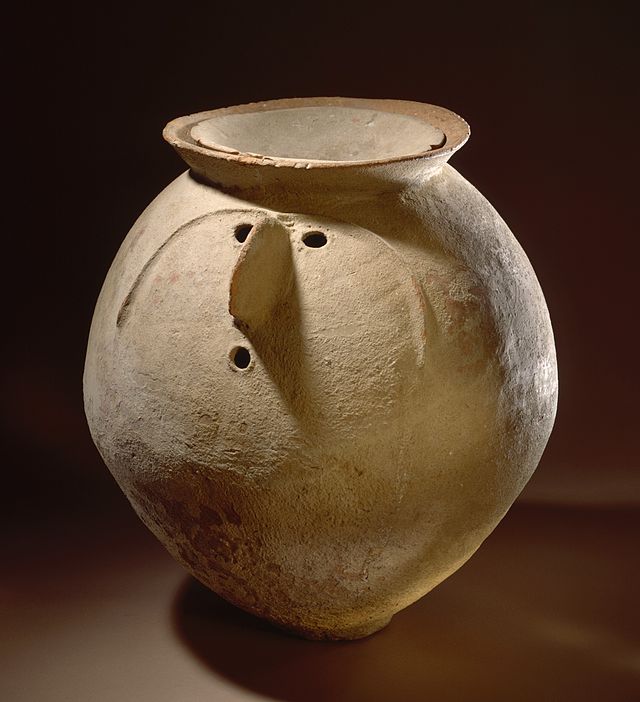
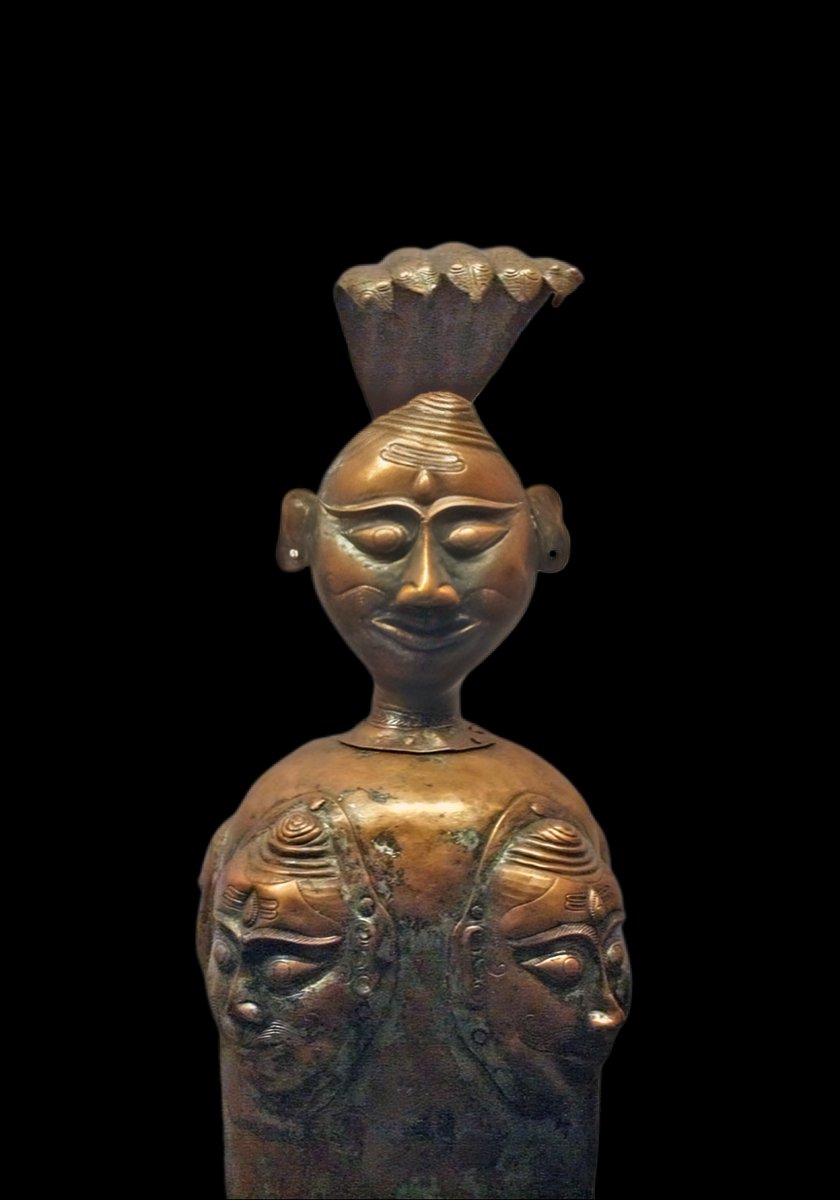
The Kanva poets worshipped the Ashvins. We can now return to sort out what is the meaning of the ‘nose’ of the gharma pot and the face urn of the Gandhâra Graves. As a result of the sound change which turned Proto-IndoEuropean *e into *a in Proto-Aryan, the root *nes- ‘to come home safely’ became homonymous with the word nas- ‘nose’. Folk-etymologically the Nâsatyas were associated with the nose and its two nostrils (nâsâ). The word nás- ‘nose’ occurs only twice in the Rigveda. In 2, 39, 6 the two As’vins are compared to the nose with its two nostrils (nâsâ in the dual) – note that the nose of one face urn has the detail of two nostrils. The other reference is 5, 61, 2c, in a hymn addressed to the Maruts, the gods of storm and battle, who in verses 12-13 are represented as driving a chariot, but in verse 2 apparently as riders: ‘(where is) the saddle (literally, seat) on the back (of the horse), (where) the rein (literally, the restrainer) of the two nostrils (of the horse)?’ (prshthé sádo nasór yámah). This verse shows that the Sanskrit words yama- (meaning ‘twin’ as well as ‘rein’) and nás- (meaning ‘nose’ as well as ‘to save’) – both associated with the As’vins in the Rigvedic language – had connotations defi nitely linked with a key skill in horsemanship, the control of the horse through its nostrils. The myth about the ‘nose-birth’ of the As’vins is briefl y related in one of the Yama hymns of the Rigveda (10, 17, 1-2) and more extensively in the Nirukta (12, 10), the Brhaddevatâ (6, 127 – 7, 6 ed Tokunaga) and elsewhere. The mother of the divine twins assumed the shape of a mare and became pregnant with the As’vins when she sniffed the seed of the brightly shining sun-god Vivasvant, her husband, who had assumed the shape of a stallion but in haste emitted his seed on the ground.
https://t.co/l9ycvUXsqI
Barli Inscription the oldest recorded Brāhmī inscription of the Jain religion prolly the oldest archaeological evidence of Jainism. It mentions "Viraya Bhagavate chaturasiti vase" meaning it is dedicated to Lord Vīrā(Mahāvīra)and was inscribed in the 84th year after his nirvā��a.
3/3
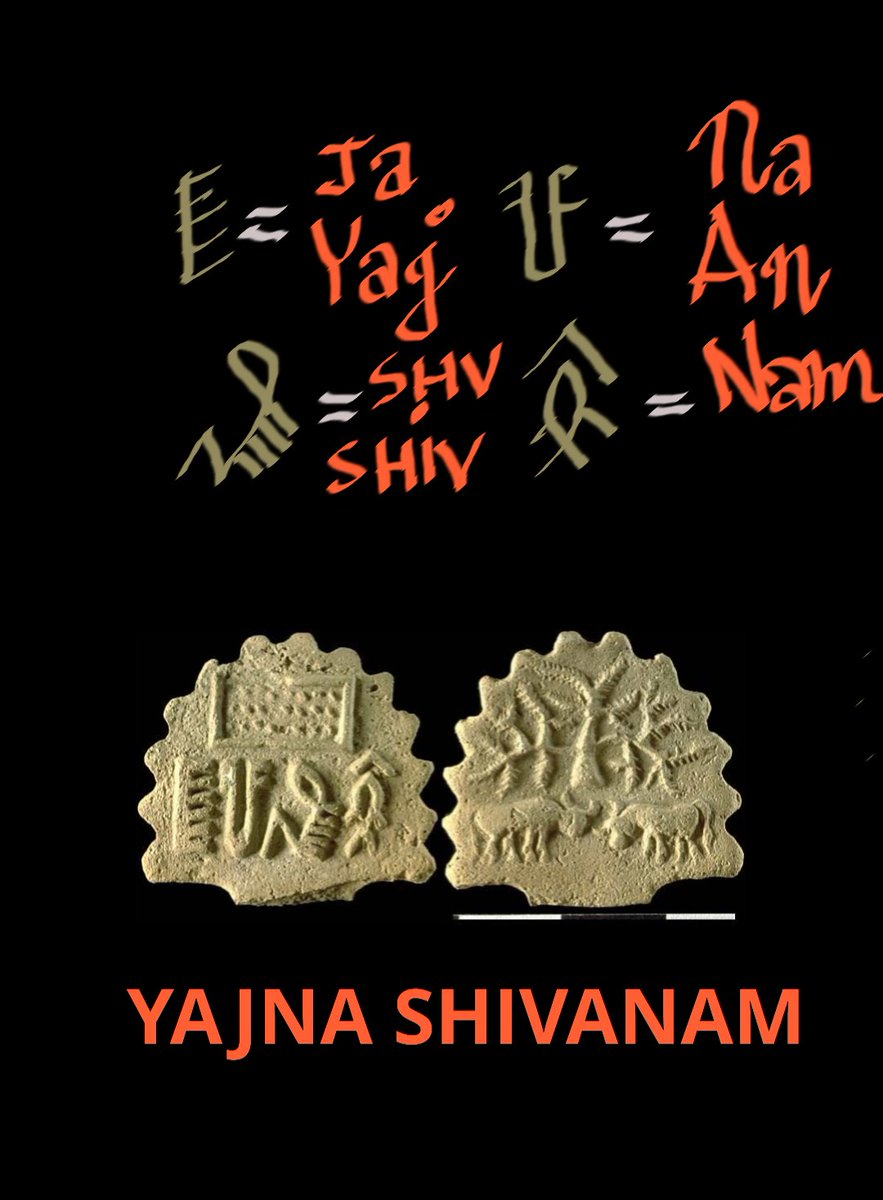
The Gold Leaf, Sonapatra, with 24 dots on an ingot, represents 24 carat Gold.
With Indus Symbols behind, clearly indicating that this was issued at IVC.
A Yajna for Sri Shiva was performed before the purification process of the Gold. Whenever, they processed gold an invocation to the Deities was performed as well, tonnes of "Kankan" series seals have these invocation.
Thus, even if the seal was used as a currency, it went with Indus iconography and a sacred text.
Indus seals : iconography to Script.
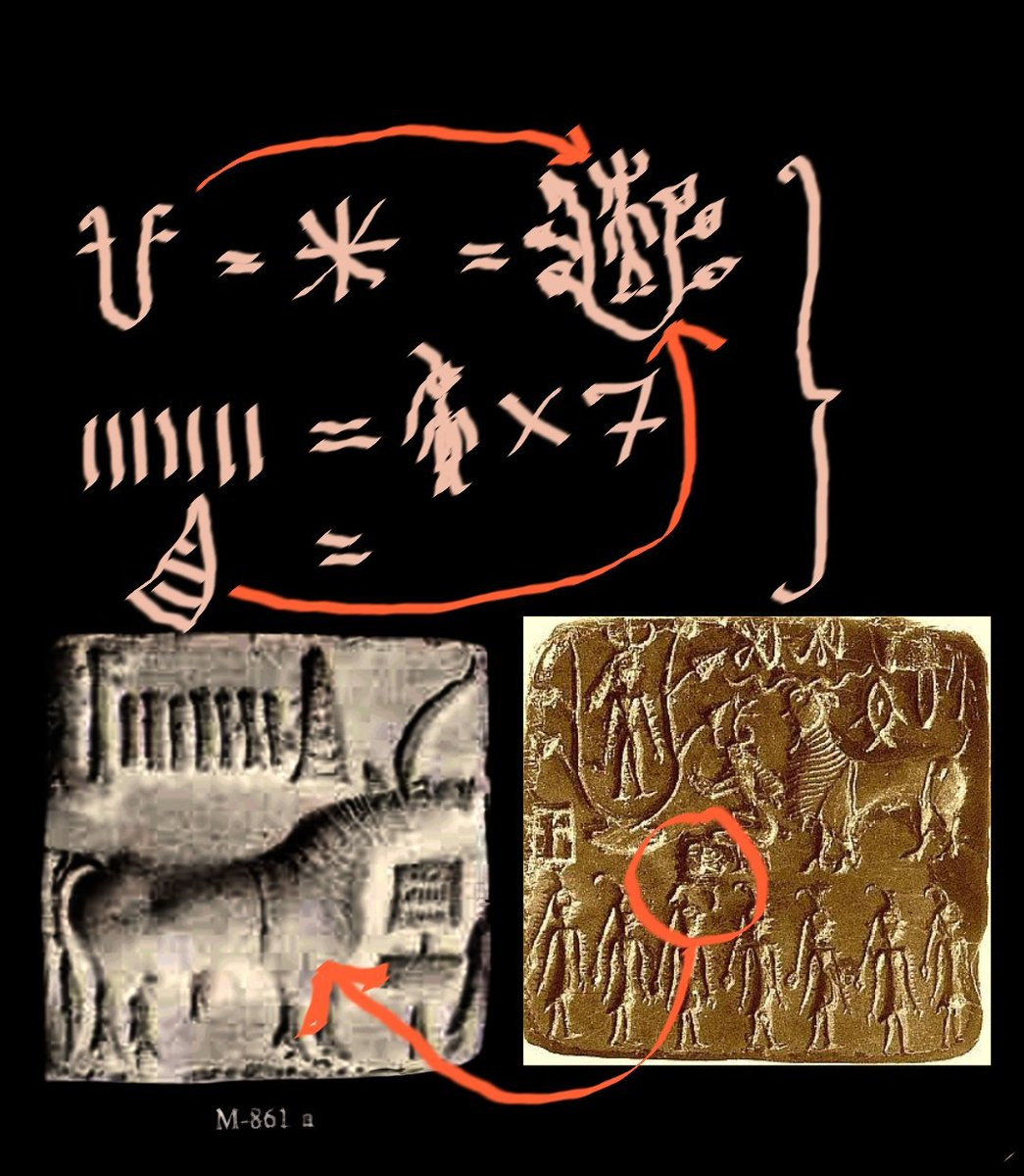
Left : Here a divinity denoted by Jar sign, arrives from Pleiades or Krittika Constellation, indicated by seven strokes, the stargate or portal is the last symbol, which looks like stairway from heaven. Offered sacrifice, the Unicorn.
Right: The divinity arrived in a portal, indicated by jar sign with pipal leaves, seven Matrikas denote Pleiades, the shepherd or leader of the clan, offered human sacrifice, head of a warrior from other tribe with two buns, on the stool.
L To R
AGNYA RUPA
अग्नय रूप
Agnya = 🔥 Fire
Alternatively:
Aga = 7
Aganya = related to 7, or "The Seven"
Also Aganya is uncountable, so "uncountable forms"
The Rupa suffix was a legit thing in the past. E.g. Agamyarupa.
Source: DDSA: The practical Sanskrit-English dictionary
Agamyarūpa (अगम्यरूप).—a. of unsurpassed or inconceivable nature, form, &c. °रूपां पदवीं प्रपित्सुना (rūpāṃ padavīṃ prapitsunā) Kirātārjunīya 1.9.
Agamyarūpa is a Sanskrit compound consisting of the terms agamya and rūpa (रूप).
Source: Cologne Digital Sanskrit Dictionaries: Shabda-Sagara Sanskrit-English Dictionary
Agamyarūpa (अगम्यरूप).—mfn.
(-paḥ-pā-paṃ) Of superior and unequalled form or nature. E. agamya and rūpa form.
Source: Cologne Digital Sanskrit Dictionaries: Monier-Williams Sanskrit-English Dictionary
1) Agamyarūpa (अगम्यरूप):—[=a-gamya-rūpa] [from a-gamya > a-gama] mfn. of unsurpassed form.
2) [v.s. ...] difficult to be traversed, [Kirātārjunīya]
Source: Cologne Digital Sanskrit Dictionaries: Goldstücker Sanskrit-English Dictionary
Agamyarūpa (अगम्यरूप):—[bahuvrihi compound] m. f. n.
(-paḥ-pā-pam) Of superior or un-equalled form or nature. E. agamya and rūpa.
#Indus #Script #Harappa #Mohenjodaro #IVC #Decipherment
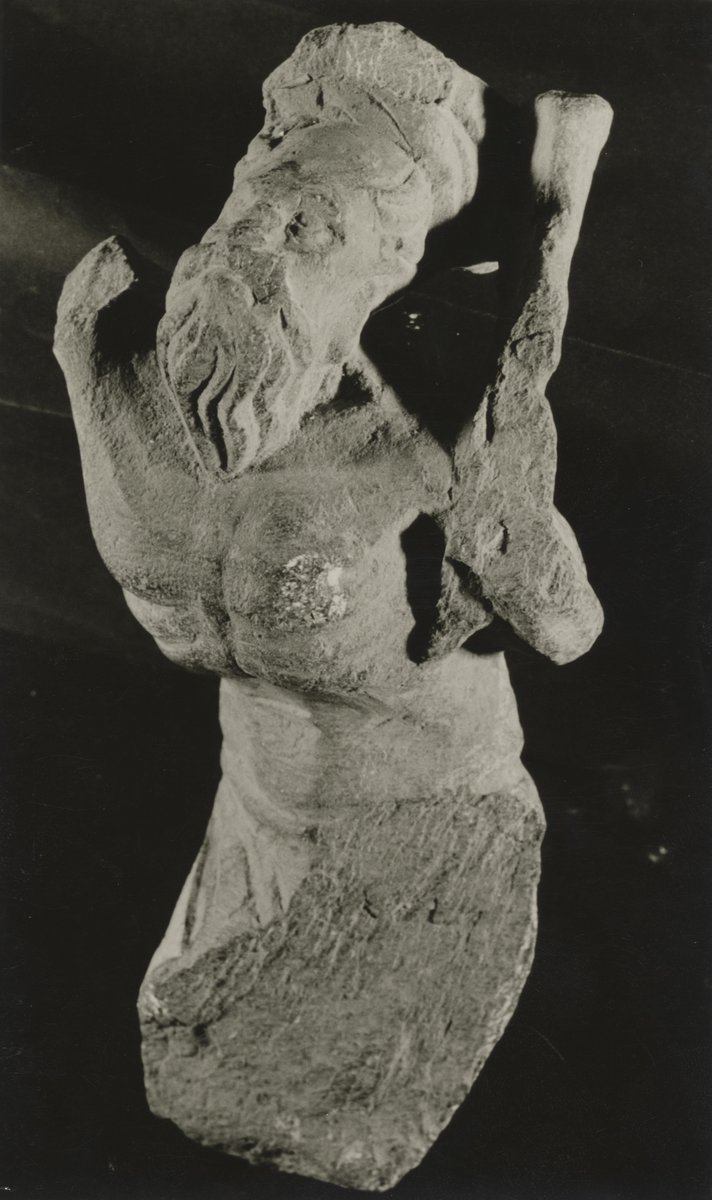
Jīna? in Kāyotsarga
As a lamp in a windless place does not waver, so the transcendentalist whose mind is controlled remains always steady in his meditation on the transcendent Self.
~ B.G










![Nash_Siddiqui's tweet photo. L To R
AGNYA RUPA
अग्नय रूप
Agnya = 🔥 Fire
Alternatively:
Aga = 7
Aganya = related to 7, or "The Seven"
Also Aganya is uncountable, so "uncountable forms"
The Rupa suffix was a legit thing in the past. E.g. Agamyarupa.
Source: DDSA: The practical Sanskrit-English dictionary
Agamyarūpa (अगम्यरूप).—a. of unsurpassed or inconceivable nature, form, &c. °रूपां पदवीं प्रपित्सुना (rūpāṃ padavīṃ prapitsunā) Kirātārjunīya 1.9.
Agamyarūpa is a Sanskrit compound consisting of the terms agamya and rūpa (रूप).
Source: Cologne Digital Sanskrit Dictionaries: Shabda-Sagara Sanskrit-English Dictionary
Agamyarūpa (अगम्यरूप).—mfn.
(-paḥ-pā-paṃ) Of superior and unequalled form or nature. E. agamya and rūpa form.
Source: Cologne Digital Sanskrit Dictionaries: Monier-Williams Sanskrit-English Dictionary
1) Agamyarūpa (अगम्यरूप):—[=a-gamya-rūpa] [from a-gamya > a-gama] mfn. of unsurpassed form.
2) [v.s. ...] difficult to be traversed, [Kirātārjunīya]
Source: Cologne Digital Sanskrit Dictionaries: Goldstücker Sanskrit-English Dictionary
Agamyarūpa (अगम्यरूप):—[bahuvrihi compound] m. f. n.
(-paḥ-pā-pam) Of superior or un-equalled form or nature. E. agamya and rūpa.
#Indus #Script #Harappa #Mohenjodaro #IVC #Decipherment](https://pbs.twimg.com/media/Gg3JYpFXQAAphYr.jpg)