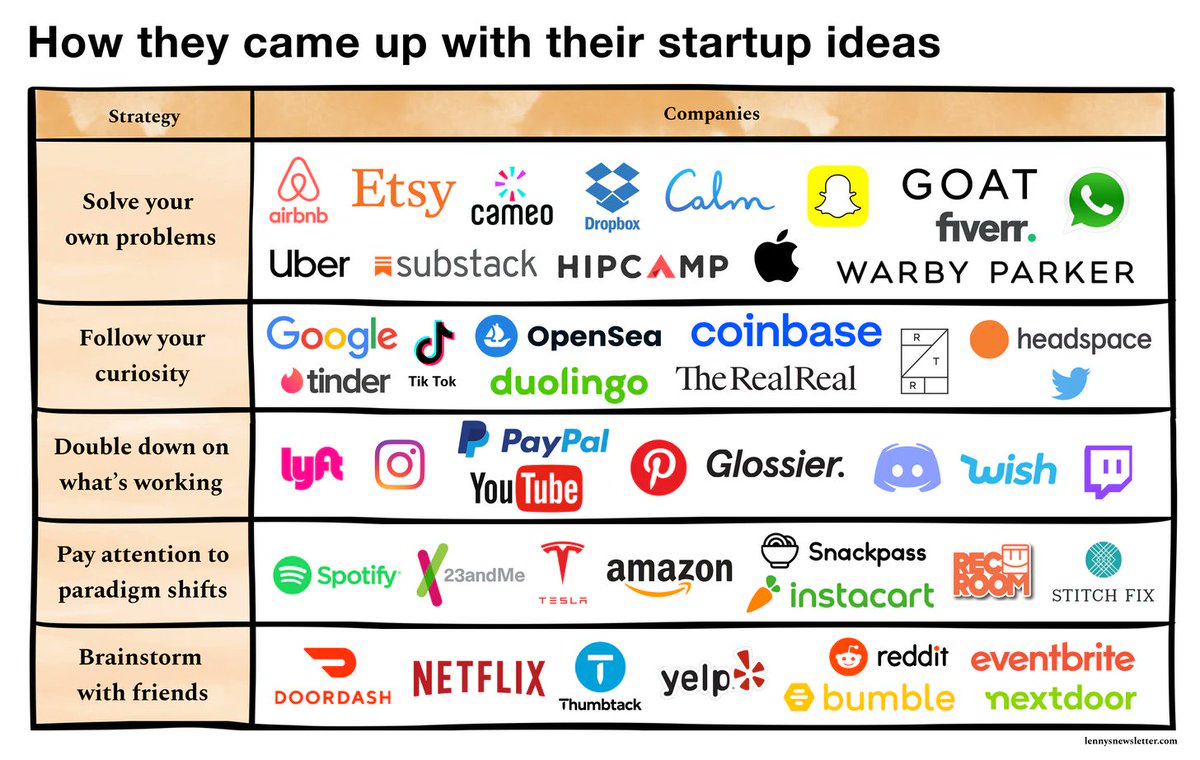
My biggest surprises from researching how 50 of today's biggest consumer companies came up with their startup idea:
1. Only 1 company came up with their idea by talking to customers (@DoorDash)
2. Only ~30% of ideas came from founders trying to solve their own problem
More 👇
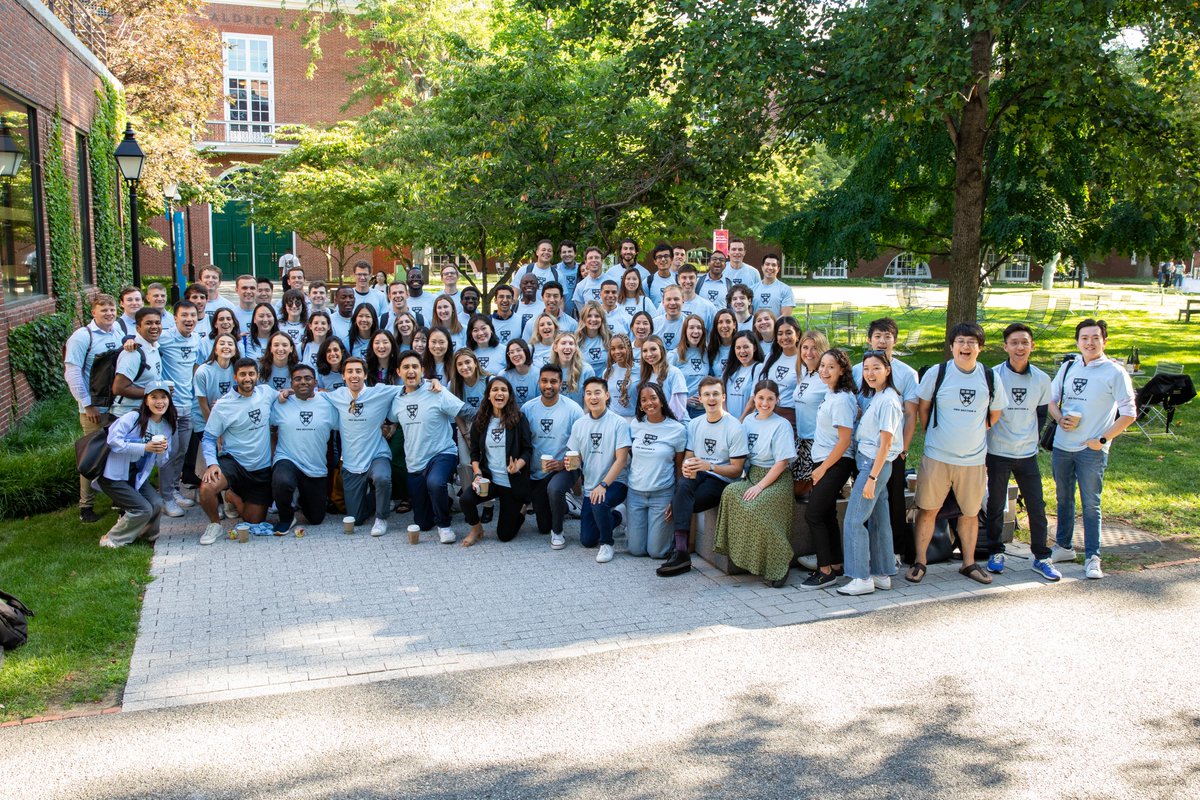
Student sections were revealed first. Incoming students are assigned to a specific “section” of about 90 students with whom they will complete the Required Curriculum. #LifeAtHBS
📸: Russ Campbell
Hosted a curated "bouquets & brunch" for early stage female founders this weekend with @nicolesseah 🌸
If you're a female founder building in AI or SaaS in SF, let's hang out!
UC Berkeley just hosted a hackathon. Over 1000 students from around the world came to build for 36 hours straight.
The reward? $100k+ in prizes.
Here are the winners and crowd standouts we saw at CalHacks ‘24 @CalHacks (🧵)
ChatLLM - Building Enterprise Scale RAG Applications
The most common use of LLMs in the enterprise world has been Retrieval-Augmented Generation applications built on custom knowledgebase.
These applications look deceptively simple and are easy to prototype, but they can be painful to push to production.
The key challenges include
- Parsing complex docs and PDFs (most open-source libraries don't do a great job)
- Data pipelines: the LLM app should have access to any updates in the data
- Custom front-ends: Ideally, you need a custom front-end on top of your LLM app and/or access the LLM app from your Slack or Team channel
- Complex orchestration: You want to able to handle complex prompts and co-ordinate between different doc retrievers and/or vector stores
- SQL and Code Execution: Depending on the complexity of your LLM application, you may need to execute code or SQL
- LLM choice: Depending on your use case, you may want to use a cheaper open-source LLM or a closed-source API. It's ideal to be able to choose the right LLM for the proper use case
- Ease of iteration: Just like with any other ML app, you need a way to measure accuracy and iterate on the app. If you don't repeat and evaluate the app, the chances of it not being used are very high.
LLM apps, just like any software, need monitoring, testing, and maintenance.
Abacus AI has now put dozens of LLMs in production and handles all these challenges well. Using our ChatLLM you can build all these complex apps in hours or days.
Of course, you can also try and build or pull together all these components yourselves, but then you won't have time to focus on the fun part of creating these apps - experimenting with different LLMs, evaluating complex questions, and really understanding the language of AI 😉
“Learning is making consequential decisions you are responsible for.”
If you aren’t holding the responsibility for your decisions, are you testing your judgment? Or becoming really great at observing?
Is observing a lot of decisions close to making actual decisions daily?
Wordle 946 3/6
🟨⬜⬜⬜🟩
⬜🟩🟩🟩🟩
🟩🟩🟩🟩🟩
—
First case in entrepreneurial manager tomorrow is on Wordle, so I just tried it.
Virality factors:
1. High stakes playing field (1 attempt/day)
2. Ability to share on social w/o spoiling ^
3. Rivalry
4. Single player mode
When designing an app, everyone looks at how other apps do it today. However, incumbent apps operate in a different context: they already have habit formation and many of their aggressive growth hacks have been eliminated due to public scrutiny.
Instead, using Internet Archive and old blog posts, find older screenshots & marketing materials when the incumbent app hit their inflection point (e.g., Snapchat in 2012) and construct a narrative on why they did what they did. You’ll be surprised by how explicit they were with their value proposition.
1) Bias to action always WINS.
Any analysis ahead of action is purely speculation. You really do not understand something until you've done it. Analysis post-action can be driven by real data.
So when you are stuck, TAKE ACTION vs keep thinking.
@StanfordHealth@AnthemBCBS I am not surprised at all that Yani is already a supervisor. Thank you so much for helping us when no one else could, and for resolving such a stressful situation for my dad and me. I hope that all future agents any patients work with are like you. You’re the best. (9/9)
I’ve spoken to 14 reps across @StanfordHealth, HealthNet, and @AnthemBCBS to fix my dad’s medical billing issues for more hours than I want to count. We’re approaching month 7 after endless pingpong:
SHC: "Call your insurance."
Insurance: "Call your healthcare provider." (1/9)
@StanfordHealth@AnthemBCBS Yani C from the claims department at Anthem is the most helpful, kind, smart, competent, empathetic, representative I have worked with, and I’ve worked with dozens. @AnthemBCBS, you truly have a gem there. Please get this guy promoted. (8/9)