@nh487 Admiro tu fortaleza, sólo en Cristo está poder obtener otra vida, sin penas y sufrimientos, con un cuerpo perfecto y rodeados de nuestros seres queridos. Esta vida terrenal es de aprendizaje, en la otra está lo mejor! Siempre adelante y con fé! 🙏
We come to church not to hide our problems but to heal them. It is not an automobile showroom—a place to put ourselves on display so that others can admire our spirituality, capacity, or prosperity.
The Church of Jesus Christ of Latter-day Saints is more like a service center, where vehicles in need of repair come for maintenance and rehabilitation.
And are we not all in need of repair, maintenance, and rehabilitation?
Artificial discipleship not only keeps us from seeing ourselves as who we really are, but it also prevents us from truly changing through the miracle of the Savior’s Atonement.
The Savior’s Church is a place of healing, not a place of despair, judgment, or sorrow. Jesus Christ, and living His restored gospel, can make of us the genuine, spiritual being of light and truth we desire to be.
Now in his 100th year, President @NelsonRussellM addresses his age — and the age of other Latter-day Saint leaders — on social media before general conference. #GeneralConference
https://t.co/zAaQOiEqEW
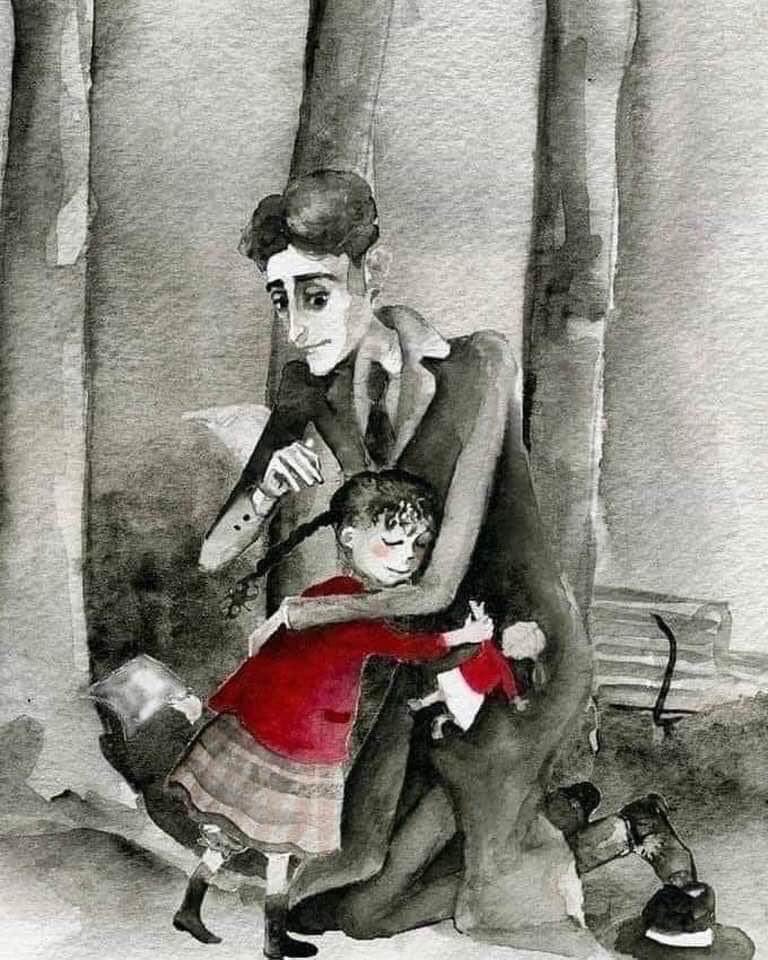
À 40 ans, Franz Kafka (1883-1924), qui ne s'est jamais marié et n'avait pas d'enfants, se promenait dans le parc de Berlin quand il rencontra une petite fille qui pleurait parce qu'elle avait perdu sa poupée préférée. Elle et Kafka ont cherché la poupée sans succès.
Kafka lui a dit de le rencontrer le lendemain et qu'il reviendrait le chercher.
Le lendemain, quand ils n'avaient pas encore trouvé la poupée, Kafka donna à la petite fille une lettre « écrite » de la poupée qui disait : « S'il te plaît, ne pleure pas. » J'ai fait un voyage pour voir le monde. Je vais t'écrire sur mes aventures.
C'est ainsi que commença une histoire qui se poursuit jusqu'à la fin de la vie de Kafka.
Lors de leurs rencontres, Kafka lisait les lettres de Poupée soigneusement écrites avec des aventures et des conversations que l'enfant trouvait adorables.
Enfin, Kafka lui ramena la poupée (en acheta une) qui était de retour à Berlin.
« Elle ne ressemble pas du tout à ma poupée, » dit la petite fille.
Kafka lui a remis une autre lettre dans laquelle la poupée écrivait : « Mes voyages m'ont changé. »
La petite fille a embrassé la nouvelle poupée et l'a ramenée toute heureuse à la maison.
Un an plus tard, Kafka est mort.
Plusieurs années plus tard, la petite fille désormais adulte a trouvé une lettre dans la poupée. Dans la minuscule lettre signée par Kafka, il y avait écrit :
« Tout ce que tu aimes sera probablement perdu, mais à la fin, l'amour reviendra d'une autre manière. »
Artiste : Marlene López
We celebrate the living Jesus Christ at this season of Easter. He came and comes to heal the brokenhearted, deliver the captives, recover sight to the blind, and set at liberty those who are bruised.
Because He knows our pains, afflictions, sicknesses, our “temptations of every kind,” (Alma 7:11) He can, with mercy, succor us according to our infirmities. #BecauseofHim
“Our own repentance bears testimony of Him and the power of His #grace to pardon and cleanse us. We need not have achieved perfection for our witness to be valid so long as we are striving to conform our lives to the Savior’s standard.” D Todd Chrisofferson
#ComeUntoChrist
One day when I was repairing the roof on our home, I went to a local store to purchase some additional supplies. I was wearing my customary work clothes—casual pants and shoes, a well-worn T-shirt, and a baseball hat. Wanting to quickly return home and complete my project, I hurriedly entered the store and began looking for the things I needed.
A man approached me as I was selecting my supplies and said, “Elder Bednar, the disguise is not working.” We laughed, and then he inquired, “Do you mind if I ask you a question?”
I responded, “Well, that is why I am here.”
He replied quizzically, “What do you mean?” I said, “You are the reason I am here. I am doing repair work at my home, and I need a few things to finish the task. But I am not in this store simply to buy roofing nails. I am here because God knew we were going to meet each other in this store and that you had something about which you wanted to ask. Please go ahead and share with me your question.”
We talked in the aisle for about 15 minutes, and I tried to help him find the answer to his question. Was it merely a coincidence that I encountered this good man at the local store? Or was this episode divinely orchestrated by a loving Savior who knew and responded to the concerns of a faithful man—a one?
I believe that in the work of the Lord there is no such thing as a coincidence. The worth of souls is great in the sight of God.
Our Heavenly Father loves us profoundly and perfectly. Jesus Christ shares with the Father this same perfect love.
This divine love should give us abundant comfort and confidence. Not one of us is a stranger to Them. We need not hesitate to call upon God, even when we feel unworthy. We can rely on the mercy and merits of Jesus Christ to be heard.
As we keep His commandments and abide in God’s love, we depend less and less on the approval of others to guide us. He is willing to guide each of us along His covenant path with steps designed to our individual needs and tailored to His plan for our ultimate happiness with Him.
“The newspapers might announce some great phenomenon in the heavens, misplacement of planets, that have caused consternation, and scientists will have their explanation to make of it, and unless they have faith in the living God, unless as Jesus said, they can read the signs of the time, they may not know anything about what is going on in the world.”
—LeGrand Richards, 1951
Christ did not say “Follow the news. Follow the popular experts. Follow the politicians. Follow the consensus crowd.” He said “Follow the signs. Follow the scriptures. Follow the promptings of the Holy Ghost. Follow my prophets upon the earth. COME. Follow me!”
More than ever, we must become observers of signs, viewing the world through spiritual eyes. Not every calamity we see requires our intervention (or could even be helped by our participation.) We must see, take note, lift the weary, and keep moving up the mountain of the Lord.
The great and spacious building will deconstruct itself. Our job is to notice and call our brothers and sisters out of its rumbling shadow. Our duty is to help build Zion, and it’s rising before us at ever-increasing speed.
What do you see? What does it mean? What will you do?
“Follow thou me.” (John 21:22)
We know that world peace and harmony are not prevalent in our world today.
We are bombarded with angry, contentious language and provocative, devastating actions that destroy peace and tranquility. In my lifetime, I have never seen a greater lack of civility in our society.
Luckily, one of the most cherished titles of our Lord and Savior, Jesus Christ, is “Prince of Peace” (Isaiah 9:6). Ultimately His kingdom will be established including peace and love.
For us, personal peace—found in and through the Prince of Peace—can be achieved despite the anger, contention, and division that blight and corrupt our world today. It has never been more important to seek personal peace than now.
Gently the Savior reminds us, “Learn of me, and listen to my words; walk in the meekness of my Spirit, and you shall have peace in me” (Doctrine and Covenants 19:23).
It is a miracle that the Book of Mormon came forth, but the real miracle happens when you come to know for yourself that it is true. That is what changes lives.
The Book of Mormon has changed my life because of what it has taught me about Jesus Christ. He is my Savior and your Savior, my Redeemer and your Redeemer.