Most newsletters end up unread.
We wanted to create something different.
Once a month, we share thoughtful perspectives on mental health, relationships, fertility, grief, anxiety, and the things many people experience but rarely talk about openly.
1/3
No daily emails. No sales pitches every week. No inbox overload.
Just practical insights, honest conversations, and ideas that might help you understand yourself a little better.
Watch the short video below to learn more about what you’ll find inside.
2/3
Your prefrontal cortex helps with thinking, planning, decision-making, impulse control, attention, and personality expression.
It is one of the brain areas most involved in helping you pause, reflect, weigh options, and choose how to respond.
1/2
ADHD can look like forgetting things, zoning out, interrupting, hyperfocusing, procrastinating, or feeling mentally exhausted from trying to keep up with everything at once.
1/3
A lot of people with ADHD grow up thinking they are lazy, careless, “too much,” or not trying hard enough. In reality, many are working twice as hard just to stay organized, focused, and regulated.
2/3
Your nervous system is not dramatic. It is protective.
Fight or flight is your brain’s way of trying to keep you safe, even when the “danger” is an unread email, a difficult conversation, or constant stress.
1/3
Sometimes people judge themselves for feeling anxious, overwhelmed, reactive, or exhausted without realizing their body has been stuck in survival mode for too long.
2/3
One of the hardest parts about feeling “not good enough” is how convincing it sounds in your own head.
You can get complimented ten times and still replay the one awkward moment from three days ago.
1/4
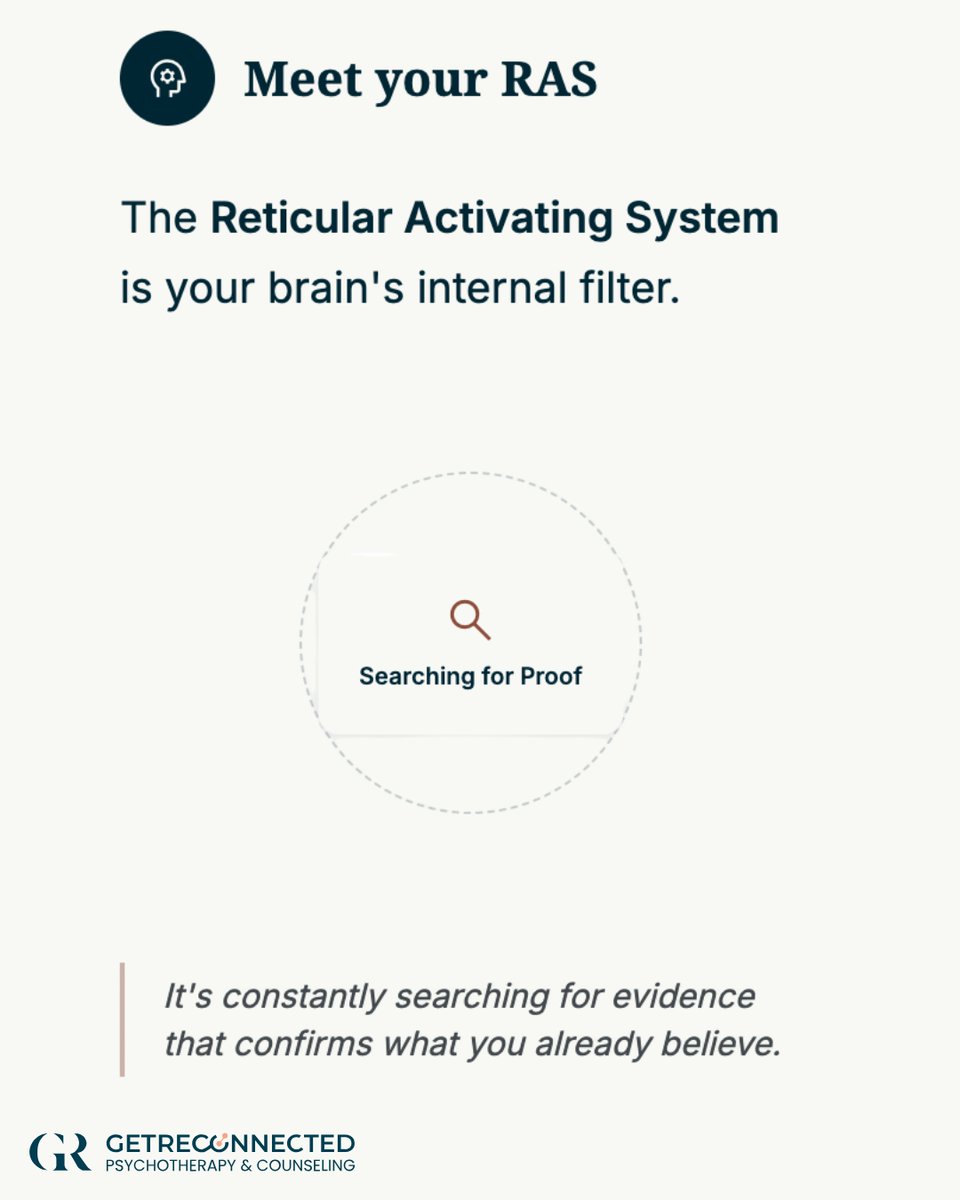
That does not mean the thought is true. It means your mind got very good at searching for evidence that supports an old belief.
Therapy can help you notice the filter, challenge it, and slowly create a different relationship with yourself.
3/4
Your brain was not built to be available all day.
It was not built to carry every message, every task, every decision, every worry, every notification, and every emotional demand without pause.
When there is no downtime, your brain does not just get tired.
1/3
It starts protecting itself. You may notice brain fog, irritability, zoning out, anxiety, numbness, or a shorter fuse than usual.
That is not a character flaw. It is a signal.
Rest is not the reward after you have done enough.
2/3