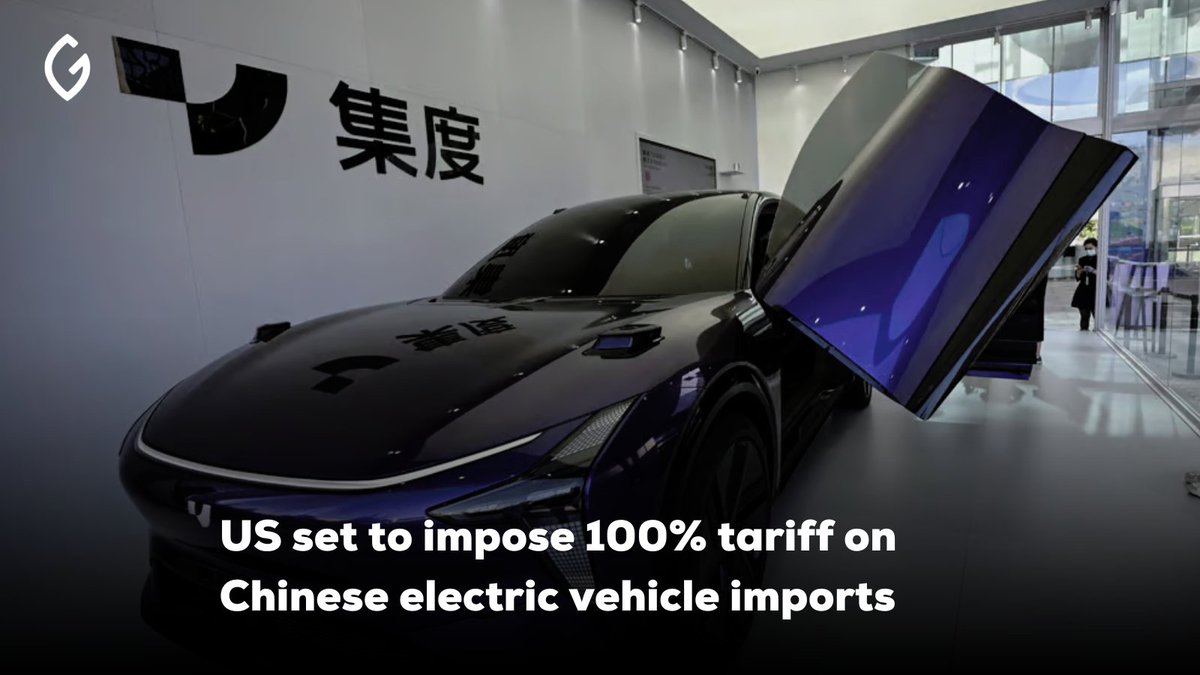
The US government is set to quadruple tariffs on Chinese electric vehicles (EVs) from 25% to 100%.
The decision is being made to protect American automakers from their high-quality, low-cost competition (thanks to heavy Chinese government subsidies).
The Biden administration will also raise tariffs on other clean energy goods sourced from China. This move marks a significant escalation in the US-China trade war, shifting the conflict into the arena of climate technologies.
Critics argue these tariffs are counterproductive to reducing emissions and increasing EV adoption due to the higher costs.
Source: Financial Times
Renewable energy accounted for over 30% of global electricity for the first time in 2023, largely due to a rapid increase in wind and solar power.
The growth in clean electricity has already reduced the growth of fossil fuels by nearly two-thirds in the past decade. Solar power was the main contributor to electricity growth, adding more than twice as much new electricity generation as coal in 2023.
Despite this, fossil fuels still play a significant role in global energy, making up 82% of the world's primary energy.
Source: The Guardian
The G7 energy ministers have agreed to shut down their coal-fired power plants in the first half of the 2030s, marking a significant step towards transitioning away from fossil fuels.
The final political deal will be sealed on Tuesday, with a communique detailing the G7's commitments to decarbonisation.
The ministers are also considering potential restrictions on Russian imports of liquefied natural gas to Europe.
Nuclear energy and biofuels will be mentioned in the final communique as options for decarbonising power generation and transport.
Source: Reuters
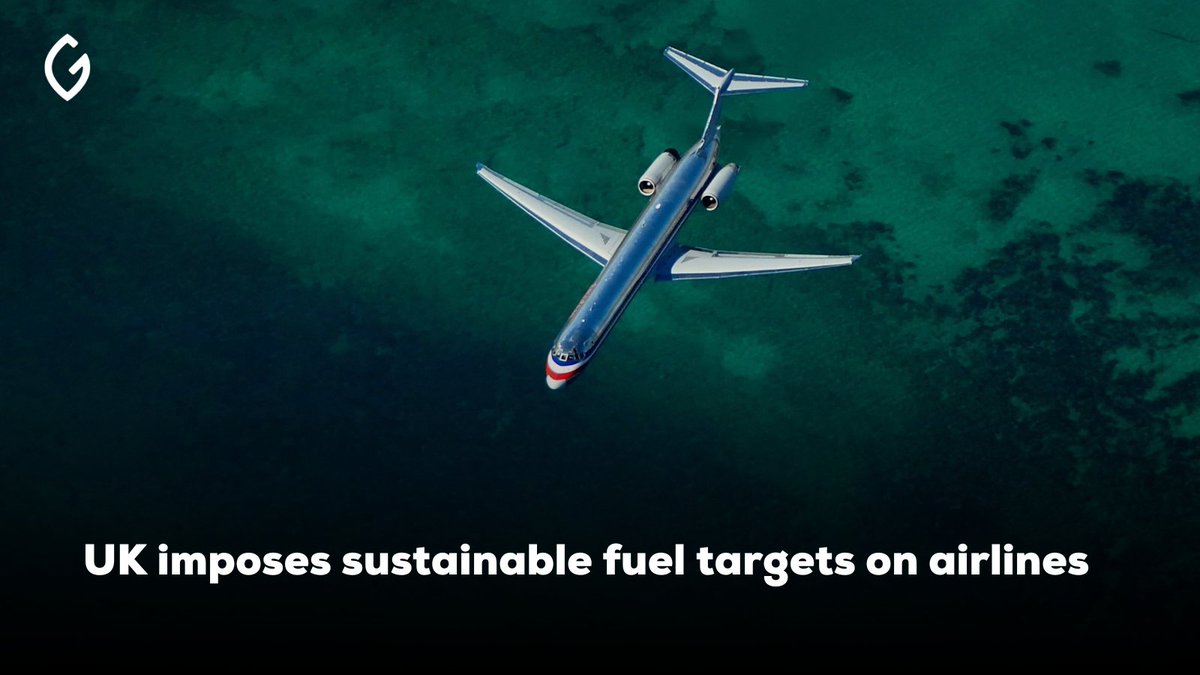
The UK government will require airlines to switch to greener, but more expensive, fuel sources as part of decarbonization efforts.
By 2030, 10% of all jet fuel on UK flights must be sustainable aviation fuels (SAFs), which can emit 70% less carbon dioxide than traditional aviation fuel. However, SAFs are currently three times as expensive as traditional jet fuel and produced in small quantities.
The government hopes that binding targets will encourage fuel companies to produce more SAFs, reducing the price. Critics argue that flying less is the only genuine way to cut emissions.
Source: Financial Times
The European Parliament has approved a law banning certain single-use plastic packaging, including mini shampoo bottles and thin grocery bags, from 2030.
The law, which aims to curb packaging waste, also requires countries to ensure 90% of single-use plastic bottles and cans are collected annually from 2029. Drinks distributors must also ensure that 10% of their products are in reusable packaging from 2030.
However, the law has faced criticism for allowing member states too much flexibility in meeting targets, potentially leading to a complex mix of measures across the EU.
The EU's annual packaging waste grew by around 25% from 2009 to 2021, reaching 84 million tonnes.
Source: EU newsroom
Despite concerns from carmakers, the International Energy Agency (IEA) predicts strong growth in electric vehicle (EV) sales, with battery and hybrid models potentially accounting for one in five cars sold globally.
The IEA expects EV sales to rise more than 20% to reach 17 million this year, and to constitute two-thirds of global sales by 2035.
The report also highlights that almost one in three cars in China and one in five in the US and EU will be electric by 2030, impacting both the auto industry and the energy sector.
The global wind industry installed a record 117 gigawatts (GW) of new capacity in 2021, a 50% increase from the previous year, with China leading the installations.
The top five markets for wind installations were China, followed by the United States, Brazil, Germany and India. China set a new record with 75 GW of new installations commissioned, representing nearly 65% of the global total, while Latin America also experienced record growth - up 21% from the year before - led by Brazil which had 4.8 GW of new installations.
However, to meet climate targets, the industry needs to triple this amount annually by 2030, reaching a cumulative capacity of 3 terawatts (TW).
Source: Reuters
Most US CEOs expect significant returns from sustainability investments within three to five years, according to the 2024 KPMG US CEO Outlook Pulse Survey.
The survey indicated that the CEOs continue to focus on ESG as the initiatives and investments are expected to yield financial returns. According to the study, 55% of CEOs reported that they expect to see “significant returns” from their sustainability investments in 3-5 years, with 19% anticipating significant returns as soon as 1-3 years. Another 25% expect a longer period, predicting 5-7 years.
The survey also assessed CEOs’ key priority areas for their sustainability efforts, with Operations emerging as the top focus area, cited by 42% of respondents, followed by Products at 24%, and governance models and transparency protocols, such as best practice reporting, at 16%.
Source: KPMG
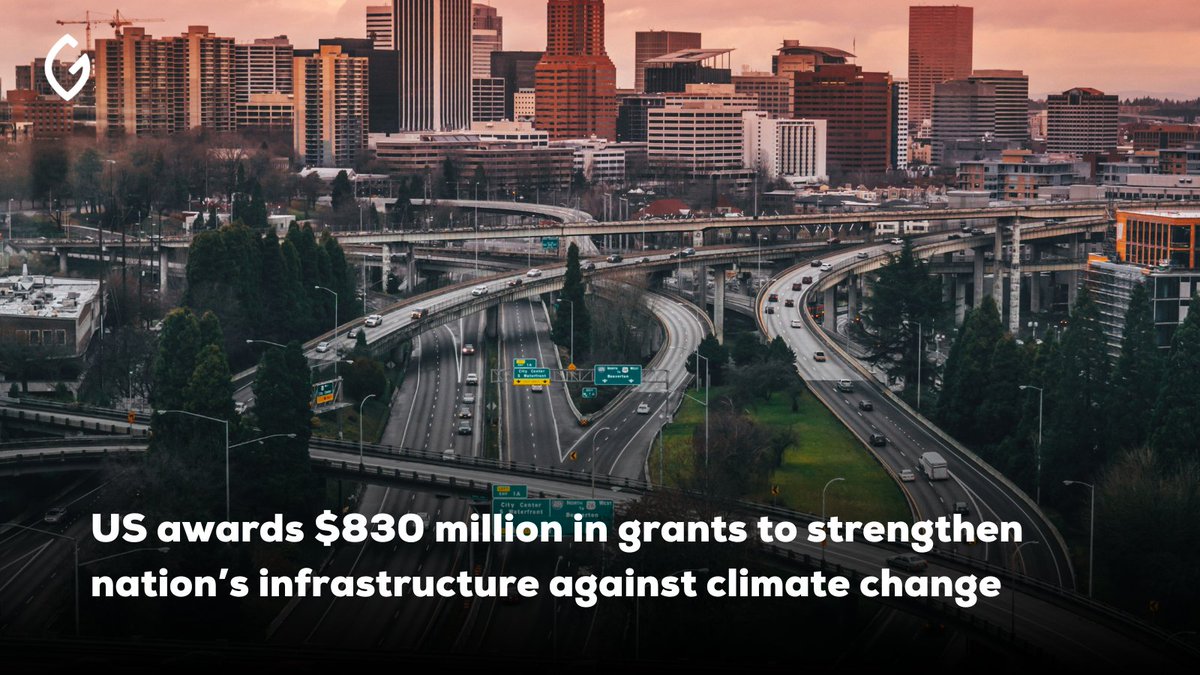
The Biden administration has awarded $830 million in grants to fund 80 projects aimed at fortifying the nation's aging infrastructure against climate change.
The funds, which come from the Bipartisan Infrastructure Law passed in 2021, will be used to improve bridges, roads, ports, rail, transit, and other infrastructure across 37 states, Washington, D.C., and the Virgin Islands.
This is part of a larger federal effort to combat the negative effects of climate change, with President Biden earmarking over $50 billion for climate-related projects.
Source: AP News
The European Court of Human Rights is set to rule on three separate climate cases, marking the first time it will decide if government inaction on climate change violates human rights.
The Strasbourg-based court could also rule that governments are obliged to protect people from climate change. The cases include Portuguese youths suing 32 European countries for failing to prevent climate change, elderly Swiss women arguing their government's inadequate climate efforts put them at risk, and a former French mayor challenging France's refusal to adopt more ambitious climate measures.
If the court rules in favor of three cases claiming rights breaches, individuals could seek redress and compensation if their governments fail to take sufficient climate change prevention measures.
The cases have sparked backlash from the UK Government, with accusations that the court is overstepping its jurisdiction. The rulings will set a precedent for future climate litigation and could potentially force governments to significantly increase their efforts to combat climate change.
Source: The Telegraph
The US administration has announced eight organizations that will manage $20 billion in grants for clean energy and transportation projects in disadvantaged US communities.
The funds, from the Greenhouse Gas Reduction Fund, will be invested in projects such as home energy retrofitting and off-grid renewable energy. The selected organizations will create a national clean financing network expected to reduce or avoid up to 40 million metric tons of climate pollution annually.
The administration reported that the grantees are expected to mobilize almost $7 of private capital for every $1 of federal funds they spend.
Source: US administration newsroom
A group of 57 fossil fuel and cement producers, including nation-states, state-owned firms, and investor-owned companies, were responsible for 80% of the world's CO2 emissions from 2016 to 2022, according to a report by InfluenceMap.
The top three emitters were Saudi Aramco, Gazprom, and Coal India. The report also found that most companies expanded their fossil fuel production since the signing of the U.N. Paris Agreement in 2015, despite commitments to curb climate change.
Since then, while many governments and companies have set tougher emissions targets and rapidly expanded renewable energy, they have also produced and burned more fossil fuels, causing emissions to rise.
Source: Reuters
In 2023, Britain saw a 5.4% decrease in greenhouse gas emissions, largely attributed to reduced gas consumption in electricity and heating. This decline is part of the country's commitment to achieving net zero emissions by 2050, necessitating shifts in consumption and energy production.
Total emissions stood at 384.2 million tonnes, with increased electricity imports from France helping reduce fossil fuel usage. Gas power generation decreased by 21.1%, while emissions from buildings and industrial sectors also saw notable drops of 6.2% and 8% respectively.
Domestic transport emissions also fell by 1.4%, with a substantial 6.6% decrease in carbon dioxide emissions compared to 2022.
Source: Reuters
The US Energy Department has announced $6 billion in federal funding for 33 industrial projects aimed at reducing carbon emissions.
The initiative, the largest industrial decarbonization investment in US history, is expected to leverage a total of $20 billion and eliminate 14 million metric tons of pollution annually.
The projects span industries such as iron and steel, cement, concrete, aluminum, chemicals, food and beverages, pulp and paper, and are expected to support job creation and boost US competitiveness.
Source: US Administration newsroom
Starbucks has certified 6,091 Greener Stores in over 40 markets globally, nearly doubling its portfolio in the past year, as part of its goal to certify 10,000 Greener Stores by 2025. The initiative is aimed at reducing carbon emissions, water usage, and landfill waste by 50% by 2030.
What’s A Greener Store?
Being certified as a Greener Store, means meeting standards across eight environmental impact areas developed in partnership with the World Wildlife Fund (WWF) and SCS Global Services: water stewardship, energy efficiency, waste diversion, renewable energy, responsible materials, engagement, sites, communities, health, and wellbeing.
Soure: Starbucks newsroom
Central banks, including the Bank for International Settlements, the Bank of Spain, Germany's Bundesbank, and the European Central Bank, have utilized an AI project called Gaia to analyze company disclosures on carbon emissions, green bond issuance, and voluntary net-zero commitments.
Gaia overcomes differences in definitions and disclosure frameworks, offering transparency and comparability. The AI system can quickly add new key performance indicators or institutions, enabling large-scale climate risk analysis.
The banks are now suggesting that Gaia could potentially be made publicly available as a web-based service for analysts.
Source: Reuters
The European Council has approved a scaled-back version of the corporate sustainability due diligence directive (CSDDD), a law mandating companies to address their negative impacts on human rights and the environment.
The compromise raises the thresholds for companies covered by the legislation to 1,000 employees and €450 million in revenue, reducing the number of companies in scope by approximately two-thirds.
The law will be phased in over five years and no longer requires companies to promote climate transition plans through financial incentives. Despite criticisms of the changes, the core of the directive remains intact.
Source: EU Newsroom
Germany's greenhouse emissions fell by around 10% in 2023, marking the largest drop since reunification and putting the country on track to meet its 2030 climate targets, according to its Environment Agency.
The decline was attributed to a drop in energy-intensive industries' output and a rise in renewable power production. However, the transport and building sectors failed to meet their emissions targets, posing a risk to the 2030 goals if further decarbonization measures are not implemented.
Source: Reuters
The US Department of Energy is granting $750 million to projects across 24 states to build capacity for clean hydrogen production and usage.
The funding comes from the 2021 Bipartisan Infrastructure Law and will support 52 projects focusing on various aspects of the hydrogen industry. This initiative is part of the National Clean Hydrogen Strategy, aiming to produce 10 million tonnes of clean hydrogen by 2030.
Source: US Administration
Shell has revised its 2030 carbon reduction target and eliminated its 2035 goal, citing lower power sales and high gas demand.
The changes are part of CEO Wael Sawan's strategy to focus on high-margin projects, steady oil output, and increased natural gas production.
Shell now aims for a 15-20% reduction in net carbon intensity of its energy products by 2030, down from the previous 20% target.
The company also introduced a new goal to reduce overall emissions from oil products sold to customers by 15-20% by 2030.
Source: Reuters