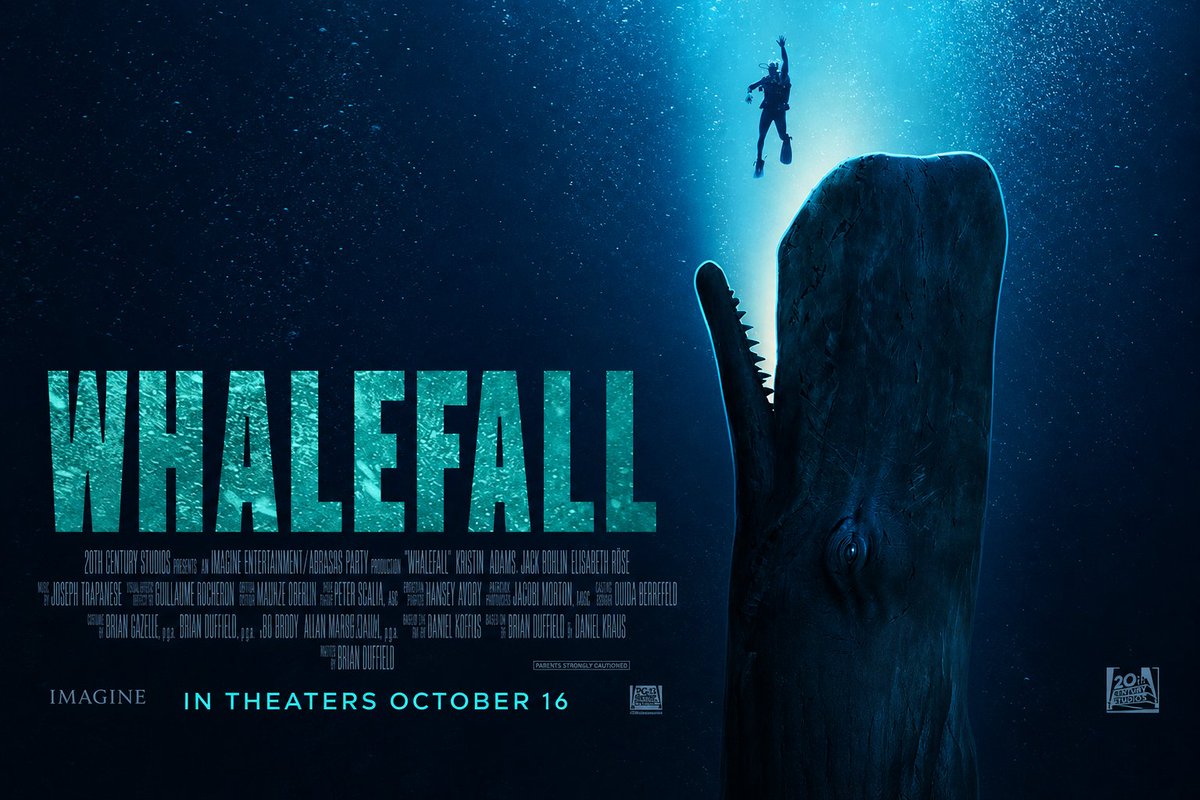
Getting swallowed by a sperm whale with one hour of oxygen left.
Whalefall might be the survival thriller to watch out for.
If you haven't seen the trailer, check it out and also 👇
Read more: https://t.co/Ms5zEuOf0V
#Bitcoin finally reached $79,000! 🚀
As promised, I want to help someone by giving away 0.1 BTC (about $7,900).
Just like this post, retweet it, and comment “done.”
One random person will win in 24 hours. 🎁
Good luck everyone! 🍀
Another small but meaningful step for @BeldexCoin adoption
$BDX is now live on @SwftCoin Wallet and @Bridgersxyz, making it easier to access and move BDX across the ecosystem
Infrastructure like this may not get the most attention, but better wallet and bridging access is what makes a network easier for people to actually use
More access, fewer friction points
That’s how adoption grows quietly in the background
Cifer is taking a very different approach to distributing some of its Ghosts.
Instead of announcing one fixed time and having everyone rush toward it, they’re introducing surprise claim windows.
Up to 5 surprise claim links can drop every day, and for each one, the first wallet to open the link and sign gets the free mint.
No fixed schedule.
No countdown that everyone can prepare around.
You simply have to be there when it happens.
I actually find the mechanic interesting because it changes what “participation” looks like.
It’s not just about seeing an announcement and coming back hours later.
The distribution itself rewards attention and timing.
And there’s another detail worth separating from the noise:
this is about access to a free mint, not a promise of what that NFT will be worth.
That’s an important distinction in Web3, especially when anything involving NFTs starts getting discussed.
@cifer_security’s Ghost ecosystem has several different layers;GHOST campaign credit, Ghost Eggs, Fantoms and Ghosts.
So understanding how something is distributed is just as important as understanding what it is.
Today’s pin adds another mechanism to that ecosystem:
surprise distribution.
You don’t know exactly when the next opportunity appears.
You just know that the drops are happening.
the most dangerous thing a wellness AI can remember is a guess that slowly becomes a fact.
@sleepagotchi's latest point is that agents need context: health data, patterns and history.
agree.
but good context also needs provenance.
imagine:
device: bedtime shifted 75 minutes
you: one off event.
AI: routine may be changing.
those aren't the same kind of information.
one was measured.
one was reported.
one was inferred.
if an agent stores all three as equally true, temporary assumptions can quietly shape future recommendations.
I'd want the context layer to remember where every important belief came from and let me correct the inferred ones.
better personalization isnt just remembering more about you.
its knowing the difference between:
I observed this
and
I think this means…
thats the kind of memory i'd trust.
would you rather correct a bad recommendation, or the assumption that caused it?