I don't tweet much. We ALL must go to church this Sunday. Even if you're not Christian, or agnostic, you gotta go. Just stay with us. We got you, but you gotta come. This is 911.. you gotta come now
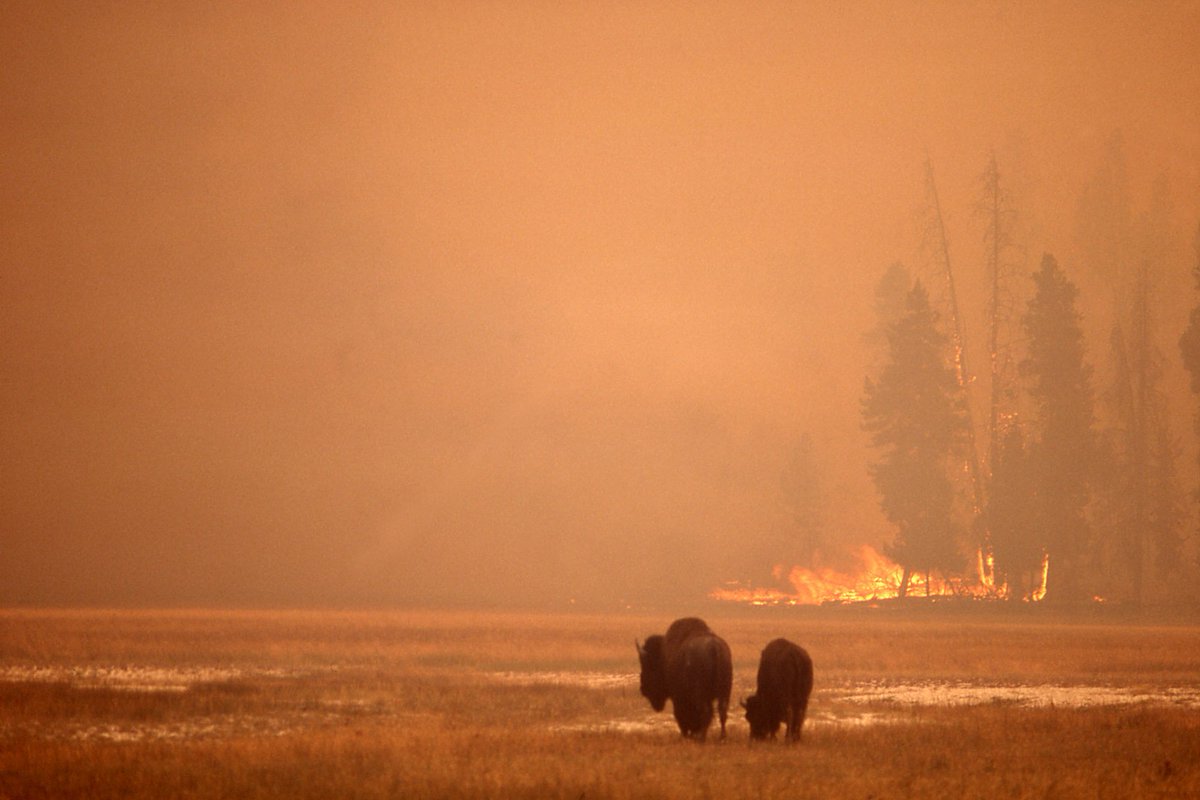
In the summer of 1988, wildfire swept across approximately 36% of Yellowstone National Park. The largest fires in the park's recorded history. The news coverage was apocalyptic. Commentators predicted the permanent destruction of the ecosystem.
The bison of Yellowstone, which had been reintroduced after near-extinction a century earlier, moved ahead of the flames.
They knew. Nobody knows exactly how they knew. They moved in the right direction at the right time.
After the fire passed, they returned to the burnt ground within days. The ash was rich in minerals. The fresh growth pushing up through the blackened soil was, by all accounts, the sweetest grass of the year.
The bison grazed it hard. Their grazing stimulated regrowth. Their hooves worked the ash into the soil. Their dung replaced the burnt organic matter.
The parts of Yellowstone that recovered fastest after the 1988 fires were the parts the bison had grazed.
The parts that took longest to recover were the parts the bison could not reach, or had been fenced out of.
Fire is part of a grassland ecosystem.
Bison are part of a grassland ecosystem.
The two work together.
The people who thought Yellowstone was destroyed in 1988 did not understand either fire or bison, which is roughly the level of ecological literacy currently driving policy discussions about ruminants in general.
Yellowstone is fine.
The bison are fine.
The policy discussions, less so.
@Zo_bo_fo_sho Was this before or after you were on Twitter? I think I first saw you a long time ago.. but the handle ZO BO FO SHO (coolest on X) and your cool posts... just too cool!!!!
Always good to see all the blessings!
People ask me why I'm so passionate about sheep.
Here's why.
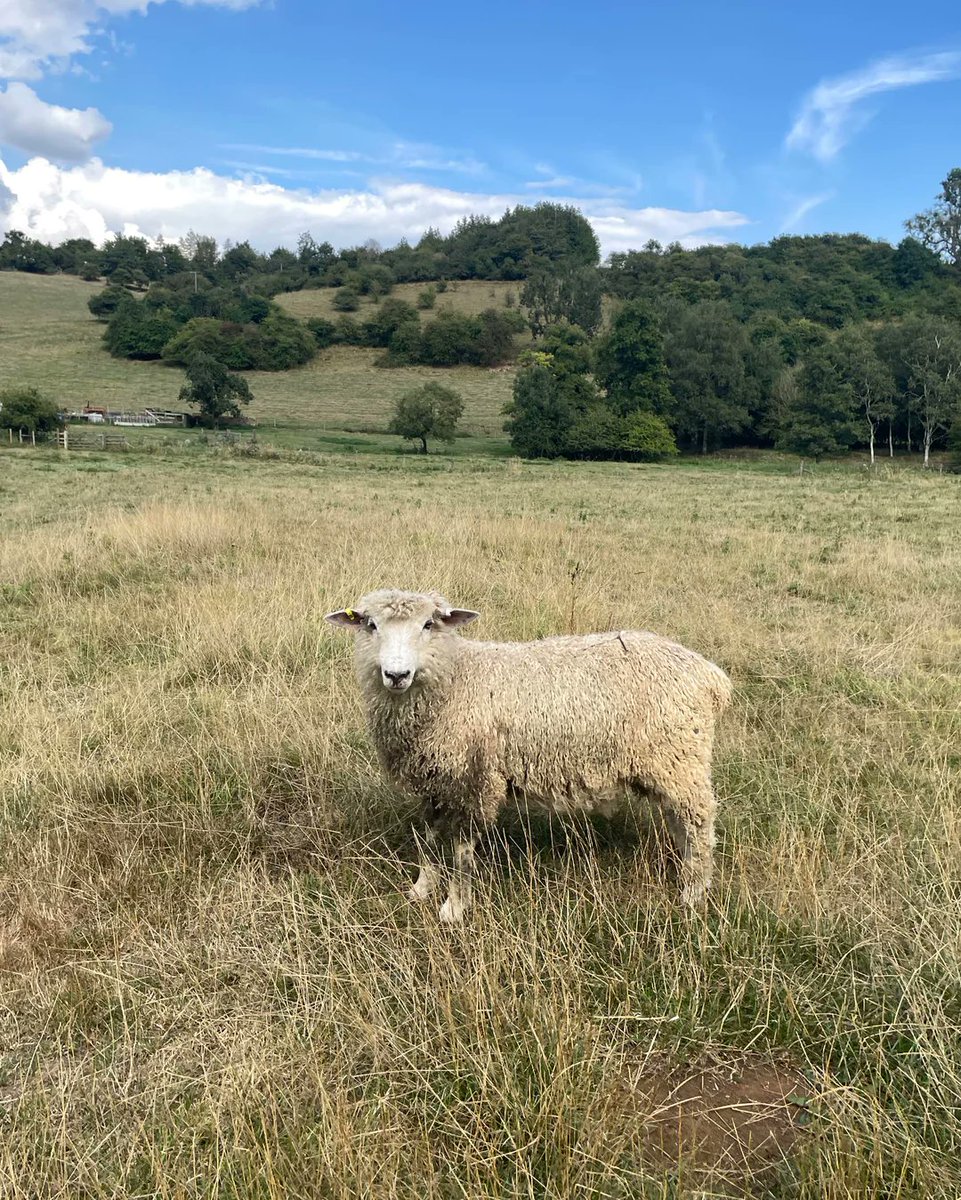
A sheep wakes up on a hillside nothing else will live on. 32-degree slopes. Acidic soil. Wind off the Atlantic. Rain in quantities most European crops would consider insulting. She walks out, eats grass nobody asked her to grow, and turns it into meat, milk, wool, lanolin, and the maintained landscape beneath her feet.
She requires no pesticides. No irrigation. No imported feed. No lab. No patent.
She takes the sun, the rain, the soil, and the specific botanical composition of a particular upland, and produces the leanest, most nutritionally complete meat in the British food supply. Every gram of lamb contains complete protein, zinc, iron, B12, selenium, and the conjugated linoleic acid your metabolism actually asked for.
She also produces, as a side effect, the landscape the tourists photograph. The wildflowers the campaigners claim to care about. The birdlife the charities fundraise on. The stone walls the poets write about. The curlew, the skylark, the golden plover, the red grouse, the hen harrier. None of it exists without her.
And we have spent the last fifty years being told this animal is wrecking the countryside.
The audacity.
I'll take my chances with the creature that has been shaping these hills for ten thousand years over the pea protein isolate that was patented in 2017.
Crazy thought. The folks that ruled this land (Colorado) before our folks liked to fight.. Doing battle, risking injury, even death. Best I've learned, they just did it just to do it.. for the Glory of Battle.
My land too, and I like doing battle.
For The King. 'Cause I know it's rigged.. I'll win.. King says--
#JesusIsRisen
@Zo_bo_fo_sho Or some might think "very real and authentic.. and holy!"
I've always been enriched by your posts! And the coolest handle in all of Twitterdom! Fo sho!!!
@Joeinblack Thanks for passing on the chart! I've been hunting a chart like this for years! I'd also like to learn how these units/battalions/divisions, or Orders, have so successfully furthered the mission of the Church Militant.
Guess a fella shoulda oughta maybe start astudyin'!
People laugh at carnivores for not eating enough plants.
Fair enough. I'll be honest. I eat a lot of plants.
Different plants, actually. A variety. Which apparently matters. Different plants give you different nutrients, and that variety is the whole point.
There's the ryegrass, obviously. Always the ryegrass. That's your baseline. But then there's the clover, which is where you're picking up your nitrogen-fixing goodness and some excellent trace minerals. Red clover specifically, if you can get it.
Then there's plantain, not the banana, the herb, which is genuinely impressive for zinc and silica and gets unfairly overlooked. Yarrow for the flavonoids. Chicory for the deep-rooted minerals that the shallow-rooted grasses can't even reach because the roots go down nearly a metre into soil that most plants have never heard of. Timothy grass for the fibre.
Then maybe some dandelion where the hedgerow meets the field, which is doing things for liver function that no supplement manufacturer has had the good sense to bottle yet.
Different plants, different nutrients, different soil depths. The variety is the mechanism. The whole is considerably greater than the sum of its parts.
The animal eating all of this on your behalf is a cow.
You eat the cow.
Apparently this is not how the diversity of plant nutrition was supposed to work. And yet.
@SamaHoole And no taste to it. Just for rabbits and coyotes. Maybe just another Crack we like to smoke as Americans. Can't explain this one my friend. Just bat sh*t crazy
Let this soak in a bit, my beloved fellow Americans. Plant a garden. Learn to can. Maybe we should think before letting our appetites wreak devastation.
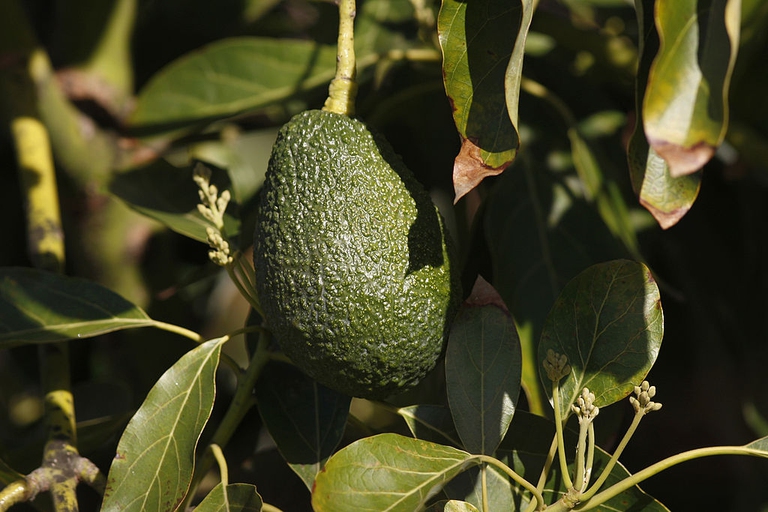
The avocado has been granted a cultural status that its environmental record does not support.
It is green. It photographs well. It has a buttery texture that food stylists love. It appears on toast in restaurants with exposed brickwork and pendant lighting and a menu that uses the word "artisan" without apparent embarrassment. It is associated with a particular kind of urban, health-conscious, ethically-minded consumer who recycles and cycles to work and has strong opinions about palm oil.
In Michoacán, Mexico, where the majority of the world's avocado supply originates, the industry has become substantially controlled by organised criminal networks who have found that an avocado grove is more profitable, more defensible, and considerably more socially acceptable than most of the other things they might otherwise be doing.
Farmers who refuse to cooperate with extortion have been murdered. This is not a conspiracy theory. It has been reported by the New York Times, the Guardian, and every major news organisation that covers Mexico. The Mexican army has been deployed to avocado-growing regions because of the level of cartel involvement.
In Chile, avocado production in the Petorca region has been directly linked to the drying up of rivers that local communities depend on for drinking water. Investigations found illegal water extraction by avocado farms, with residents receiving water by tanker lorry while the orchards were irrigated. The people went without water so that the avocado could travel to the brunch plates of people who were eating it because they cared about the environment.
The avocado does not have an environmental halo. The avocado has a very good publicist.
@Joeinblack Don't argue with the, dear Father.. it's the equivalent of a Jedi trying to explain to a fella still throwin rocks to try to kill (and little rocks at that)!
If 2.4 million years of human evolution were laid out over the 24 hours of a clock:
We've been eating red meat for 24 hours
We've been eating grains for 6 minutes
We've been eating seed oils for 4 seconds
And we're meant to believe the "settled science" that says it's the red meat that's causing the chronic disease epidemic that burst up over the last 4 seconds on the human clock.
Goats are arguably the most resourceful food animal on earth, and they are almost completely absent from any serious conversation about sustainable food production.
The goat is a browser, not a grazer. Where a cow and sheep prefer grass, a goat prefers scrub, brush, bramble, and the lower branches of trees. It eats the plants that cattle won't touch, on land that sheep won't use, on terrain that's too difficult for either.
This makes the goat the ideal animal for reclaiming marginal land. Overgrown hillsides, scrubby valleys, former industrial land reverting to bramble and thistle: the goat will clear it. Not by destroying it, but by browsing it back to a state where grass can establish, which is then grazed by sheep or cattle.
The goat is the pioneer species of ruminant agriculture.
Goat milk has a smaller fat globule size than cow's milk, making it naturally easier to digest. Its casein protein structure is closer to human milk. It contains higher levels of short and medium-chain fatty acids. People who cannot tolerate cow dairy frequently tolerate goat dairy without issue.
Goat meat, chevon, is the most widely consumed meat protein in the world. More humans eat goat than eat pork or beef. It is virtually unknown in Western supermarkets.
The animals that feed the majority of the world's population are essentially invisible in Western food discourse.
Because Western food discourse is conducted by people who shop in supermarkets where goat meat isn't stocked.
The goat needs a marketing budget and slightly better PR.
The goat does not need defending nutritionally.
The nutritional case is solid.
The animal has been keeping humans alive for ten thousand years.
Mostly just nobody in a position to write about food has noticed.