“Pharmacist & longevity scientist | Author | Making the 12 Hallmarks of Aging, mitochondria, nutraceuticals & post-viral science actionable for your healthspan
A concept I keep returning to: Personal Viral Burden. Not the last cold you caught, but the lifelong cumulative load of the viruses that never leave: CMV, EBV, HHV-6, VZV, HSV. Why PVB belongs in the longevity conversation.
These latent viruses live in your cells for life and reactivate now and then. By 70, CMV is detectable in essentially everyone, and CMV-specific T cells can swell to a quarter or more of your CD8 pool. That is important immune bandwidth spent guarding old enemies.
2025 work in older adults links higher latent viral burden to more inflammation and worse cardiovascular outcomes. The cost is not any single infection. It is decades of low-grade immune tax that compounds quietly.
Thread two: immunometabolism. 2025 and 2026 research shows aging T cells shift how they burn fuel, lose metabolic flexibility, and respond worse to new threats and to vaccines. How an immune cell powers itself shapes how well it fights.
Thread three: a May 2026 Frontiers in Immunology multi-omics study found long COVID carries a persistent signature of suppressed mitochondrial OXPHOS across tissues, out to 12 months. The cellular power supply stays dialled down post infection.
The connective tissue across all three: immune resilience is deeply intertwined with metabolism. Mitochondria fuel T cell function. Keeping the power plants healthy helps you defend better against both new infections and reactivating old ones.
Which is why I treat viral burden as a longevity variable, not just an infection-by-infection event. It is worth thinking about, and increasingly worth measuring.
Taurine was the longevity darling of 2023 (Singh et al., Science). Here is the uncomfortable update worth sitting with: a 2025 NIH replication in Science found taurine levels often rise, not fall, with age.
The follow-up from de Cabo and colleagues, plus a 2025 Aging Cell human study, found circulating taurine was not reliably tied to muscle, strength or mitochondrial function.
Does that make taurine useless? No. It means the deficiency-drives-aging claim was premature. I still take 1 to 2g a day for its cardiovascular and metabolic benefits.
Contrast that with NMN, where human data keeps firming up. A January 2026 randomised trial in 65 adults showed 14 days of NMN roughly doubled circulating NAD+, comparable to NR, with a clean safety record up to 1,250mg a day.
And fucoidan, the sulphated polysaccharide from brown seaweed, activated SIRT6 and extended male mouse lifespan by 13% in 2025 Rochester work. Human stem cell mobilisation data goes back to Irhimeh (2007). I fish the same oceans it comes from.
The pattern that everyone in the space needs to be mindful of ... separate the mouse headline from the human evidence, then watch what survives. NMN and fucoidan are aging well. Taurine's longevity halo has dimmed even as its other benefits stand.
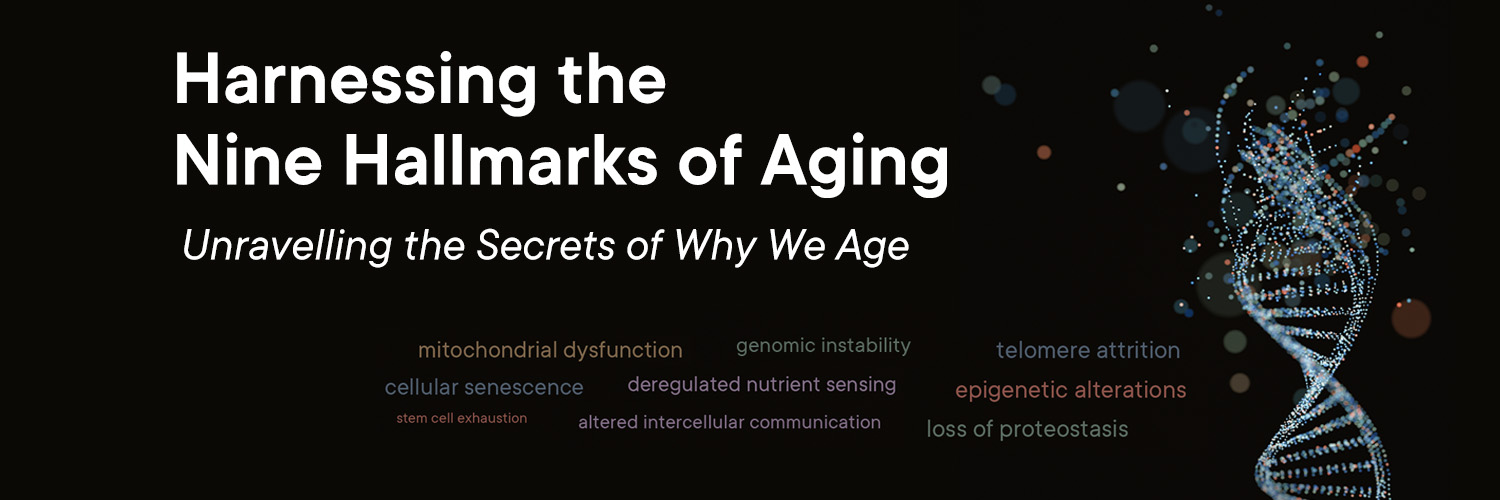
Epigenetic alterations are the Hallmark of Aging (Lopez-Otin et al., Cell 2023) I find most hopeful when it comes to the potential for significant longevity outcomes.
Your DNA barely changes across life. What changes is how it is read. And reading is something you can influence.
Think of your genome as the hardware and the epigenome as the software: DNA methylation, histone marks and chromatin structure decide which genes are switched on or off. With age that software drifts. The right genes get muted, the wrong ones get noisy.
This drift is exactly what biological age tests read. Epigenetic clocks (Horvath, PhenoAge, GrimAge) measure methylation patterns to estimate how fast you are aging, often more honestly than the candles on your cake.
Here is the part that changes everything: it is reversible. Partial reprogramming with Yamanaka factors can lower epigenetic age in cells, and far more practically, lifestyle moves these clocks too. A 2026 study showed six months of endurance training reversed GrimAge in middle-aged adults.
What helps day to day: feed methylation (folate and B12 are methyl donors, which is why they sit in my Cel1), move regularly, protect sleep, and cut the two big accelerators, smoking and excess alcohol, both of which age the methylome fast.
The lever I lean on is fasting. Prolonged fasting drives autophagy and stem cell renewal (Valter Longo's work), and the 4-day water fast I run each quarter is my deliberate attempt to reset some of that accumulated epigenetic noise.
Our 2025 trial (Macpherson et al., Aging, PMID 40096467) measured epigenetic clocks directly and saw biological age fall over twelve months.
The headline for me is not the number. It is that this hallmark bends positively from both lifestyle and augmenting lifestyle with clinically validated supplementation.
Personal Viral Burden update: HSV-1 just gained another mechanistic link to Alzheimer's. New 2025 research shows viral proteins activate transposable elements in neurons, accelerating brain degeneration.
Pooled data from 2025 meta-analysis: HSV1/2 clinical episode increases all-cause dementia hazard by ~36% (HR 1.36, 95% CI 1.01-1.83). Antiviral prescriptions (valacyclovir, acyclovir) associated with lower AD incidence, especially in women and those over 75.
Counterpoint: a 2025 randomised trial of antivirals in early Alzheimer's failed to slow progression. Prevention may be easier than reversal. Treat the infection early; do not wait until cognitive decline is established.
Immunometabolism: T cells and macrophages run on mitochondria. Aged T cells show reduced respiratory reserve and impaired metabolic flexibility. The senescence-metabolism axis is now an active therapeutic target.
Long COVID: 2026 Frontiers in Immunology multi-omics found sustained down regulation of oxidative phosphorylation in PBMCs out to 12 months post-infection.
Three practical levers: get the shingles vaccine (Eyting et al., Nature 2025: ~20% lower dementia risk in recipients). Support mitochondrial function relentlessly. Treat HSV reactivations early, not late.
The immune system is a metabolic organ that happens to do defence. Anything that supports mitochondrial health supports immune resilience.
Three lifestyle inputs that almost everyone under-loads relative to their actual evidence base: resistance training, sauna and sleep architecture. All of them outperform the supplement bottle.
Resistance training: not optional past 50. Muscle is an endocrine organ. Sarcopenia predicts frailty, fall risk and all-cause mortality. Twice a week.
Sauna: Finnish cohort data shows dose-dependent reductions in cardiovascular events and all-cause mortality at 4 to 7 sessions per week, 20 minutes per session. Mechanism: heat shock proteins, endothelial function, cardiovascular load similar to moderate exercise.
Sleep: Sleep architecture beats sleep duration. Eight hours of fragmented sleep is not the same as eight hours of continuous sleep. DNA repair, glymphatic clearance and growth hormone pulses all run during deep sleep.
Your supplement stack augments your lifestyle. Anyone depending on a supplement protocol ahead of healthy lifestyle habits will get a smaller return on both.
The strongest human telomere data for any single supplement class sits with astragalus-derived compounds. New 2025 meta-analysis: 8 RCTs, ~750 participants on TA-65 (cycloastragenol).
Result: statistically significant telomere elongation. The effect was larger in adults over 60. Earlier trials also showed a drop in immunosenescent CD8+ CD28- T cells.
Mechanism: cycloastragenol and astragaloside IV are saponins from astragalus root. They activate telomerase modestly in adult cells. The mouse data showed extended healthspan without increased cancer incidence.
An independent 2024 trial in 40 healthy middle-aged adults on an astragalus-based complex found significant increases in median and short telomere length over 6 months. In the placebo group there was no change.
Caveat. Human safety data is still relatively short term. The cancer-incidence question is the right one to keep asking. Use with normal screening.
Astragaloside IV sits in Cel1 alongside 2-HOBA, rutin, vitamin C, methylfolate, B12, zinc and selenium. The stack is designed to reduce damage load AND support telomere maintenance, not just one or the other.
Telomeres are the protective caps at the ends of every chromosome. Every cell division shortens them by 50 to 100 base pairs. When telomeres get critically short, the cell stops dividing or self-destructs. This is Hallmark 2 of 12 in the Lopez-Otin framework.
Telomere length is one of the better biomarkers of biological age. Short telomeres in immune cells predict cardiovascular disease, dementia and shorter life expectancy.
Telomerase is the enzyme that rebuilds telomeres. Most adult cells have minimal activity, however, stem cells have more. Cancer cells can reactivate telomerase, which is why telomerase activation has always been a balance.
The lifestyle data is now solid. A 2025 meta-analysis in Frontiers in Physiology confirmed that exercise significantly maintains telomere length and enhances telomerase activity. Endurance and resistance both contribute.
Meditation works, but the dose matters. The 18-month Age-Well Trial found no group-level telomere gain, yet greater practice commitment was protective.
Dietary interventions that support telomere length: Mediterranean, plant-forward, polyphenol-rich and avoid ultra-processed food.
The supplement aisle gets the headlines. But its your daily habits that do the real work.
My weekly stack: swim every second day, calisthenics on the alternate days, walk on weekends, sauna 5x, time-restricted eating, 4-day water fast every quarter.
I choose swimming over running as it delivers the same cardiovascular load but with much less joint impact and injuries. I get a brain and mood boost, the same brain effect runners chase.
Calisthenics every other day with a mix of exercises that revolve around push, pull, squat, hinge. My goal is to retail as much functional strength as possible to protect me as I head towards my 70s and 80s in a few decades time. Every gain you make in muscle mass flows through to other longevity elements you build into your life. And a reminder that efforts here are not about vanity but about building metabolic capacity and flexiblity as I age.
I also hit he Sauna 5x a week. Laukkanen's Finnish cohort: 4-7 sessions per week associated with about 40% lower cardiovascular mortality and 66% lower dementia risk (JAMA Intern Med 2015; Age and Ageing 2017). Benefits from sitting down in the quiet and enjoying the heat feel like a cheat code.
Once a quarter I step away from the dining room table for a 4-day water fast. There are so many benefits to this and especially so for someone with an autoimmune condition. Crohn's in my case. Drops IGF-1, triggers autophagy, supports HSC regeneration (Cheng et al., Cell Stem Cell, 2014). The reset I cannot replicate any other way. BUT - it does need medical supervision if you have health issues. Discuss with your doctor and rule out any issues ahead of tackling your fast.
And it goes without saying but saying it anyway ...
Supplements augment all this. They do not replace it.
Every cell in your body has a recycling crew. It pulls damaged proteins, broken organelles and clumped aggregates out of circulation, breaks them down, and reuses the parts. With age the your recycling crew slows down. That is Hallmark #5 of Aging: disabled macroautophagy.
Macroautophagy is a process where the cell wraps damaged material in a membrane, fuses it with a lysosome (the stomach of your cell), and digests it. Lopez-Otin et al. (Cell, 2023) made it a Hallmark because the failure of this process drives so many of the others.
When autophagy stalls, junk accumulates. Misfolded proteins, broken mitochondria, oxidised lipids all park up inside your cells and compromise its function. Cells become inflamed, senescent, or both. Inflammaging, neurodegeneration, sarcopenia and metabolic disease all share this signature.
What turns autophagy on? Fasting, exercise, caloric restriction, and sleep. What turns it off? Constant feeding, chronic high insulin, sedentary days.
Compounds with real autophagy data in humans include; spermidine (cognitive trials underway), urolithin A for mitophagy (Liu et al., Nature Aging 2025), polyphenols like oleuropein and EGCG.
But none of them outrank a 16-hour eating window or a 4-day water fast.
Lifelong viral burden, CMV, EBV, HHV-6, VZV, HSV, is one of the most under-discussed drivers of aging. I call it Personal Viral Burden.
CMV infects 40 to 95% of adults globally.
CMV is asymptomatic in most but it quietly affects your immune system over decades.
2025 MARK-AGE data shows that a chronic CMV infection drives immunosenescence, and reactivation drives inflammation and oxidative stress. CMV seropositivity is linked to higher epigenetic age acceleration.
It does this because CMV chronically expands memory T cell populations and shrinks the naive T cell repertoire. This means you have less immune bandwidth to fight new infections later in life.
The longevity lifestyle stack that the evidence actually supports is unglamorous.
Move daily. Sleep 7 to 8 hours. Time restricted easting. Get hot regularly. Get cold occasionally. Stay connected to people you care about.
I swim every second day. Full-body exercise that is gentle on joints at 56, drives BDNF, supports cardiovascular health without compounding inflammation the way long runs sometimes can.
Alternate days: calisthenics. Push-ups, pull-ups, dips, squats. Bodyweight strength holds up into your 80s if you keep doing it.
Sauna 5x a week. Heat shock proteins, endothelial function, anti-inflammatory effects. Finnish cohort: 4 to 7 sessions a week was 50% lower fatal cardiovascular event risk vs once a week.
Quarterly 4-day water fast. The single most powerful biological reset I have found.
Then, once you have your longevity lifestyle locked in, it's worth exploring some of the supplement protocols that support healthspan extension.
Two NMN trials landed in early 2026. 1,000 mg/day for 14 days doubled NAD+ in healthy adults. 1,200 mg/day suppressed exercise-induced inflammation.
NAD+ is the most abundant molecule in your body after water giving us a fairly clear indicator of its importance. It's levels in your cells will have dropped in half by the time you are 60.
NAD+ replenishment is moving from theory to dose-response data and with all the research breadcrumbs lining up behind this work, it is looking more and more like NAD+ precursor supplementation is a worthwhile addition to your morning regime.
Some of your cells refuse to die. They stop dividing, sit in your tissues, and pump out inflammation. The longevity field calls them senescent cells, or zombie cells. Cellular Senescence is Hallmark 8 of aging. Lopez-Otin et al., Cell 2023.
Drivers: DNA damage, shortened telomeres, oxidative stress, oncogene activation, chronic inflammation. Senescence is partly a defence. It stops damaged cells from dividing into cancers. The problem is they linger.
The real cost is when these cells move towards SASP, the senescence-associated secretory phenotype. In this state a soup of inflammatory cytokines, MMPs, and growth factors is released and it ages every tissue around the senescent cell. This becomes part of a mechanistic root of inflammaging, as SASP cells grow in number as we age.
Senolytics target this directly. Fisetin, quercetin, dasatinib in research settings. A 2025 paper showed intermittent fisetin matched genetic clearance of senescent cells on physical function in aged mice.
Lifestyle reduces senescent cell load too. Exercise lowers senescence markers and improves immune surveillance. Fasting triggers autophagy that helps clear senescent cells. Sleep is when NK cells and T cells do most of the clearing.
The fact that we have no broad-spectrum antivirals in 2026 is a civilizational embarrassment.
After penicillin, the next trillion dollars of medical R&D should’ve gone to pan-viral therapeutics.
Instead our treatment plan is still “wait and see if you die”
Mitochondrial dysfunction is a connector Hallmark. It sits upstream of inflammation, senescence, and epigenetic drift. Fix your cellular engines and the downstream noise quietens. This is the topic I have spent close to 15 years of my career on.
As we age our NAD+/NADH ratio falls, mitochondrial activity drops, mitophagy slows, mtDNA accumulates damage, and ROS leakage rises. The cell becomes simultaneously energy-poor and oxidatively-loud. Not a great combination if you are wanting to stay healthy as you age.
These issues compound over time to compromise your health: mtDNA fragments leak into the cytosol, triggering the inflammasome, and contribute to inflammaging. Senescent cells accumulate and your stem cell function declines.
There is a Long COVID overlap: 2024 Nature Communications data showed reduced mitochondrial activity 6+ months after infection. New 2026 multi-omics work confirms persistent mitochondrial repression up to 12 months post-severe COVID. Post-viral mitochondria are accelerated aging mitochondria.
What helps: aerobic training (mitochondrial biogenesis via PGC-1α), heat (sauna, HSP-mediated mitochondrial quality control), fasting and time restricted eating (mitophagy), CoQ10/mitoquinol for electron transport support, and supplements like NAD precursors and urolithin A.
I take mitoquinol in my STEM+ stack, the mitochondria-targeted antioxidant I worked on for years. I pair it with sea buckthorn proanthocyanidins, fucoidan, oleuropein, and vitamin D3. Plus the rest of the Cel System.
Personal Viral Burden is a concept I have been developing: the lifelong, cumulative immunological cost of every persistent virus you carry. CMV, EBV, HHV-6, VZV, HSV-1, HSV-2, COVID. None of them “clear.” All of them tax your immune system for the rest of your life.
The latest 2026 data: among the major persistent viruses, CMV shows the strongest, most consistent association with epigenetic age acceleration. CMV-driven CD8+ expansion crowds out naïve T cell space and blunts response to new vaccines.
1 in 5 adults walks around with an Absolute Lymphocyte Count below 2000 cells/µL, which is associated with significantly elevated all-cause mortality. It is on every standard CBC. Most people have never been told their number.
What raises ALC: regular moderate exercise, zinc and selenium sufficiency, vitamin D in range, sleep, and reducing chronic viral reactivation pressure. What lowers it: chronic stress, smoking, untreated sleep apnea, persistent gut inflammation.
On the gut piece, I have Crohn’s. The gut wall, the microbiome, and immune training are all tightly connected. Inflammation in the gut is an immunological issue for me that will compound with my viral burden over decades.
Long COVID 2026 update: a new Frontiers in Immunology multi-omics paper shows persistent mitochondrial repression in white blood cells up to 12 months post-severe infection, regardless of long COVID status. Post-viral immuno-metabolic damage appears to be the new normal.
Get an ALC number on your next blood draw, what you measure you can manage. Optimise your sleep, zinc, selenium, and vitamin D intake. Proactively manage gut inflammation. Take any acute viral illness seriously and rest properly. Your future immune system is built by the choices you make this decade.
The hierarchy of longevity inputs, from biggest to smallest: don’t smoke, sleep 7+ hours, train regularly, eat plants, keep visceral fat low, manage stress, and foster deep social networks and connections. Once you have your longevity lifestyle locked in then consider adding evidence based supplements.
What I do: swim every second day (joint-friendly, BDNF, full-body), calisthenics on alternate days (functional strength), walks on weekends. Sauna 5x a week. Time-restricted eating daily. A 4-day water fast each quarter.
Things I have stopped doing: long slow runs (joint cost), late dinners (sleep cost), and chasing every new biohacking trend (focus cost).
The day to day boring lifestyle inputs do most of the heavy lifting. The exciting inputs do the last 10%. Most people invert that ratio and wonder why nothing moves.
If you do nothing else this week: walk after dinner, swap one screen evening for an early night, and put one full glass of water on your desk before each meal. Three changes that are easy, cost you nothing and the benefits compound for decades.