1/3
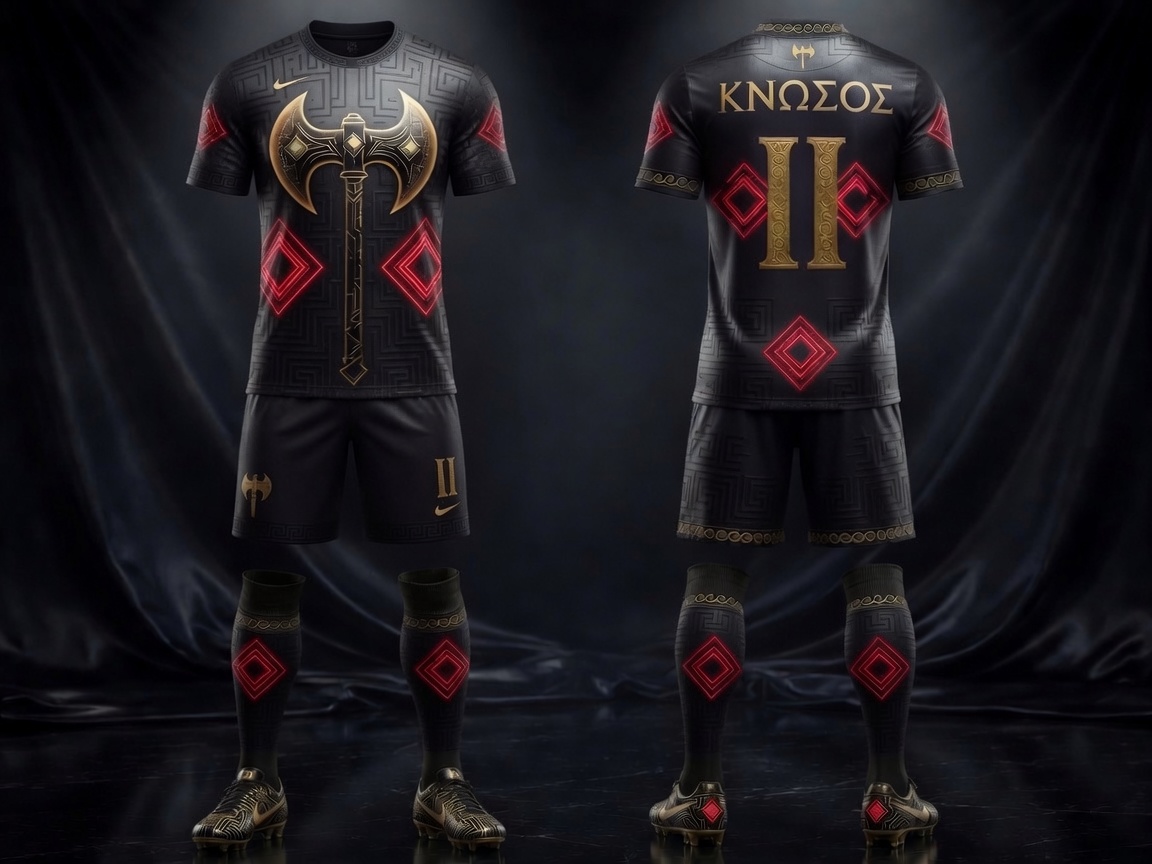
July 4th, 2004. Nobody gave Greece a chance. They beat France, the Czechs, then the hosts Portugal, twice, and became champions of Europe.
The next golden generation is coming. Some kit ideas for the comeback.
#GreekFootball#Euro2004#FootballKit#Hellas#GreekNationalTeam
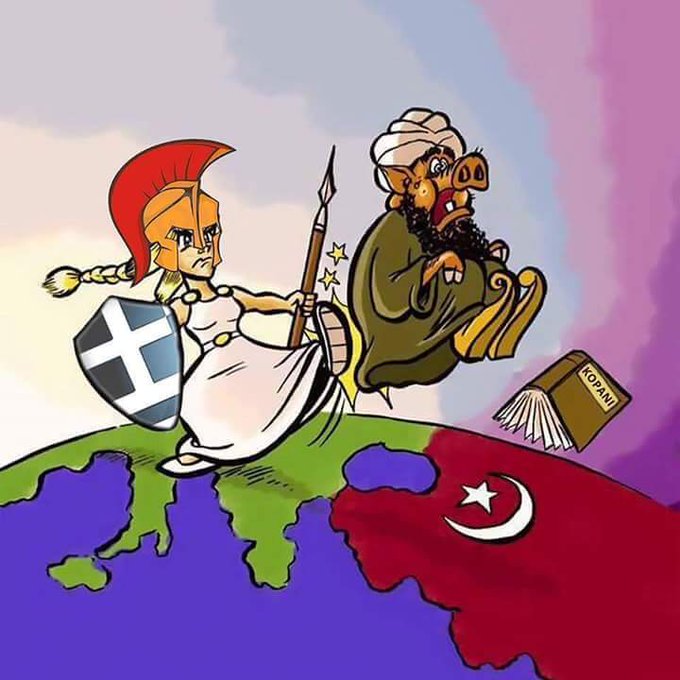
This is Islamic propaganda by two uneducated barbarians who are deliberately trying to manipulate history. I will explain to you, in a long and historically accurate post, exactly how Muslim Turks treated Christians.
In the 1.300 years of Muslim-Arab slave trade, approximately a million Greek Christians were sold as slaves. I am Greek, so I will write you about how Islam and Muslim Turks treated Greek Christians.
On March 30, 1822, the Chios Massacre took place. The Muslim Turks slaughtered 42,000 Greek Christians: women, men & children. Additionally, 52,000 were sold as slaves in the markets of Smyrna & Constantinople.
On September 1, 1821, Samothrace was devastated by the Ottomans through a general massacre led by the Turkish Kara Ali. Approximately 10,000 men & boys were slaughtered. Women & children were sold in the markets of Constantinople & Smyrna (Holocaust of Samothrace).
On June 4, 1821, the Turks carried out a massacre against the Greeks of Kydonies in Asia Minor (modern-day Ayvalık). They did pogroms at shops and homes, looting them, while seizing women and children to sell as slaves. Simultaneously, they conducted a general massacre of the population, and the town was set ablaze and completely destroyed.
In Crete muslims carried chains with them to tie up Greek Christian women so they could take them away. They were enslaving and converting the Greek Christians of Crete for centuries.
For 300 years (1380-1680) the muslim Turks were stealing kids from their mothers. This was the most brutal thing humanity ever witnessed. They were waiting for women to birth, raise their kids, and then at the age of 8 were collecting the them. The devşirme known as "collection of children" or "blood tax" or in Greek as "paidomazoma". The devshirme was the greatest wound inflicted on Hellenism during the period of Turkish rule. The children who were seized were considered definitively lost. In Epirus, in fact, on the first Sunday after the abduction, their parents would go to church dressed in black, where a funeral service was chanted. In this service, the names of the children were read aloud as if they were dead. Once taken, boys were circumcised, renamed with Muslim names, and forbidden from contact with their families. They were raised as Muslims, effectively erasing their Greek cultural and religious identity to foster loyalty to the sultan.
After the Ottoman conquest of Crete (1669), local officials and governors began to oppress the Christian population in every way: killing, abducting and abusing women, demanding money, and preventing the performance of the subjects' religious duties.
We Greeks, called the Muslim Turks, "The grand masters of torture." In 1821, in Patras, they captured a father and son and, after impaling them, lit a fire and forced the other captives to roast them like lambs. Ali Pasha at that point was more inventive: When he impaled Christians, he forced their relatives to turn the spit, threatening that otherwise he would impale them too.
Immediately after the hanging of Patriarch Gregory V in Constantinople, the Turks hanged three metropolitans at various points in the city. However, one of them, the very elderly Metropolitan of Nicomedia, breathed his last before reaching the place of execution. Such, however, was the Turks' mania for revenge that they punished even the dead man by hanging his corpse.
Just 65 years after the Fall of Constantinople (1453), Sultan Selim I Yavuz, grandson of Mehmed the Conqueror and father of Suleiman, decided to definitively abolish the Patriarchate of Constantinople during the patriarchate of Theoleptos I, and to slaughter all the subjugated Christians (rayah) of the empire who refused to convert to Mohammedanism. Just 65 years after the Fall of Constantinople, the Greeks of Thrace were collectively placed before the forced dilemma of either converting or being wiped off the face of the earth, that is, to suffer ethnic cleansing or genocide, as we would say today. Between those two barbaric options, the Greeks of Thrace (the ancestors of today’s Muslim Greeks of Thrace) chose ethnic cleansing at their own expense; that is, they chose to convert in order to survive as an ancient indigenous people, in the hope that at some point in the future their descendants would regain their national self-awareness and their religious independence, and would then voluntarily return to the bosom of the Greek Nation and of Greek Orthodoxy.
When the Greek Bishop Dionysios the Philosopher of Larissa organized a revolt against the Muslim Turks in 1611, which ended in failure, the Turks flayed him alive, stuffed his skin with straw, and paraded it from city to city. Three days later, the Turks also discovered -the Greek rebels- Deli Giorgos and Lambros. They burned Lambros alive, while they crucified Giorgos and, instead of a crown of thorns on his head, they drilled holes into which they placed feathers. Dionysios’s skin, together with the heads of 85 Greek Christian rebels, was sent to Constantinople, where it was thrown into the Sultan’s stables.
After the failure of Daskalogiannis’s uprising in Sfakia (Crete, 1770), the Turks captured him and flayed him alive, cut him in pieces and throw them in the fire and the dogs.
The Muslim Pasha of Thessaloniki, Abdul Abud, who had set as his goal the extermination of the Greeks, burned 120 villages and wiped out their inhabitants to the last one.
5.000 Greeks were massacred in Naousa, the rest were sold in slave markets, and the entire city was reduced to ashes.
The most common torture inflicted by the Muslims during the Ottoman period was whipping. The usual victims were the Christians. It was the introductory torment in every other torture, so common in the persecutions of Christians that the phrase became proverbial: "I will whip you until you change your faith."
The Janissaries faced no restraint in their behavior toward the Christians. They would even enter churches and desecrate them. And if they discovered a beautiful Greek girl, they would seize her from her parents in order to satisfy their lewd desires. For this reason, anyone who had a pretty daughter was forced to keep her locked inside the house, while most Greek women who lived in towns would wear a burqa when they went out, just like Muslim women.
The Janissaries also exterminate Christians without any reason, simply because they were Christians. Sometimes they executed them in cold blood in the middle of the road, just to test the accuracy of their weapons; other times to watch them writhe in their own blood; sometimes to make the abduction of a bride, right after her wedding, more dramatic; other times simply because the Christians were manly-looking, relatively well-dressed, or on horseback. In the latter case, the rayah would hurry to dismount upon seeing a Janissary, but the latter would draw his pistol and say: “Why did you dismount, you infidel dog? So you could make me ride instead?” And the rayah, Greek Christian, would fall dead.
During the Ottoman period, Muslims enjoyed performing all kinds of mutilations. Ears, noses, lips, tongues, breasts, and genitals were primarily cut off. Not just those, though. Let's recall here the newly-revealed Saint Raphael of Mytilene, who was hanged from a tree and had his lower jaw cut off, while the twelve-year-old martyr Irene was roasted in a barrel on the Tuesday of Easter in the year 1463, ten years after the fall of Constantinople.
Many times Christian captives were placed in front of cannons that were fired, turning them into human shreds of flesh. In other cases, they were tied to galleys that sailed in opposite directions and were torn apart. Dismemberment of victims also occurred with horses.
In Chios Massacre young girls were raped publicly in the streets, and newlyweds in front of their husbands, who were then slaughtered. Others were raped in front of their parents, after which the men's genitals were cut off. Women over 40 were set on fire and left to burn alive. Pregnant women had their bellies ripped open and their fetuses pulled out, while small children were thrown forcefully against rocks. The frenzy of the Muslims was unprecedented.
In 1822, Muslims also captured the wives of Zafeirakis and Gatsos. The wife of Zafeirakis was built into the wall up to the neck in the church of Hagia Sophia in Thessaloniki. Maria Karatasou, daughter of a priest refused to change faith, and for this Ebub Lubut enclosed her in a sack with deadly snakes, where she martyred.
Pouqueville describes in the darkest colors to the civilized world the dramatic scenes he saw with his own eyes there: “Many women naked were put up to the neck in sacks with cats, snakes, and mice…”.
The Greek Christian Woman, during the years when Greece was enslaved to the Muslim Turks, in order to avoid -as much as she could- the abhorrent dishonor from the barbaric Muslims, would destroy the youthful beauty of her face, or create a family from the age of fourteen, believing that she would not give birth to slaves.
On September 1955 in Constantinople 4,348 Greek businesses, 110 hotels, 27 pharmacies, 23 schools, and 73 churches were damaged or destroyed. The exodus of Greeks from Turkey, reduced the community of over 150.000 (who have already left from the Fall), to fewer than 2.000 today.
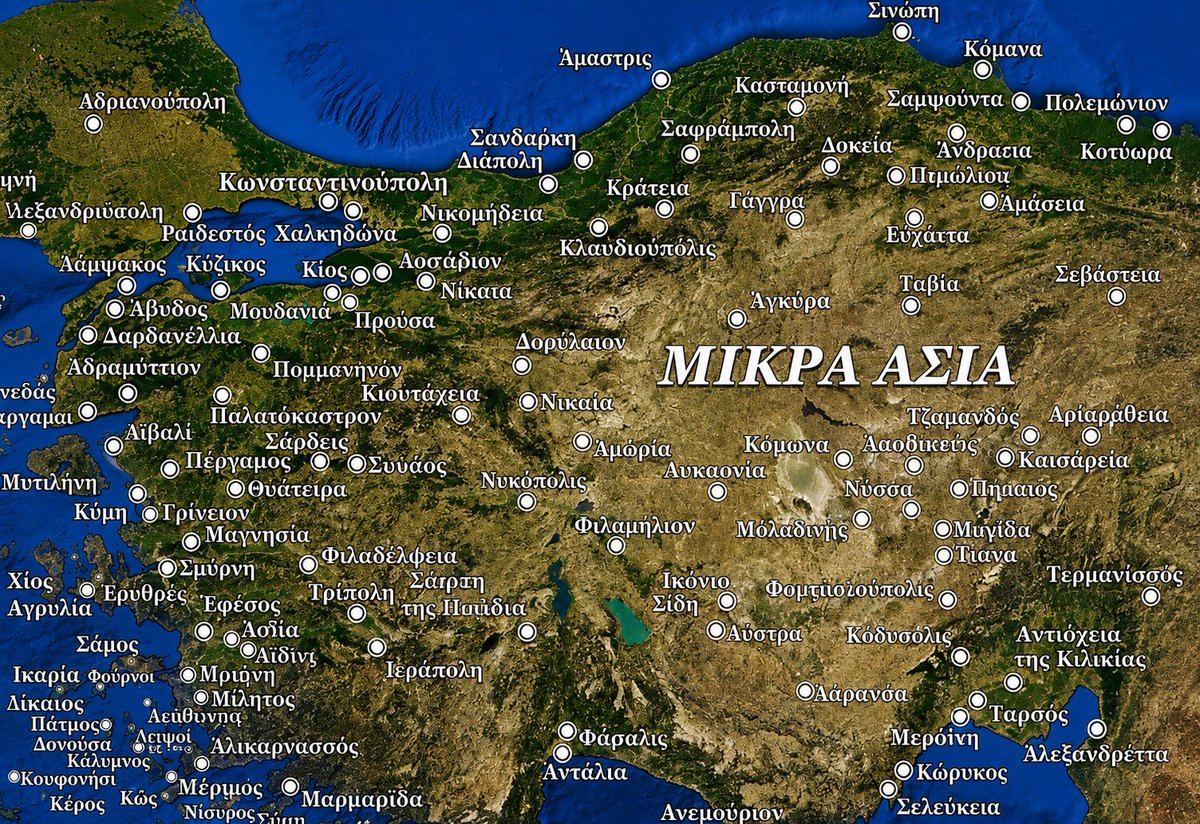
Muslims commited GENOCIDES and Islamized the Anatolia, Antioch and Seleucia.
From the Hellenism of the East (Thrace, Asia Minor, Pontus), around a million people were exterminated (1914-1924). In the Pontus region alone, 353,000 people were slaughtered. Because they stole our lands. Smyrna, Aydin, Kydonies, Prousa, Nicaea (Asia Minor region), Trebizond, Kerasounta, Samsounta, Oinoe, Paphra, Ordou, Amaseia (Pontus), provinces of Derkon, Metron, Herakleia, Myriophytou, Kallipoleos, Ainos, Tyrolois, Saranta Ekklision, Adrianople (Eastern Thrace).
On December 18, 1803, at Zalongo in Greece, a group of Greek Souliote women jumped from the cliffs, holding their children. They chose death over falling into the hands of Muslims, where they would face rape, abuse, and enslavement.
These are only some of the most recent and important events in Greek history. Of course there are thousands of books and primary sources about the Ottoman period and what happened to Christians in Anatolian Greeks and other Christian countries.
Bookmark this and repost it everywhere.
I am Homer Pavlos. A Greek, descendant of those who fought Islam and knows the history of his homeland.
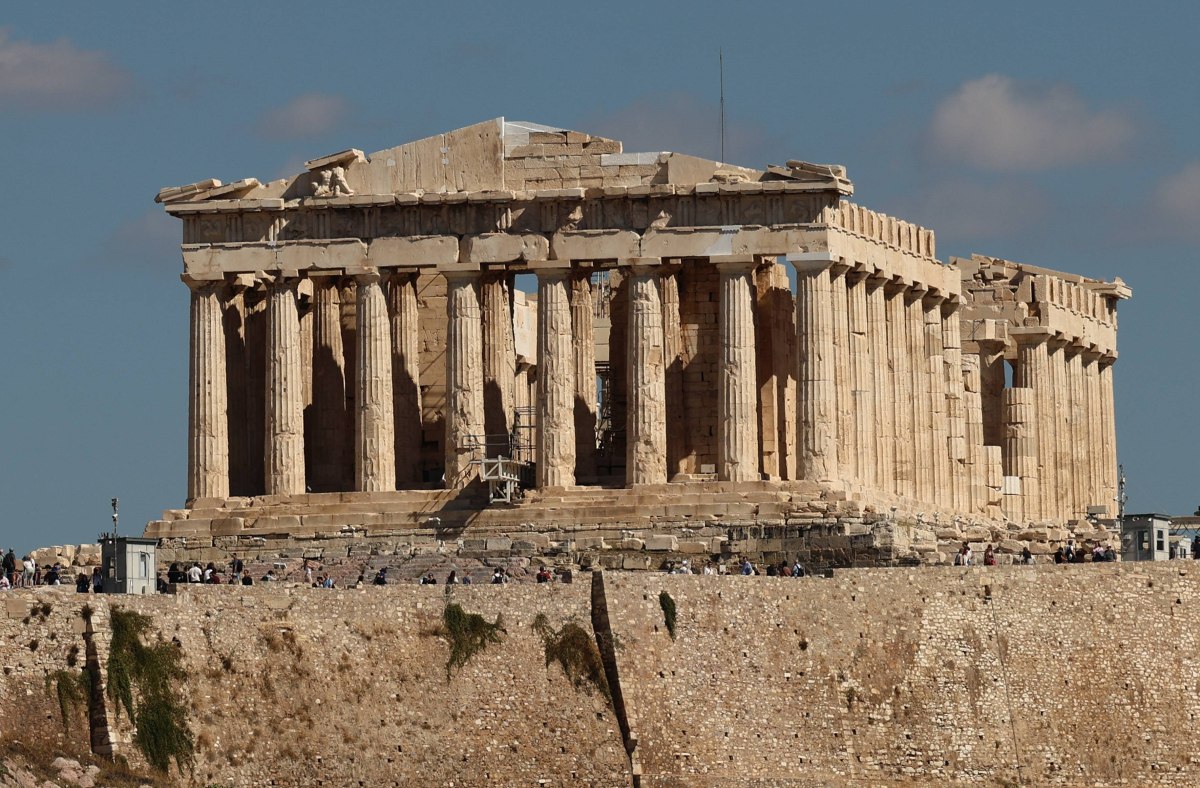
For the first time in about 220 years, the west façade of the Parthenon in Greece can be see in its fullest possible form. The next step is for the sculptures currently in the British Museum to be returned and placed where they truly belong. After that, the reconstruction of the temple should be completed and painted, so that it marks the beginning of a new era for humanity. Greece will once again lead the way in philosophy and the values that humanity needs in order to progress in life.
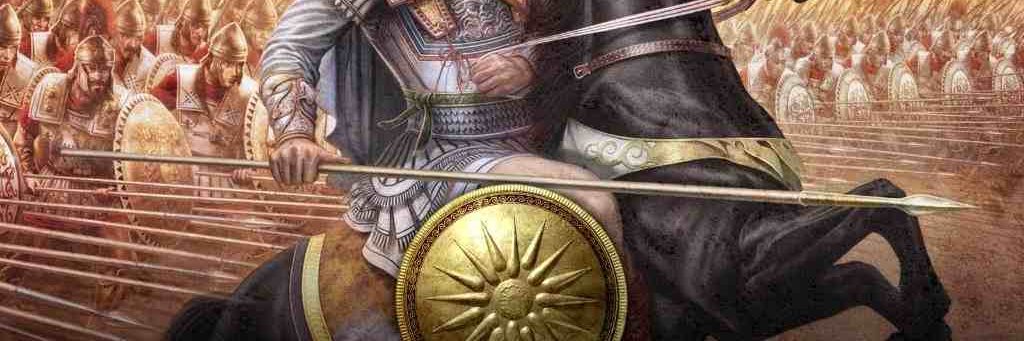
Philip did not entrust Alexander's education to ordinary teachers. Because he believed that Alexander was destined for great deeds of the highest importance to the Greeks, he summoned the most renowned and wisest philosopher of the age, Aristotle, and gave him generous and worthy compensation. Before Aristotle, when he was young, Alexander had two more educators. At the age of 13 he had as "paidagogos" (educator) the great Leonidas, a relative of his mother from Epirus that he was very strict and taught him the laconic way of life with similarities from the Spartan Agoge. The other educator was Lysimachus.
Aristotle understood the importance of his mission. Since Pella at that time was a bustling commercial hub full of noise and commotion, he asked Philip for the school to be established in the countryside, inside a forest.
Thus Philip founded a six-year school: three years as "Vasilikoi Paides" ("Royal Pages") and three years as "Vasilikoi Akolouthoi ("Royal Companions").
It was there that Philip sent Alexander along with fifty other Greek boys from royal houses, who would be educated by Aristotle and the other teachers. This group also included Thessalians such as Lysimachus, and Nearchus who was Cretan. This shows Philip’s desire for a united Greece with a common purpose.
Among Alexander and these fifty youths were also his eight sworn friends from childhood. From this school would graduate the fifty Royal Companions, the future king of the Macedonians, and later of all Greece.
The School of Aristotle in Mieza included:
> Theoretical Philosophy and Metaphysics from Aristotle’s Peripatetic School
> Geometry taught by Menacles
> Acroamatic Lectures (esoteric teachings) by Aristotle
> Physics, Zoology, Botany, Geography, and practical Medicine taught by Aristotle
> Horsemanship, Pankration, and Swordsmanship taught by Cleitus
> Practical Philosophy and Poetry taught by Aristotle
> Military operations and Diplomacy taught by Philip himself
> Correct Diction and Rhetorical Expression (Φραστικές Ορθοέποιες) taught by Theophrastus
The most capable student in each subject became the supervisor (epimeletes), with the aim that he would later lead. The supervisor wore a distinctive green belt, which he would also wear later as an officer in battle, so that he would feel the battle was a natural continuation of his educational journey.
The Acroamatic teachings I mentioned were deep, secret knowledge, according to Plutarch, which were not taught to the others.When Alexander was in Asia and learned that Aristotle had published certain lectures on these subjects, he wrote him a bold letter about philosophy, which in part read verbatim:
"Alexander to Aristotle, greetings. You have not done right in publishing the acroamatic lectures. For in what way shall we differ from others if the teachings by which we were educated become common to all? I would rather excel others in the knowledge of the highest things than in power. Farewell."
Aristotle apologized, explaining that some lectures had been published and others had not, especially those he had taught to Alexander. We see here the importance of Aristotle’s teaching, the esoteric knowledge, and how powerful it was.
By nature, Alexander loved literature and reading. He kept the Iliad, which he had received from Aristotle (who had corrected and annotated it with comments on its symbols and the secrets Homer had hidden), under his pillow along with his dagger throughout the entire campaign. Because he loved reading and had no other books in Asia, he ordered Harpalus to send him some. Harpalus sent him the books of Philistus, several tragedies by Euripides, Sophocles, and Aeschylus, and the dithyrambs of Telestes and Philoxenus.
Alexander admired and loved Aristotle, as he himself said, no less than his father, for he owed his life to Philip, but to Aristotle, he owed a good morally life.
Aristotle used to say the following: "Parents who provide their children with the proper education deserve more than those parents who simply gave birth to them. For the children who did not receive the proper education, their parents merely gave them life. But for the children who did receive the proper education, their parents gave them a happy life."
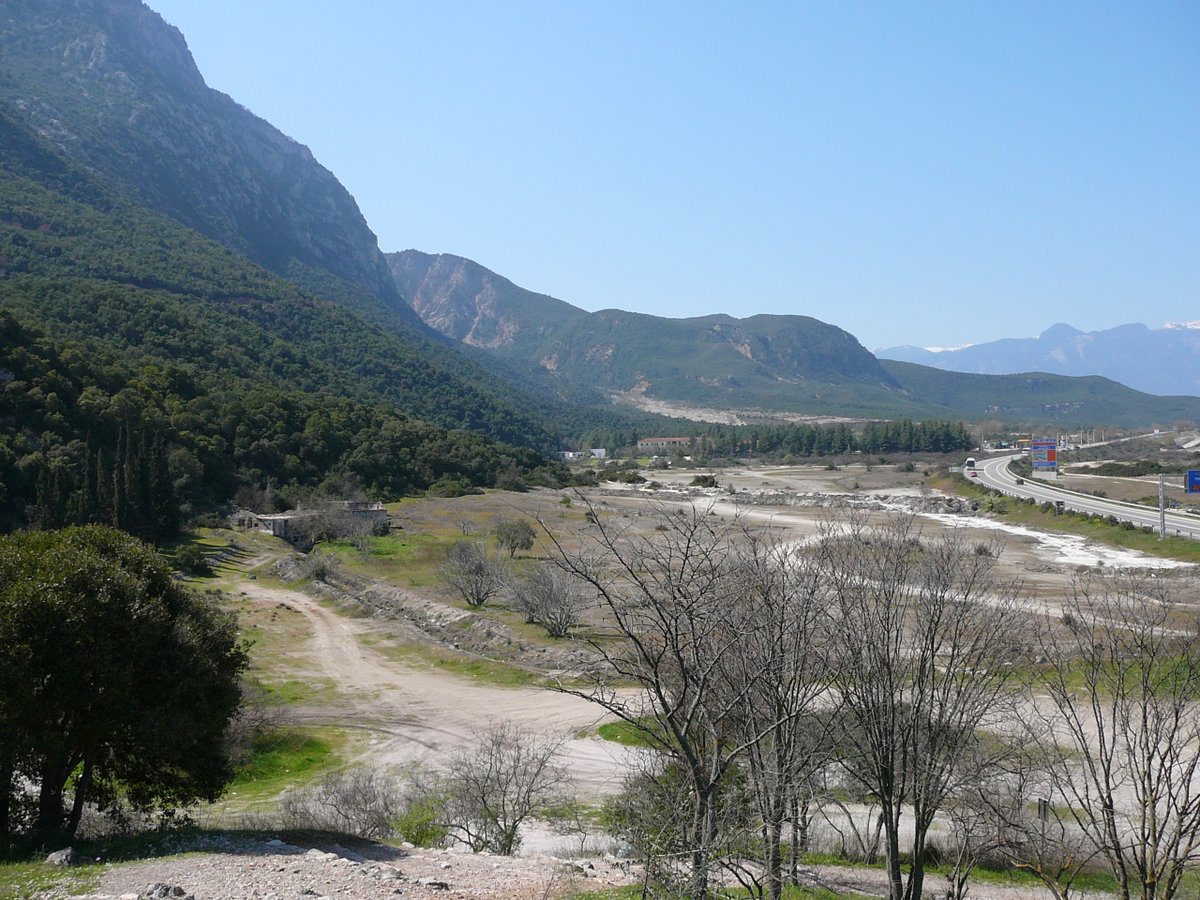
When the Persians gathered in Thermopylae, Xerxes sent a cavalry scout to observe the Greek soldiers, assess their strength, and report what they were doing. The Persian rider approached the Greek camp and saw the Spartans exercising and combing their hair. Others were bathing. They saw him but paid no attention, and he returned and reported what he had seen, as Herodotus recounts.
Xerxes was confused and summoned Demaratus of Sparta, the king who was exiled from Laconia. Xerxes repeated what the rider had told him and asked what it meant and how to explain the Spartans’ behavior:
"I, Demaratus, when you began this campaign, I told you about these men. I said then that the Spartans would never accept terms that would enslave Greece and that they would fight you even if all of Greece submitted. It is unnecessary to ask about numbers. If they muster a thousand warriors, that’s how many will fight you. The same will happen with any number, whether larger or smaller. When I told you this, you laughed, and now look. These men stand here to defend the pass and are preparing to fight you. It is their custom to adorn their heads whenever they risk their lives. I assure you, if you defeat the Spartans, no other nation will resist you. Before you stands the finest Kingdom of Greece, with its best and most virtuous Man."
Xerxes could not believe it. Unable to consider what he heard as logical, he asked a second time:
"But how will these few resist me?"
And he received this astonishing response from Demaratus:
"If what I’ve told you does not happen exactly as I said, then, king, treat me as a common liar."
(Source: Herodotus 7.209.1)
However, before the Battle of Thermopylae, when the Persians decided to invade Greece and enslave it, Demaratus secretly sent a message to Sparta, informing them of the Persians’ intentions. Yet until the end of his life, he remained an advisor to the Persians and lived in exile in Asia Minor, where his descendants later ruled Pergamon, Teuthrania, and Halisarna. He had also given the Persians the strategic advice to capture Cythera, but fortunately for Greece, they did not listen to him.
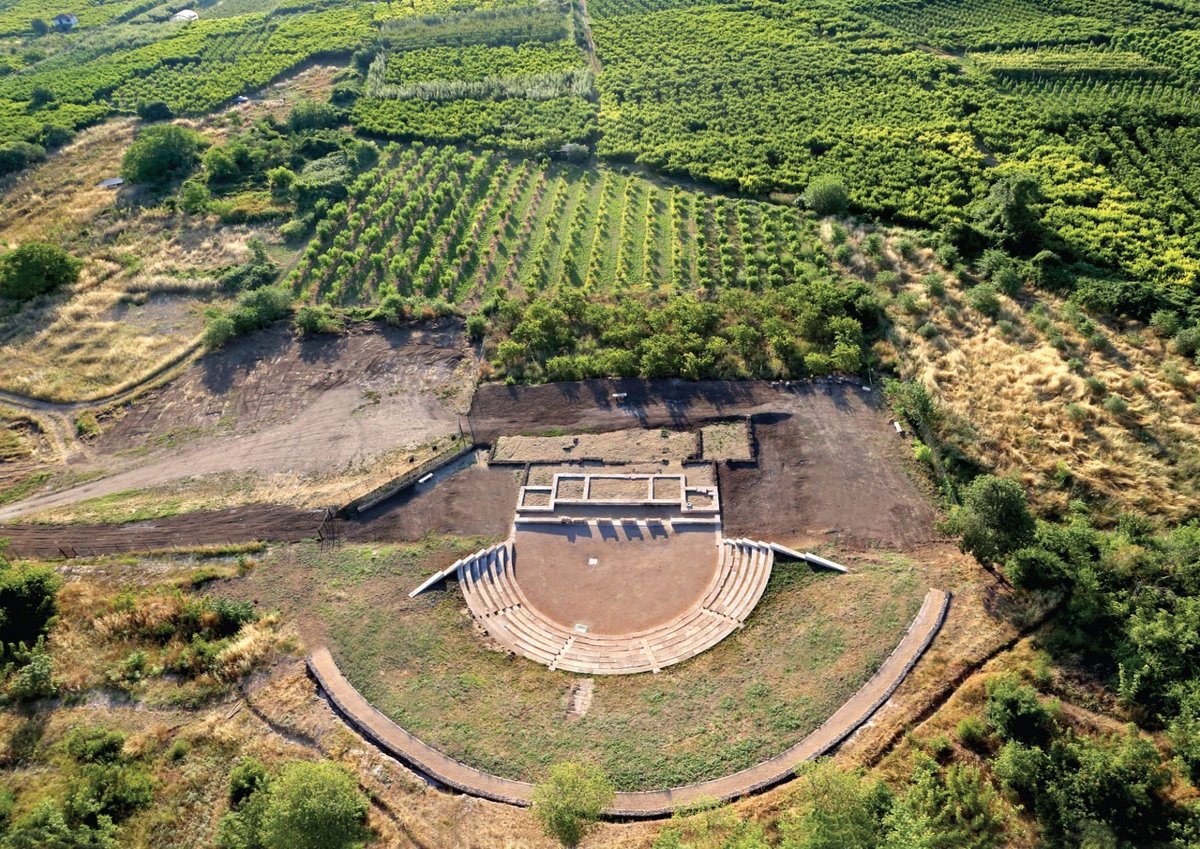
Important archaeological discovery in Mieza, Greece. The Royal Gymnasium where Alexander and around 50 more Greeks were taught by Aristotle, along with its stoas, the stadium, the palaestra (wrestling school), and even the writing tools that students used 2,300 years ago. HUGE!
Athanasios Psilopoulos, a Greek marble mason who has been working on the restoration of the Parthenon since 1995, talked about what he discovered:
"When we took down the last column from the pronaos (the porch at the front of the temple), we found an ancient wooden dowel that had been there for 2.500 years. The fact that it hadn’t rotted away means that not even air was getting in. They took it and immediately put it in a vacuum chamber so it wouldn’t deteriorate. This is astonishing, two pieces of marble sealed so airtight that no air could enter. It’s incredible that you can join two marbles together and, after 2.500 years, find the wood inside still perfectly intact, and discover what was inside. I was stunned when I saw it. I said to myself, “We are nothing.” That’s what I said."
I hope that one day we get to see the Parthenon fully restored and complete, exactly as it was 2,500 years ago, with its original colors and the mythological representations of the ancient Greeks on the pediments.
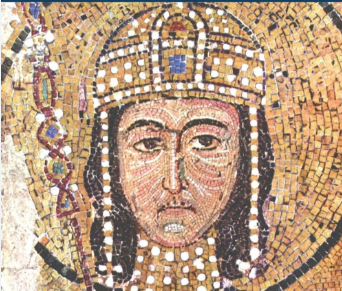
Anna Komnene (Άννα Κομνηνή) was an Eastern Roman (Byzantine Greek) Princess of the 11th-12th century AD. She was the daughter of Emperor Alexios I Komnenos (1057 - 1118), who oversaw the so-called "Komnenian Restoration" of the Eastern Roman (Byzantine) Empire, the last historical period when the Empire was again on the rise and was considered a major power within the known world.
Anna spent her senior years in the Kecharitomene Monastery of Constantinople where she wrote "The Alexiad", one of the most important contemporary accounts of the history of the Eastern Roman Empire of this period, as well as of the early Crusades. Her detailed descriptions of political and strategic matters and even battle tactics and various weapons are considered remarkable for a woman of her time.
The work, which revolves around the numerous exploits of Emperor Alexios I, is written in Atticizing Greek and classicizing style, typical of the Byzantine elites' tendencies of the period, while the work's name is evidently inspired by the Homeric Epics titles.
In the Alexiad, Anna uses several times the name "Hellenes" (Greeks) as synonymous to the term Rhomaioi (Byzantines). Moreover, she frequently refers to the non-Greek speakers (including the Latins) as barbarians. One interesting example is when she attempts to describe the crossbow, a weapon that was becoming popular in the west, yet was not yet widely adopted in the east. She writes:
"This cross-bow is a bow of the barbarians quite unknown to the Hellenes (Byzantine Greeks); and it is not stretched by the right hand pulling the string whilst the left pulls the bow in a contrary direction, but he who stretches this warlike and very far-shooting weapon must lie, one might say, almost on his back and apply both feet strongly against the semi-circle of the bow and with his two hands pull the string with all his might in the contrary direction."
The people of Greece, Constantinople, and Anatolia were of the exact same ethnicity in medieval times, and they did not see themselves as separate peoples or separate cultures or ethnicities at all.
Lately some Turks have been pushing the lie that modern Greeks have nothing to do with the east Romans, and they manage this by inventing a fantasy where the east Romans only ever lived in Anatolia, as if Greece and Anatolia were home to two completely different ethnicities back then.
In reality both lands were full of Greek speaking Romans who shared the same Roman political ideology, followed the same Greek church and the same Greek literary culture, and that culture was the direct continuation and evolution of the literary culture of the ancient Greeks.
Anthony Kaldellis, in his book Hellenism in Byzantium, wrote that:
The east Roman philosopher and theologian, and Ecumenical Patriarch of Constantinople ‘‘Gennadios Scholarios again affirmed how little these so-called internal divisions signified:
‘it makes no difference whether I am from Thessaly or Byzantion, given that Thessalians and Byzantioi differ neither in their language nor in belief nor in customs, as perhaps they once did,’ ’’
Kaldellis also wrote that:
‘‘We should not view Romania as a multi-ethnic empire but as the nationstate of the Romans that happened at times to include a number of partially assimilated minorities within its borders, as have all modern nation-states, indeed all states, throughout history.’’