Your brain peaked musically somewhere around age 16. Everything since then has been a dopamine echo.
Between the ages of 12 and 22, the mesolimbic dopamine pathway, the same circuit that processes cocaine and sex, fires at levels in response to sound that it will never reach again for the rest of your life. A 2011 McGill study used PET scans and fMRI simultaneously and found that music triggers dopamine release in the striatum at peak emotional arousal. The caudate nucleus lights up during anticipation of the good part. The nucleus accumbens lights up when it hits. Your brain is treating a guitar riff with the same reward architecture it uses for food-seeking and pair bonding.
During adolescence, that response is dramatically amplified. Pubertal hormones are flooding the system. The prefrontal cortex is still wiring itself. Memories formed during this window get encoded with a density of emotional tagging that nothing in your 30s or 40s can replicate. Researchers at the University of Leeds identified this as the “reminiscence bump”: the period when your sense of self is forming, and the music playing during that formation becomes structurally integrated into your identity.
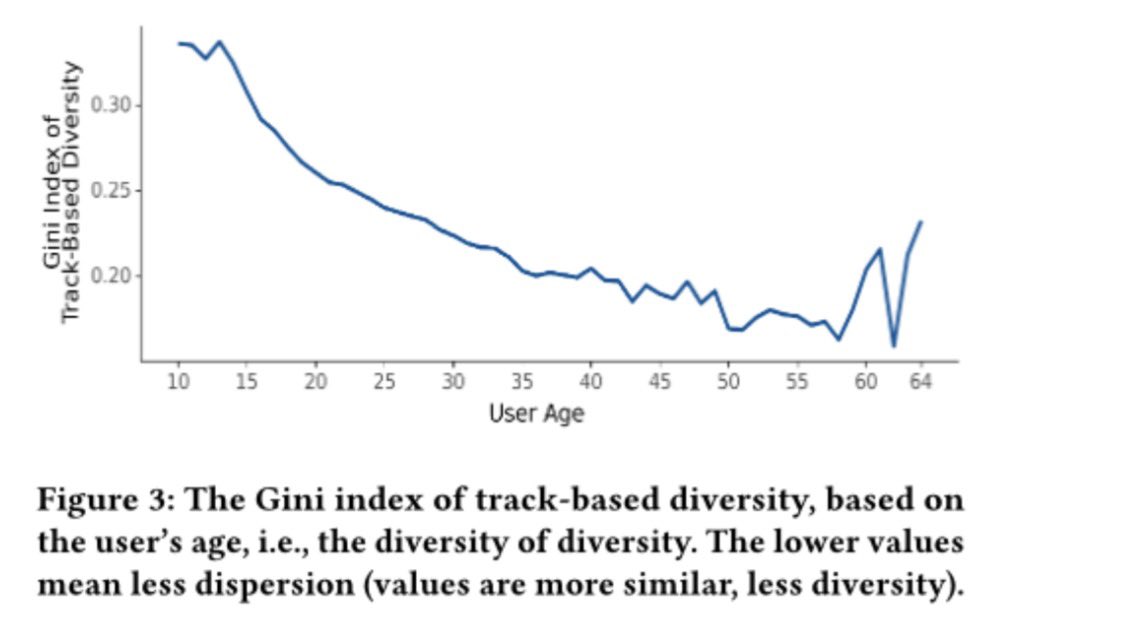
A 2025 longitudinal study from the University of Gothenburg analyzed 40,000 users’ streaming data across 15 years. Younger listeners explored broadly across genres. Older listeners collapsed into increasingly narrow loops, almost entirely anchored to music from their teens and early twenties.
Your brain stopped losing interest in new music years ago. It’s running a cost-benefit analysis. Familiar songs deliver guaranteed dopamine with zero processing cost. New songs require pattern recognition, expectation-building, and repeated exposure before the reward circuit kicks in. Past 25, most people stop paying that tax.
The one variable that predicts whether someone keeps exploring: the personality trait “openness to experience.” Score high, you keep seeking. Score average, you default to the familiar forever.
The fix, if you want one: deliberate exposure. Three listens minimum before your auditory cortex builds enough predictive models to generate a reward response. One passive listen on a playlist will never get there. Your brain needs repetition to find the pattern, and it needs the pattern to release dopamine.
@bhalligan Wolf is my favorite.
Irsay let me play Tiger in 2012.
Would you let me play Wolf sometime? It would be a dream come true.
https://t.co/IGC5a4J4Zl
just built a swipe file of 58 VSLs actively scaling on facebook right now
not theory, not 2021 examples
current 7-8 figure ads that are printing today
inside you'll find:
→ long-form problem → agitation → mechanism breakdowns
→ short hooks that stop the scroll in 3 seconds
→ on-lander VSLs built for warm traffic
→ hybrid advertorial + VSL structures
→ 12+ niches: supplements, skincare, weight loss, gadgets, beauty and more
you'll see exactly:
→ how they hook in the first 3 seconds
→ where the mechanism drops
→ how they stack proof
→ how they kill objections before the viewer thinks them
if you're running ads this saves you weeks of testing
if you're not, it shows you what winning creative looks like in 2026
rt + comment "vsl" and i'll send the full swipe file
(follow for dm)
🚨 MIKE POSNER SAYS HIS $70,000 ROLEX MADE HIM MISERABLE — SO HE DITCHED IT FOR A $40 TIMEX
American singer and producer Mike Posner says buying a luxury Rolex turned out to be one of the worst “deals” he ever made.
He thought the watch would make him feel cooler.
Instead, it made him anxious.
Posner says every time he traveled with it, he was constantly worried:
• it would get scratched
• a backpack zipper would damage the face
• he’d forget it in a hotel safe
He says the watch was a Rolex Day-Date with a diamond bezel, a model often referred to as the “Presidential” Rolex because it has been worn by multiple U.S. presidents.
Eventually he realized something unsettling.
“I didn’t possess the Rolex… it possessed me.”
So he ditched it.
Now he wears a simple Timex and says it gives him way more joy because he doesn’t have to worry about it.
His message:
“Don’t slave away for possessions… don’t let your possessions possess you.”
Did Mike Posner just say the quiet part out loud about luxury status symbols?
found a gumroad exploit that's basically free sales and nobody's using it
the related products hack
here's what most people don't know:
gumroad has a "discover" section that recommends products based on what people already bought
you can't control if gumroad features you
but you can hijack other people's traffic
the exploit:
step 1: find the top 10 sellers in your niche on gumroad
step 2: look at exactly what they're selling. price point. format. title structure.
step 3: create a product that's the obvious "next step" from theirs
they sell cold email templates?
you sell "how to personalize cold emails at scale"
they sell a budgeting spreadsheet?
you sell "how to automate your budget with free tools"
step 4: price yours slightly lower than theirs
step 5: use similar keywords in your title and description
what happens:
gumroad's algorithm sees keyword overlap
buyer purchases their product
gumroad recommends yours as "related"
you get their traffic for free
one guy i know does $4-6K/month entirely from related product traffic
he's never posted content
has zero followers
doesn't even have a social media account
just has 7 products that sit "next to" top sellers
he calls it "digital shelf placement"
same reason brands pay millions to be at eye level in grocery stores
except on gumroad it's free if you know the keywords
the real shit:
you can research which products get recommended together
buy the top product in your niche
screenshot what gumroad recommends after purchase
those are your targets
reverse engineer their keywords
build the "part 2" they didn't make
i mapped out the whole system. finding top sellers. keyword extraction. product positioning. title formulas that trigger the algorithm. the "next step" framework.
RT and comment "SHELF" - i'll send everything (must be following)